Archive

Architecture

EntrancingAnother rule I’ve adopted for this blog, but which perhaps I ought to have made clear earlier, is that I’m not bothering with disused stations.

That’s not because they’re not great, don’t cut it architecturally, can’t hold their own against current stations, or don’t command a rich enough history or atmosphere.

No, it’s simply because if you start, where do you stop? I could fill a good third of my 150 with parts of buildings or sites of former buildings or buildings that used to be this but are now used for that, and so on.

Besides, I’ve always intended this to be a celebration of living things, rather than the dead or dying.

So as I said, no disused stations.

Apart from this one.
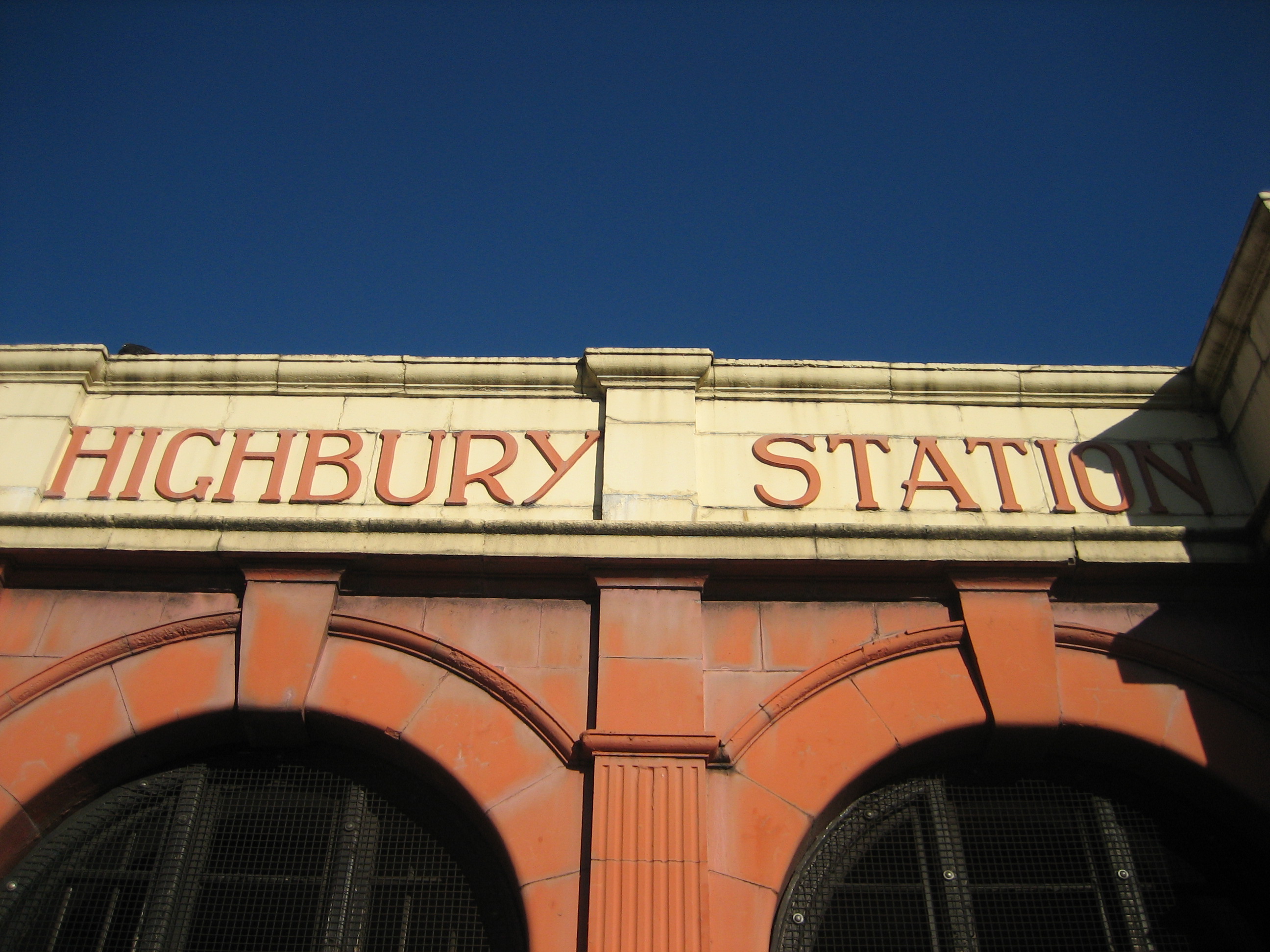
Bury nice, thank youI’m allowing it for two reasons: one, it’s an old entrance to a current station (an exemption I’ve made once before); and two, the building is still in use: it contains signalling equipment for the Victoria line.

It also happens to look absolutely gorgeous, having had its 1904-vintage exterior restored in 2006. That lettering is simply beautiful. There’s astonishing attention to detail, both in the graceful curves and exquisite finishing. It’s an alphabetical soupcon of yesteryear.

Meanwhile the present entrance to Highbury and Islington faces opposite, across the road, and looks awful.

I know which side of the street I’d rather be on.
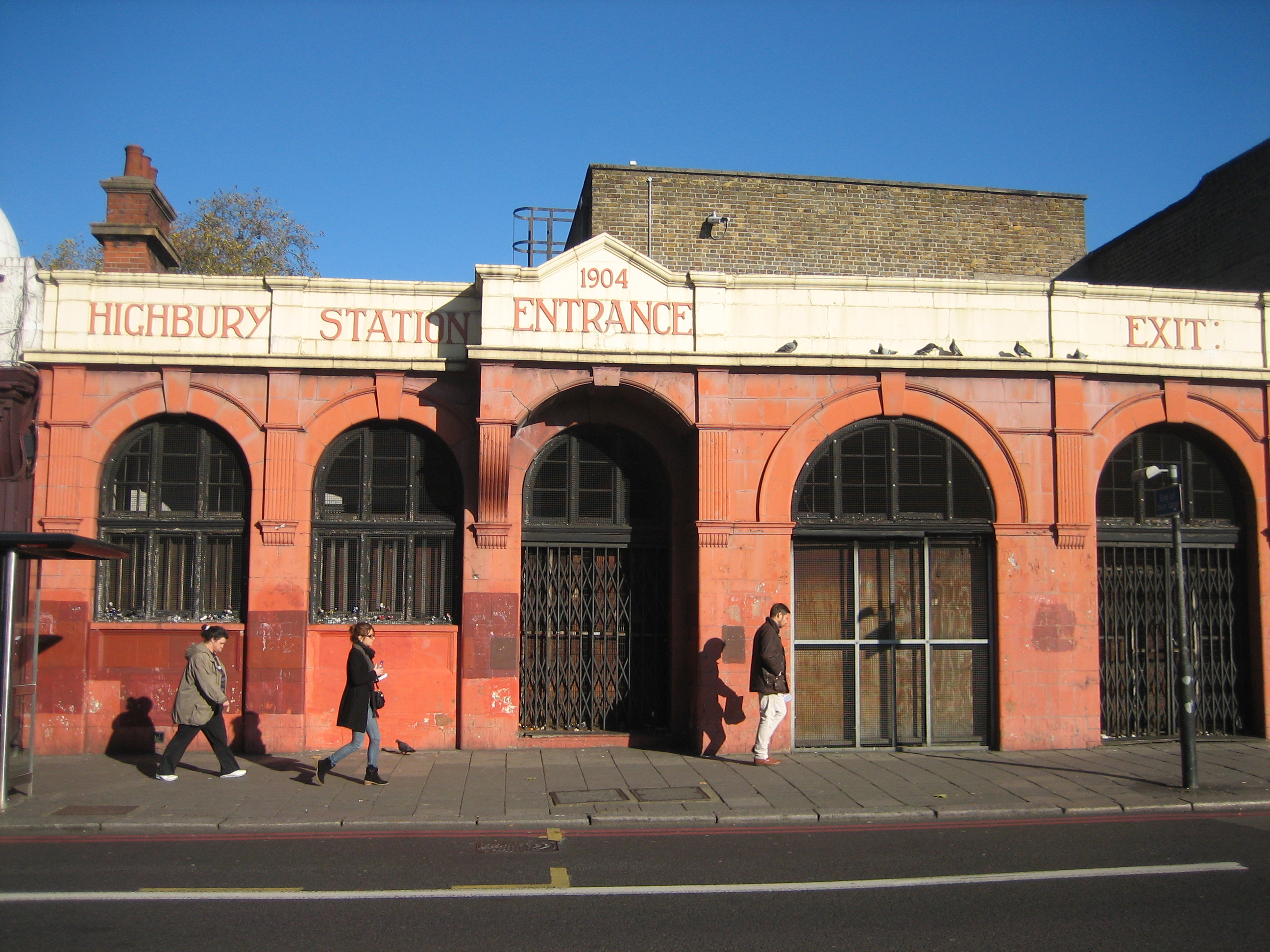
The sunny side of the street

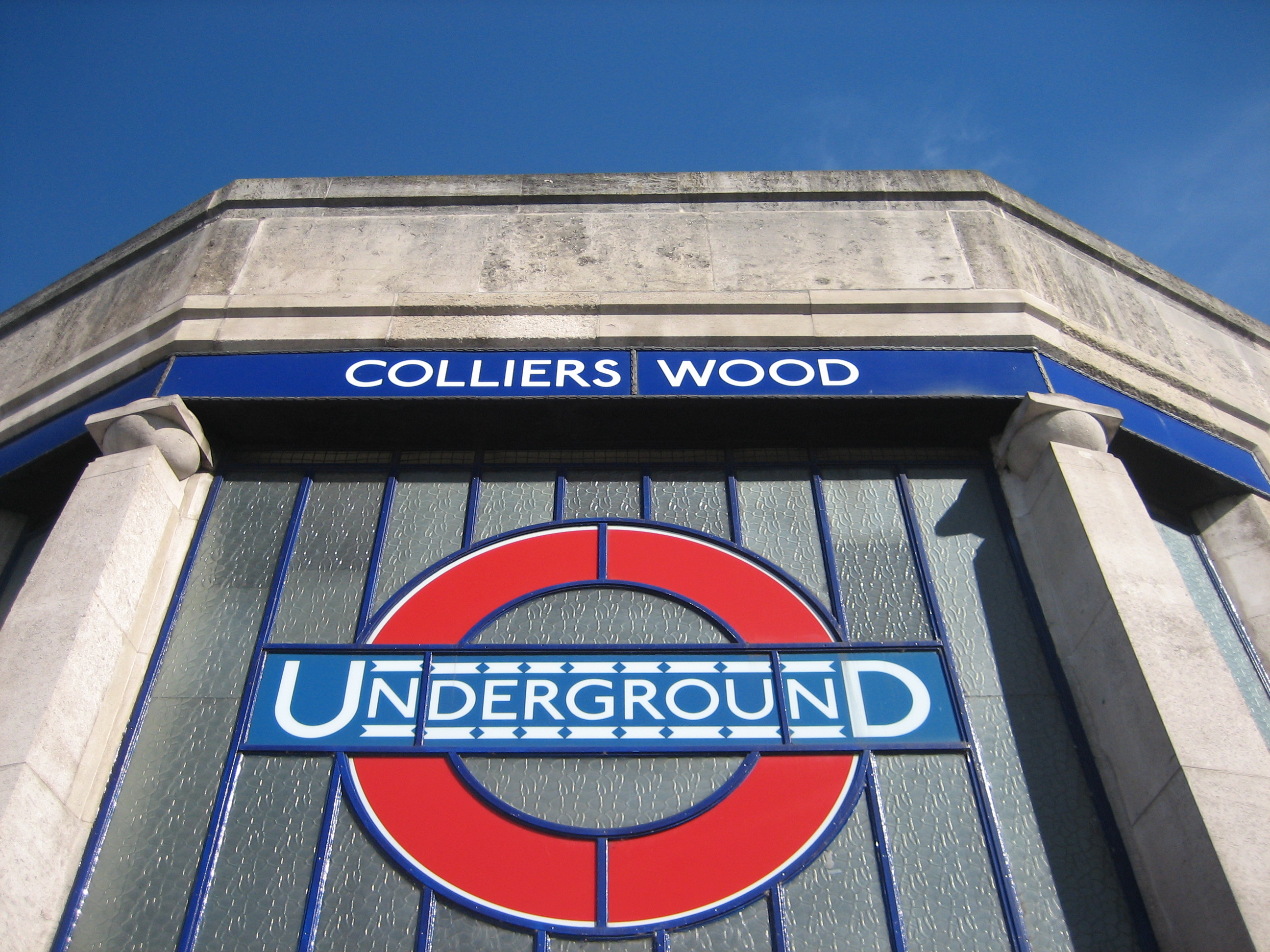
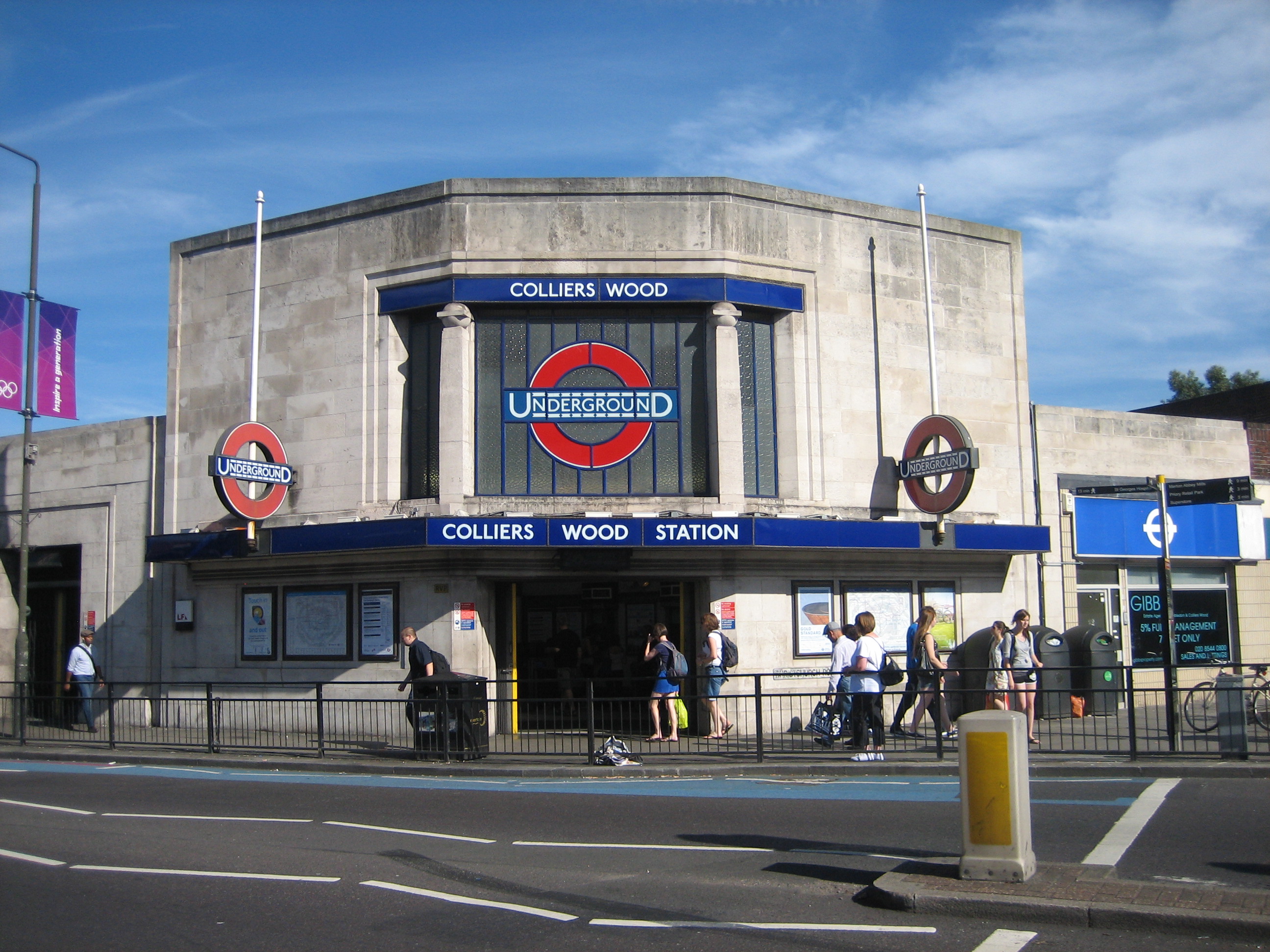
Touch WoodFew of the stations that stud the Northern line as it snakes through south London have as much stately grandeur as Colliers Wood.

When the sun catches the entrance, the building feels more of a palace than a portal. It gives off a sort of calming authority, even a coolness, which was certainly welcome on the baking hot day I took these photographs.

Those unfussy yet imposing columns that glide airily up each side of the main window are especially lovely. I like how their width is matched perfectly by the distance between each of the vertical blue lines. And look how the roundel fits so snugly in the middle. You can’t beat symmetry when it’s done properly.

Palace of delightsThen there’s the way the building is positioned on the corner of the street, its sides slanting (never curving – heavens no!) gently inwards, guiding you almost subliminally towards the entrance. Plus you have those two outer, smaller wings of the station, whose reduced stature ensures that nothing jostles for attention with the regal facade, especially when viewed from a distance.

Colliers Wood is one of Charles Holden’s earliest efforts for the Underground, dating from 1926, but it scrubs up well compared with his later masterpieces at Arnos Grove and Gants Hill. That’s as long as people remember to give it a scrub, of course.

And let’s hear it for not one, not two, but three splendidly gleaming roundels, a real help for anyone trying to spy the station from afar, but a real treat for anyone giving it the once over up close.

All hail the red, white and blueThat’s my kind of red, white and blue.

A bit draughtyI might as well end the suspense right now. For anyone who has been hanging on through 63 updates waiting breathlessly for the first appearance of the Victoria line, this is as close as I’m going to get. And it’s not even a station.

Were this a blog of, say, 365 great things, I might have tossed in a token wall-tile or two. But it’s not, and as such there will be no tokenistic tossing today – or any day.

The only instance of a design, object or sensation exclusive to the Victoria line that will be turning up on this blog, barring exceptional circumstances (in other words, something I’ve rashly overlooked), is right here:

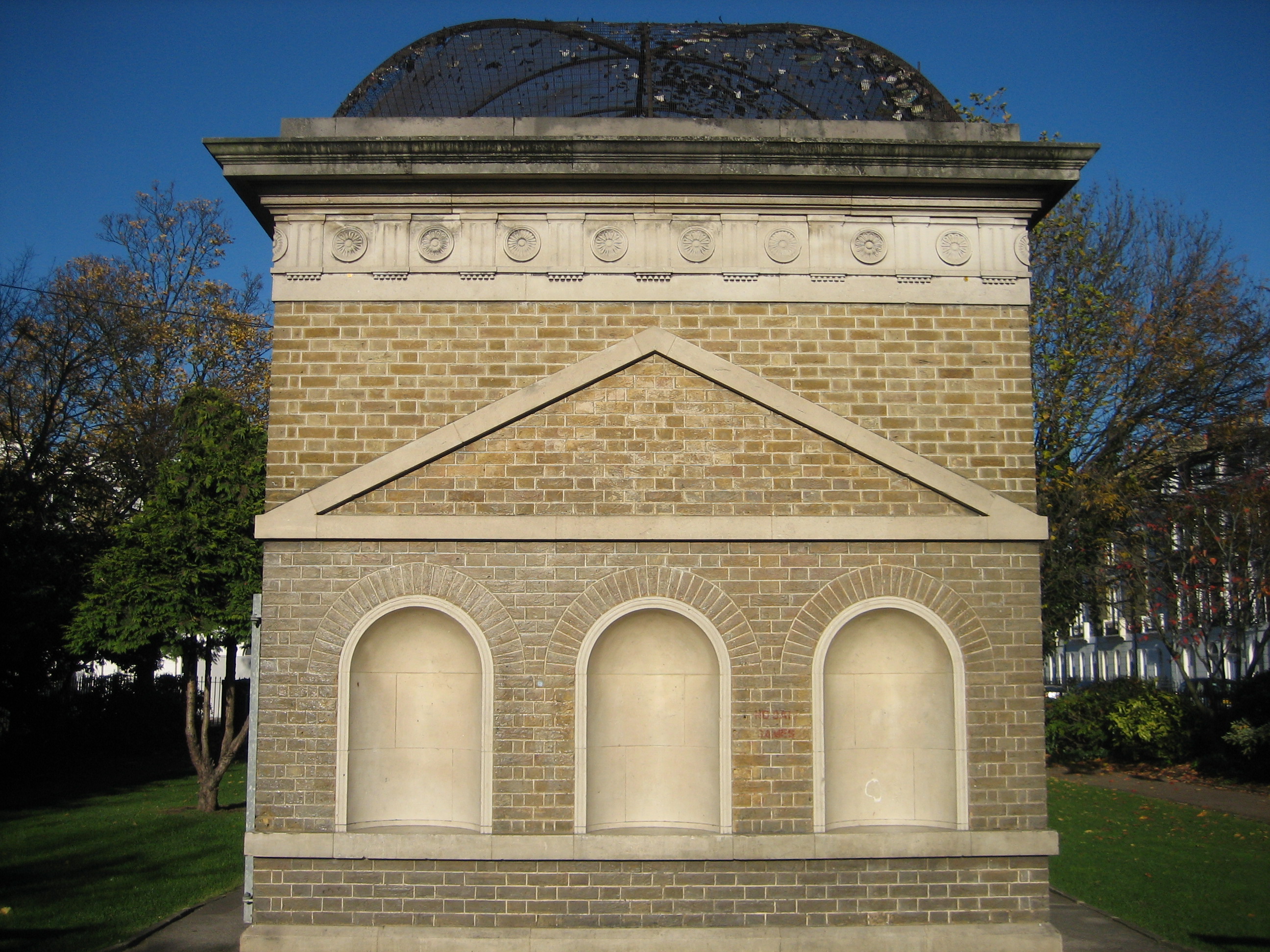
Shaft of light It’s a tastefully-rendered small brick building that sits in the middle of a charming square in Islington. There is no clue to its purpose other than intermittent rumblings from deep inside its walls, coupled with a continual gentle swirl of dust and debris within its wire dome.

Nothing is attached to the outside by way of a sign or a warning to connect it with the Underground. Strangers to the area would not have a clue as to its purpose, though the ambience it radiates offers a good hint.

It is actually a ventilation shaft that sits above the tracks of the Victoria line roughly midway between the stations King’s Cross St Pancras and Highbury and Islington.

And as ventilation shafts go, it’s really rather delightful.

Hot air not picturedAll the fancy decoration and classical brickwork is a massive exercise in misdirection. For this was built in the mid-1960s, and almost turned out as aesthetically uninspiring as much of the rest of the line.

Local residents mounted a campaign (in the way local residents always “mount” things – they never merely conceive or initiate them) to stop the construction of something out of keeping with the design of the area. Their tenacity led to success, although that assumes you prefer this particular kind of ventilation shaft to a big grey metal box*.

Air apparentSifting through the buildings associated with the Victoria line, it’s hard to avoid the conclusion that you’re looking at a transport project that put the demands of an especially joyless bout of engineering before the concerns of architecture (utterly unlike the ravishing Jubilee line extension).

Thank goodness one singular, lowly structure means it at least gets a look-in here.

A folly, but the good kind*Although these do have their places.