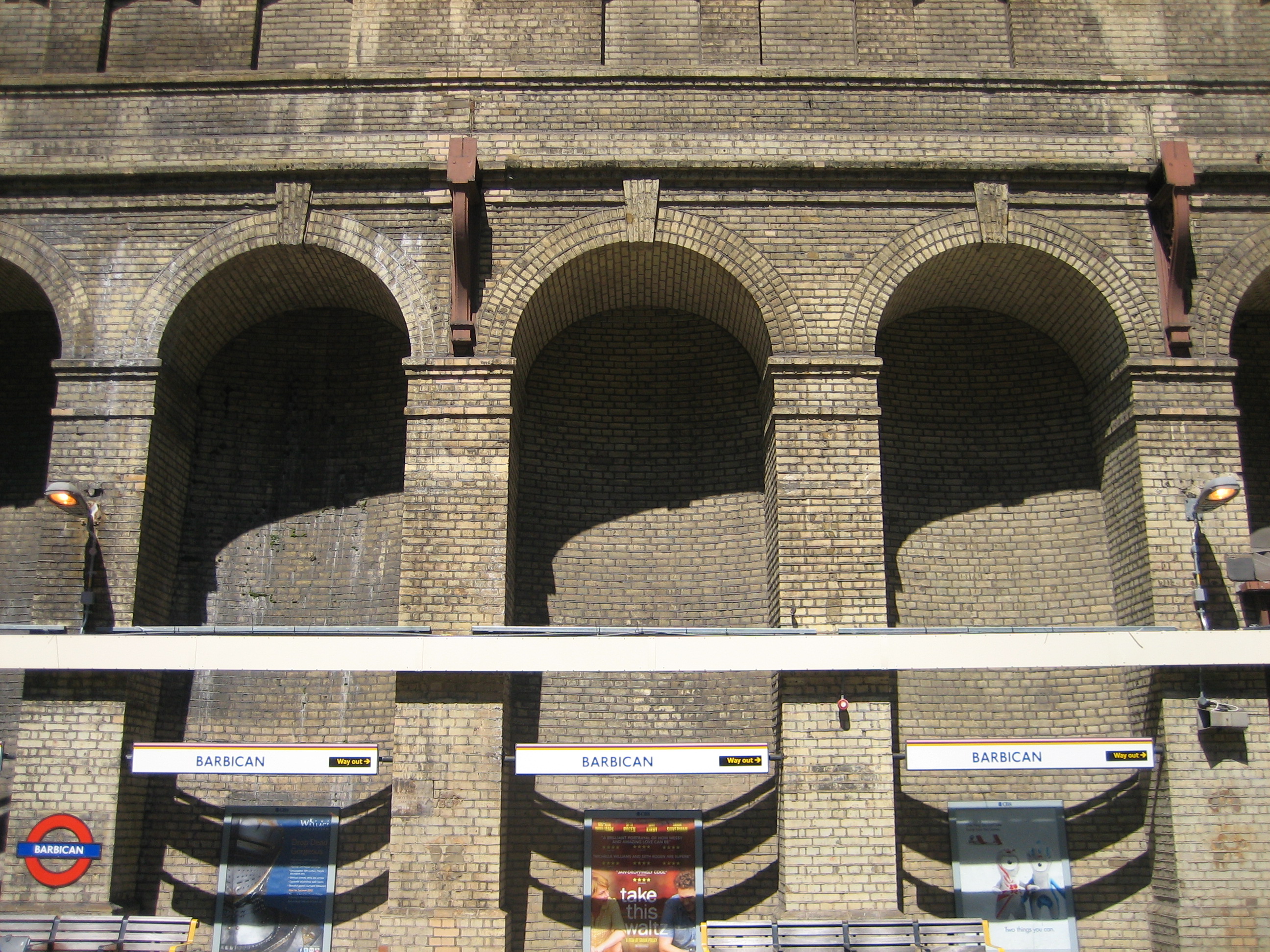
 This was suggested by Mark Siddall (yes, I am open to any and all nominations).
My photos don’t quite represent the full breadth of eerie elegance created when the sun is in a certain part of the sky and you are standing in a certain part of the station. But it’s the alcoves that best capture and amplify the effect of having so much of the area both cut into the ground and open to the sky.
The shadows and illuminations can give the impression of descending into a baroque catacomb – or, if it’s an especially warm day, an enormous kiln.
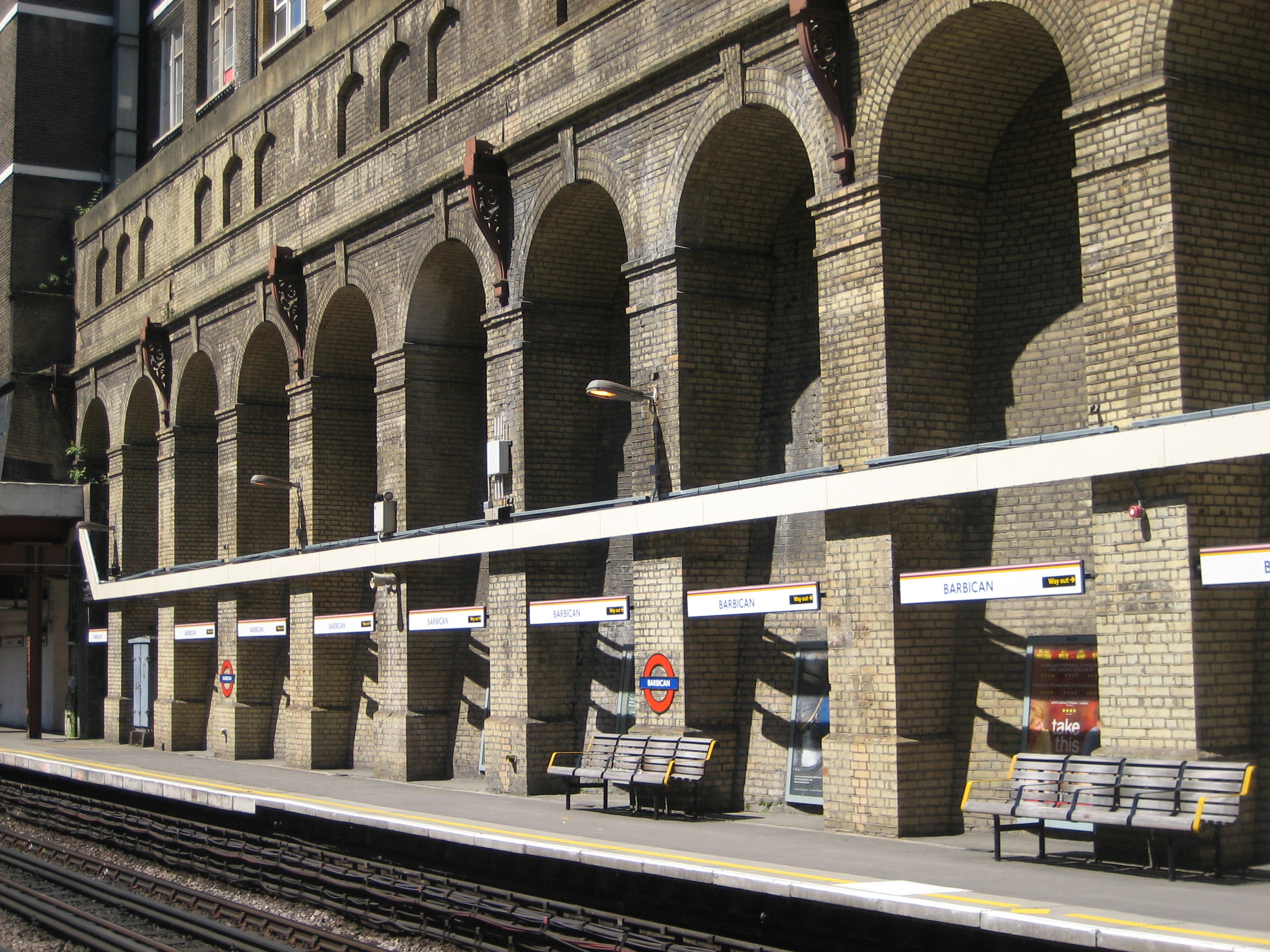 The sensations are heightened – literally – by the tall buildings rising up on all sides. It’s quite an atypical design for a station on almost the oldest stretch of line on the entire Underground. In fact I can’t think of another station on the Circle line that is quite so exposed to the sky, at least not in quite as dramatic a fashion.
This impression of cavernous space is compounded still further by the now disused platforms that sit alongside the Underground tracks:
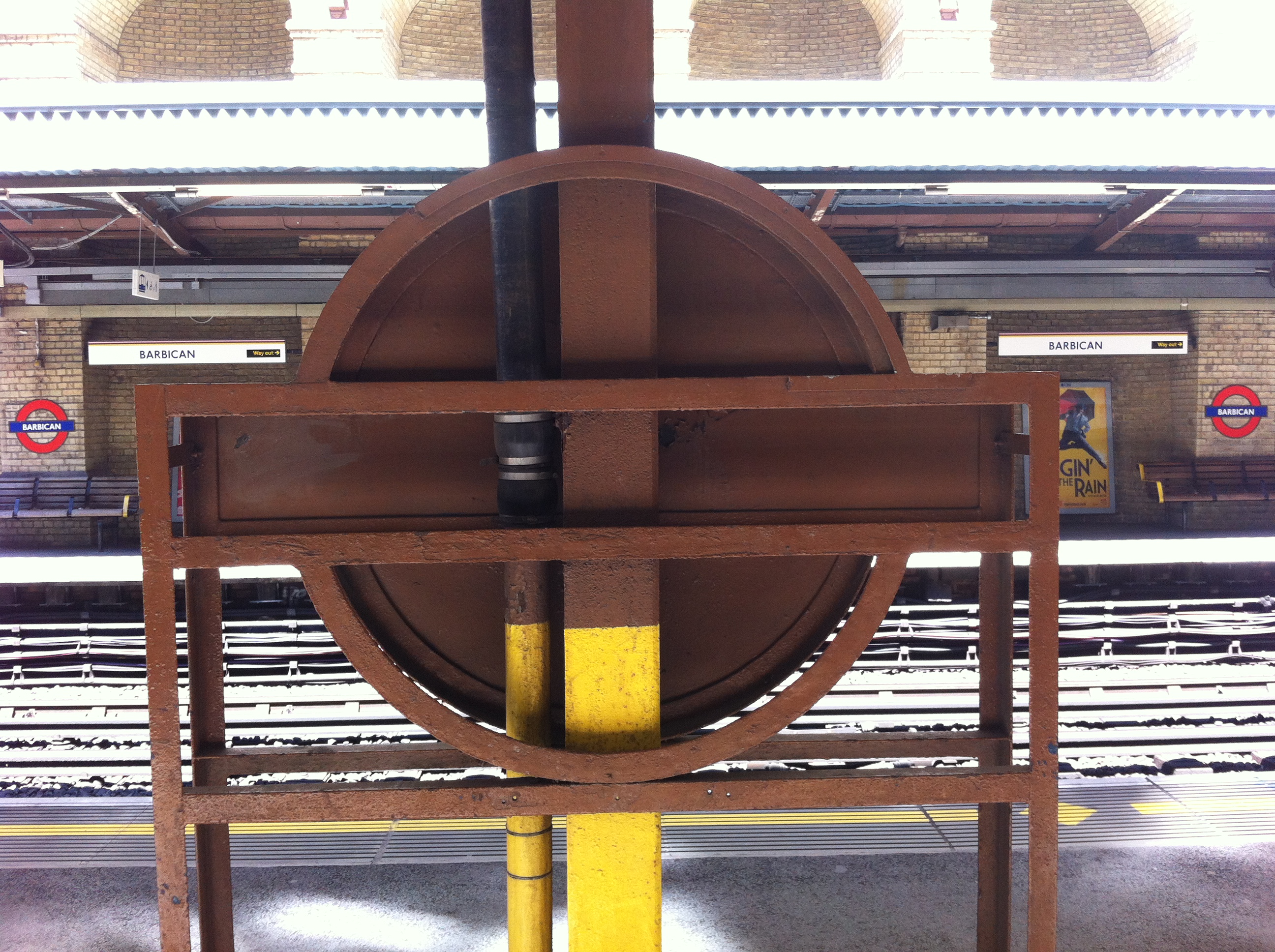
 Thameslink trains to Moorgate used to come this way. Now, nothing. The platform wall is still dutifully updated with the latest advertisements, should your gaze drift momentarily across the tracks. Some of the roundels could do with a bit of attention, though:
 I know some people think the “true” Underground is never open to the elements. I disagree. Barbican exposes the heart of the Underground in the heart of the London in heart-tugging style.
(Oh, and thanks Mark!)


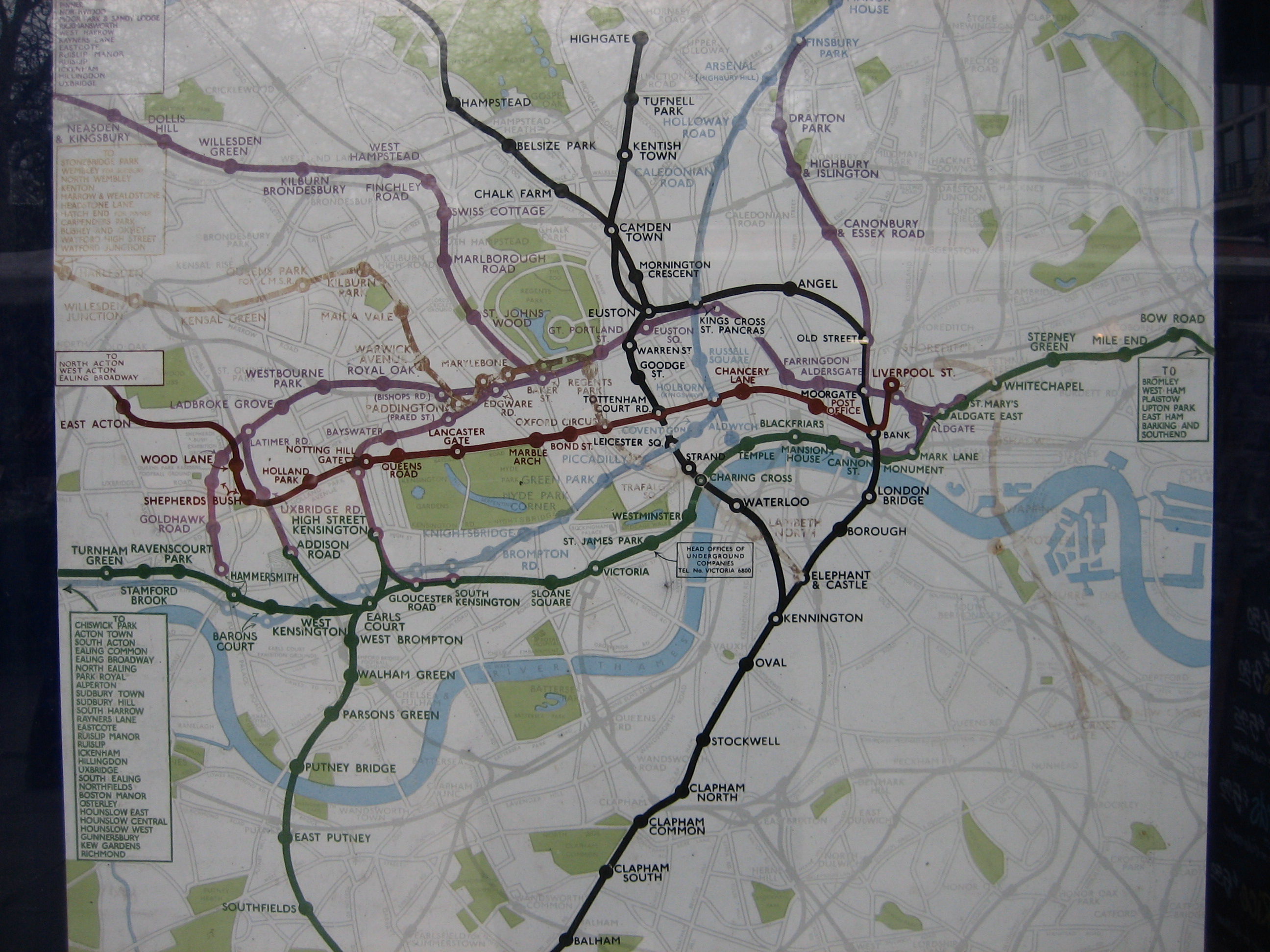
 150 great things about the Underground