Archive

District line

No, me neitherHere’s another of the Underground’s most striking features about which I know strikingly little.

Two of these large, stencilled signs frame the compact, pedestrianised forecourt of East Putney, and I believe their design is unique. I can’t think of anywhere else on the network that boasts these kinds of unorthodox yet stylish proclamations, which makes my lack of knowledge about their conception and history all the more embarrassing.

Still haven't a clueThe fact they are so atypical, and so completely beyond even the broadest of indulgences entertained by Transport for London’s in-house transport style tsars, just makes them all the more fascinating – besides inviting a clutch of teasing questions.

Were they put up perhaps as a consequence of a local YTS exercise? Or a maverick councillor, tired of design edicts from a metropolitan authority? Are they meant to be something else that went a little awry and had to be turned hastily into what we see today? Or are they porticos of the past, hailing from the station’s previous lifetimes, before British Rail sold the line to London Underground in 1994 for the choice sum of one pound sterling?

I’m sure the truth is rather more mundane, though any initiative that leads to the creation of something so artfully conspicuous can’t be entirely without flair.

Two of a kindI really like them.

But then you can show me any elevated, embossed post-war font, preferably outside a bit of public infrastructure, and I’m as happy as a sandboy.
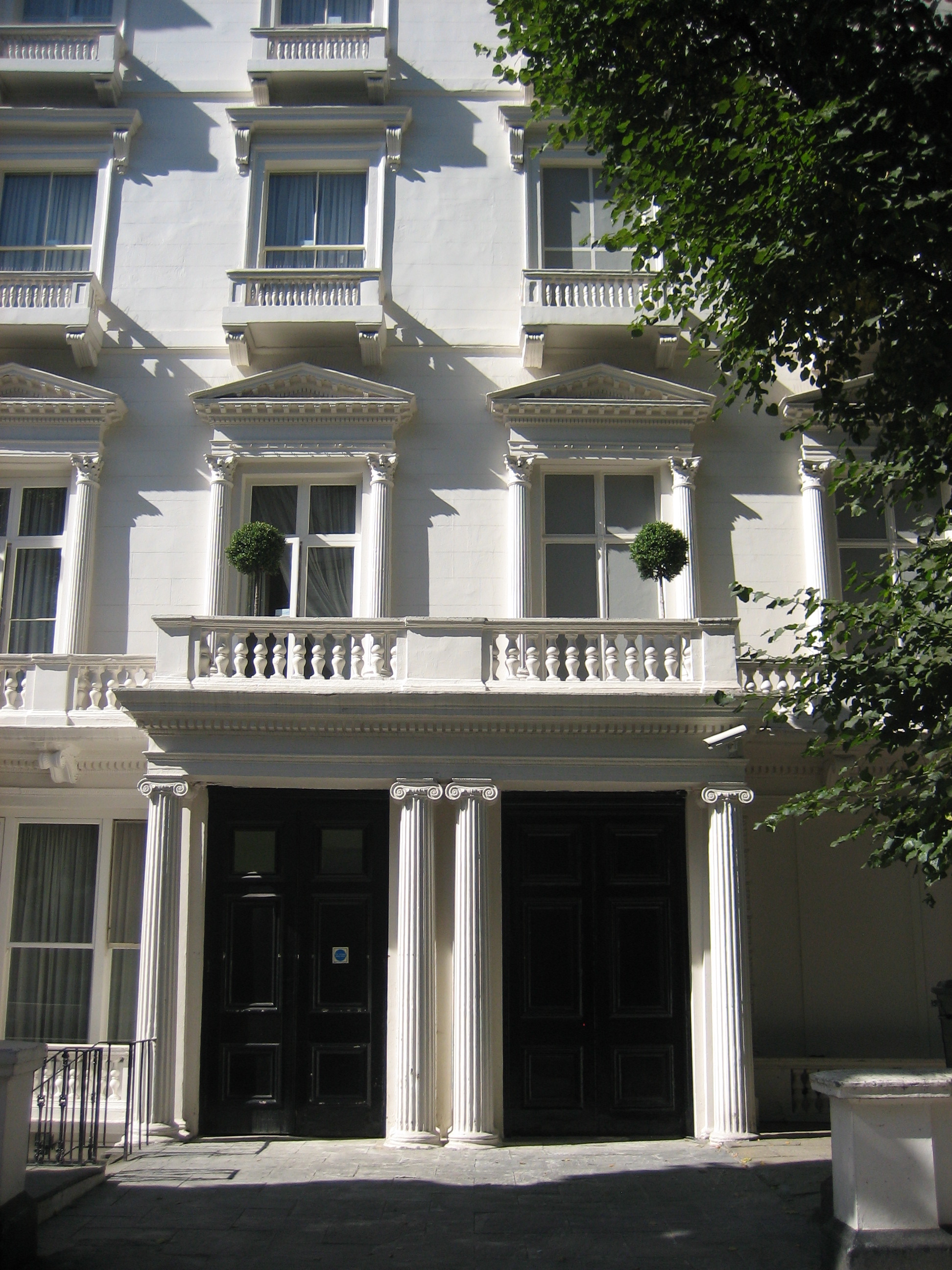
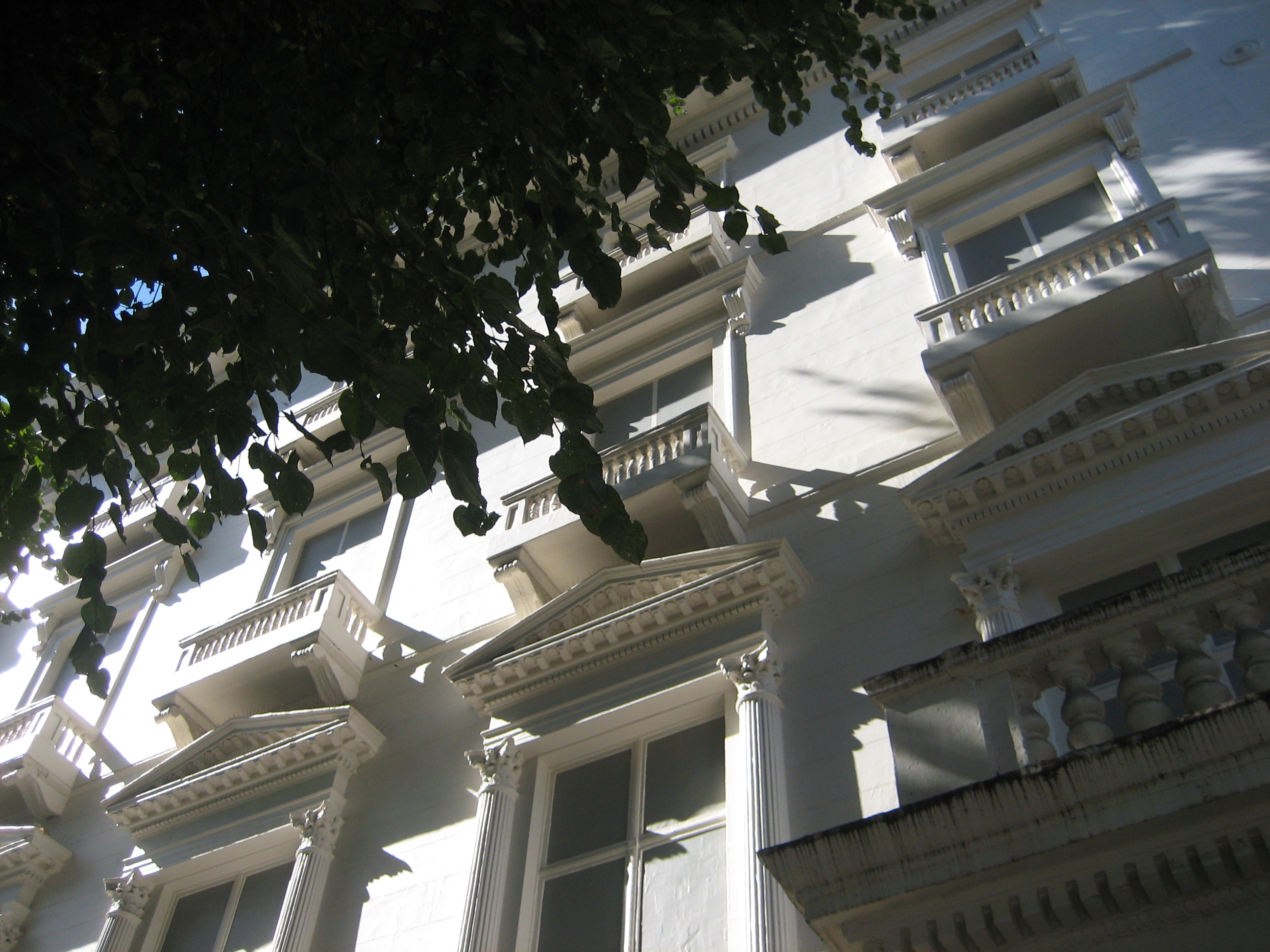
Everybody needs good neighboursTake a good look at the photo above. Does anything seem unusual about the house on the right, 23 Leinster Gardens, compared to the one on the left, number 22?

Something definitely looks a bit odd about the windows in number 23:

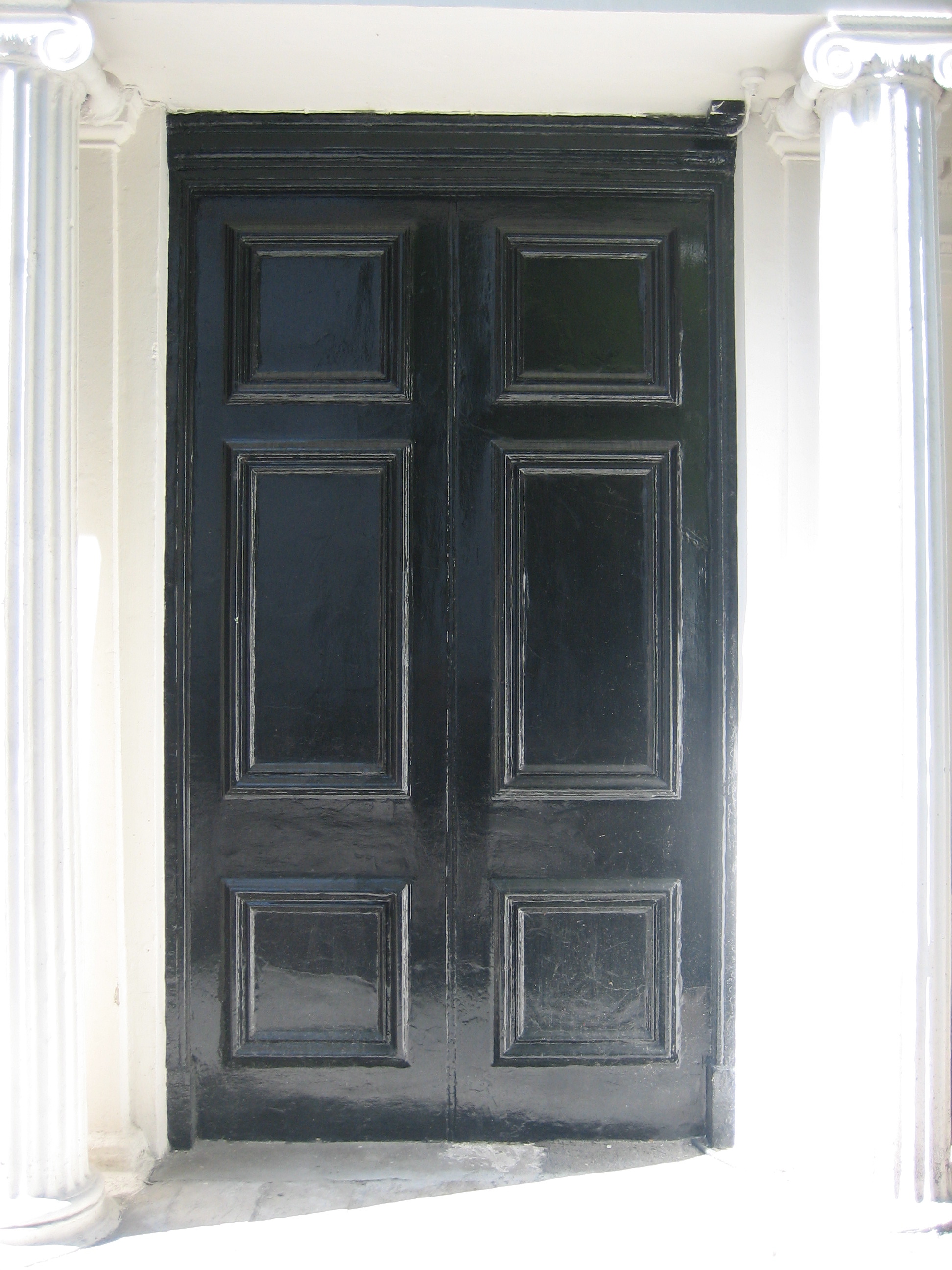
Fade to greyAnd the front door appears a bit suspect as well:

No-one departs, no-one arrivesThis isn’t like the door of 10 Downing Street, which can only be opened from the inside.

This is a door through which, to paraphrase Flanders and Swann, no-one departs and no-one arrives. For this door belongs to a house that does not exist.

Like Dolly Parton, Blackpool and extreme political organisations of both left and right, it is all front. And the reason is the London Underground – or, as it would have been pronounced when this elaborate facade was constructed, London’s Under-Ground.

The trains that first ran along the railway line that passes below Leinster Gardens were steam-powered. The locomotives needed somewhere to vent the fumes that built up inside the engines. But where to do this, in a neighbourhood jostling with upmarket residences for whom a large gap in the ground would appear both unsightly and undignified?

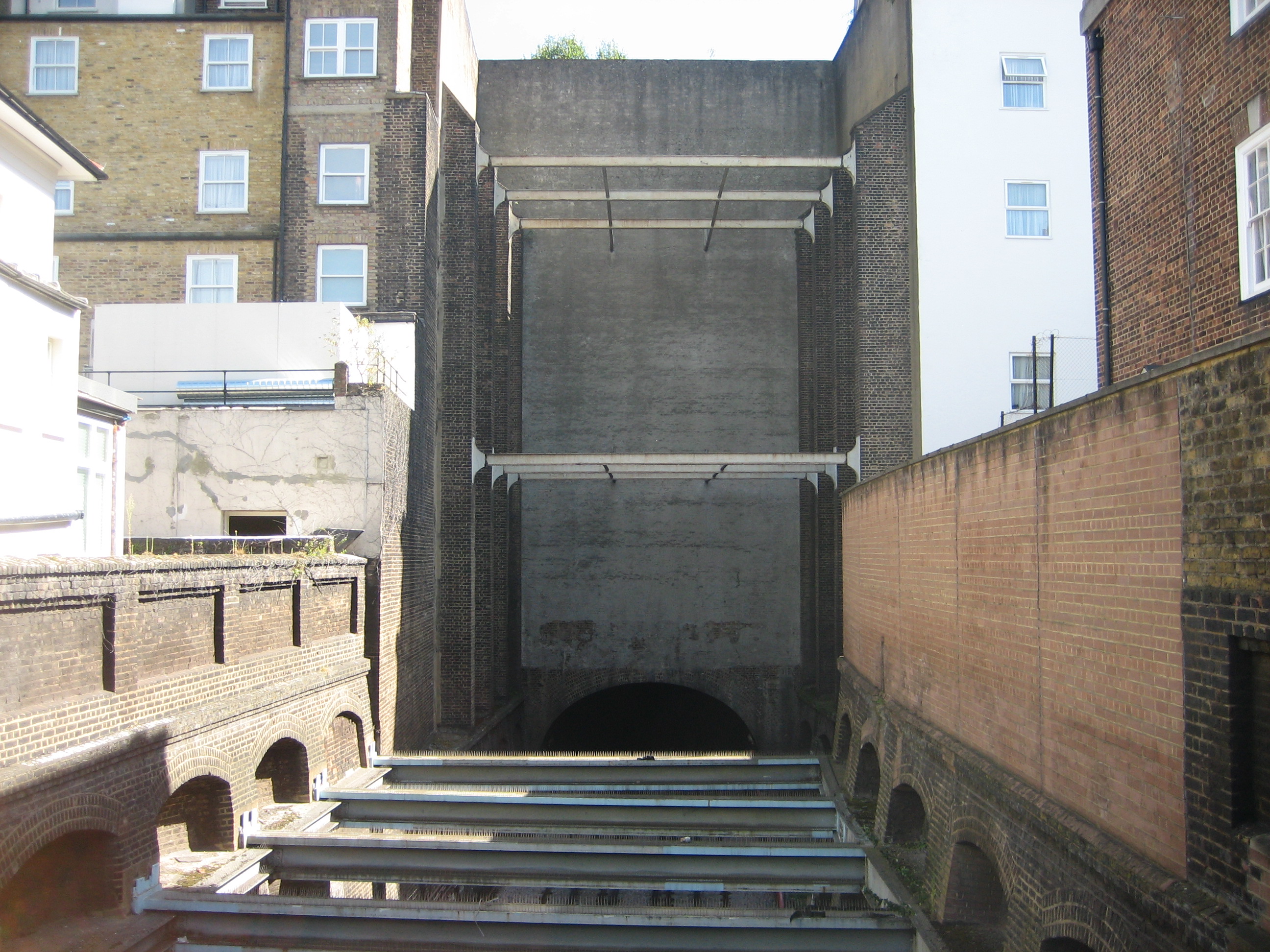
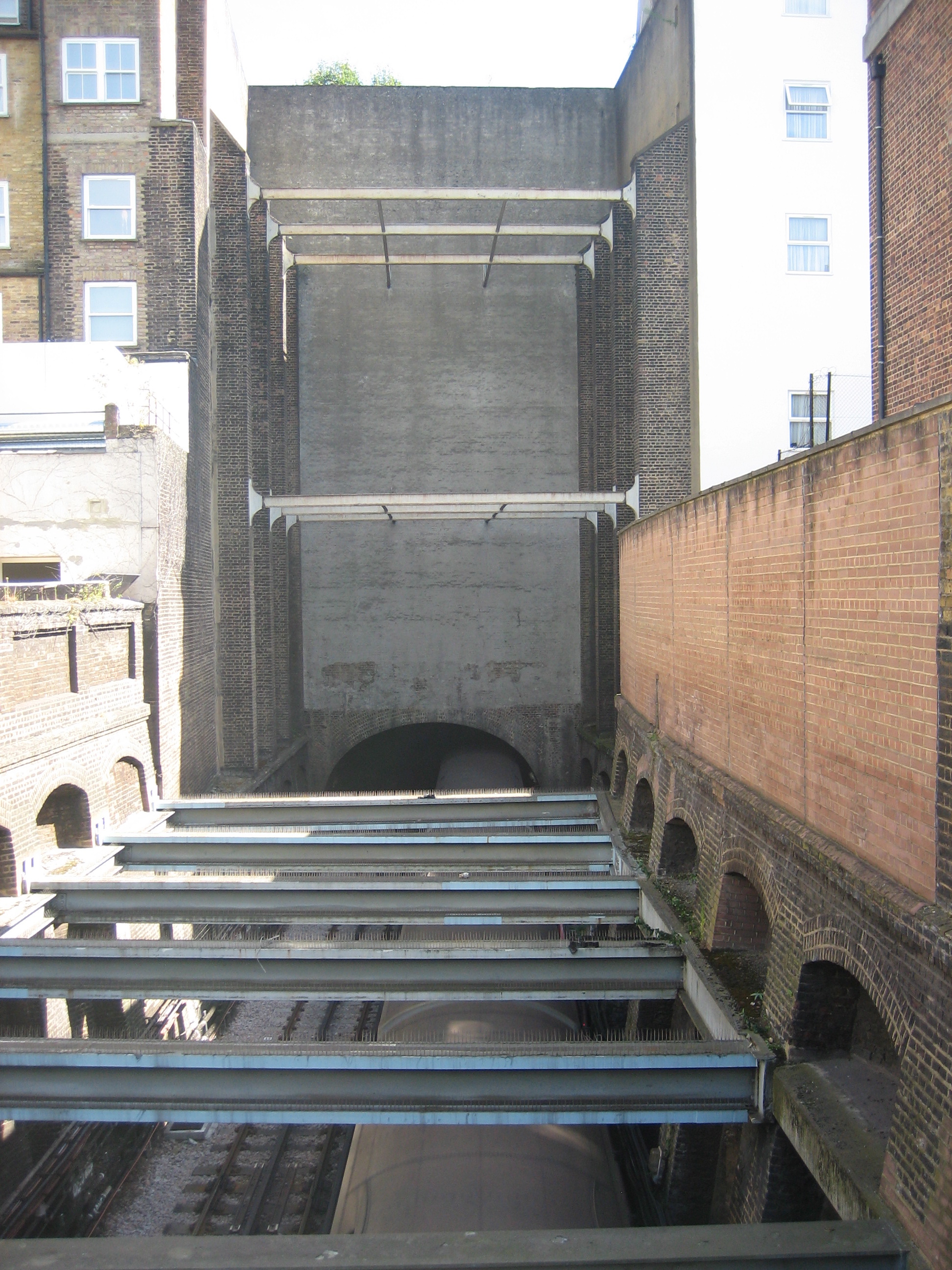
The answer, as with most tricks of the eye, can be found round the back:

Behind the scenesNumber 23 Leinster Gardens, and also its neighbour number 24, were erected as frontispieces, not houses.

Behind them, what once were steam-driven trains on the Metropolitan Railway, and which are now Circle and District line services, rumble directly below what otherwise would be dining rooms, pantries and sculleries:

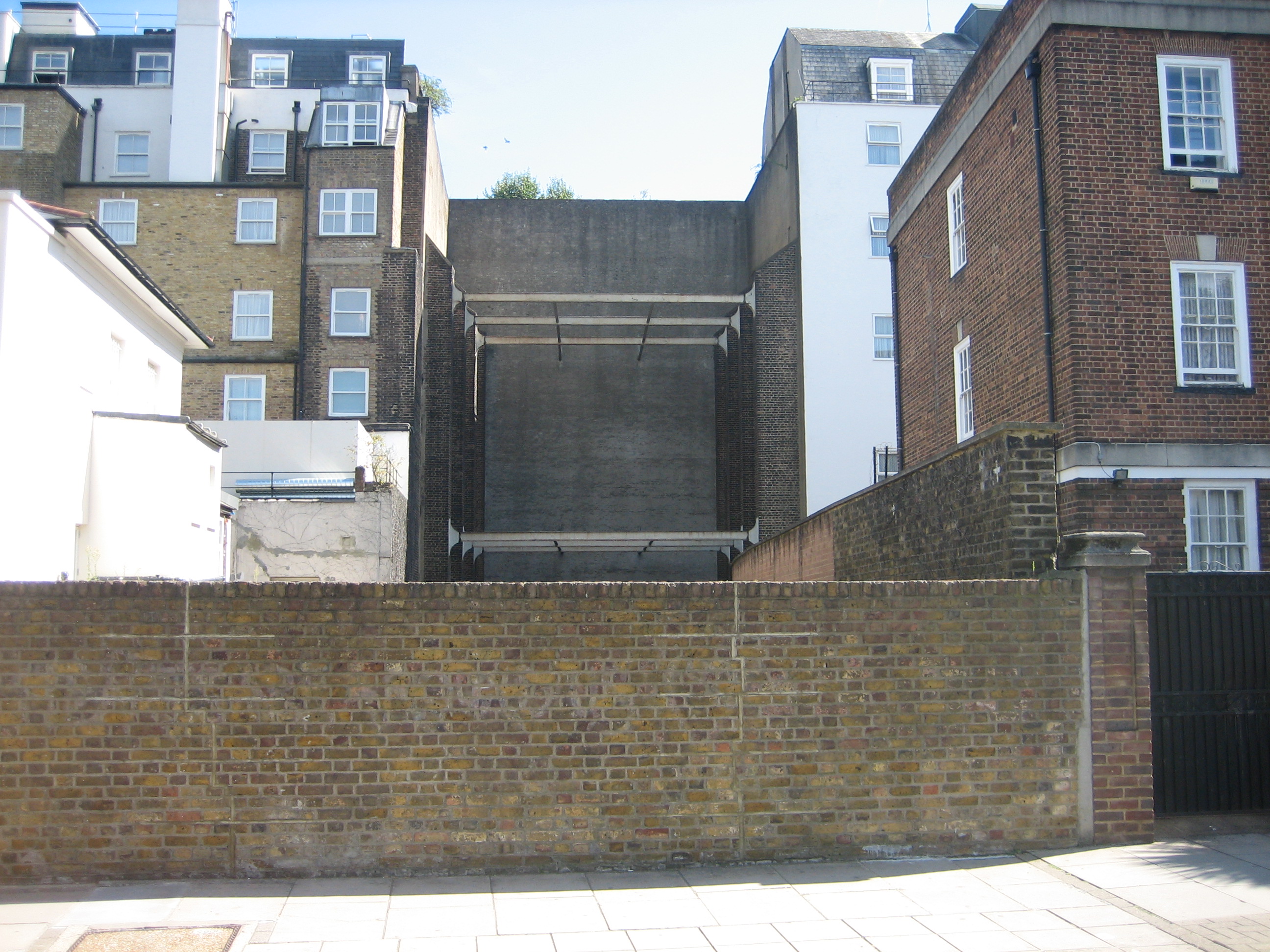
Seen but not seenIt’s a typically British compromise between the aspirational and the functional. What’s out of sight to the residents of and visitors to the expensive flats and hotels on Leinster Gardens can also be put out of mind, unless you happen to glance out of a back window. Which, back in the 1860s, nobody of “sound” upbringing would ever have thought of doing.

Meanwhile the exposed tracks are hidden from ground level by a brick wall. Only the mildly curious, and the obsessive chronicler, would think to peek above it.

Mind the gap:

Mind the gap

Arcade-iaThere are very few station entrances on the Underground through which you want not to walk, but to saunter, or even sashay.

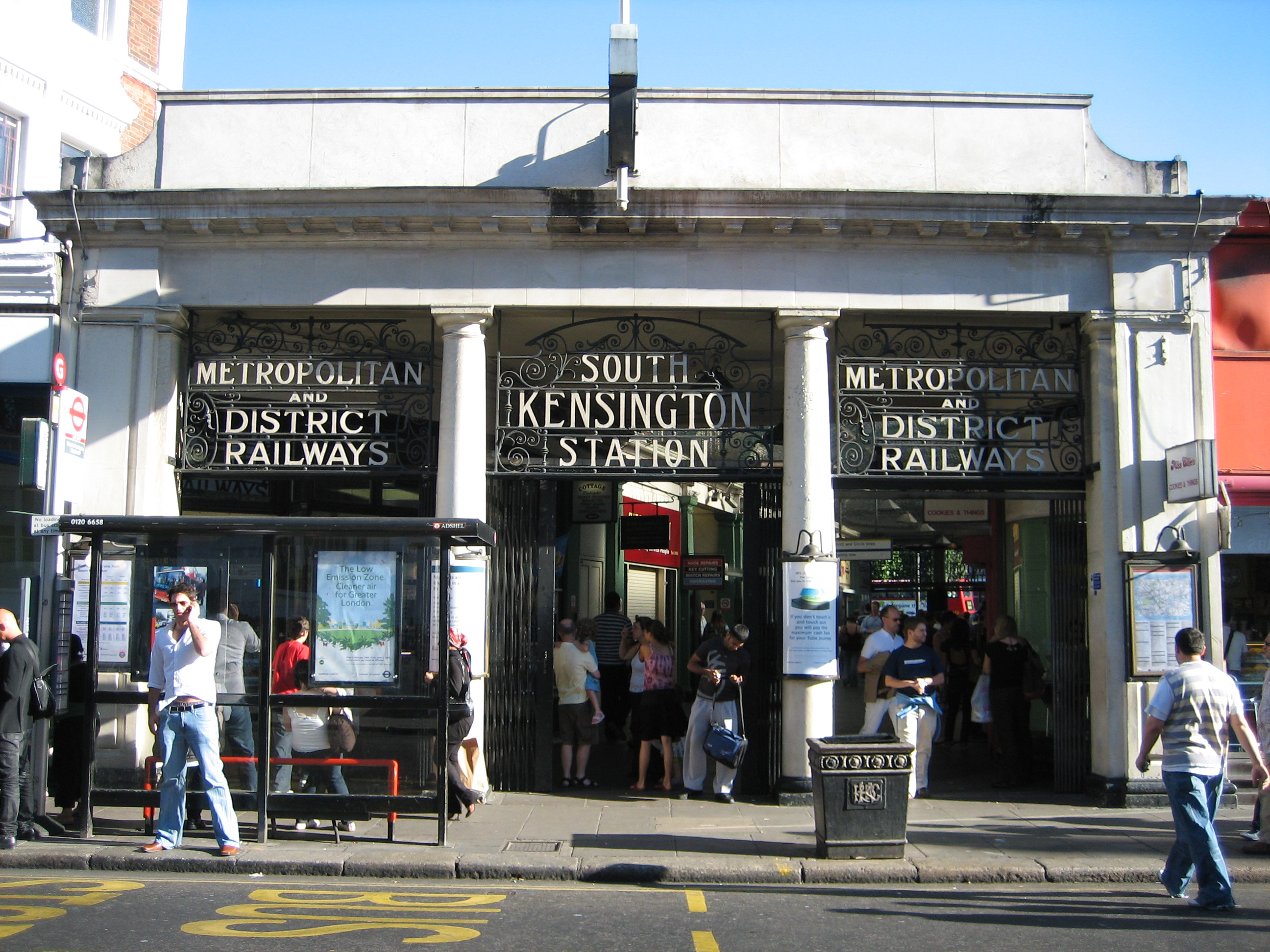
South Kensington has one of them:

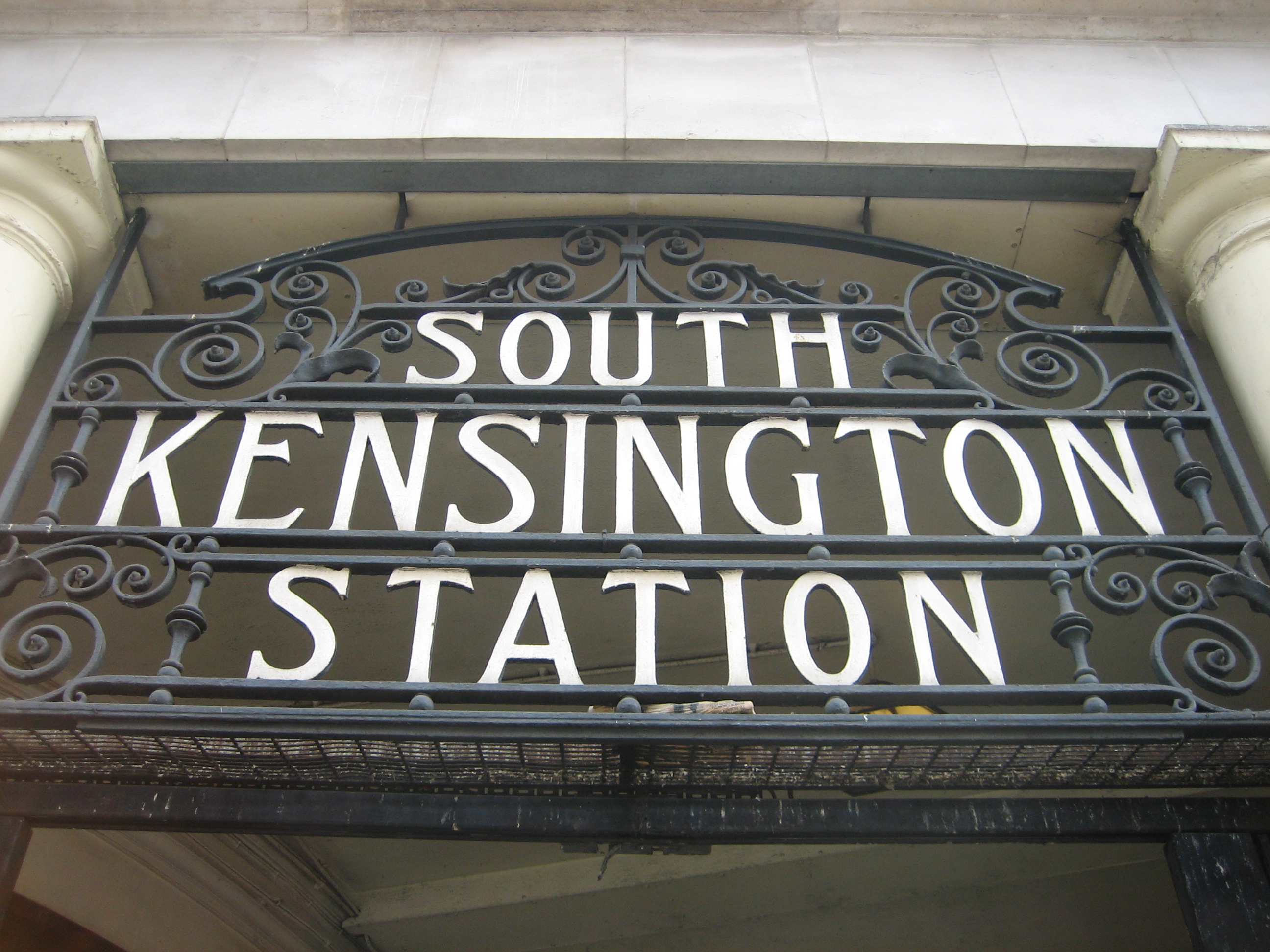
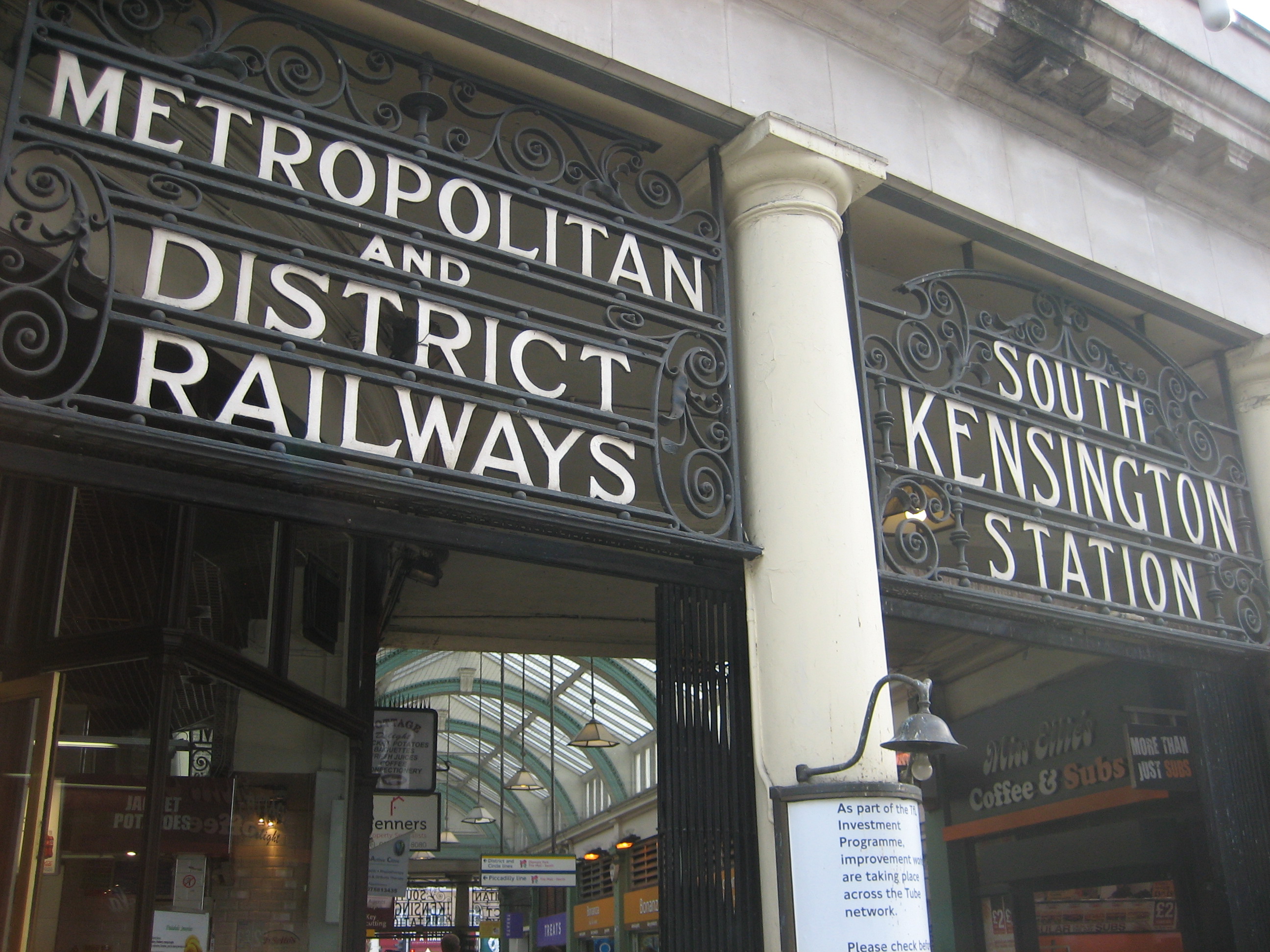
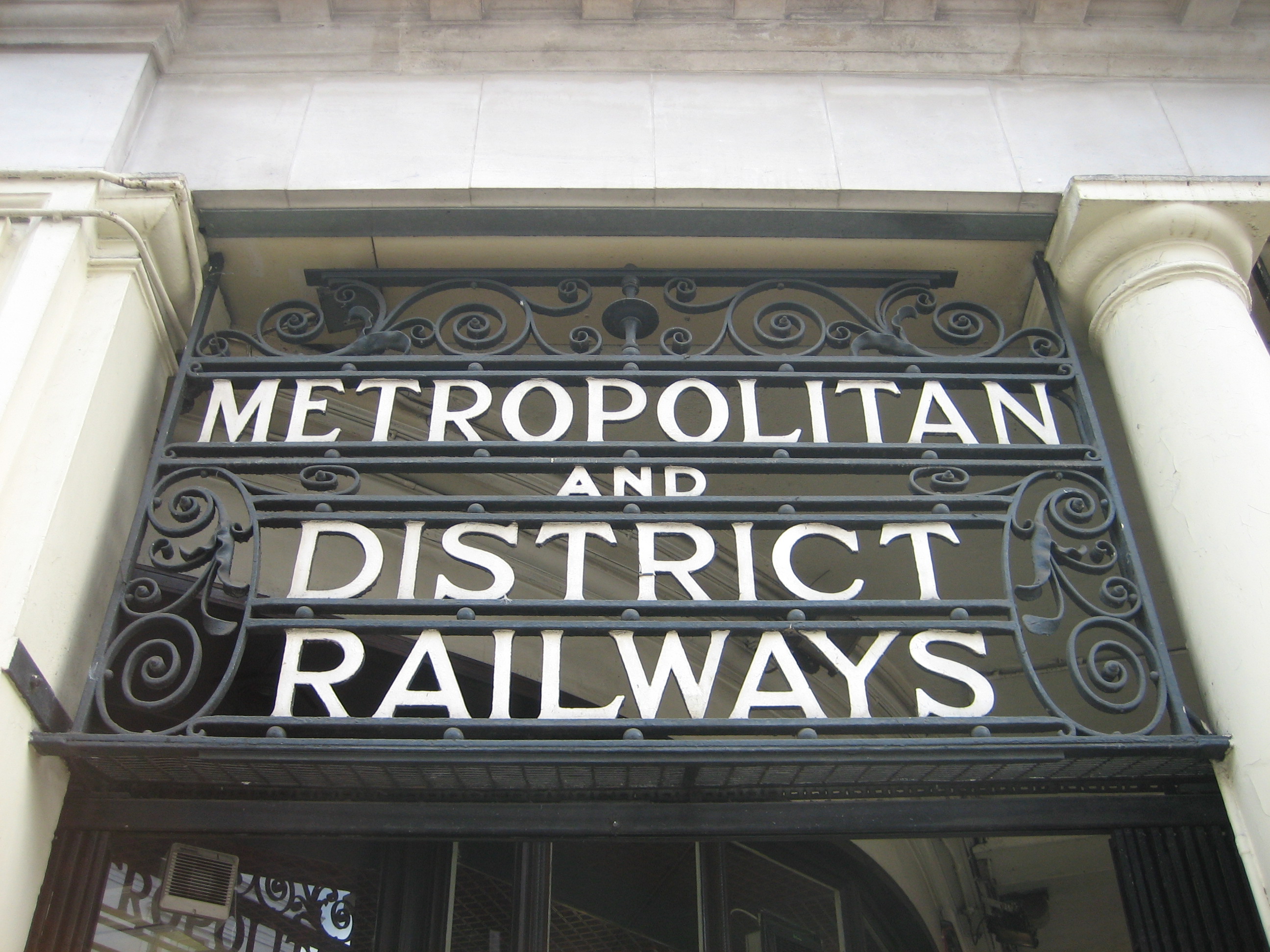
Sashay while the sun shinesEverything about this entrance, the layout, the lettering, the curve of the pillars, the curl of the brackets, screams – or rather sighs – breezy elegance.

This isn’t somewhere to slope or sidle. It’s a place to step jauntily, or to mooch enigmatically, or even to promenade wistfully.

Given its proximity to the Royal Albert Hall, the last of these traits seems particularly fitting.

Mooch this wayIf all of this seems rather fanciful, then that’s because the arcade that garnishes South Kensington like ribbons on a teacosy is itself fanciful.

It is shamelessly Victorian in both pretence and purpose. It is anti-modern, in that it tries to mask rather than celebrate the real purpose of its existence. Thanks to the arcade, the Underground at South Kensington can feel a bit like an undignified sideshow: the equivalent of someone coughing during the performance of a light opera.

It’s a delight in spite of rather than because of its role as part of a public transport utility, and that makes it rather an anachronism on this blog. I don’t think, however, that such a distinction diminishes its status as a great thing about the Underground. On the contrary, it sparkles with a personality that is simply different from, not necessarily inferior to, the parade of stylistic icons that march up the Piccadilly and Jubilee lines.

Plus it also looks gorgeous in the sunshine. Fancy a stroll?

D'ya Ken, John Peel?