 It was only a matter of time before 55 Broadway, administrative headquarters of London’s Underground since the 1930s, cleared its throat on this blog.
But I hadn’t expected it to do so as a wall tile on a platform at Aldgate East. And a pretty impressive one at that, nicely capturing the building’s mix of enduring majesty and shameless self-importance.
The tile is one of a number of designs embedded sporadically, almost whimsically, along the side of both platform walls. They lure your gaze away from the all the familiar apparatus of an Underground station and occupy you with something new, something unexpected, something… a little baffling:
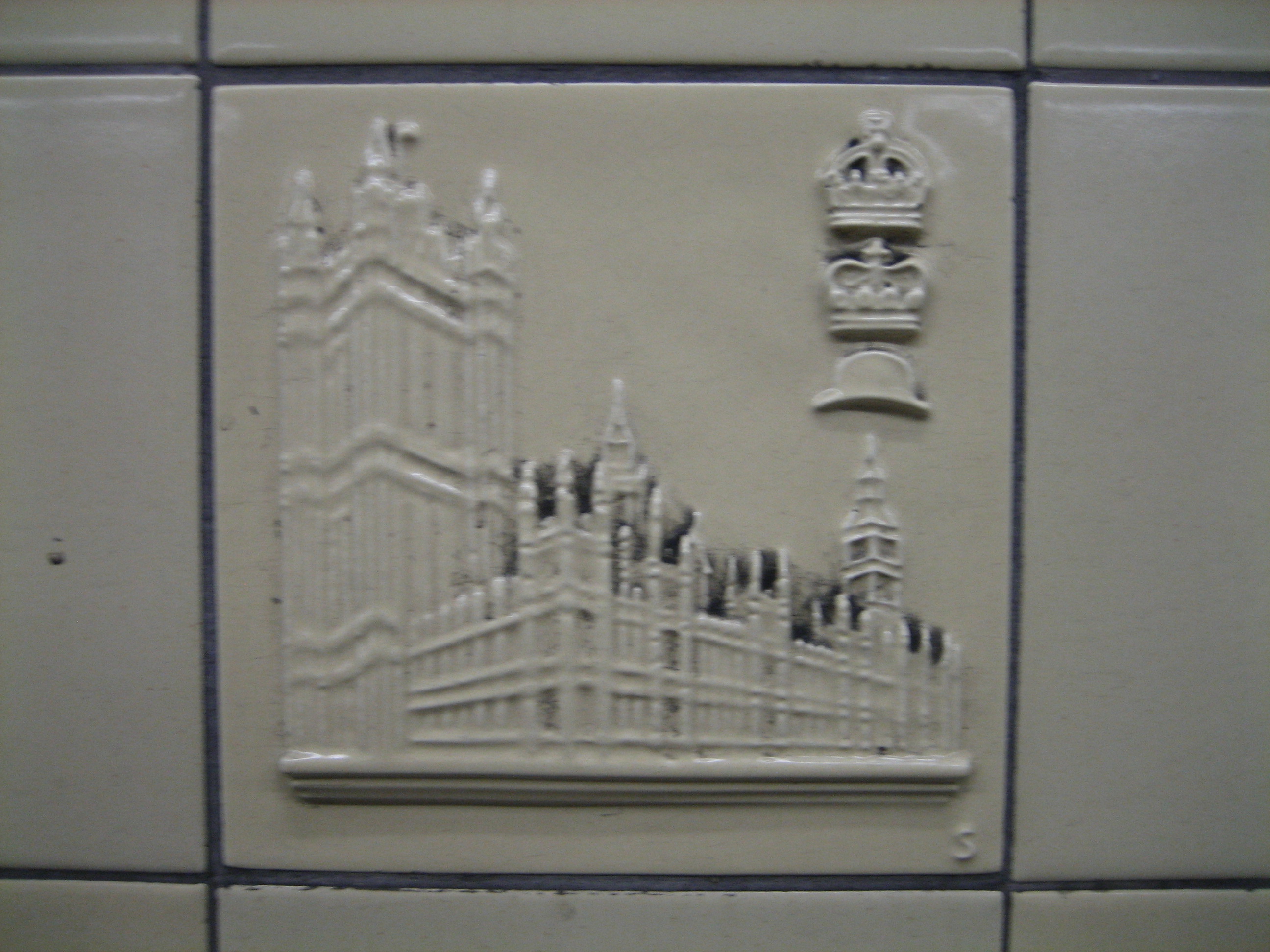
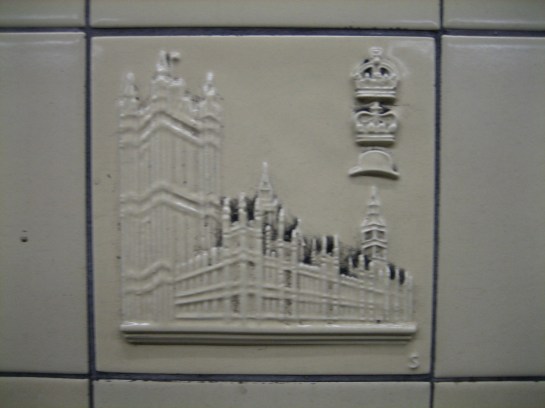 OK, so that’s the Houses of Parliament, and that’s a crown, and that’s another crown, and that’s… a bowler hat?
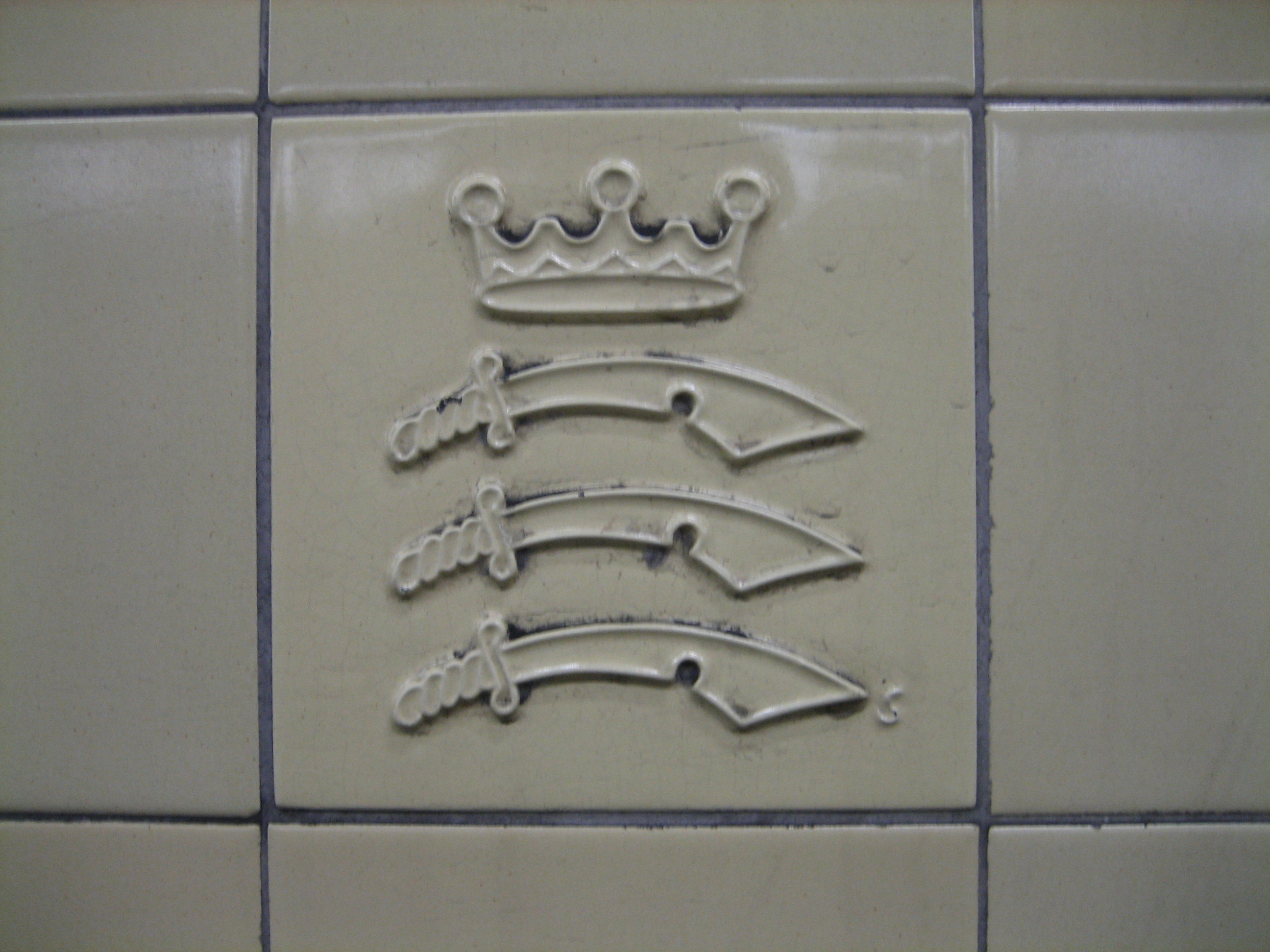
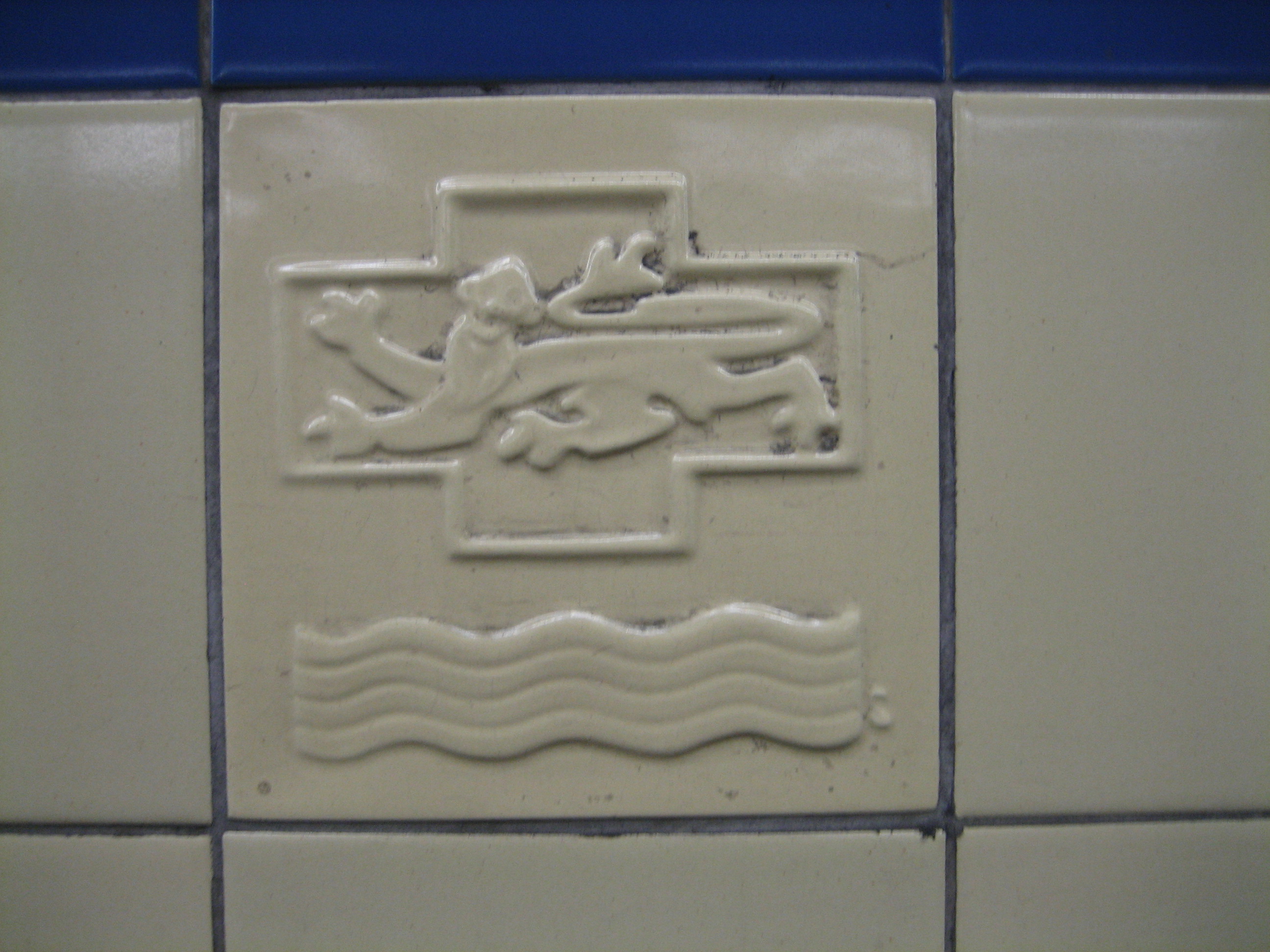
And while this looks like a coat of arms, perhaps belonging to one of the counties through which the Underground passes…
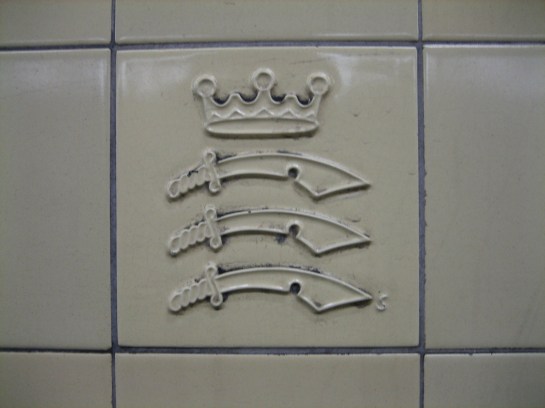 …heaven only knows what this is:
 It’s a bit like the sort of half-arsed monster that frequented Peter Davison-era Doctor Who episodes, but sporting a face that looks like a character from Once Upon A Time… Man.
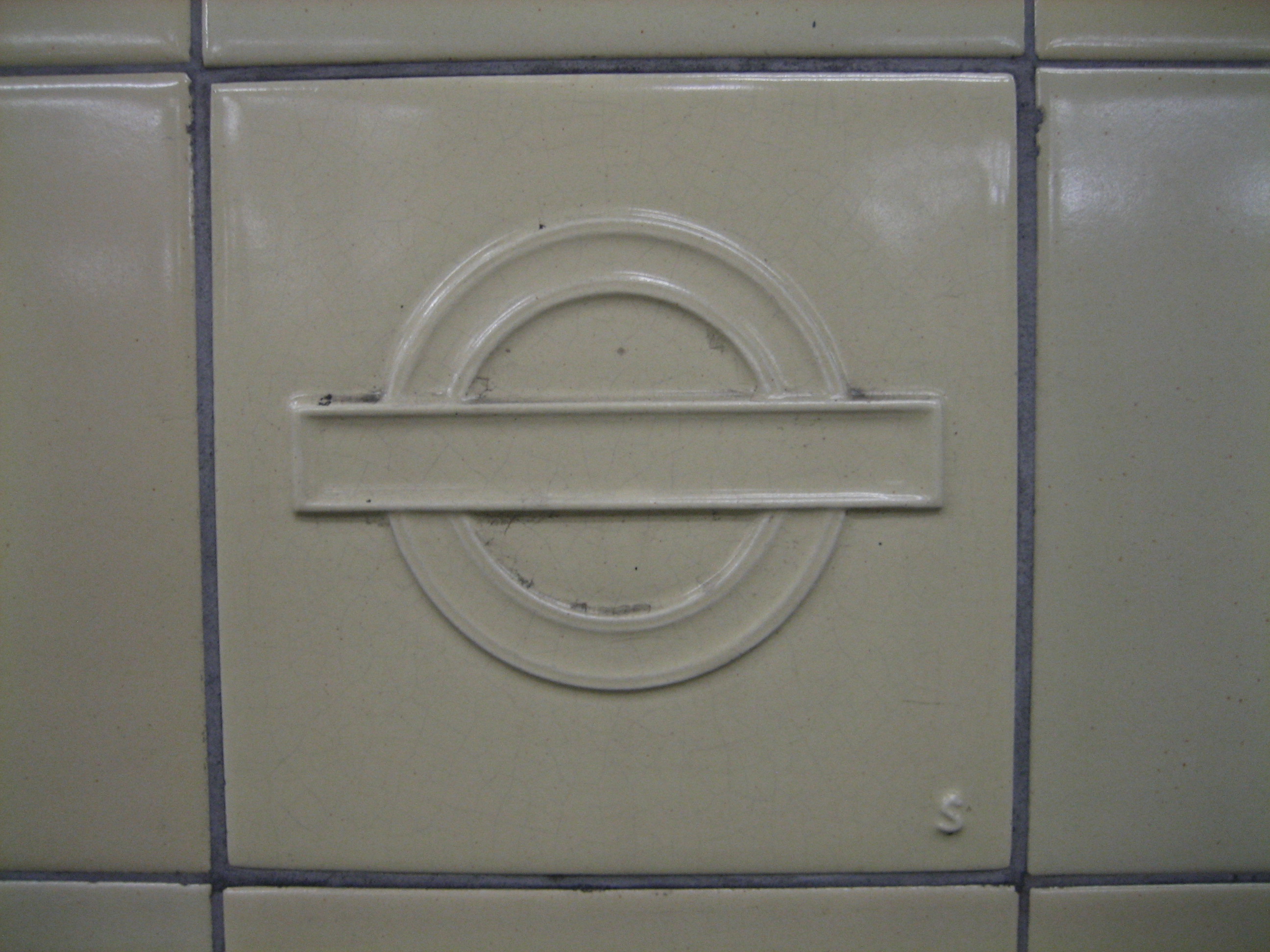
I think we’re on safer ground with this one:
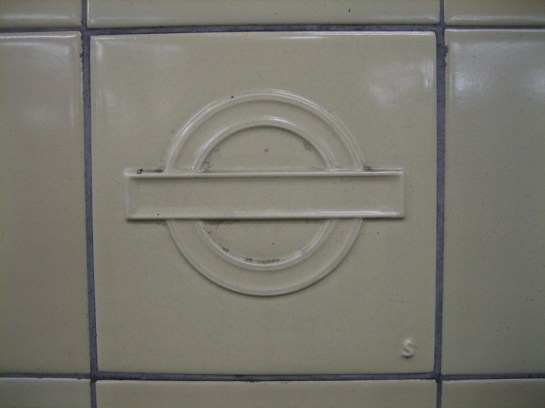 The S stands for Stabler – Harold Stabler, the designer who worked on the remodelling of Aldgate East station in the 1930s, and who helped established and popularise the influential ceramics company Poole Pottery.
Stabler’s tiles are charming little bulletins of whimsy from a time when art could be both stylish and fun. They elevate a rather humdrum station into something teasingly special. They’re also the smallest things – so far – to merit an entry on this blog all to themselves.
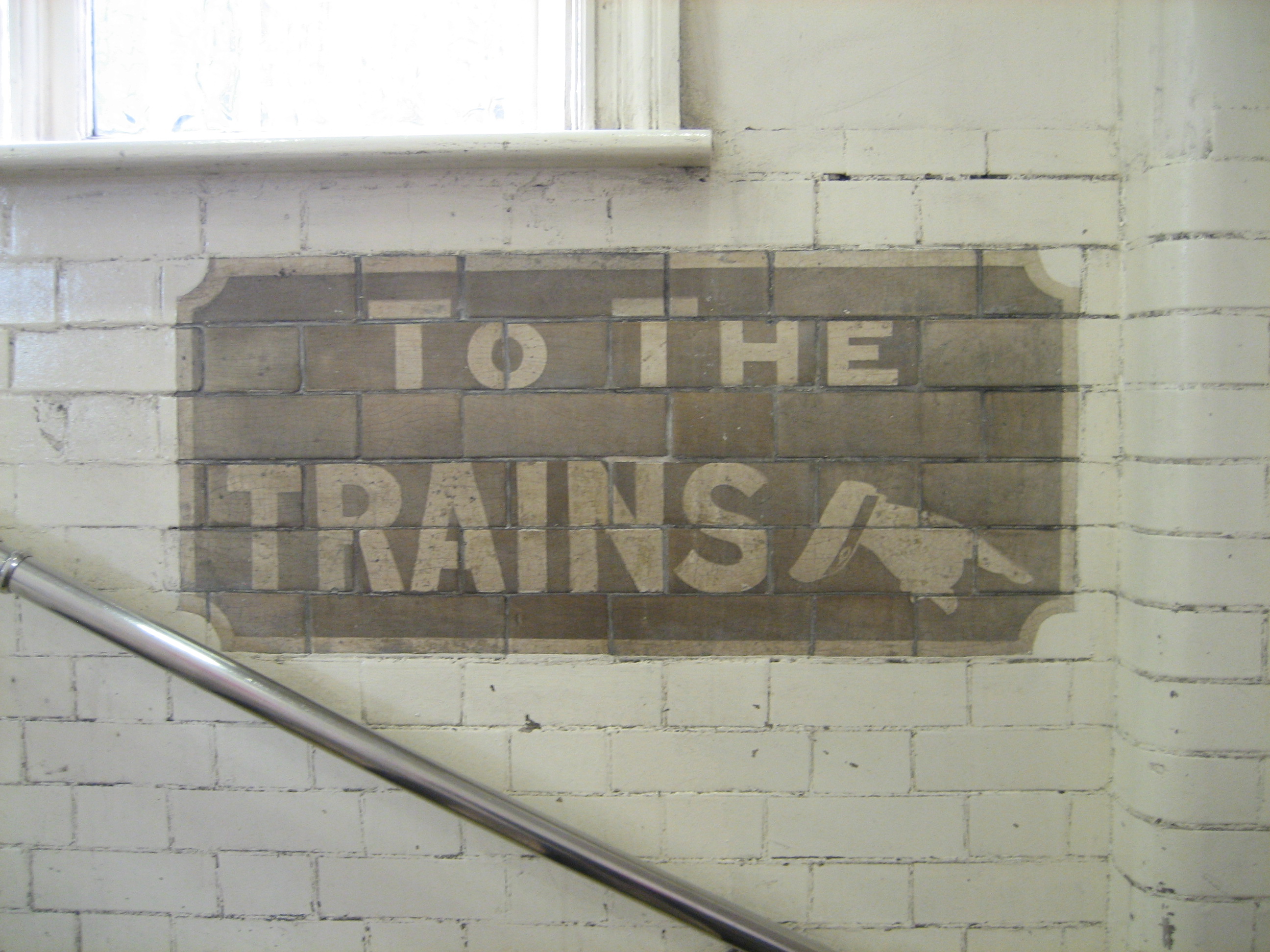
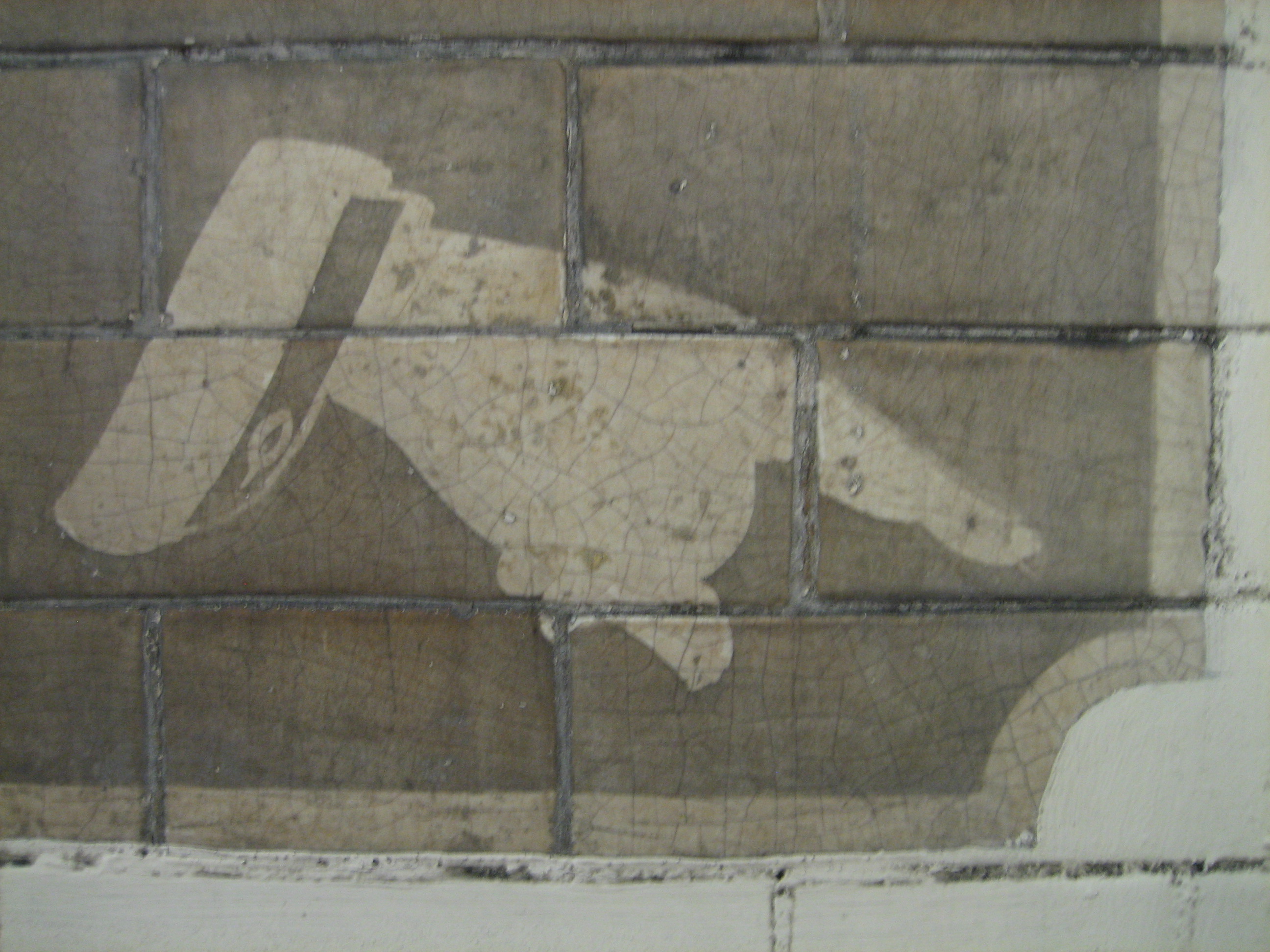 Stepney Green station opened in 1902, and while the booking hall still boasts many of its original fixtures and fittings, for me the best spot in the whole building is – as with so many locations in life – halfway down the stairs.
 London’s Underground: it isn’t really anywhere, it’s somewhere else instead.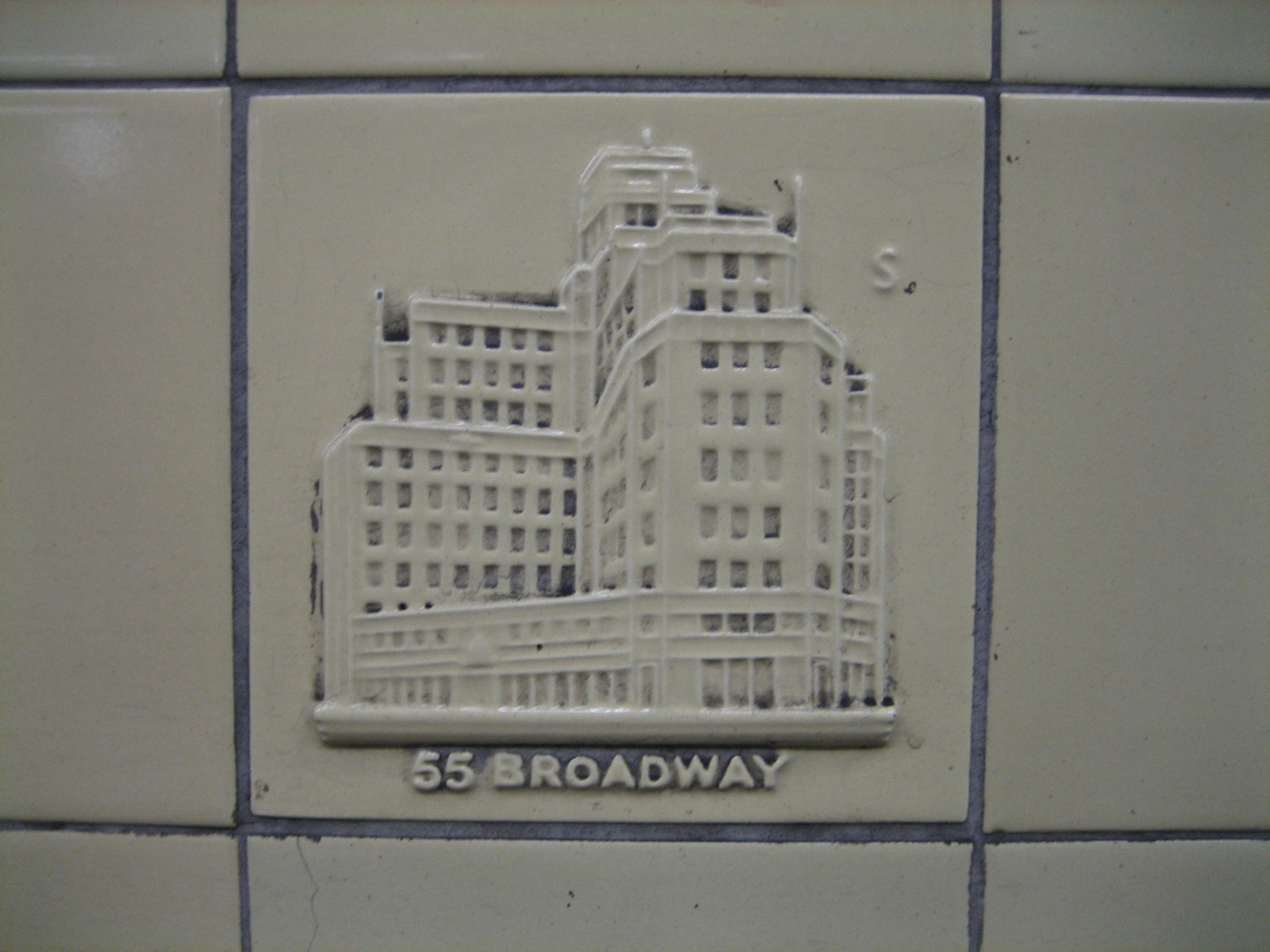

 150 great things about the Underground