 Subject of one of the saddest songs ever written about the Underground, Tooting Broadway station is a location ripe for emotional statements. So here’s one. It is a thrillingly modernist smear across an otherwise unremarkable palette of suburban London. Judge it by colour, shape, size or purpose, it’s everything the surrounding area is not.
The building, completed in 1926, is bold and stylish, blessed with both grand gestures and subtle delights. In the former category belongs the enormous curved facade, built like so many of Charles Holden’s creations out of his beloved concrete, and looking dapper in its neatly-lined, nicely-hued finery:
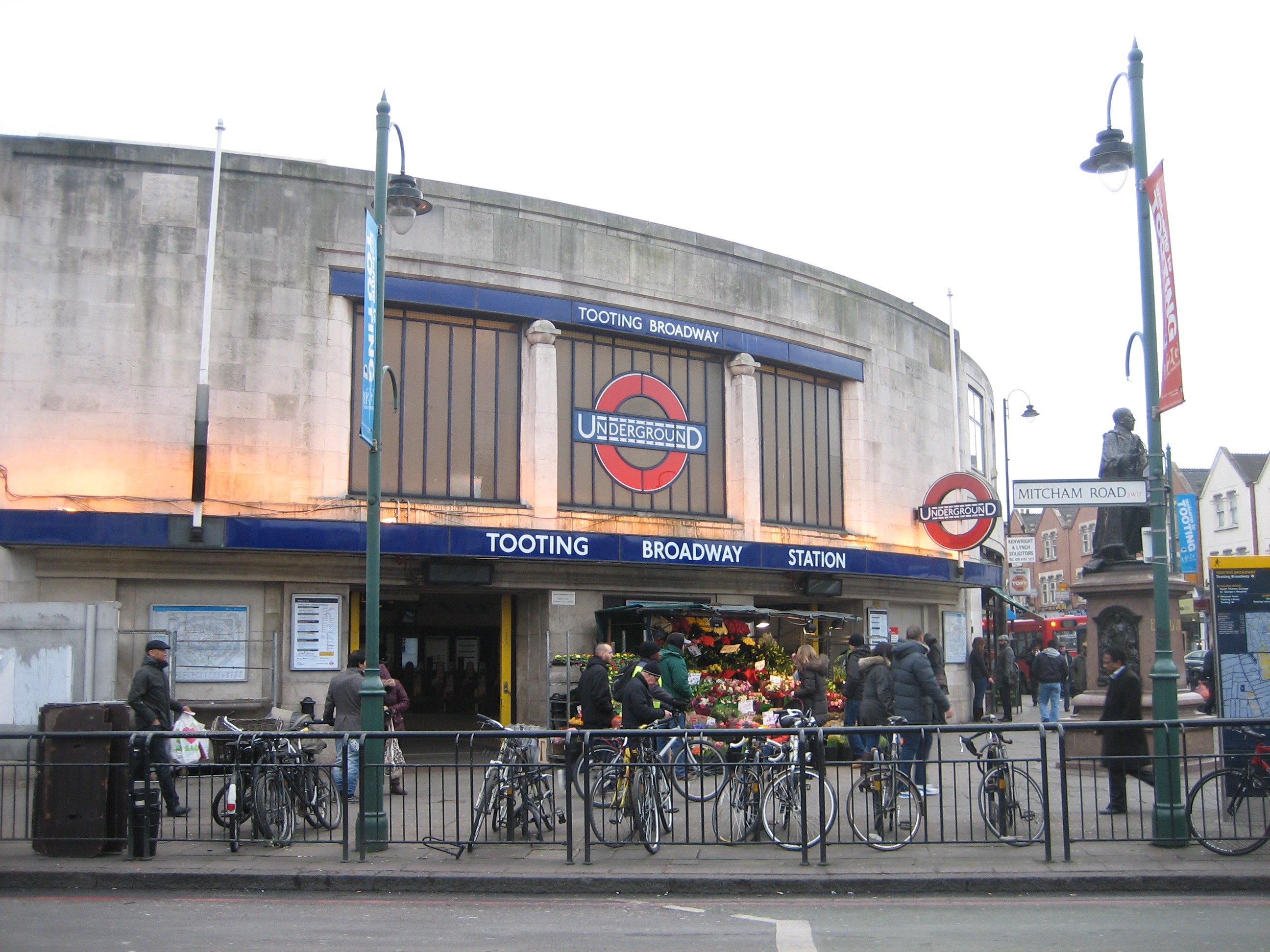 In the other category sit the illuminations that usefully pick out some of the building’s features during the day, but really come into their own at night, when the place turns the charm up even further and poses as a beautiful glittering palace. Yes, the lights are always bright on Broadway.
 A member of the German royal family stands guard by the entrance. He turned up a good 15 years before the station did, having just had his nine years interloping on the British throne curtailed through death. You might remember him from such titles as First Emperor of India and the Man Who Brought You The Edwardian Era:
 I’m uneasy about royals having anything to do with the Underground. The two institutions are mutually exclusive. One values splendid isolation; the other, glorious diversity. Whenever a royal is shoved on to the Underground for some official opening or other, they look desperately discomfited or unhappy. The same goes for all the commoners playing host. Better to keep these two worlds well apart.
I know the statue predates the Northern line’s arrival, but I’m far more comfortable associating Tooting Broadway with Patrick Fitzgerald‘s “John of Arc” than Edward VII.
(PS: Here’s a fine, five-minute snapshot of a day in the life of the station, minus all weeping/sleeping songwriters.)


 150 great things about the Underground