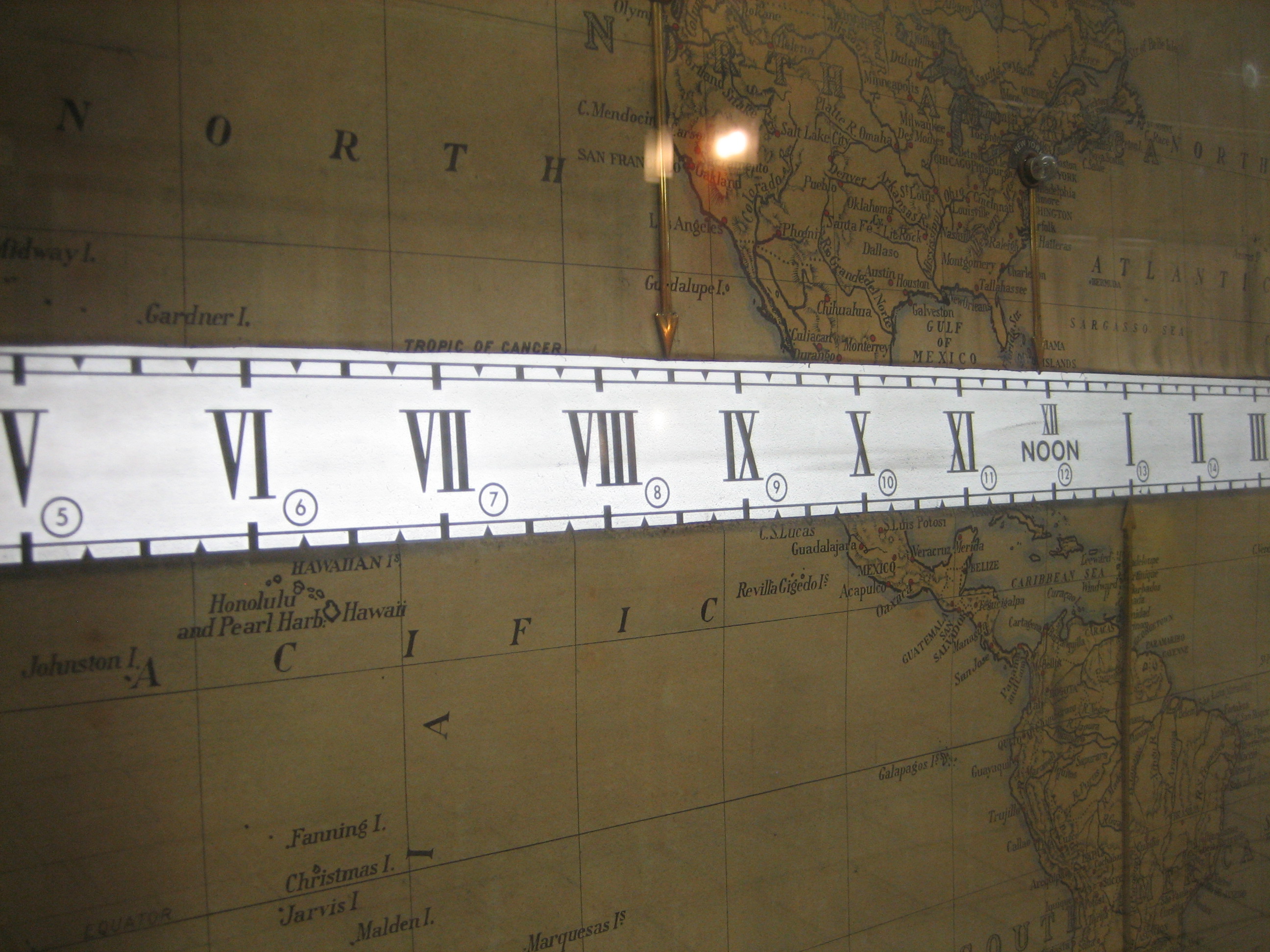
 It was the middle of the rush hour when I took this picture, yet the crowds of people passing around me didn’t give this object the time of day.
Which was a pity, as it was doing the very same back at them, and with considerably more style.
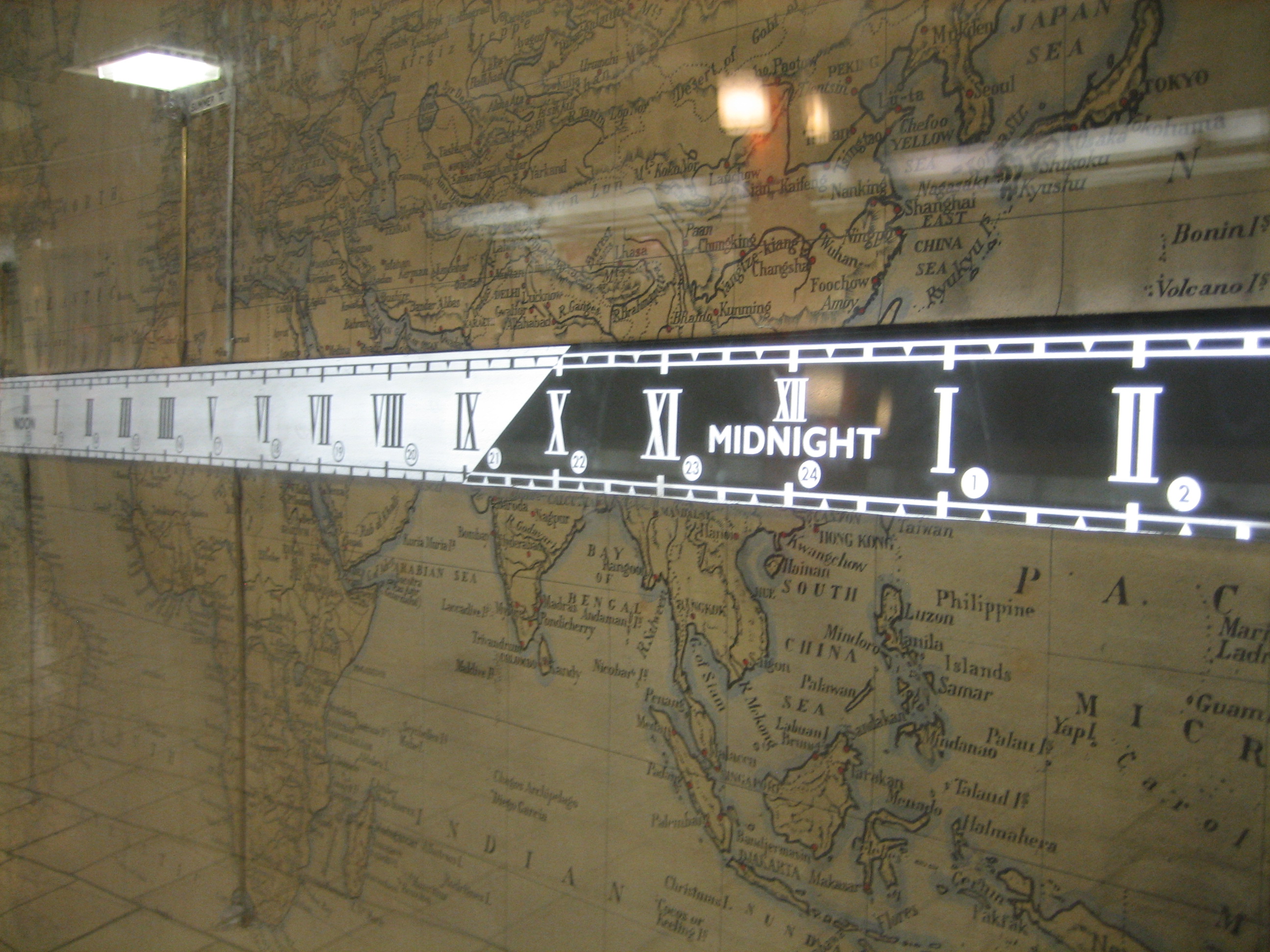
 The linear clock at Piccadilly Circus is an overlooked gem. It sits snugly within the inner wall of the station’s circular entrance hall at almost the furthest point possible from the main escalators, so perhaps its failure to grab attention isn’t that surprising.
But even the people who were brushing against it barely cast it a tiny glance. Perhaps they’d seen it before, twice daily, as regular as, ooh, clockwork. Or perhaps they just didn’t have – I should stop this – enough time.
Still, their unwillingness to pause and stare did afford me an almost clear shot of the installation, save for one gentleman who, having seen what I was up to, made a point of remaining stubbornly motionless, my fierce glares bouncing off him like platitudinous ping-pong balls.
 The clock dates from the station’s redesign in the late 1920s. The central strip scrolls imperceptibly across the map of the world at the same speed as the planet’s rotation. As such it is possible to see, roughly, what the time is anywhere around the globe at any point of the day or night. Wonderfully simple and simply wonderful.
Responsibility for such a suavely elegant and restful timepiece lies with architect Charles Holden and builder John Mowlem and Co, who collaborated on the whole of the station.
Piccadilly Circus entrance hall can feel a bit like a spinning top at its busiest moments, with passengers whirling in, up, round, down and out. You have to fight against the flow of people to even stand still. No wonder the clock doesn’t get much of an audience.
Its time in the sun was probably in its infancy, when people strolled rather than stormed around the station. But fortunately, even if nobody is looking, somewhere the sun is always shining for this antique watchman, and hopefully always will.


 150 great things about the Underground