 We’ve conditioned ourselves to ignore most of what lines the platform walls of the Underground, largely because most of it is worth ignoring.
Promotions for someone’s new DVD; promotions for a “laugh-out-loud” comedy or “feelgood hit of the year” that boasts quotes only from reviews in the Daily Star; promotions for novels that begin with the phrase: “You’ve read Fifty Shades of Grey…”; promotions for anything to do with Peter Kay…
These are all, quite rightly, things we have taught ourselves to filter and reject from our list of subconscious concerns. We look at them but we don’t see them. We’ve other things to concentrate on – not least, making sure it doesn’t look like we’re concentrating on any passengers standing nearby.
Three station platforms at the northern end of the Piccadilly line buck this trend by offering up things to which attention is worth paying. But chances are most people don’t see them. And why should they?
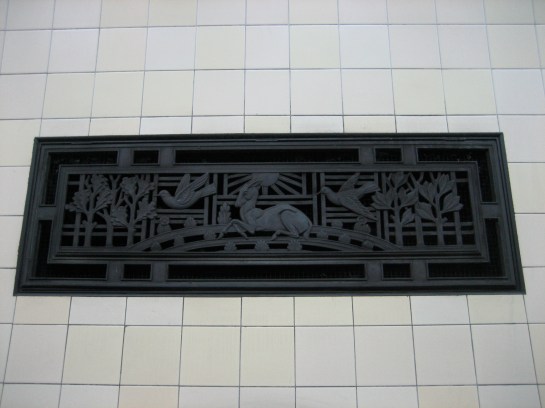
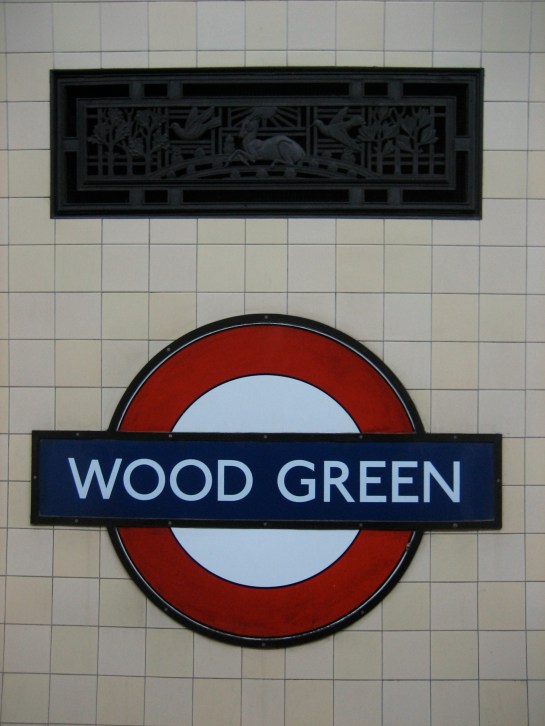 These ventilation grilles are originals: installed when the stations were built in the early 1930s, and designed by Harold Stabler whose charming if sometimes idiosyncratic work I’ve encountered elsewhere.
They can be found at Wood Green, Turnpike Lane and Manor House. Each one depicts a brazenly romanticised panorama of the neighbourhood. You can forgive the shamelessness, however, because of the wonderful attention to detail and – dammit! – their reassuring parochialism.
The grille at Wood Green appears to show two birds and a deer frolicking on the titular parkland. Trees, plants, even the sun’s rays are all neatly aligned and symmetrical. If only life were really like that.
Next comes Turnpike Lane:
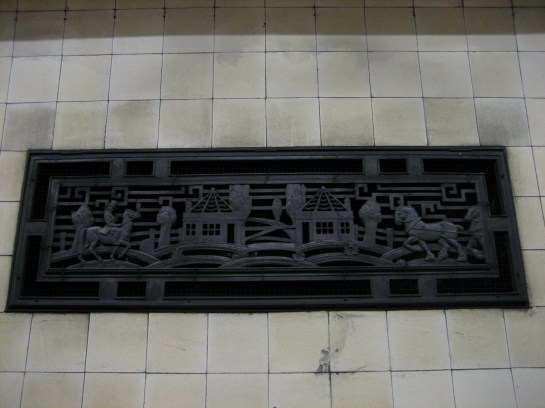 Here it looks like a brigand of courtly gentlefolk are about to engage in some business, possibly – judging by the rider’s deportment and dapper outfit – of a mercantile kind. Or maybe they’ve just come for a fight. Whoever is arriving from the right, however, has already got the upper hand by virtue of showing up with TWO horses not one.
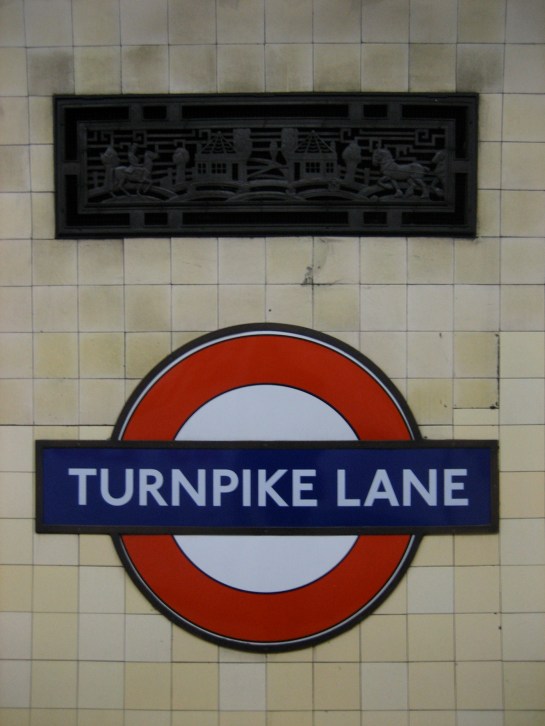 These particular grilles aren’t really helped by sitting within such shabby-looking walls. Someone needs to attend to those tiles with a cloth.
Finally we have Manor House:
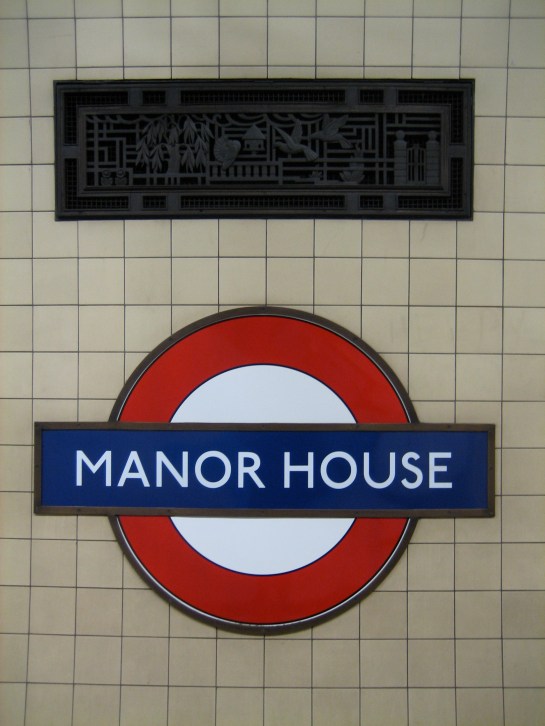
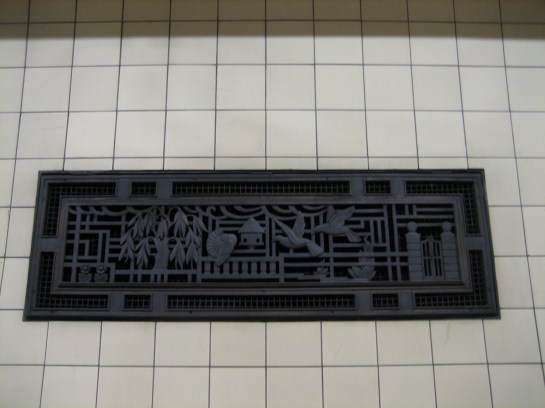 I’m not sure whether this is meant to be an idealised version of the interior of the eponymous building, someone’s back garden replete with a snoozing owl and pot plant, or maybe the grounds of the manor itself. That fine-looking portal on the far right suggests it could be the latter. Those aren’t your average garden gates.
 As with the tiles at Aldgate East, an even-closer inspection of all three grilles reveals the artist has smuggled in a namecheck for himself:
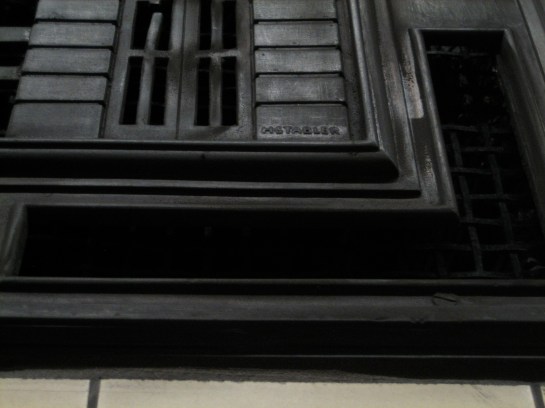 And who would begrudge him that? For here are a trio of objects that are properly worth looking out for on Underground platforms – that is, looking out for not merely to avoid seeing.

 150 great things about the Underground