Archive

Zone 2

No, me neitherHere’s another of the Underground’s most striking features about which I know strikingly little.

Two of these large, stencilled signs frame the compact, pedestrianised forecourt of East Putney, and I believe their design is unique. I can’t think of anywhere else on the network that boasts these kinds of unorthodox yet stylish proclamations, which makes my lack of knowledge about their conception and history all the more embarrassing.

Still haven't a clueThe fact they are so atypical, and so completely beyond even the broadest of indulgences entertained by Transport for London’s in-house transport style tsars, just makes them all the more fascinating – besides inviting a clutch of teasing questions.

Were they put up perhaps as a consequence of a local YTS exercise? Or a maverick councillor, tired of design edicts from a metropolitan authority? Are they meant to be something else that went a little awry and had to be turned hastily into what we see today? Or are they porticos of the past, hailing from the station’s previous lifetimes, before British Rail sold the line to London Underground in 1994 for the choice sum of one pound sterling?

I’m sure the truth is rather more mundane, though any initiative that leads to the creation of something so artfully conspicuous can’t be entirely without flair.

Two of a kindI really like them.

But then you can show me any elevated, embossed post-war font, preferably outside a bit of public infrastructure, and I’m as happy as a sandboy.
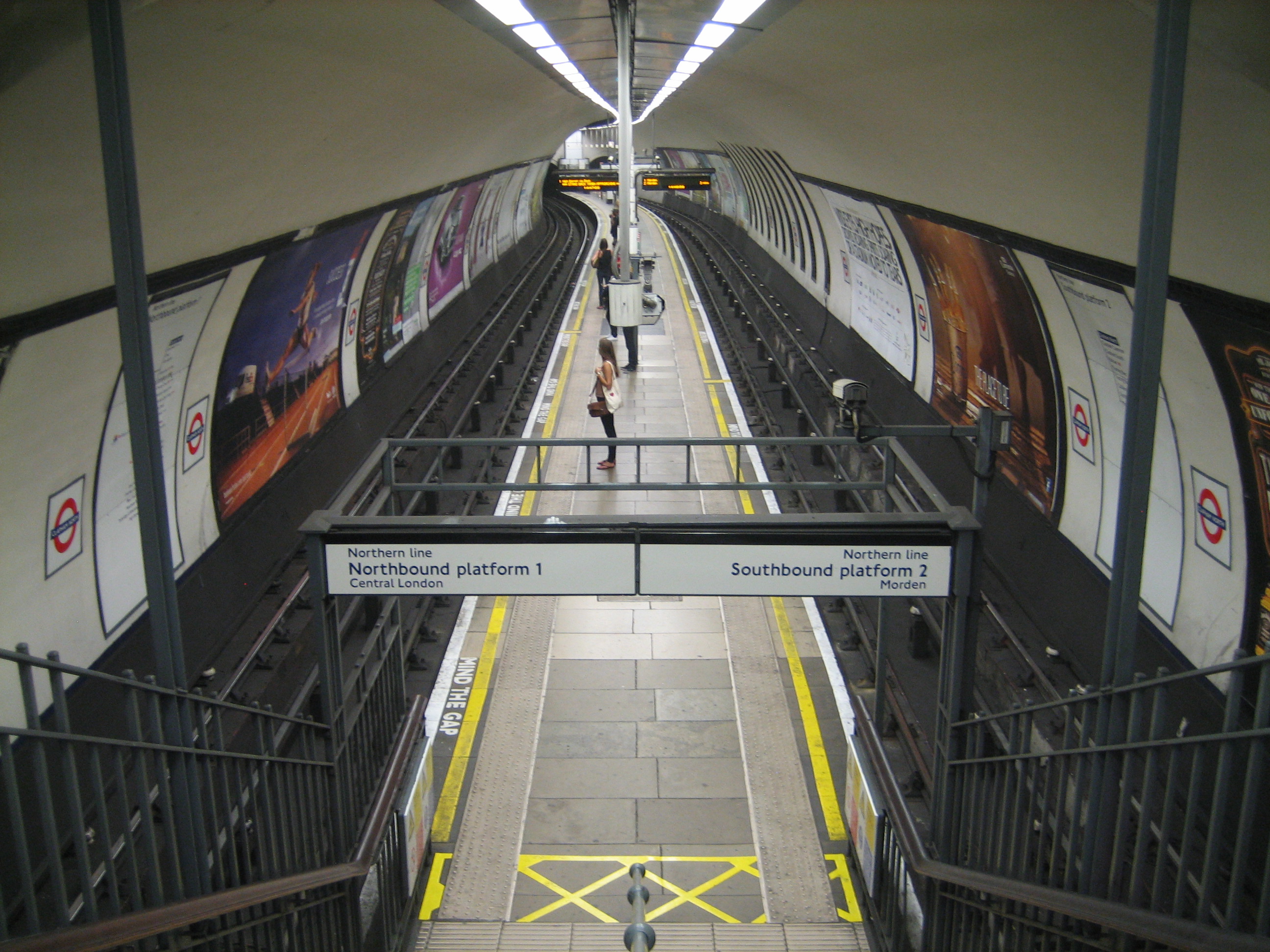
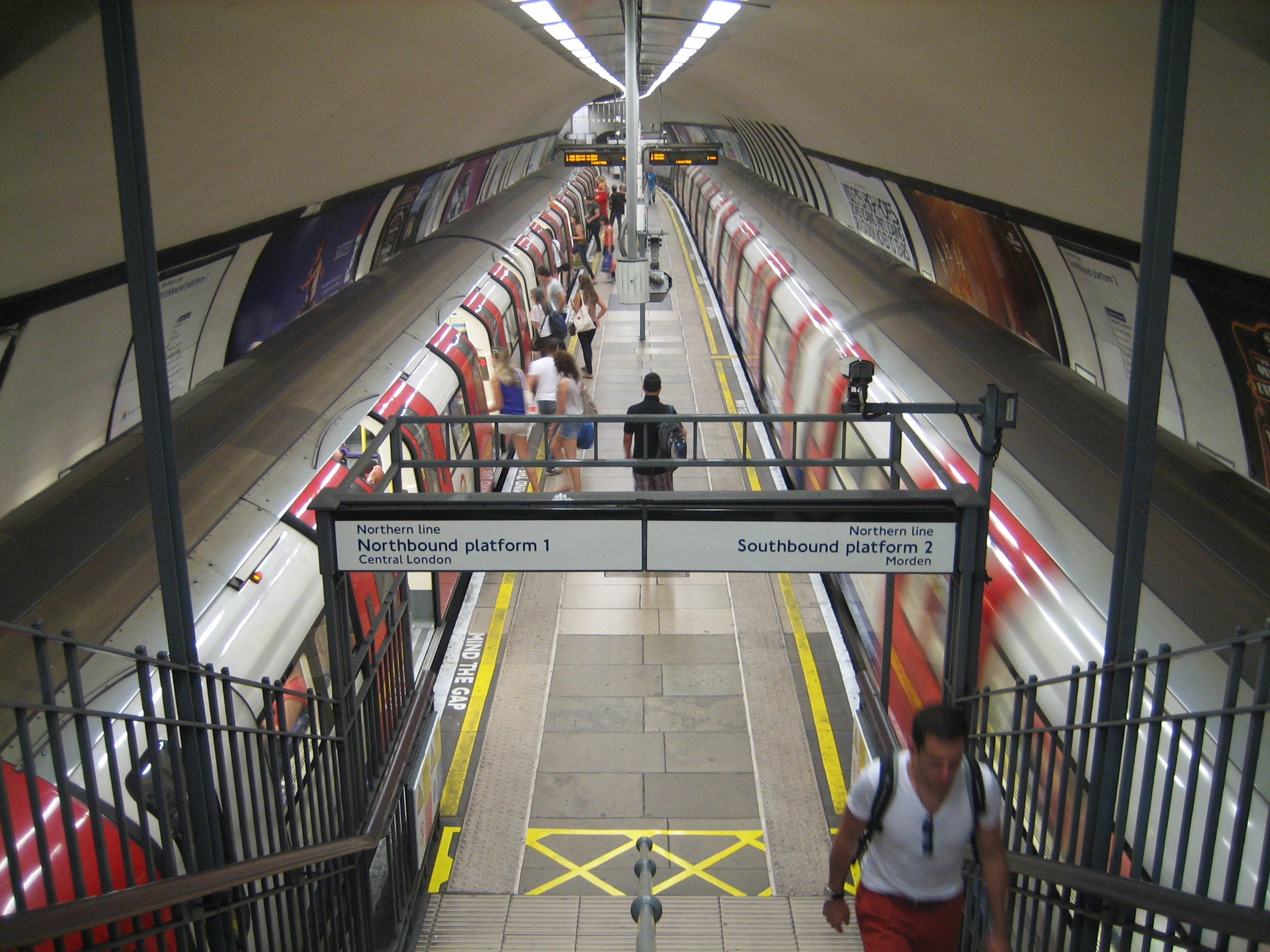
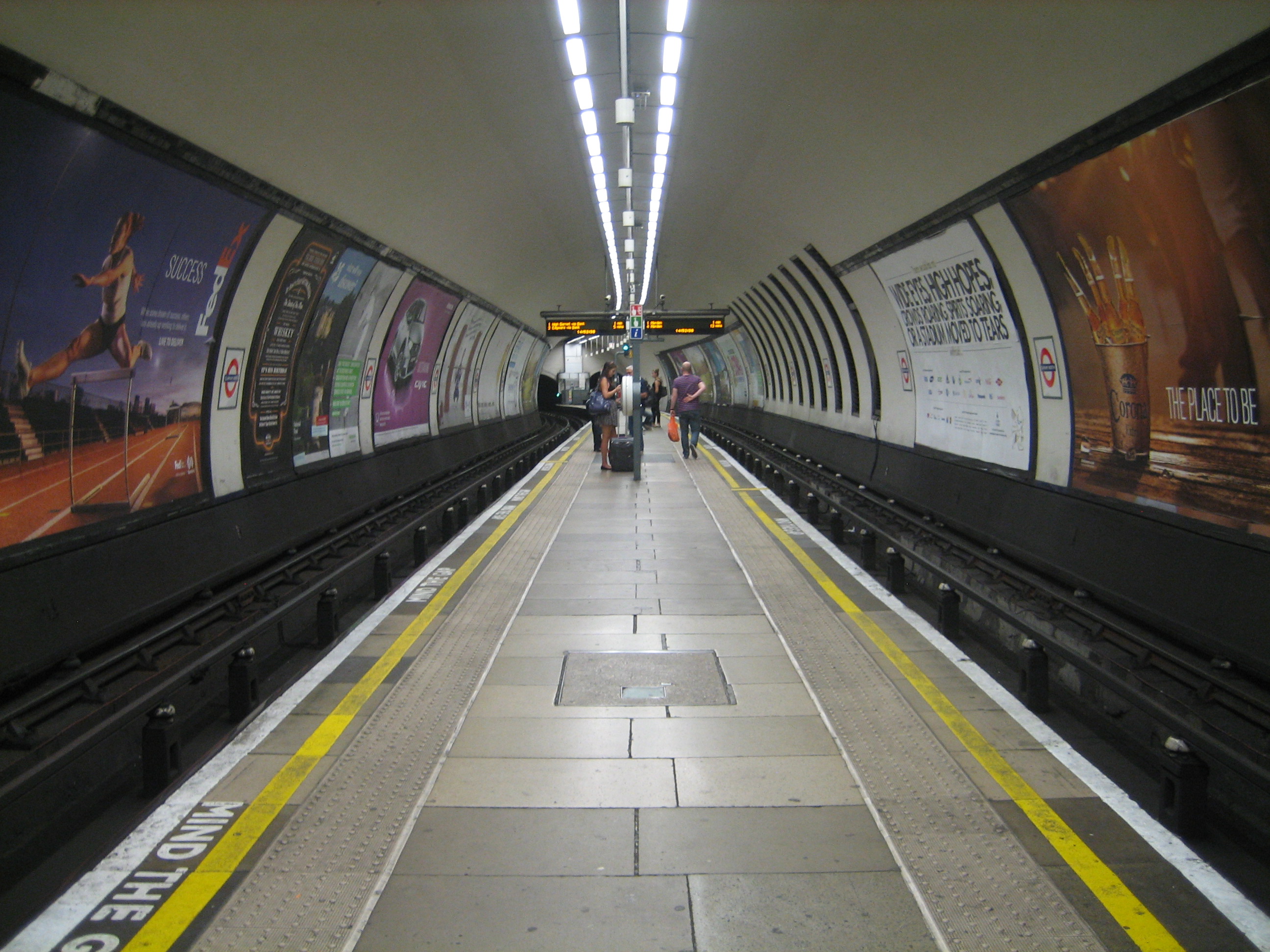
Mind the gapsThere are only two stations deep below ground with platforms like these: this one, and the next stop south on the Northern line, Clapham Common.

I don’t claim greatness for these platforms on safety or accessibility grounds (though I’d be interested to compare the number of accidents per year at Clapham North with those at recently refurbished deep-level Northern line stations, like Angel or Mornington Crescent).

What makes them special is their rarity and their antiquity.

Passing trains Not everything that is old is worth preserving, just as not everything that is new is transient. By and large, the “right” bits of the 150-year-old Underground have been kept and restored, while the “wrong” bits are – after a long wait – being sorted out.

But the platforms here and at Clapham Common cannot be sorted out, because there isn’t room. A whole new tunnel would have to be dug. That isn’t going to happen any time soon.

Using these platforms is therefore something of a novelty yet also, in an odd way, a sort of privilege. Passengers aren’t treated like fools at Clapham North. We are trusted to use this eccentric (to our eyes) architectural arrangement, and not to blunder dopily on to one or other set of tracks while reading a newspaper or prodding at our phone.

For the occasional visitor there is also excitement to be felt when trains rush in from either direction simultaneously: a sensation compounded by being in a single contained space.

The platforms are islands of history, not just of convenience. They can’t be allowed to exist forever, and they shouldn’t. But for now, their latterday idiosyncracy renders them teasingly special.

No man is an island

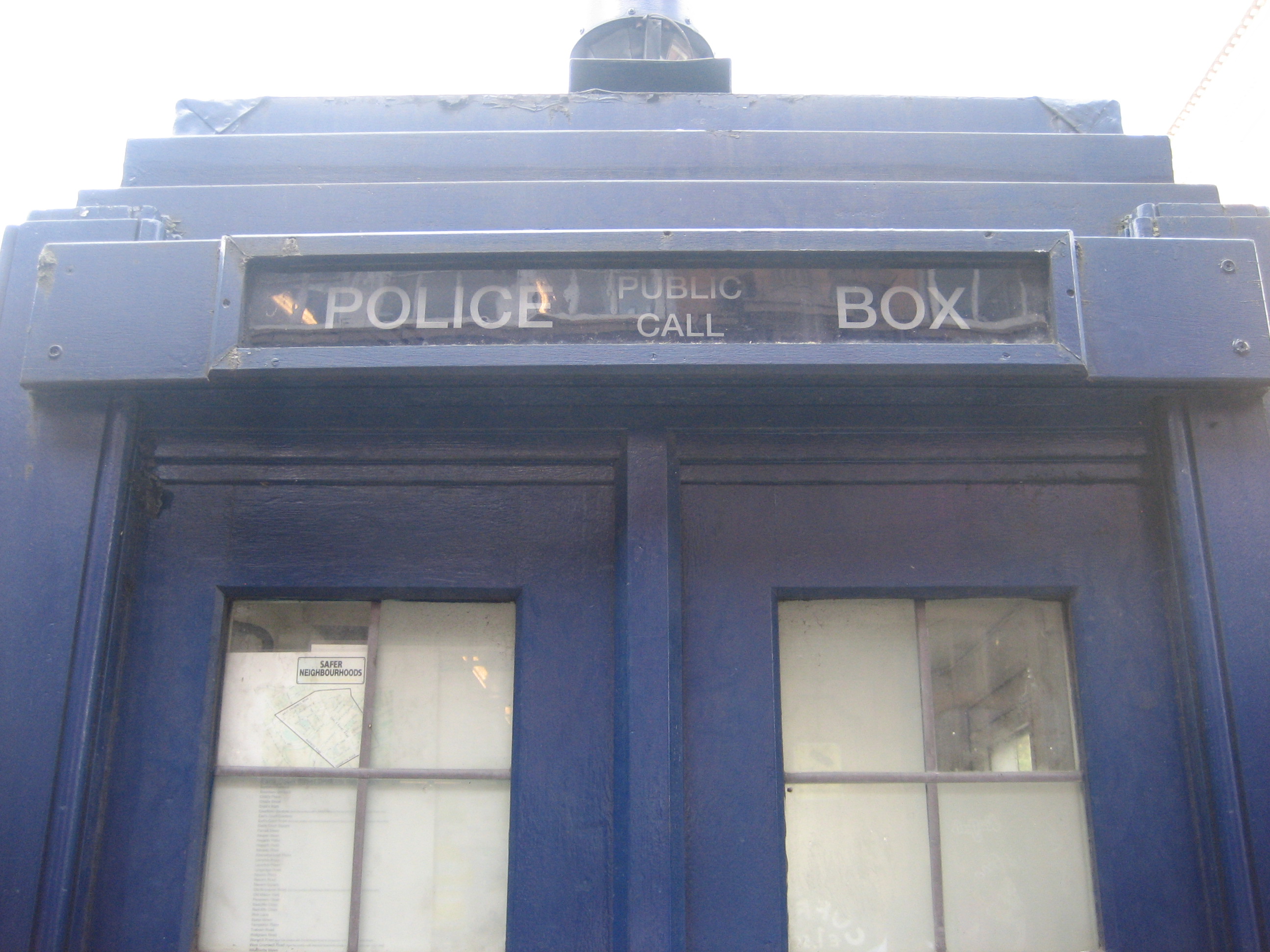
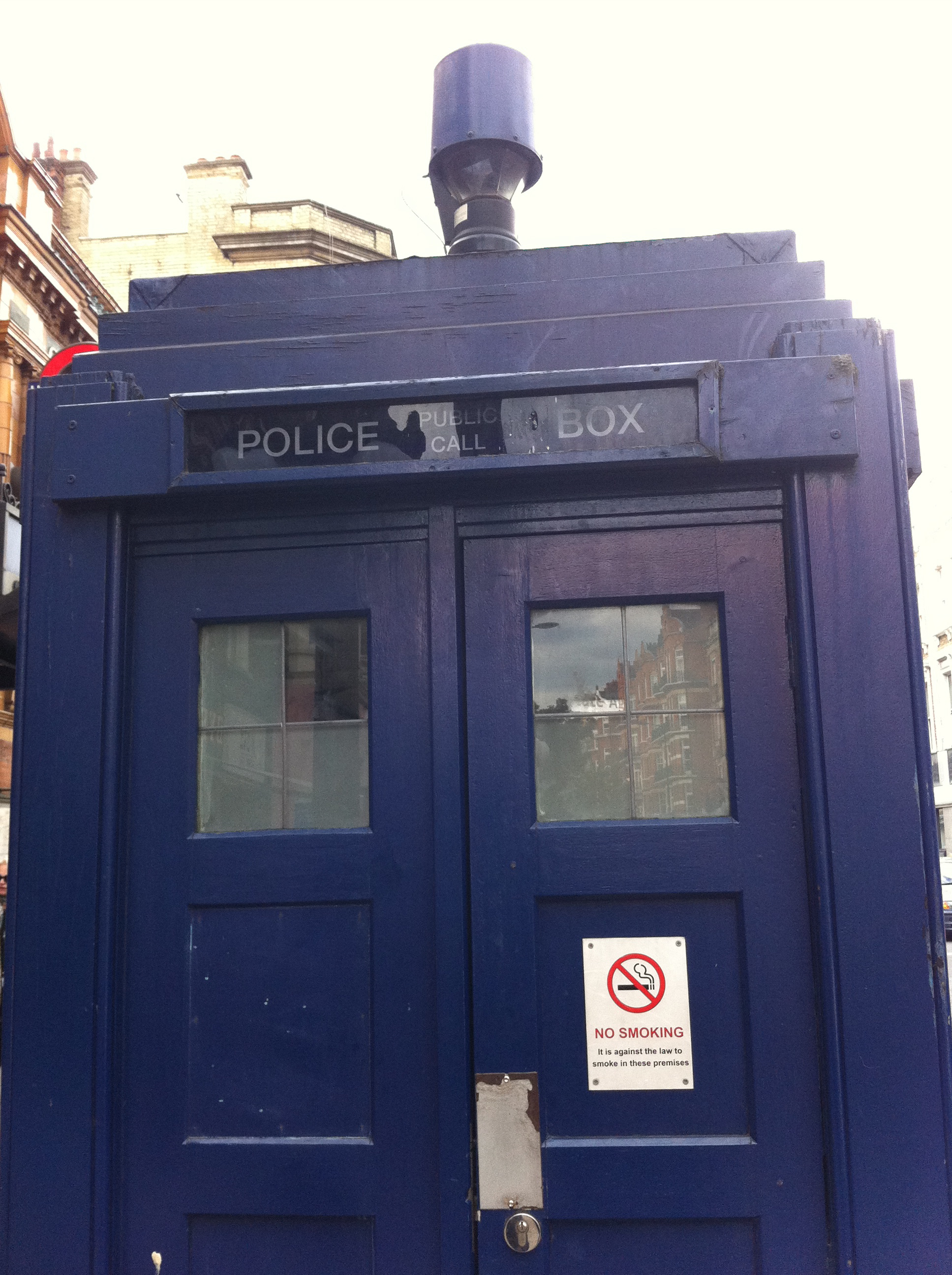
Timey-wimeyParked by the eastern entrance to Earl’s Court is something that competes for attention from passers-by with a frozen-yoghurt parlour, a branch of Pret a Manger, and a kiosk selling international newspapers.

When I was there, it was losing to all three.

Like the TV series, it’s a relatively contemporary reimagining of a once ubiquitous staple of everyday life that had ended up somewhat irrelevant and unloved.

Unlike the TV series, it’s seen better days, looks somewhat shabby and could do with sprucing up a bit. The dirt has, however, led to some topical graffiti:

Hello sweetie!You can’t use it to call the police. You can’t even go inside. And those that have the power to do so better not think of lighting up.

Sterner on the outsideIt’s probably sterner on the outside than the inside.

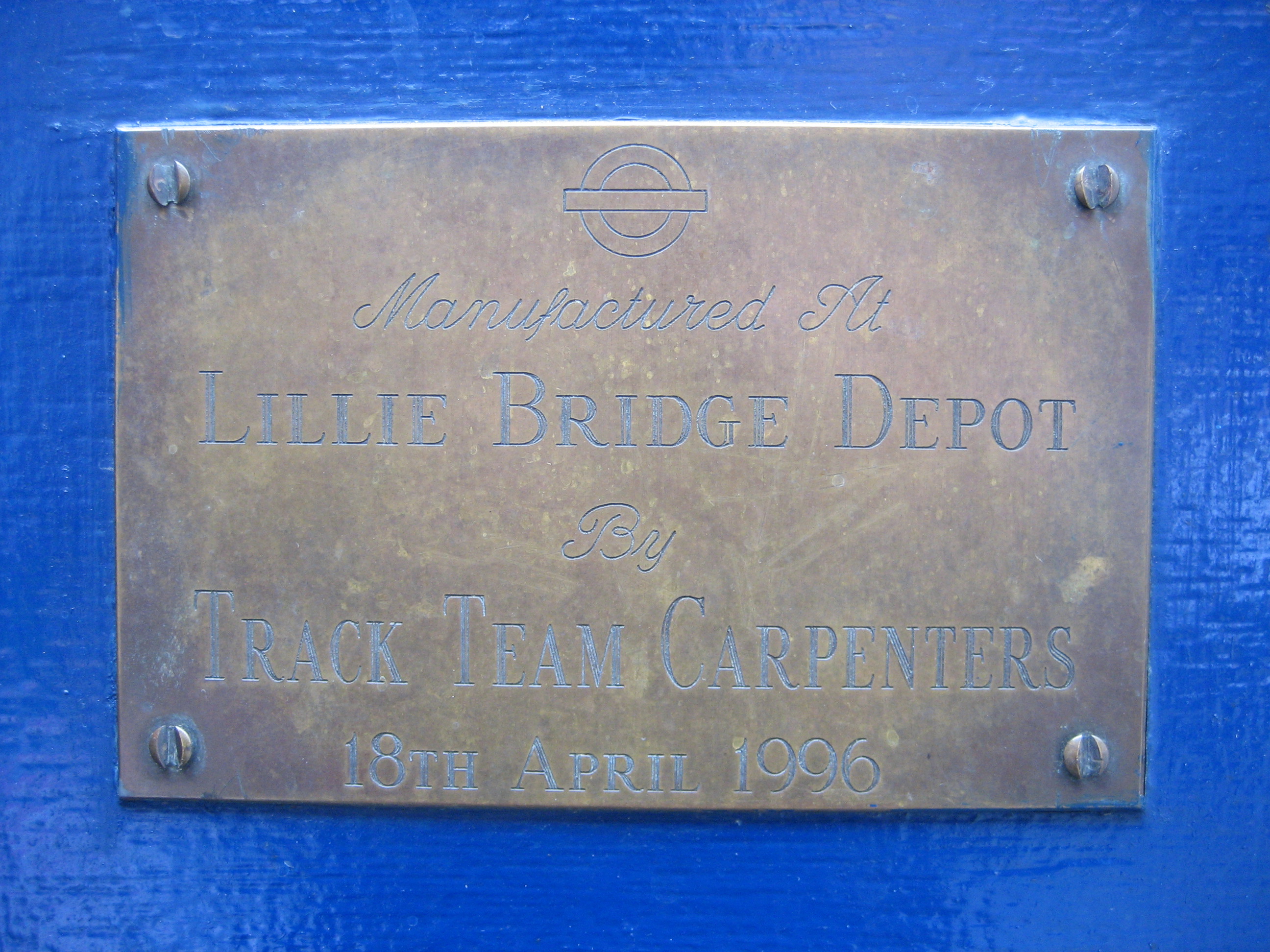
A thoughtfully-embossed brass panel fixed to the box explains who, where and when:

SpoilersI’m used to being eyed suspiciously while taking photographs outside an Underground station. On this occasion, though, not only did I fail to be eyed at all, I also got the sense of being actively ignored, even shunned. It was as if the twin bodies of the London Underground and Doctor Who had suddenly aligned in such a fashion as to send anybody in close orbit scurrying for less obsessional climes:

The anoraks have landedEarl’s Court station: change here for the District, Circle, Piccadilly and Gallifrey lines.