Archive

Zone 3

Like a circle in a spiralKenneth Williams deploys many persuasive turns of phrase throughout his wonderful diaries, sometimes without grace, sometimes without merit, but never without purpose. One of my favourites is his depiction of himself “sat in the flat, revolving memories.” It’s an immensely attractive description for the otherwise somewhat unexceptional business of brooding, or moping, or – to use another of Kenny’s terms – drearing about.

It also captures very neatly the cyclical nature of contemplation: that sense of turning the same things over and over, and of forever returning to dwell on a matter over which you’ve pondered many times, not always without regret.

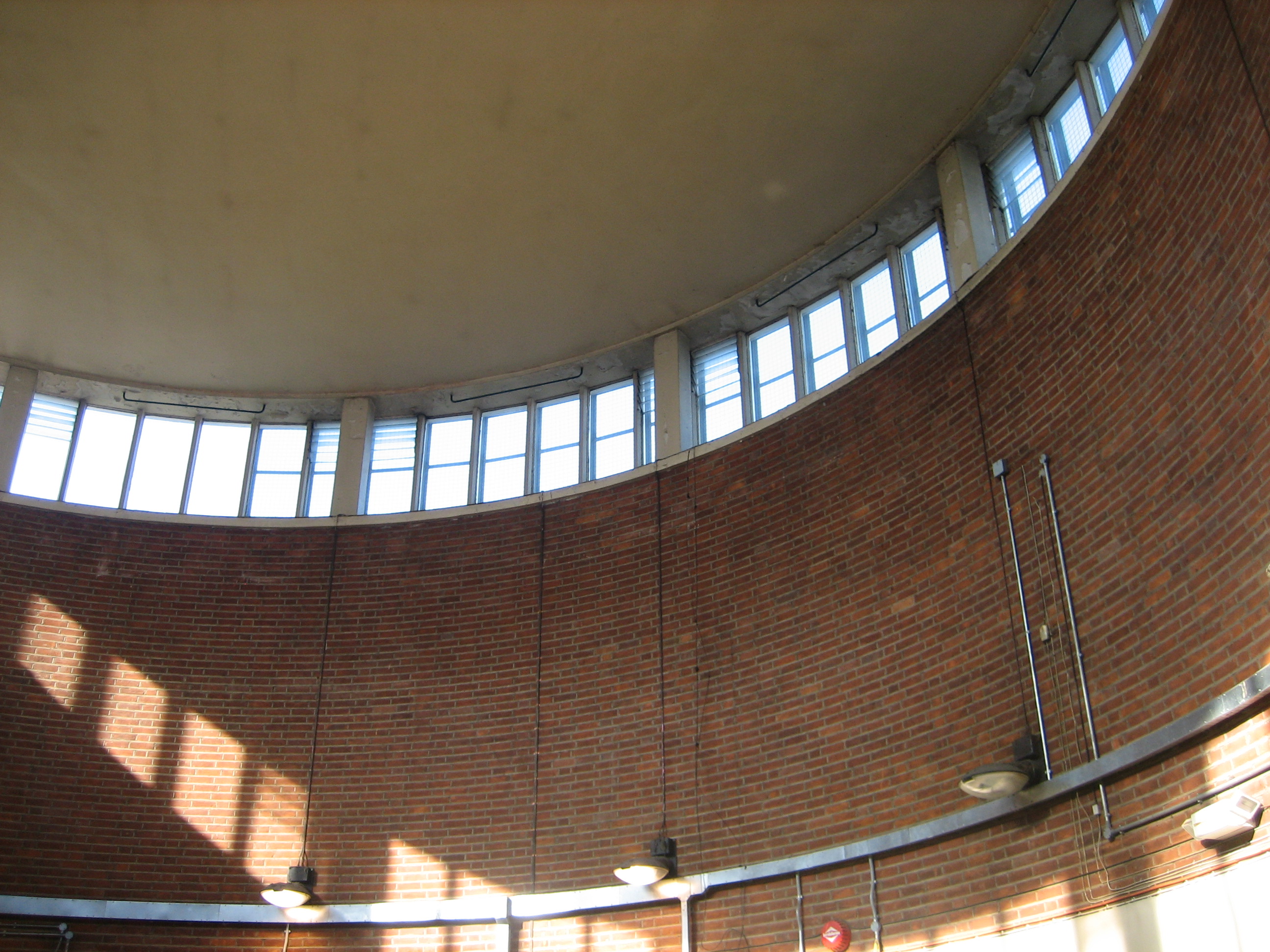
The ticket hall at Hanger Lane is a place that smoothly inverts Williams’ wise words, by way of revolving memories not within but around you.

It does this in a literal sense, its resplendent curved interior swooping this way and that, each post-war trinket and trimming igniting a little firework of nostalgia that pops and crackles inside your head. Look over there: a bit of tatty 1950s signage. And there: an uplighter that harks back to the 30s. That typeface: doesn’t it look a touch 1980s? As for that notice on the toilet door, that must be close to 40 years old. Yikes: am I really almost the same age?

But it also does it in an allusive sense. This ticket hall contrives somehow to send other associations spinning through your mind: memories of school assembly halls, of whirling zoetropes in science museums, of dust particles dancing in ribbons of sunlight in provincial libraries, of drums and top hats and birthday cakes and merry-go-rounds and doctor’s waiting rooms and party games and giant, giant silences in giant, giant spaces.

Hanger Lane is in my ears, and in my eyesNow, just as one man’s ceiling is another man’s floor, so one person’s revolving memory bank is another person’s pile of bricks. Hanger Lane’s elegance can’t bewitch everyone in the same way, or else it would cease to be special. I’m sure it suffers by sharing a name with the eponymous gyratory, even though – as I’ve already suggested – that particular tangle of roads doesn’t quite deserve such a fearsome reputation.

It also has its roots not in the Underground but – heavens – British Rail, whose Western Region architect Peter MacIver conceived the building in an era of austerity that boasted a very different cultural template to that being advanced politically today. (I really must stop moaning about Michael Gove on this blog.)

Yet maybe all these things make me love the place all the more. It wants to be different, it tries to distinguish itself, it defies your expectations… and, to my mind, it succeeds utterly. It not only revolves memories, it evolves them as well. Even the simple, formal elegance of the station’s exterior, bombarded with gales of traffic noise and jostled by neighbouring gangs of blighted shopfronts, keeps my senses transfixed.

Yes, I’m afraid I’m going to have to say it. Hanger Lane is in my ears, and in my eyes.

Blue surburban skies

Canning, you dig it?Here’s an example of how great the Underground can be at commemorating not just its own past accomplishments, but those of other, equally influential giants on whose shoulders London once stood.

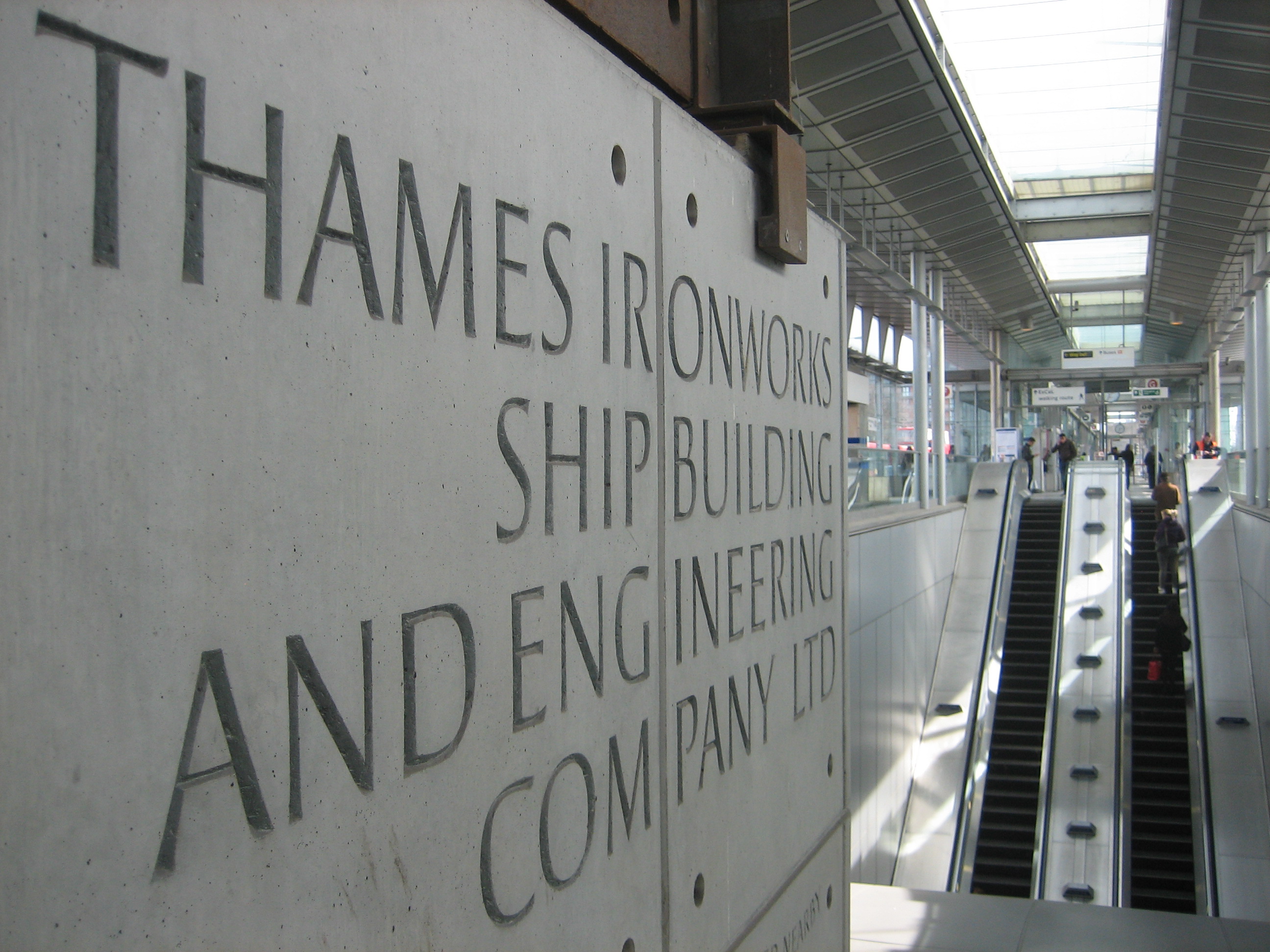
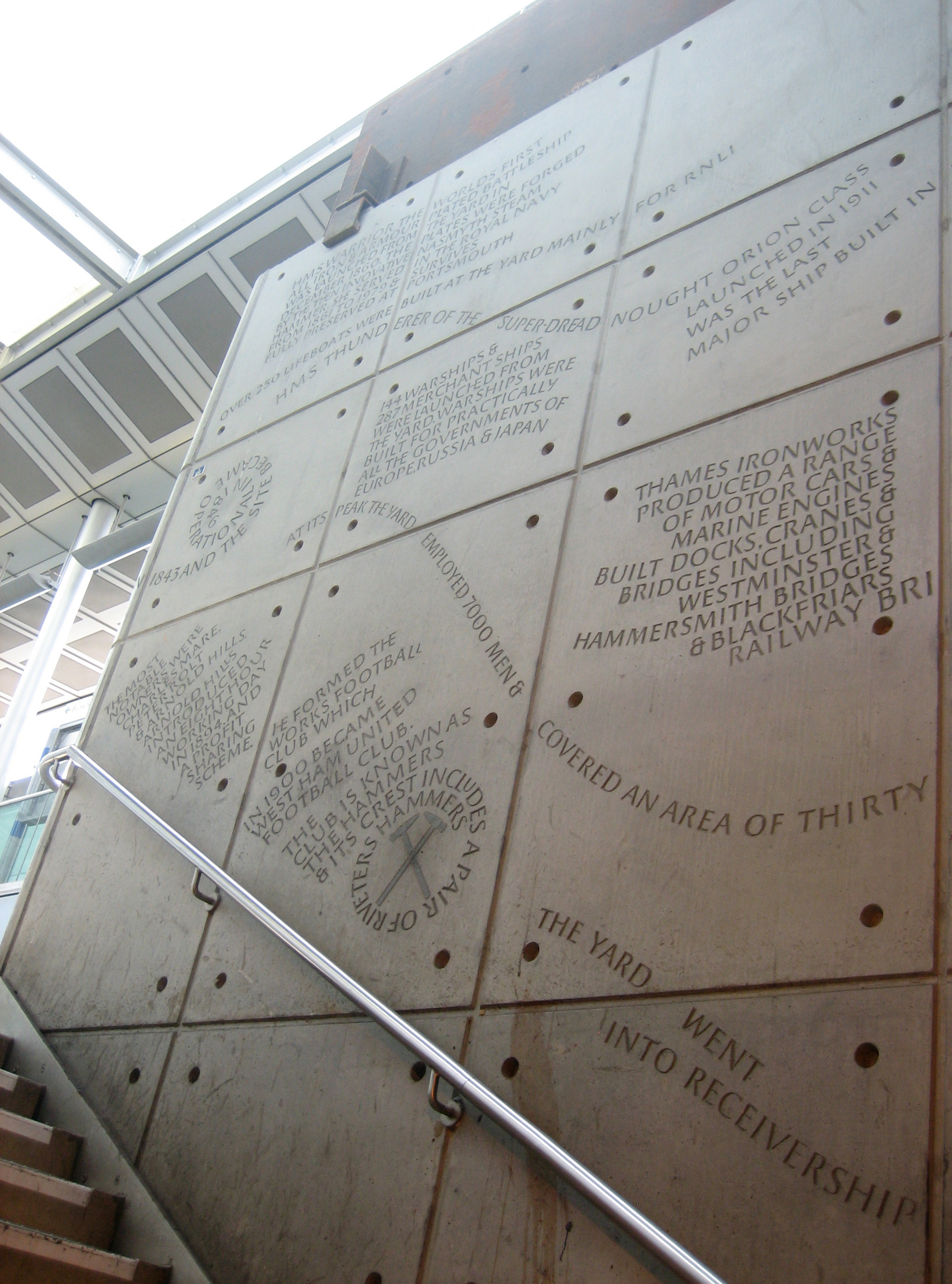
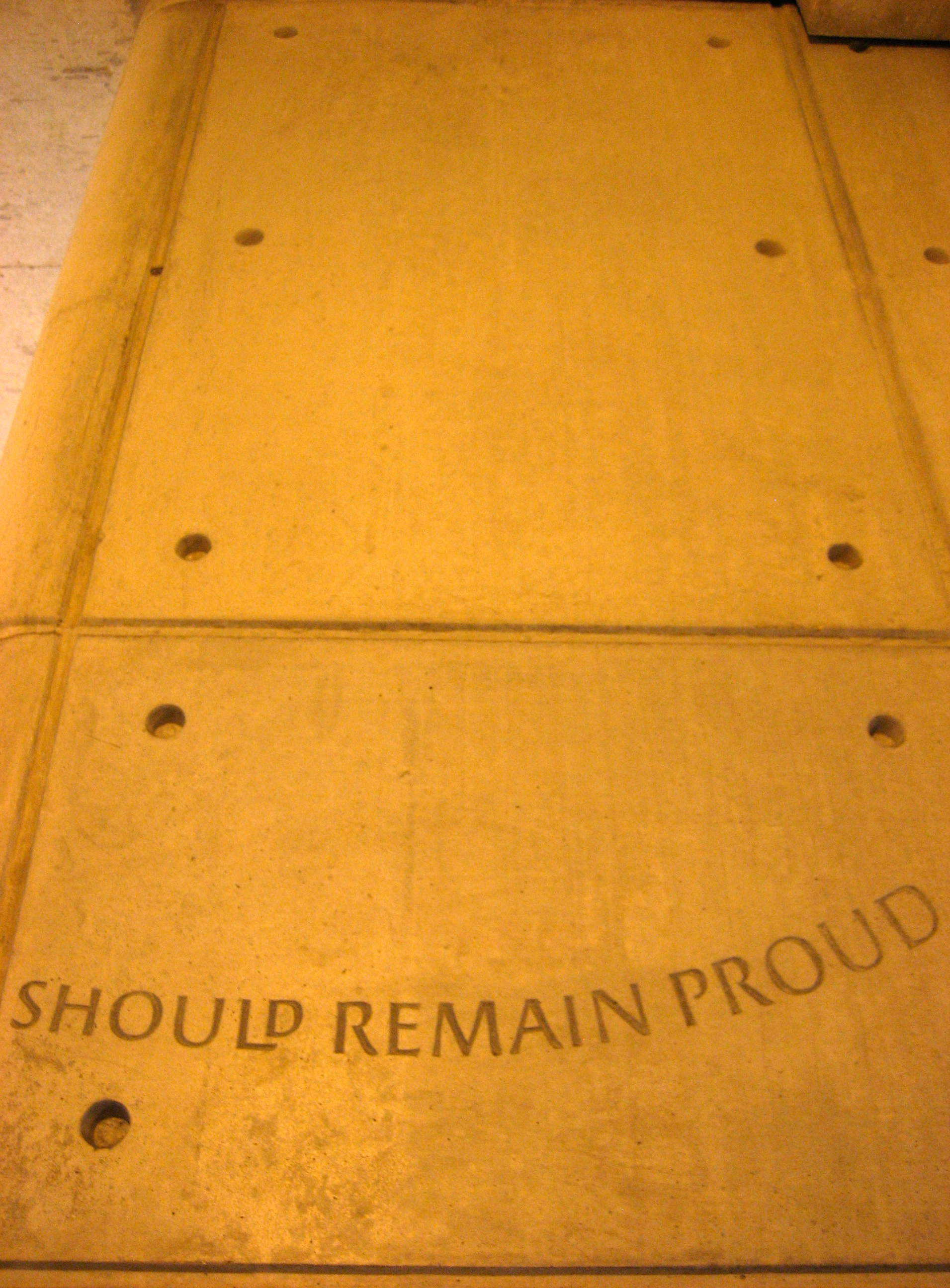
In one corner of Canning Town station rises a memorial that’s vast in both size and significance. Hewn from the iron hull of HMS Warrior, then clad in dozens of concrete panels, each in turn covered with a cascade of calligraphic prose, it is an elegy to an organisation, a trio of industries, and a way of life long gone.

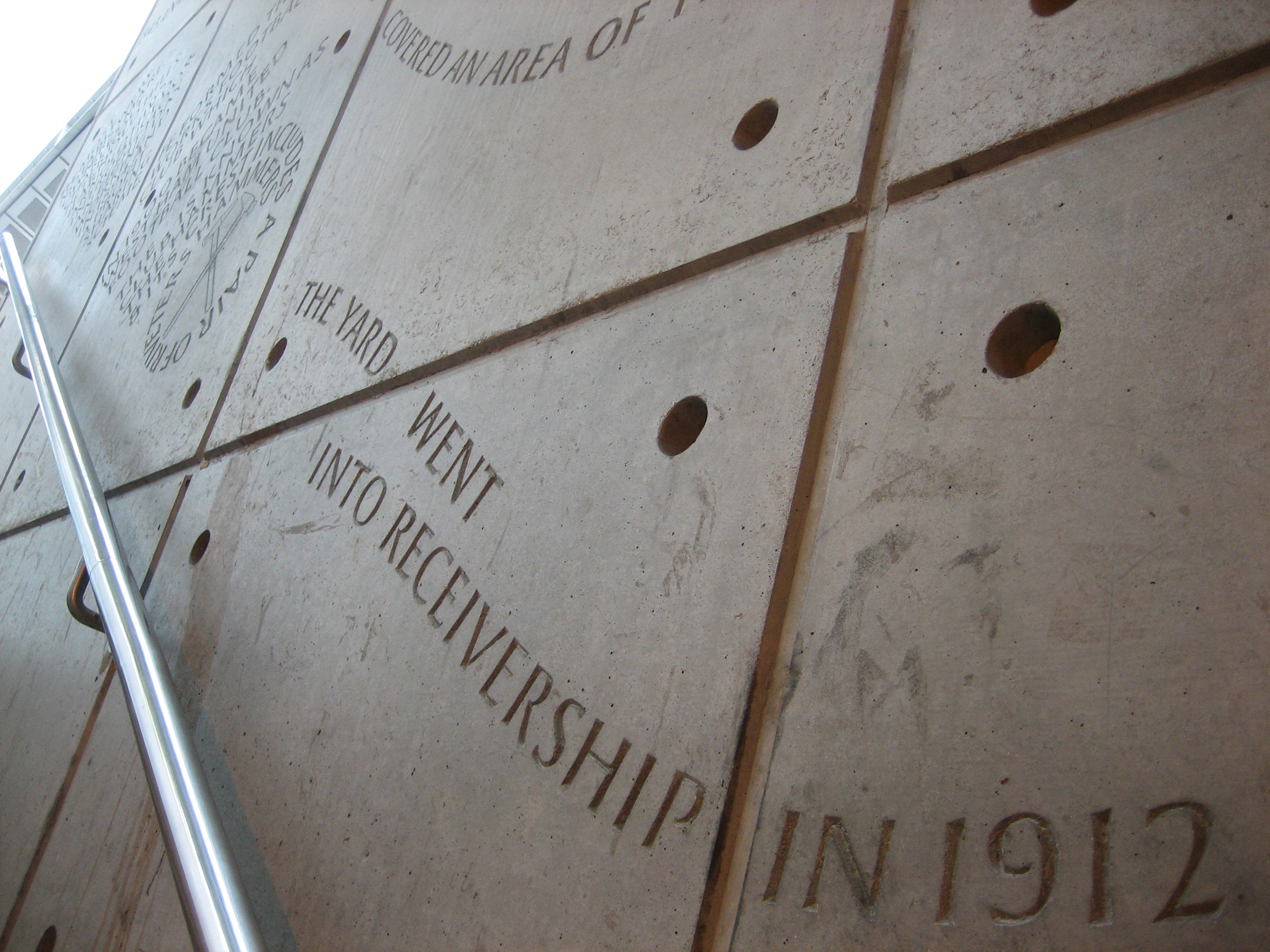
London 0, Hull 4The Thames Ironworks and Shipbuilding Company lived for almost 100 years and died two years before Britain went to war (in part thanks to the threat from someone else’s ironworks and shipbuilding). The First Lord of the Admiralty, a certain Mr W Churchill, refused to step in to save the company in 1912 when work dried up.

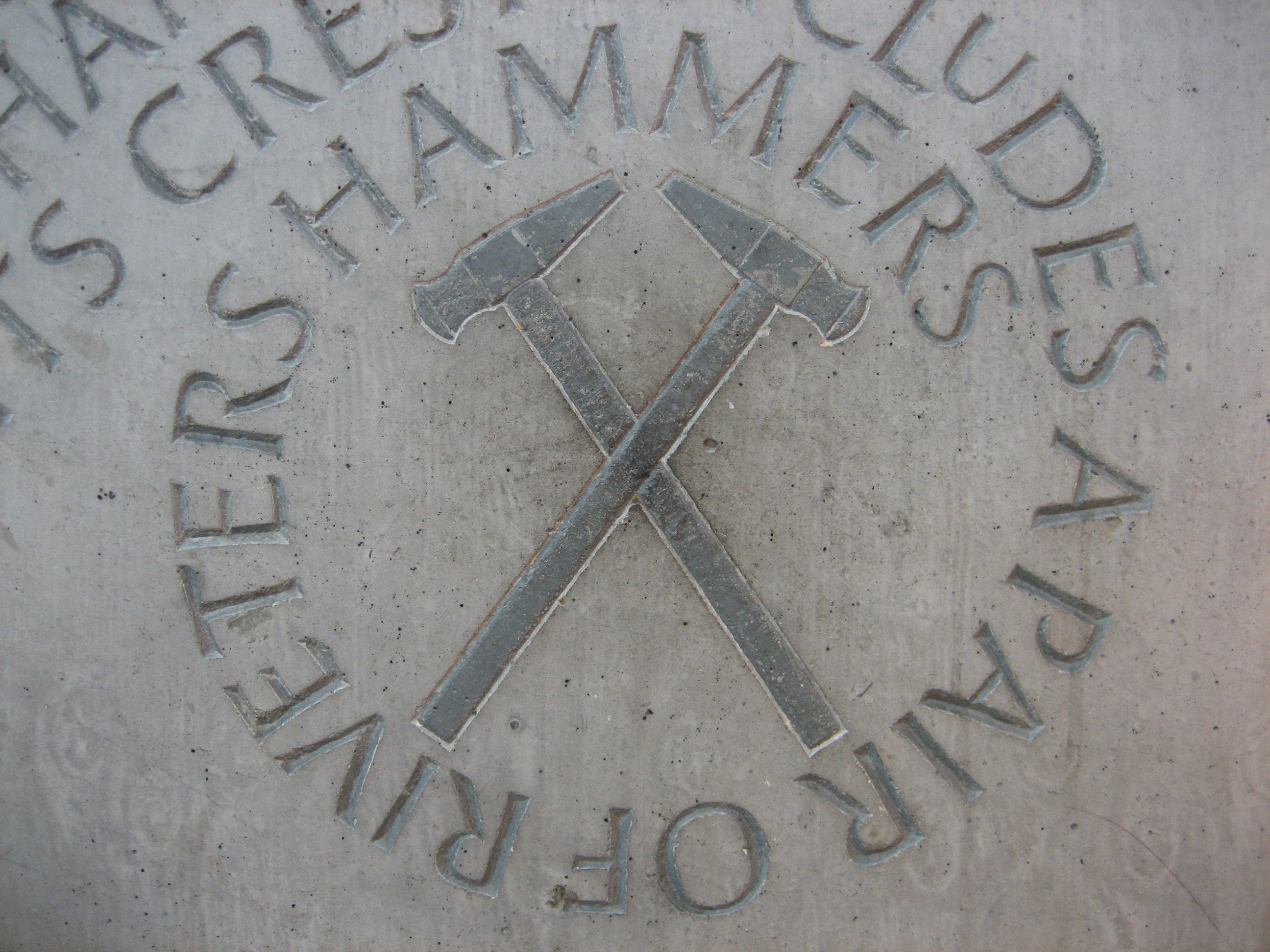
But the football club established for the works’ employees, Thames Ironworks FC, did survive and still does, under the name it adopted to allow it to hire professional players. And it was the management and supporters of that club who, many decades later, helped commission and fund the creation of this memorial. Fittingly, they get a special mention:

HammersBy my count that’s at least two lasting contributions West Ham United have made to the culture of the nation; the other being their popularisation of this beautiful song.

As for the memorial, the designer Jamie Troughton and engraver Richard Kindersley must take the main honours for realising West Ham’s dream and turning an idea into something so defiantly solid. The concrete panels were apparently so expensive that Kindersley and his helpers could not, or more accurately weren’t allowed to, make a single mistake. And they didn’t, even if it meant it took three weeks for the inscriptions to be completed.

Their collective effort is stunning and soaring. Its calligraphy whirls and shimmies around three flights of steps, not merely bringing but whipping and rocketing the past back to life.

My only regret is its location. It’s tucked away at the far end of the concourse, on the way to Canning Town bus station, and very easy to miss. I speak from experience: I only found it on my third visit. But Iif I’d been a bit more patient I probably would have worked out what to do – for example, ask someone where it was.

End of daysRather wonderfully, the very latest chapter in the evolution of London’s public transport – the magnificent Crossrail – has resulted in some of the Ironworks’ remains being uncovered. Slices of old London do have this habit of poking through into the here and now; at Canning Town one of them has achieved permanence at last.

The official history of the Jubilee line extension notes that the memorial drew a lot of local interest on its opening in 1999. It also reveals that former Archbishop of Canterbury and now full-time reactionary George Carey did the unveiling. He was born nearby, so his involvement was not entirely spurious.

I wonder if he ever passes this way nowadays, and if so what he makes of the memorial’s sparkling reams of inclusive, enlightened sentiments.

Pride

Hues of the worldI appreciate the interlacing tarmac tendrils of Hanger Lane might not get everyone gyrating with pleasure.

The road network has been branded the scariest of its kind in the country, though I’m not sure something that pre-advertises its risks in such public and self-evident a fashion can be properly blamed for giving you the willies. (Daunting is probably a better label.) There’s a noisy concentration of movement going on, but you can’t say you’re not warned. The grumble and velocity of traffic are palpable thousands of metres before you reach the junction itself.

And then right in the middle of this tombola of motorisation sits an Underground station.

It looks at first sight, from a distance, utterly inaccessible and unloved.

But you should press onwards and nearer, towards the heart of the melee, for you’ll be directed down one of a number of subways, along the walls of which you’ll find a string of pre-gyratory pin-ups.

Like this:

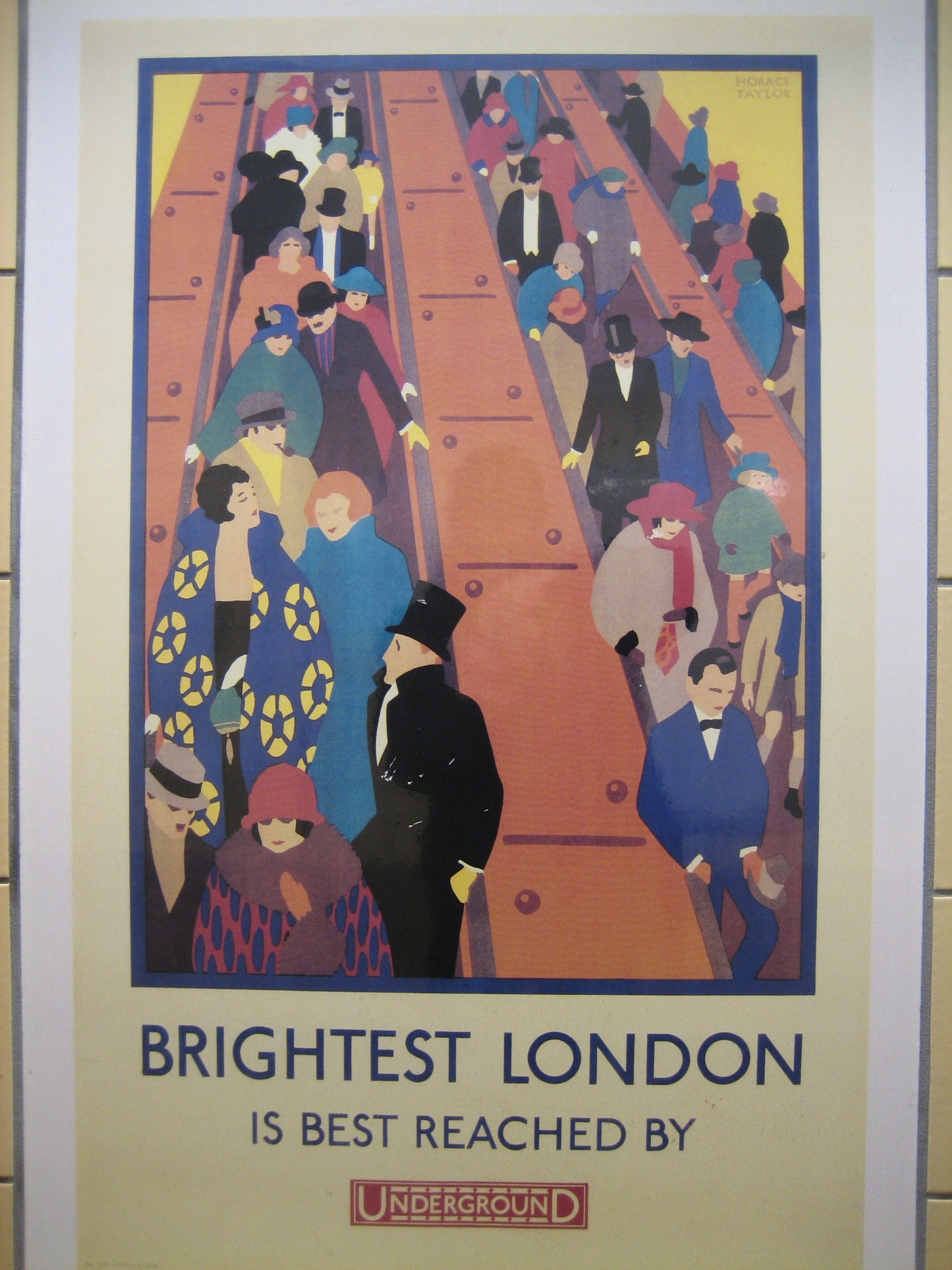
Brightest LondonRepresentations of the Underground have shaped our perception of the network far more than actual journeys on actual trains. Shapes, symbols and colours have educated and enlightened the country, if not the whole world, since the early 1900s. Most people will never see, let alone ride on, an Underground train. But most people know of the sensation. They know the palette, the aesthetic geography. They know how it must feel.

And we have posters to thank for that. Posters that are rightly being commemorated in this 150th anniversary year just as much as the infrastructure.

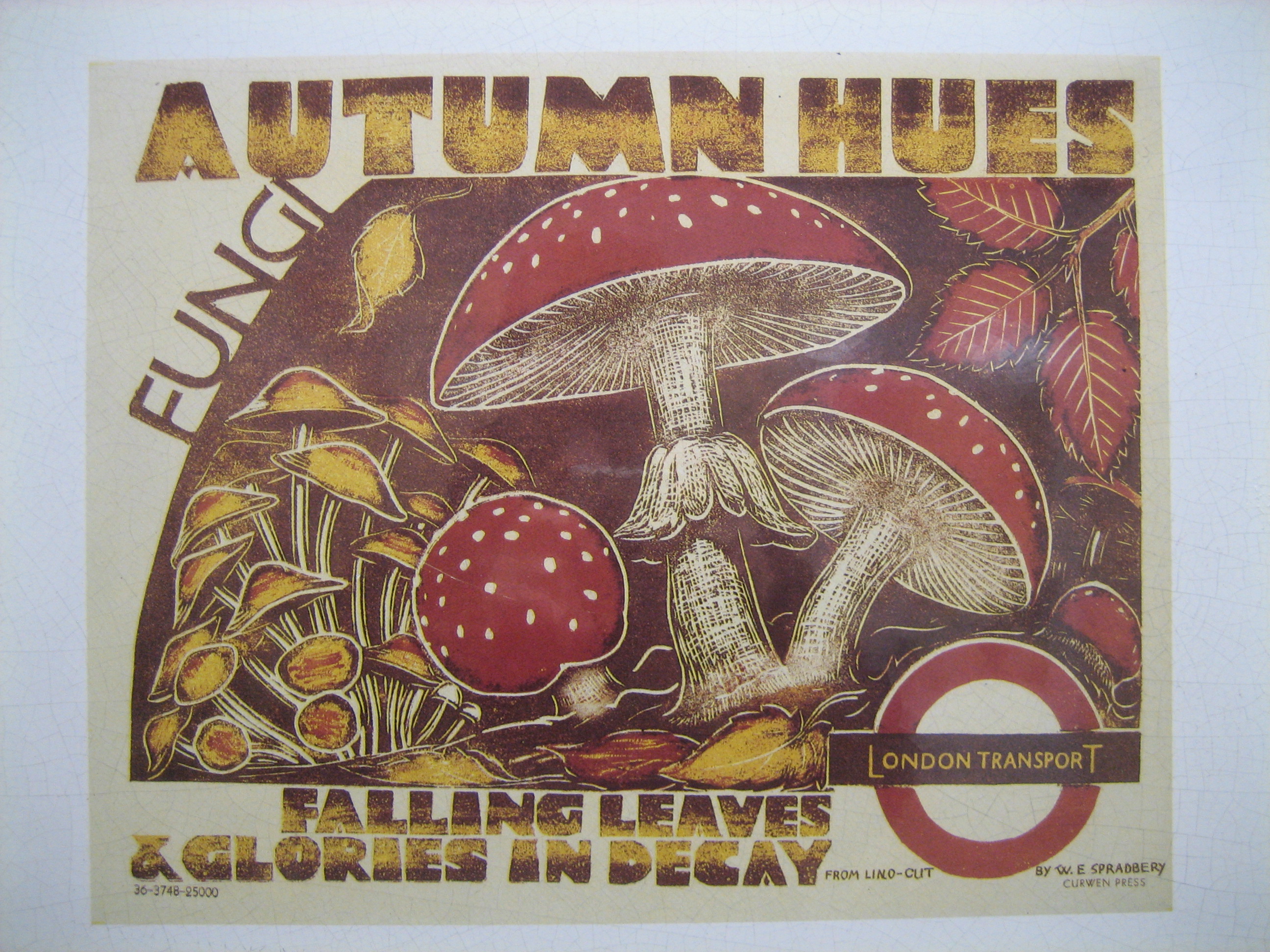
I think some of them number among the greatest works of art of the 20th century, but then you knew I’d say that. You can see and judge for yourself at Hanger Lane station, where a selection of them stud the underpasses in the form of sensibly wipe-clean tile-based reproductions.

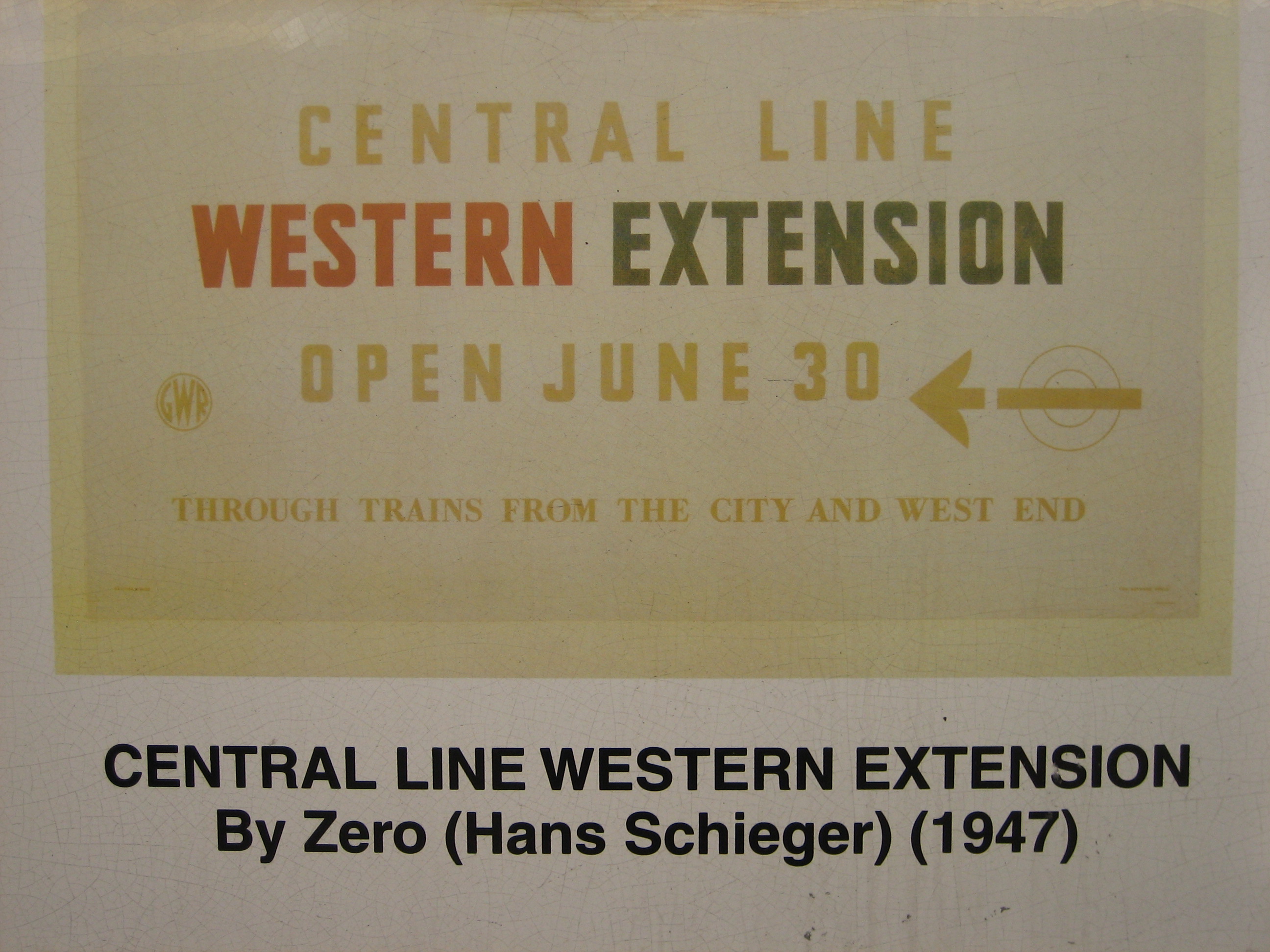
Go, West(ern Extension)!They’re all labelled, giving the artist their proper credit along with the year of publication. And they’re not just the most well-known ones. You’ll find less ubiquitous efforts, like “Autumn Hues” (at the top of this blog), which seems to be promoting easy access to poisonous fungi and “decay”, albeit tastefully drawn.

And befitting the location, there’s a nod to other, cruder modes of transport:

Life and how to live itFrom a purely selfish point of view, this display allows the likes of me to photograph and reproduce material I suspect TfL and/or the London Transport Museum guards with a roundel-shaped branding iron.

From a more selfless point of view, it’s wonderful that these colourful splashes of heritage continue to have a place in the present, available to all to see, touch and explore: history’s hangers-on at Hanger Lane.