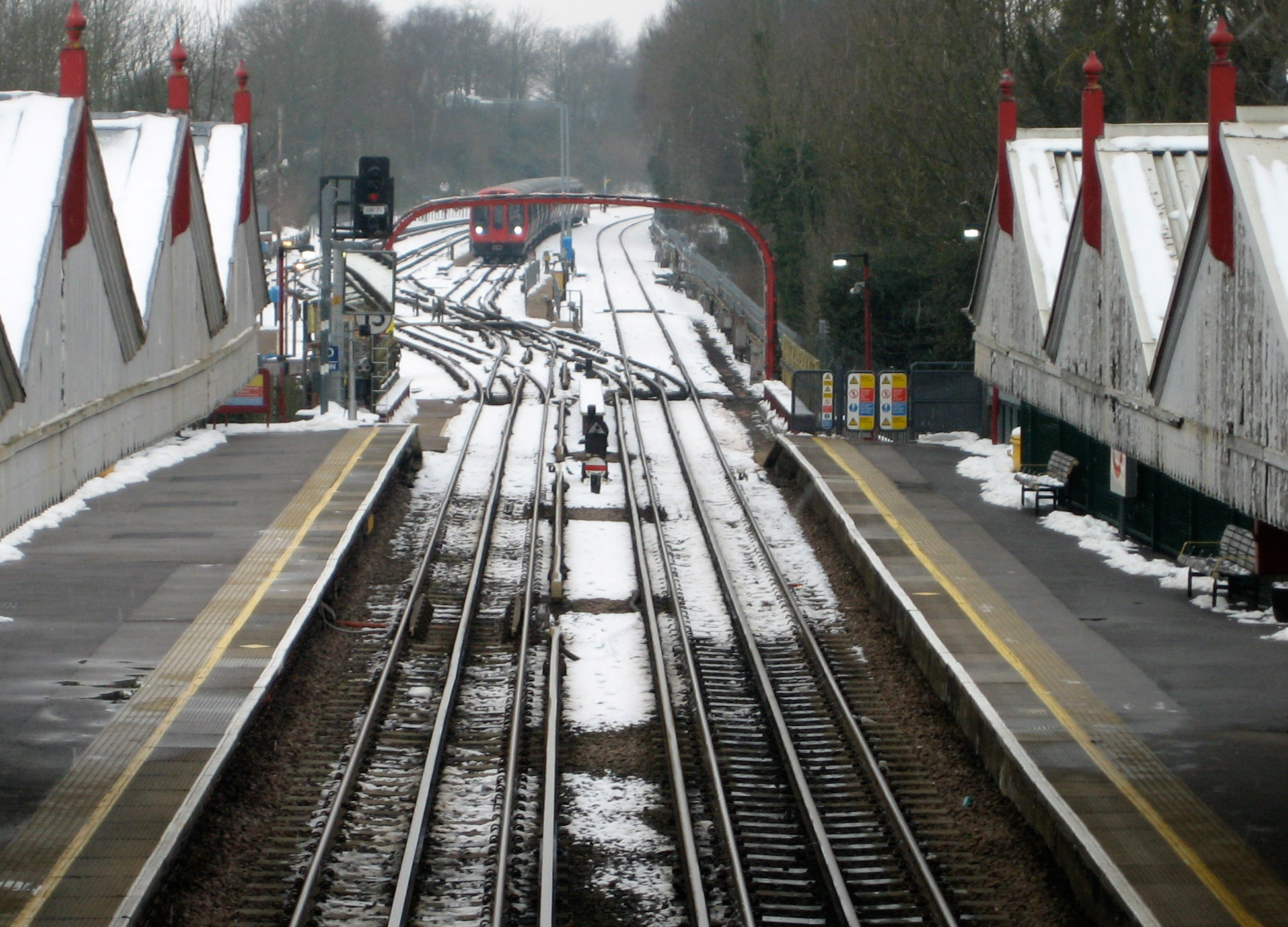
AmershamdyIn the top left-hand corner of the Underground map, the short, stubby branch lines that run to Amersham and Chesham sit there like a two-fingered salute to the empty space beyond.

You think we’re going to come any further into Buckinghamshire, they pout. Well ha ha, we’re not. You’re going to have to come to us. We’re not coming to you.

Our loyalties and life support lie south-east, in the metropolis, not north-west, in the middle of nowhere. We’ve planted our toes beyond your boundaries, and we’re not budging. So there. Cue enormous raspberry.

But this – adopts Adam Curtis voice – is a fantasy.

Trains do run beyond Amersham, despite it appearing on the map as the end of the line.

They run deep into Buckinghamshire, albeit not under the purview of Transport for London. They do, however, run on tracks that once belonged to the Underground – tracks that caterpaulted out of the city in the hope of one day becoming part of a hilariously ambitious uber-network that would link northern England with the continent.

Now look at it.
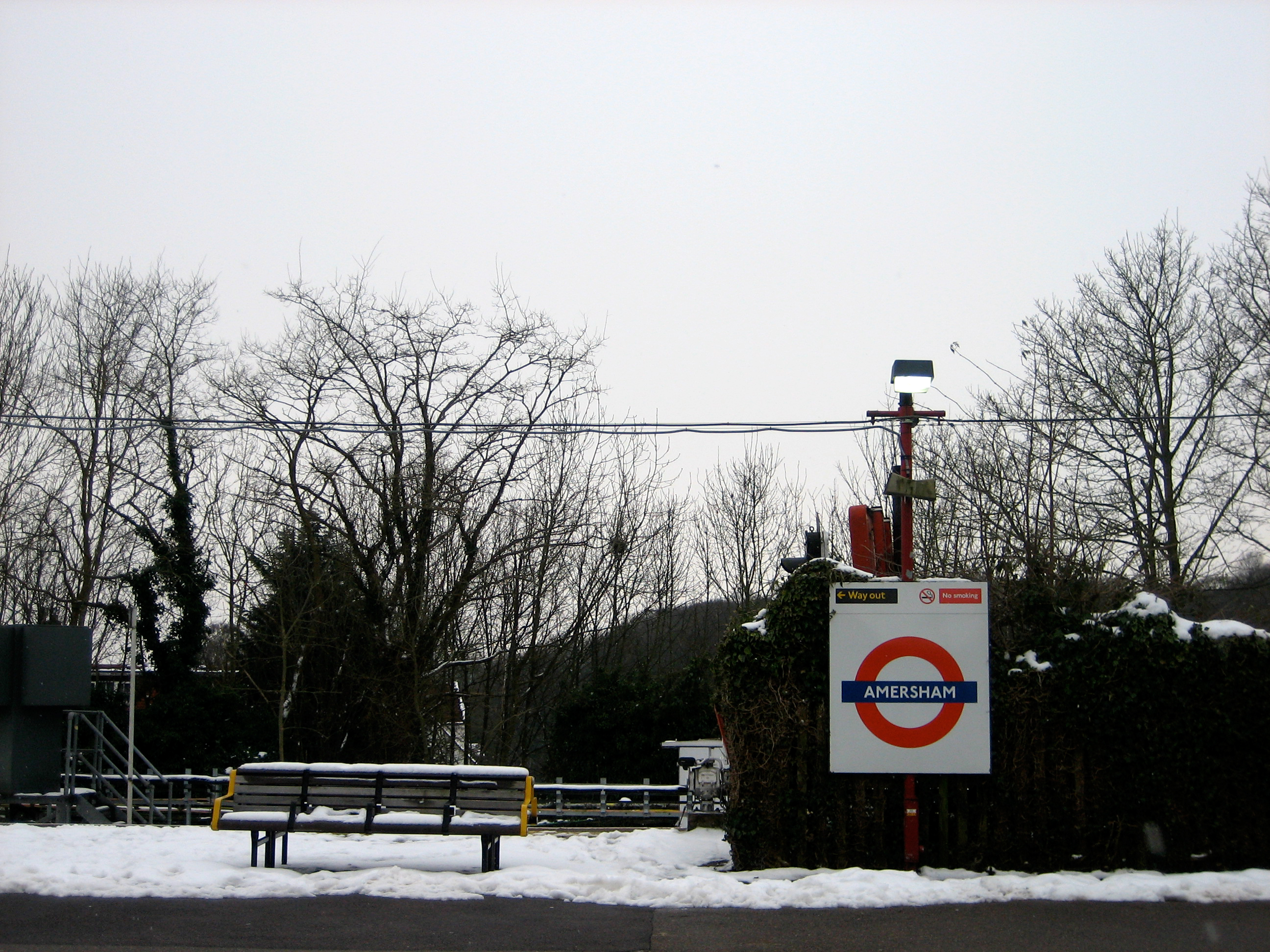
Red hat not picturedThat’s the very last roundel passengers on the mainline get to see.

No longer does the Metropolitan sneak its way up to Aylesbury. That ended in 1961. It used to puff its chest out even further, stretching the elasticity of the system to breaking point in order to poke a smoke-filled nose into Verney Junction. That ended in 1936.

I like the way things are now.

I’m taken with the frontier feel of Amersham – a place, before I moved to London, I knew only as the one and only sighting of the dreaded Red Hat of Pat Ferrick.

It’s just far enough out of London for the Underground to venture and still allow you to sense the faint pulse of the city. It has a rather attractive trace of desolation that never threatens to develop into full-blown abandonment.

Travelling up the Metropolitan line, you’ve unwound your ball of purple wool as far as it can go, threading it all the way from Baker Street through Wembley, Harrow, Pinner and Rickmansworth.

Now the wool has run out. But one tug of the strand and you can find your safely way back home again.
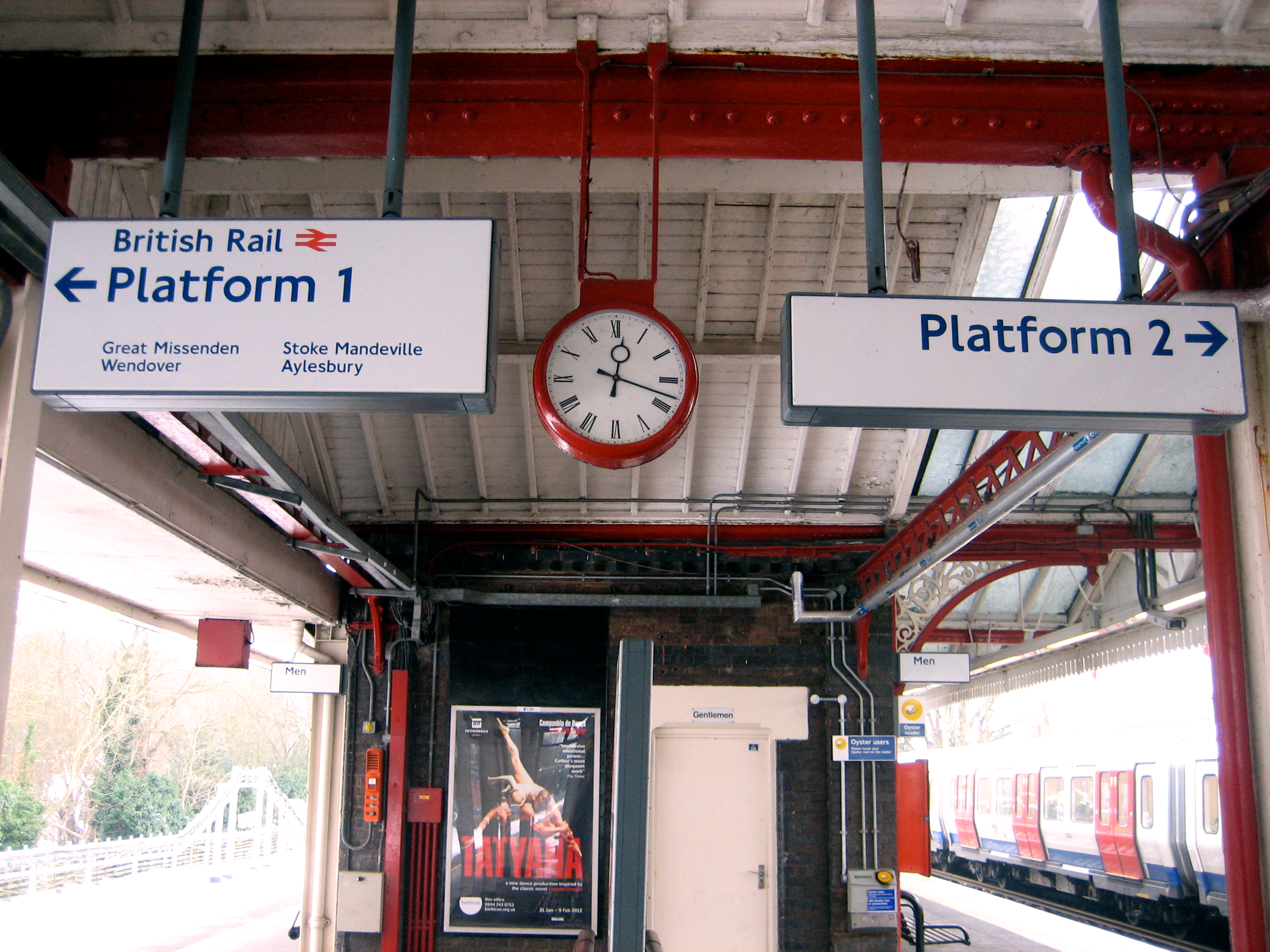
British Rail lives onSure, there’s always platform 1, with its bittersweet invocation of British Rail above its promise of the faintly exotic-sounding Great Missenden and Wendover.

But platform 3 is where London begins, and where the Underground devotee can affirm their love affair all over again.

You can stare all you like at the countryside beyond the buffers. But “in those wet fields the railway didn’t pay. The Metro stops at Amersham today.”
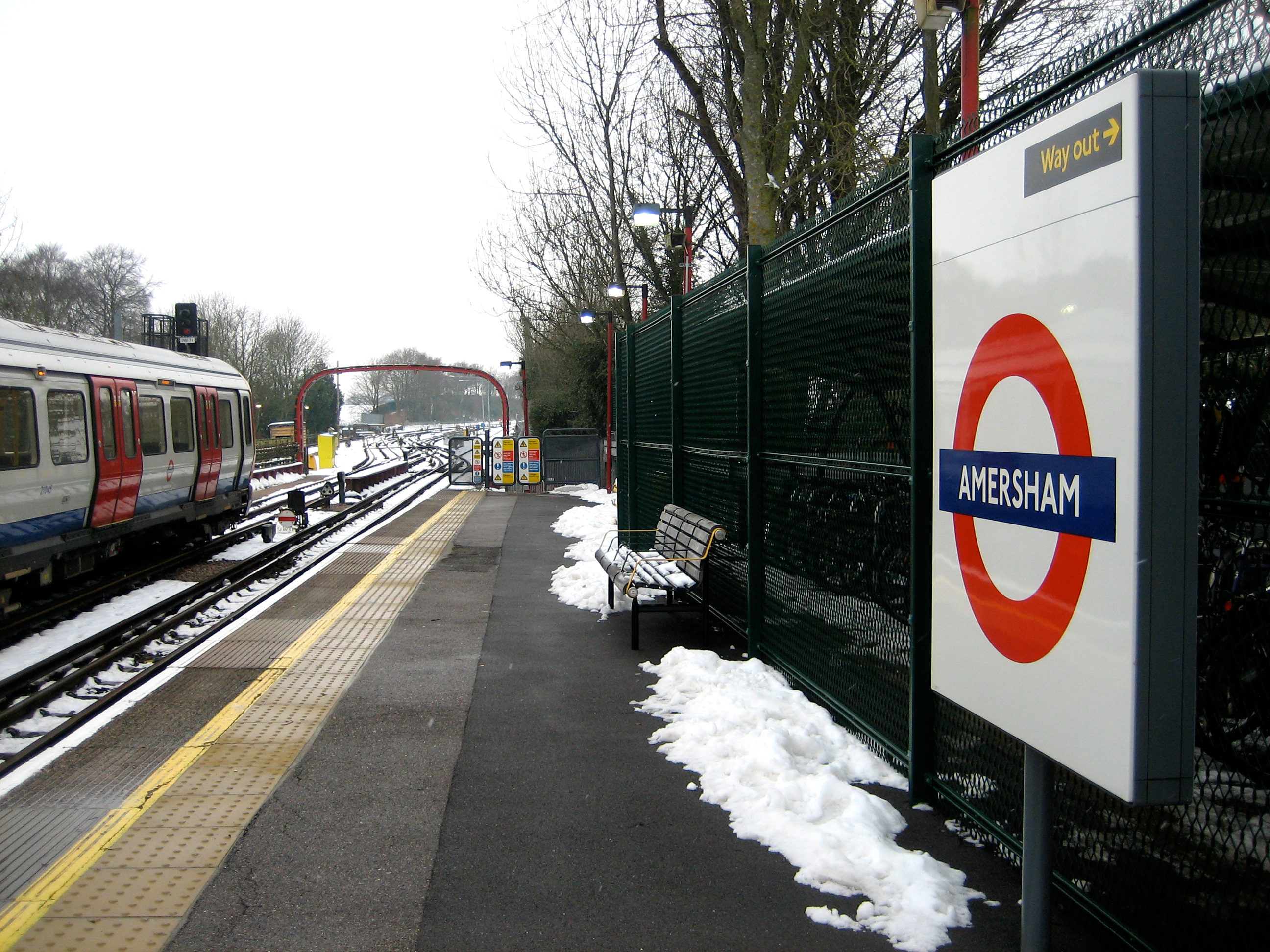
In those wet fields the railway didn't pay

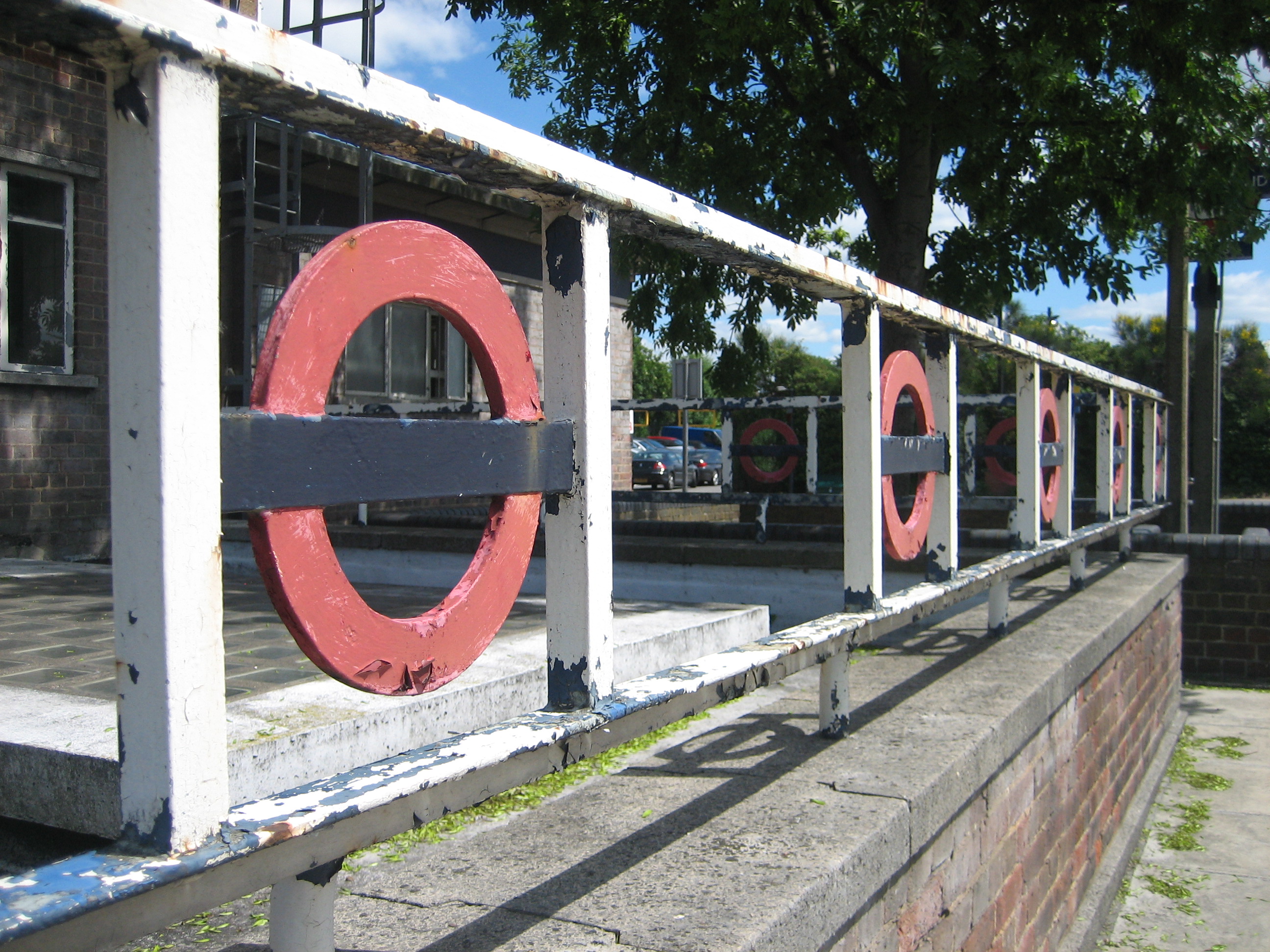
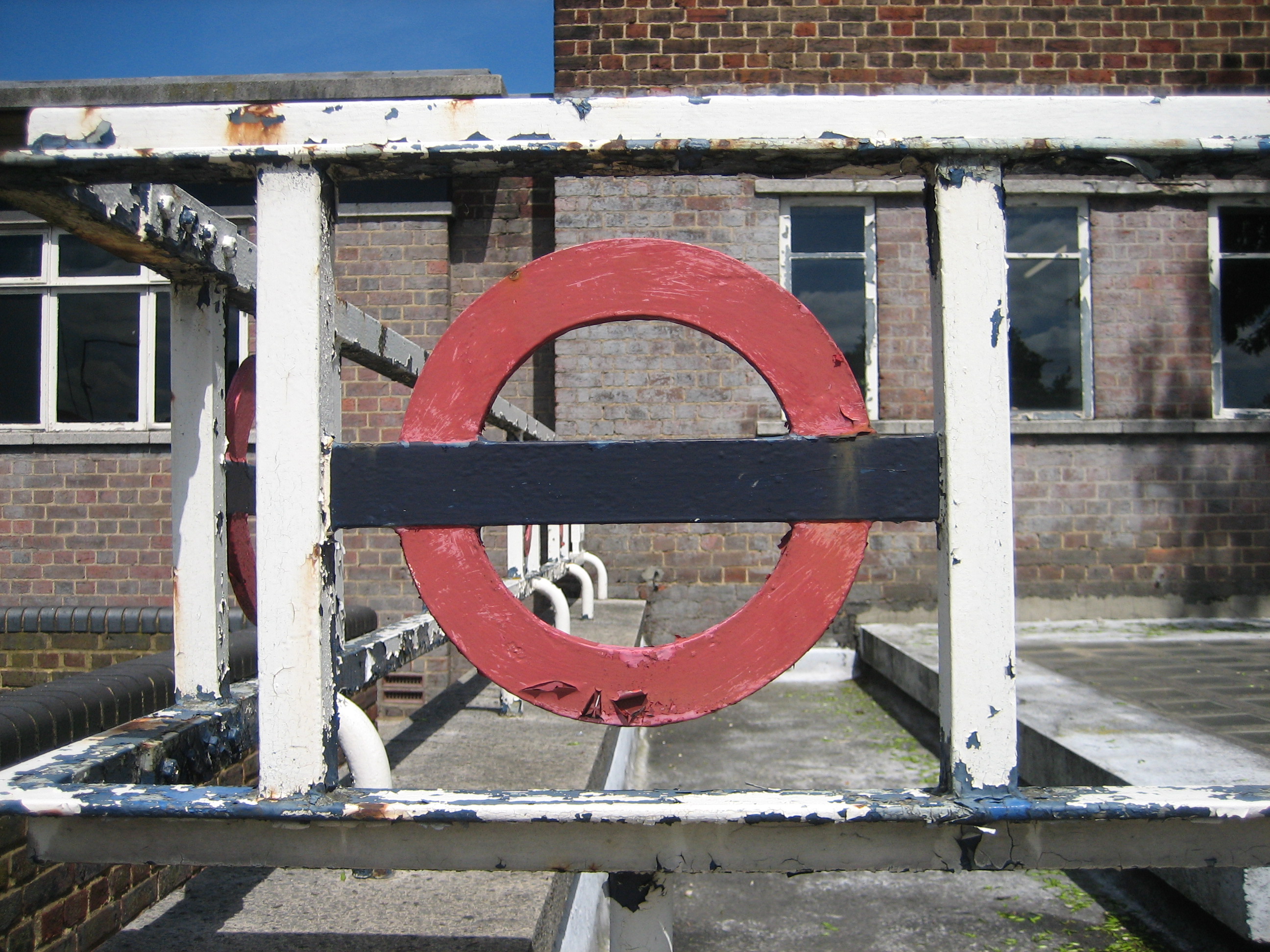
In need of a lickThis is possibly the shabbiest thing I’ve included in this blog so far. And frustratingly, it would be one of the easiest and cheapest to remedy.

I’m not sure if there’s regulation paint available from TfL central stores for the decorating of roundels. Come to think of it, I’m not sure there’s even a central store. But oh, I wish there was one, from which a few tins could be sent up the Central line to give this lovely little roundel and its row of neighbours a fresh coating of red, white and blue.

Send for the red, white and blueFailing that, how about an initiative launched by the local community? Then again, I’m not sure there is much of a community along the Eastern Avenue. I see that Jessie J was born in Redbridge. Perhaps she could front a campaign and raise a bit of money doing what she does best*.

The station has been given Grade II-listed status, but I don’t know if this includes the bits round the back, where these weathered balustrades keep watch: Cold War relics with less menace than Checkpoint Charlie but just as much elan.

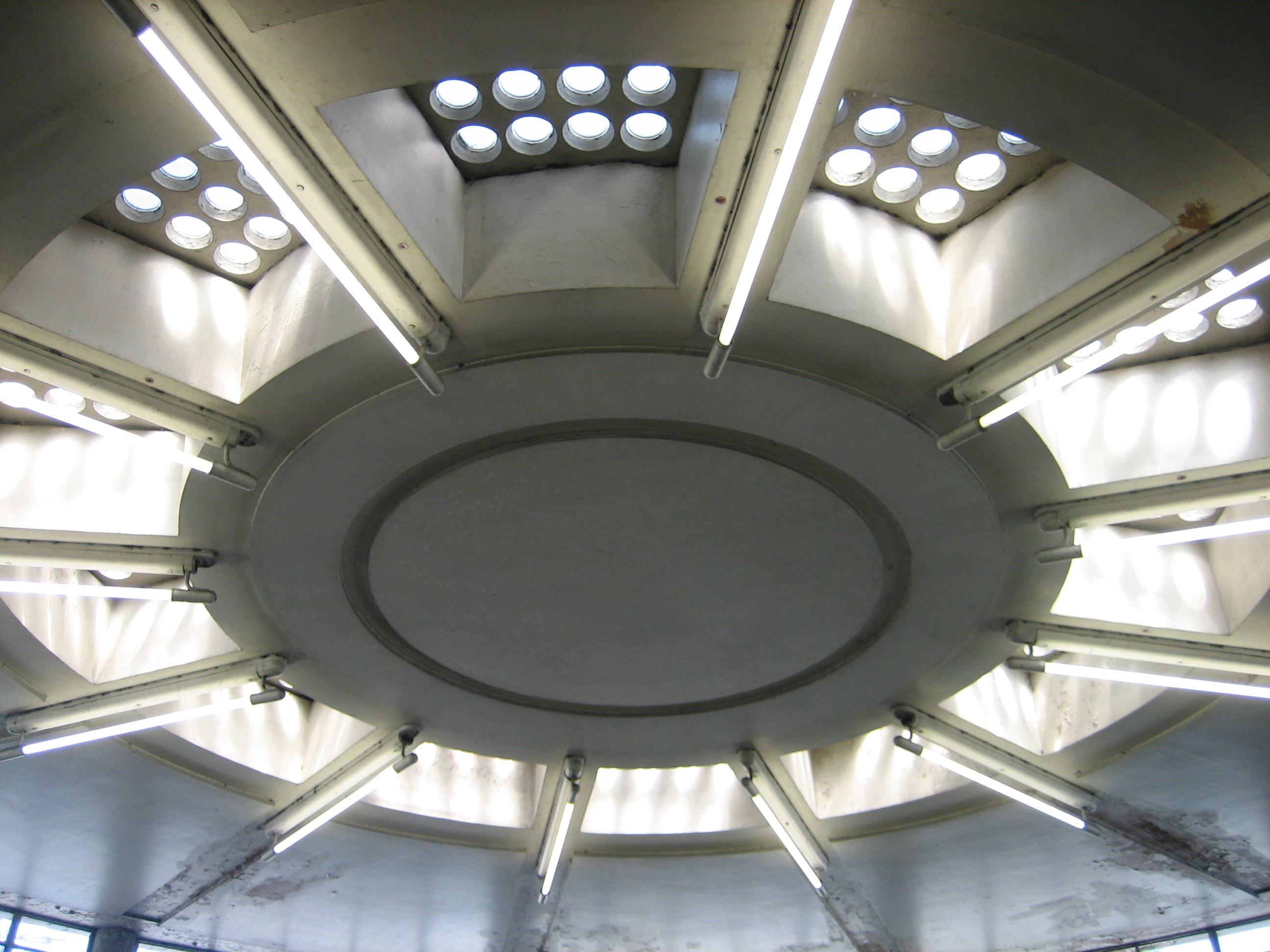
Equally gorgeous is the roundel-esque roof of the ticket hall, which foreshadows by a whole 40 years the kind of alluring mix of concrete and illumination you can find studded along the Jubilee line extension. It also looks like part of a studio set from an early-80s episode of Doctor Who, but I’m willing to forgive it that.

Perhaps when they come to do up the roundels out the back, they could make good in here as well.

Bigger on the inside*By not singing. I’d sponsor her.

Trumpeting the vertical“Like the architecture?” a Terminal 5 employee called out to me as I stood taking this photo. “Yes,” I replied, “absolutely.” “I hate it,” chipped in a passer-by, hurrying up an escalator. “That’s because you work here,” said the employee, firing me a knowing smile.

I felt a bit flattered. Not only had I been hailed by a member of staff who for once was not demanding I put away my camera or else chase me off the premises, I had also been made party to a bit of staff-room bitching. And I didn’t even work here. I had an “in”! And at an airport, a place where I usually feel thoroughly “out”!

To bond with a stranger over a slice of modern architecture is a rare treat. To do so at Heathrow Terminal 5, which trumpets its contemporary wares from every crevice, made me a bit dazed. Or to be accurate, even more dazed, because I’d felt a little out-of-sorts from the moment I’d arrived.

Terminal velocityDespite offering plenty of architecture to admire, this terminus-in-a-terminal stretches every sinew to make you not want to loiter.

Its glittering speck-free platforms and vast hushed walkways, not to mention its platoon of notices all urging you to move on and go somewhere else, conspire to make the spectator – as opposed to the traveller – feel rather uneasy.

This isn’t an environment conceived for contemplation. If you must wait, the atmosphere implies, do it sitting in a carriage, or up in the airport terminal itself. To stand still is to stand everyone else to attention.

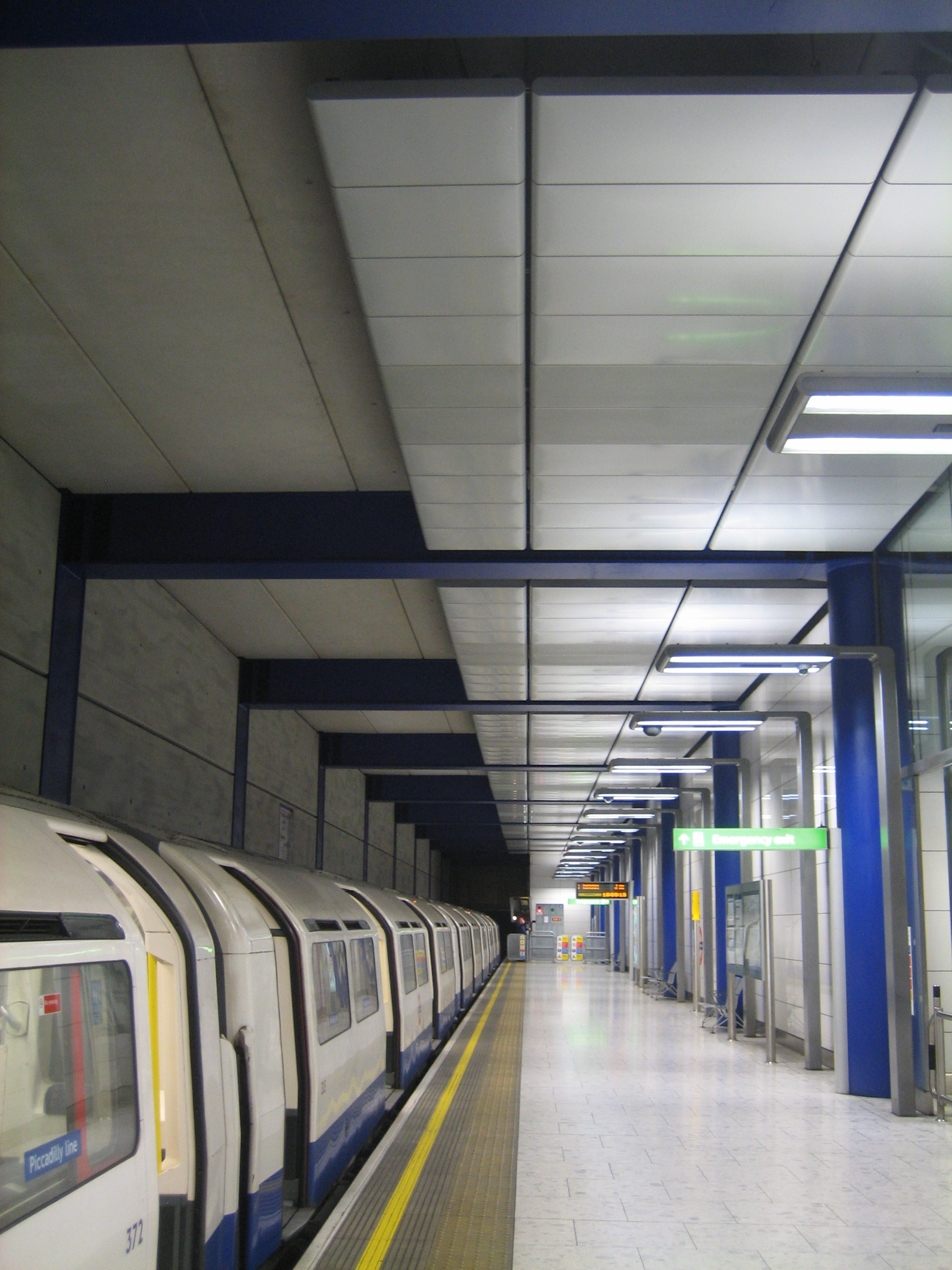
Which is a shame, as the best way to appreciate the elegance of the station is to do just that. And not just stand still, but look up, for this is a majestic soaring construction that scoops light from the surface and deposits it dozens of metres below the ground, while simultaneously doing the same in reverse with people.

Going up…

Lift offArriving here after 45 minutes on the Underground is to emerge from a dark warren of horizontals into a rather eerie but enticing forest of verticals.

The station isn’t as magnificent a modern-day cathedral as some of those along the Jubilee line extension, such as Westminster and Canary Wharf. But it’s scale is just as persuasive as its design, it has a church-like enforced calm, plus there’s a curiosity value that repays – if you can manage it – a non-suspicious linger.

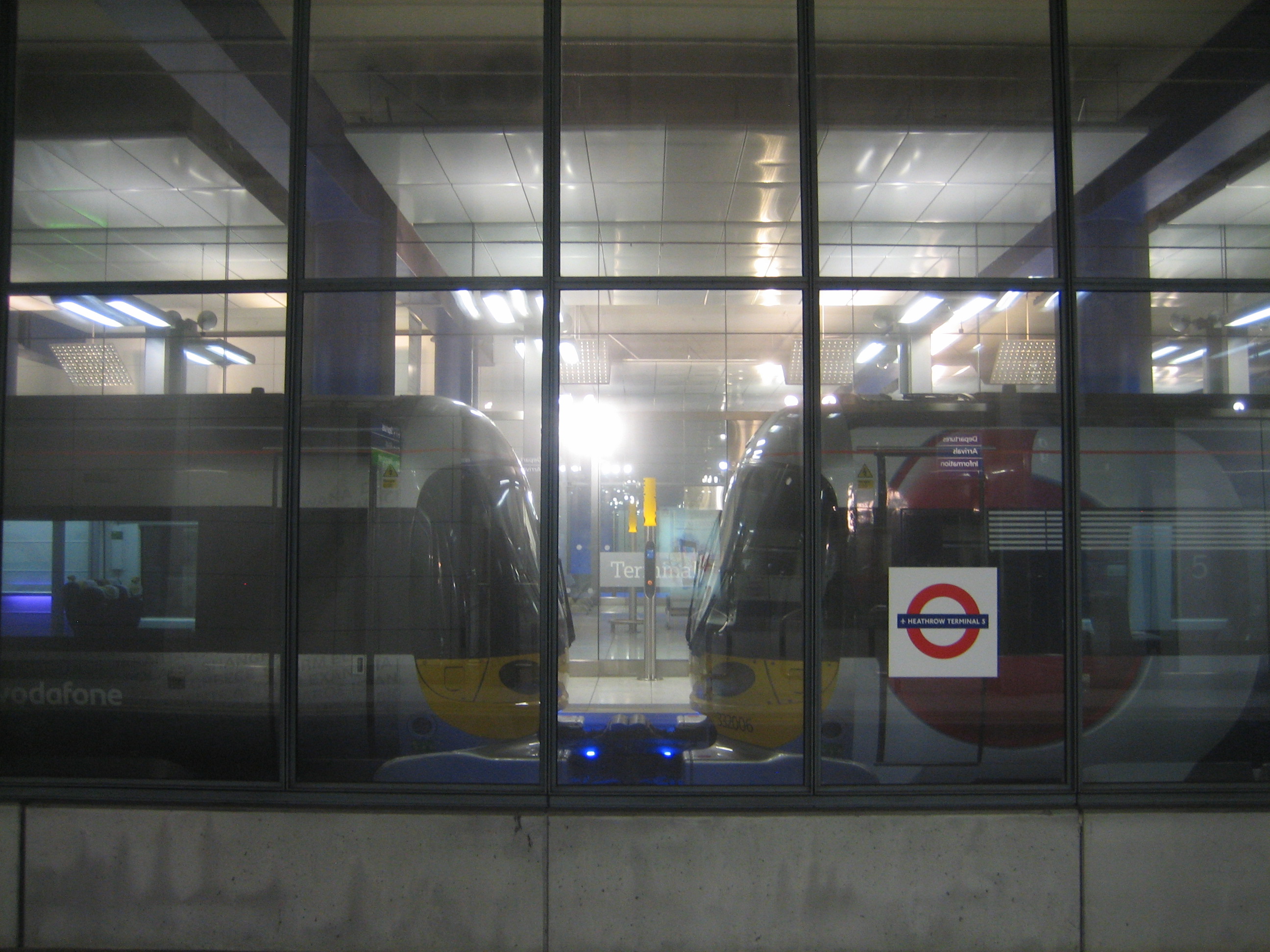
Especially when the Heathrow Express is just through the window:

Carriage clockedThis was the first time I had been anywhere near Heathrow for years – and the first time ever I had been to Terminal 5.

Along with not really knowing what to expect, I’d had to deal with the rising anxiety of setting foot in one of the world’s most scrutinised airports with absolutely no intention of getting on a plane or meeting people who had just got off one. Ripe for scrutiny, in other words.

Which is precisely what happened, though not in the form of an interrogation, more a jovial chat. Nonetheless after about 20 minutes I wanted to leave. I had a hankering for fresh air and the sight of a brick.

Besides, all those semiotics were doing my head in. Now there’s a phrase I haven’t needed to use since back at university.