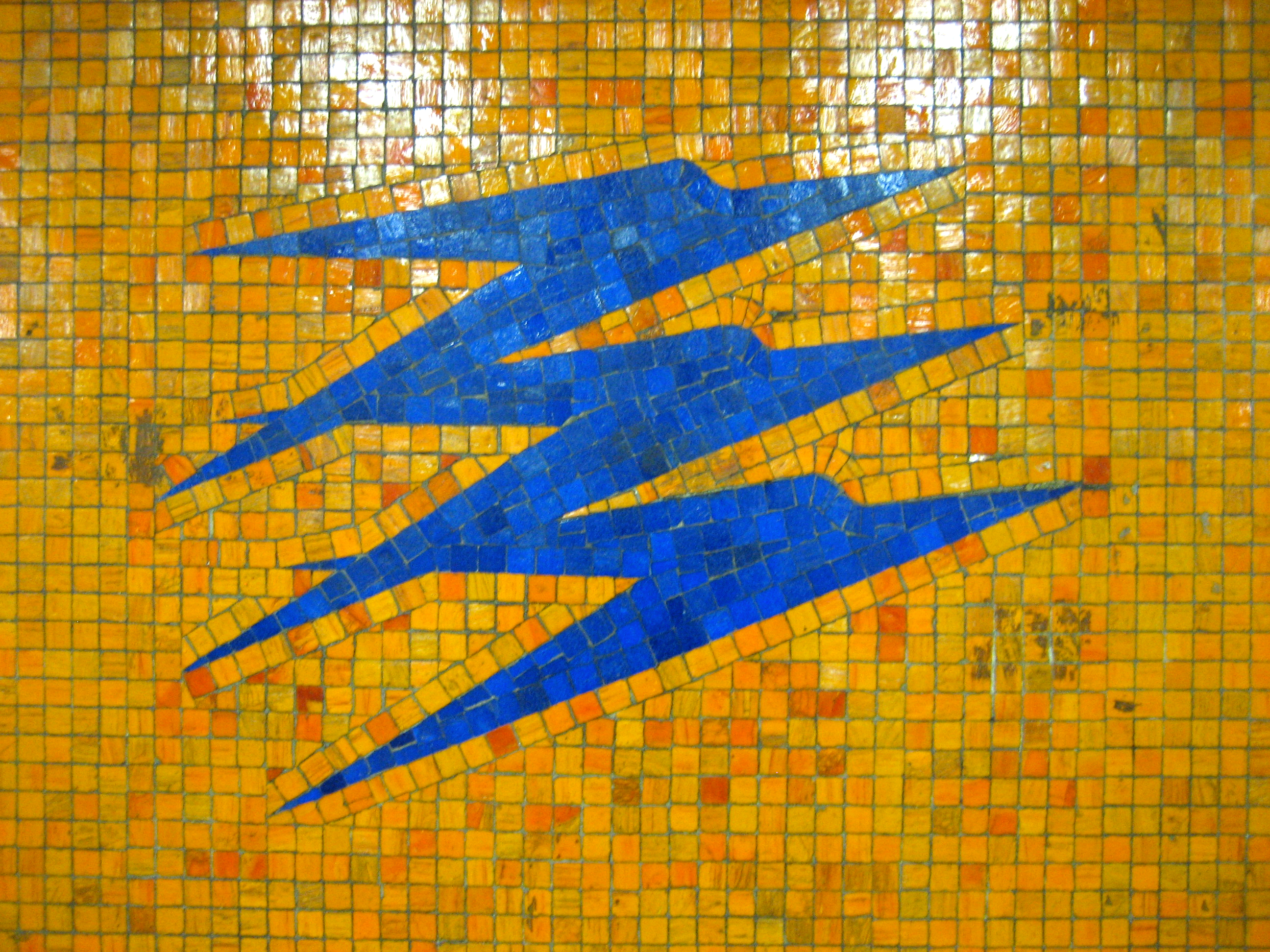
Hatton patternFor a long time I was baffled by the opening line of the Beatles’ Back in the USSR. “Flew in from Miami Beach BOAC.” What did those letters mean? Were they some kind of code? A bit of 1960s polari?

I decided it was an in-joke of the era, a teasingly exotic hangover from a time of impenetrably trendy goings-on, but one that added a potent twist to what I still think is one of the most exciting opening 30 seconds to any song on any album ever.

Many years later I realised it was a reference to the British Overseas Airways Corporation. But this just made the song even better. Then later still I realised I’d been oblivious to a second salute to the BOAC, in an equally unexpected place:
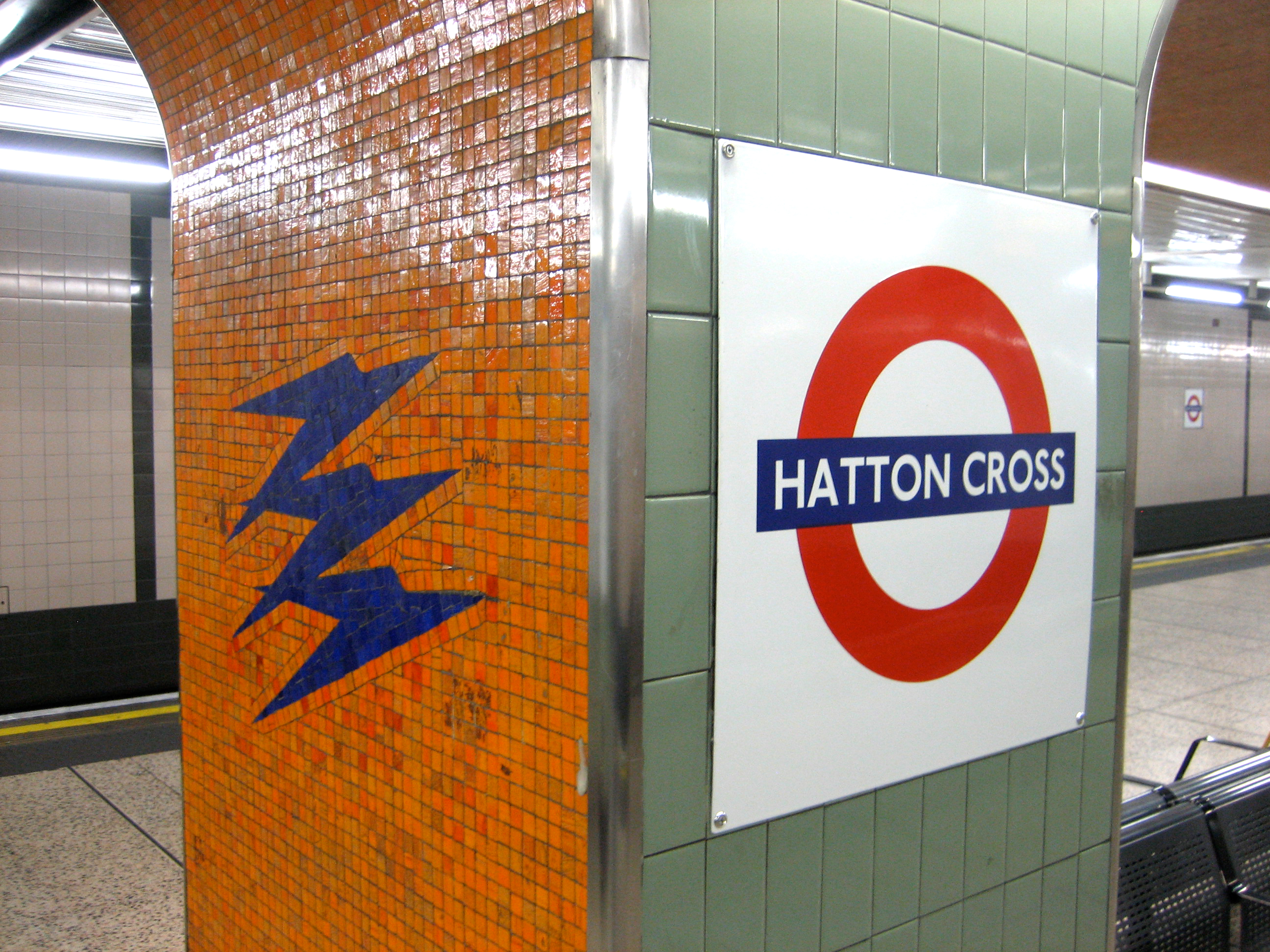
Cross purposesIt is the old British Overseas Airways Corporation logo, and it is gorgeous.

Speedbird, to give it its thrillingly imagine-what-the-future-will-be-like name, used to be emblazoned all over aeroplanes until British Airways was privatised in the early 1980s (coincidentally, around the same time I would have first heard Back in the USSR).

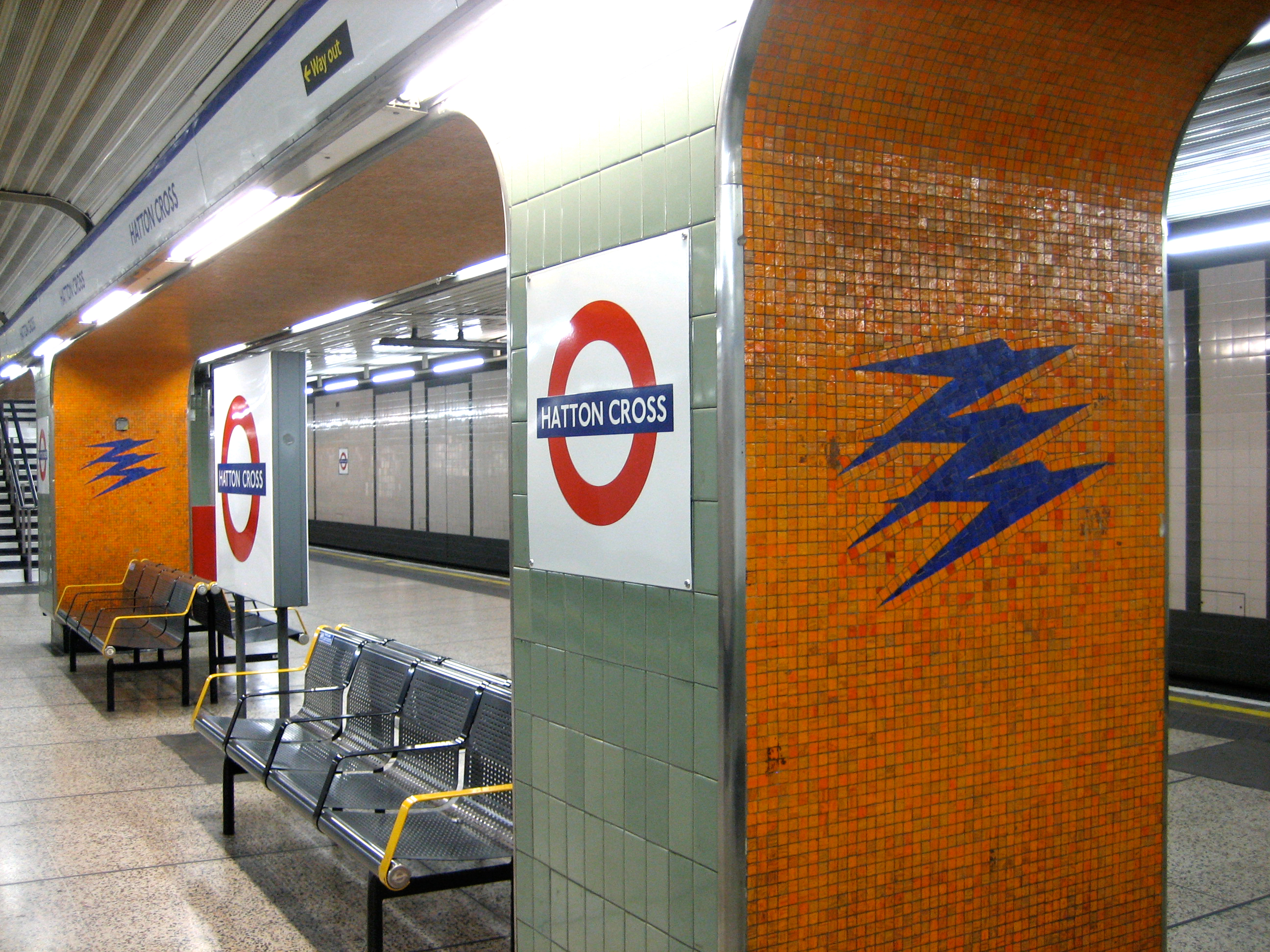
Since then it’s been revised and adapted and generally messed around with so as to become virtually unrecognisable. Not that I’d ever be close enough to spot it, given my fear of flying. Indeed, even being at Hatton Cross, one stop along from the first of the Heathrow stations, gave me the jitters. Although this might have been more down to the questioning looks I was getting from waiting passengers.

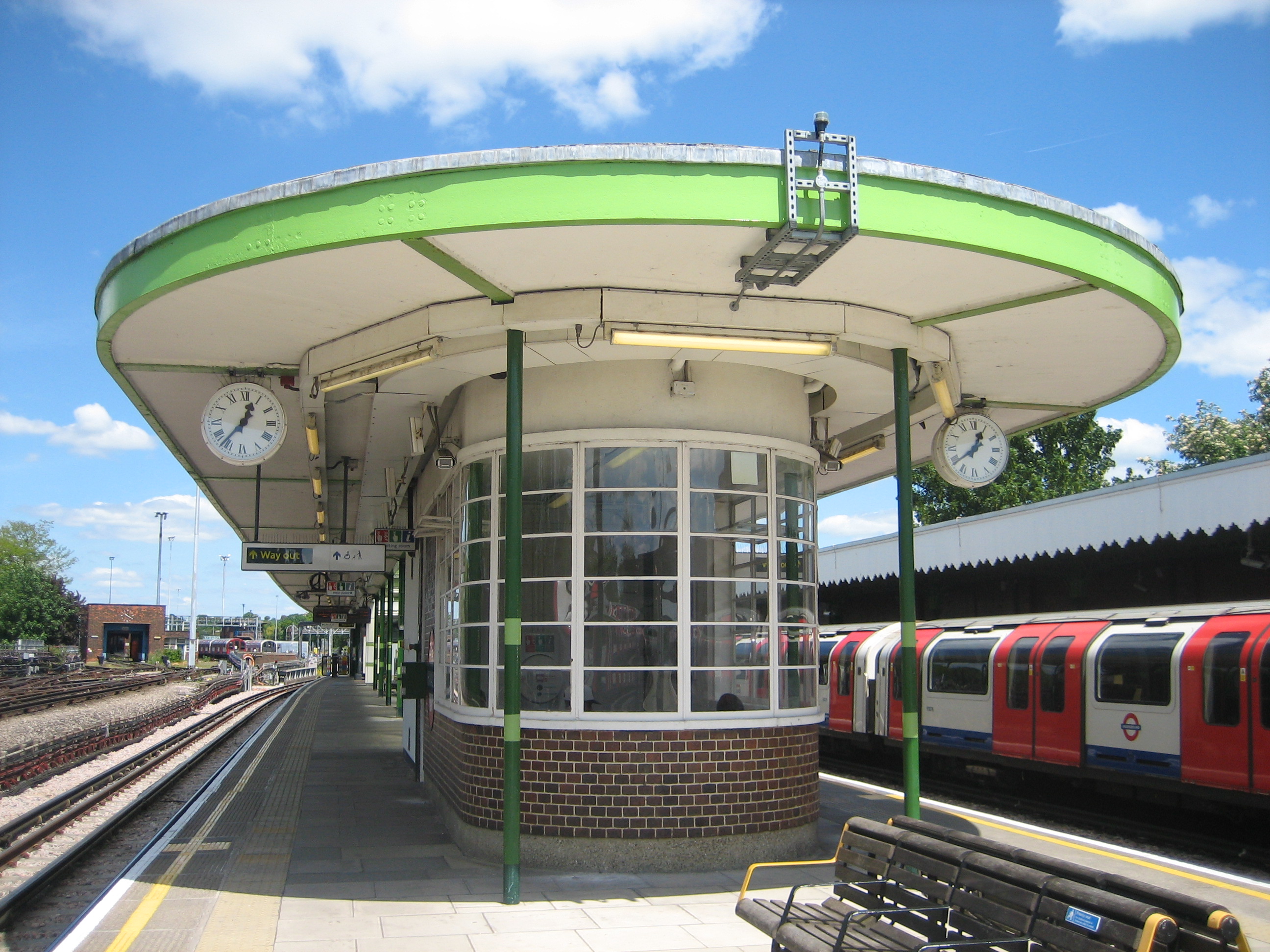
You’re encouraged to change trains at Hatton Cross to get your desired connection to terminals 1, 2, 3, 4 or 5. As such the platforms play host to much anxious watch-checking and ticket-consulting. Maybe these bold and colourful streaks of futurism provide a welcome distraction. They can certainly calm the nerves of the most aerophobic of souls.

Planes: perfectly fine when turned into a two-tone mosaic on a pillar. Just don’t send me up inside one, or there’ll be more than a paper bag on my knee.
Hatton: Lust for Glory

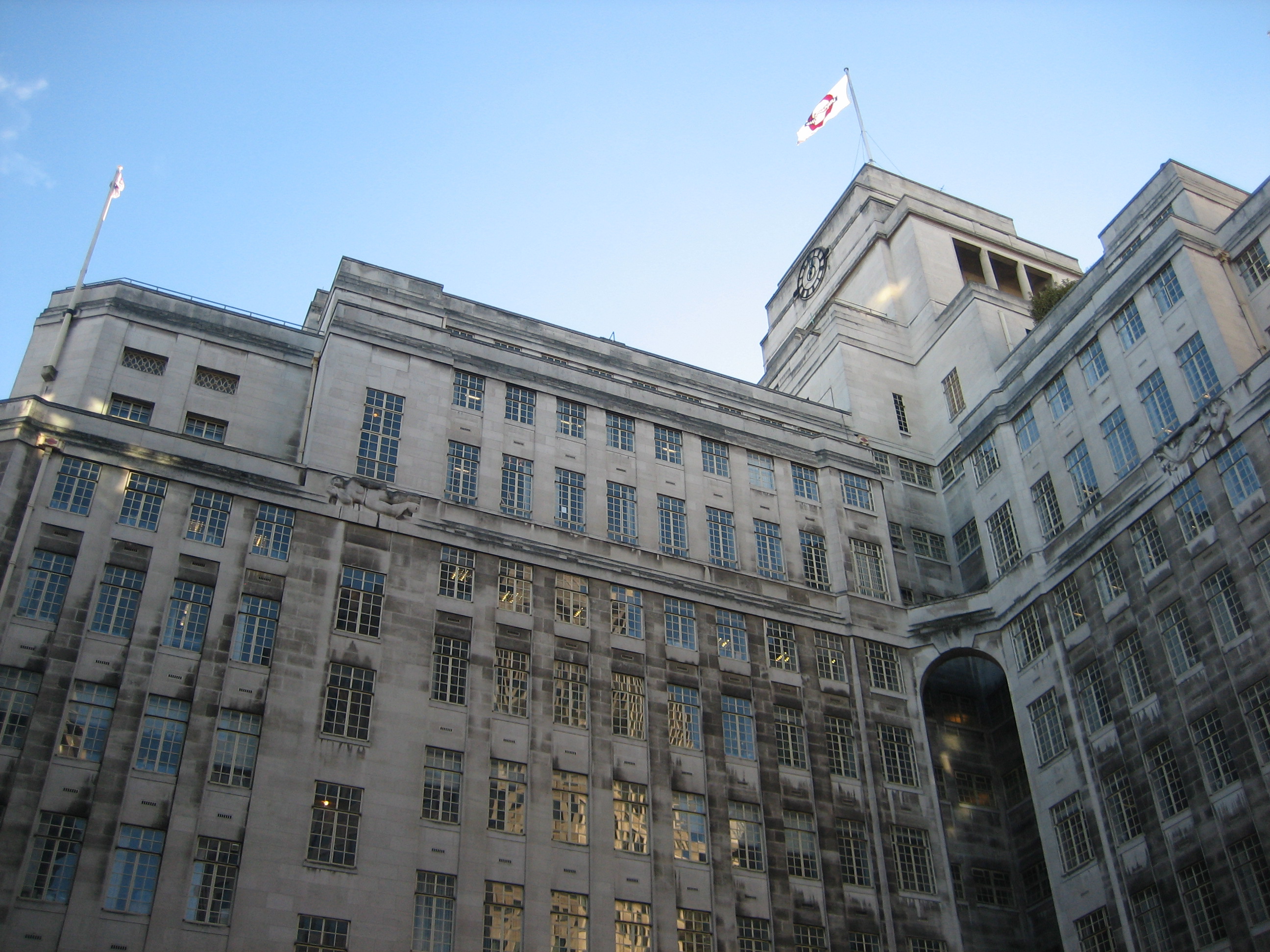
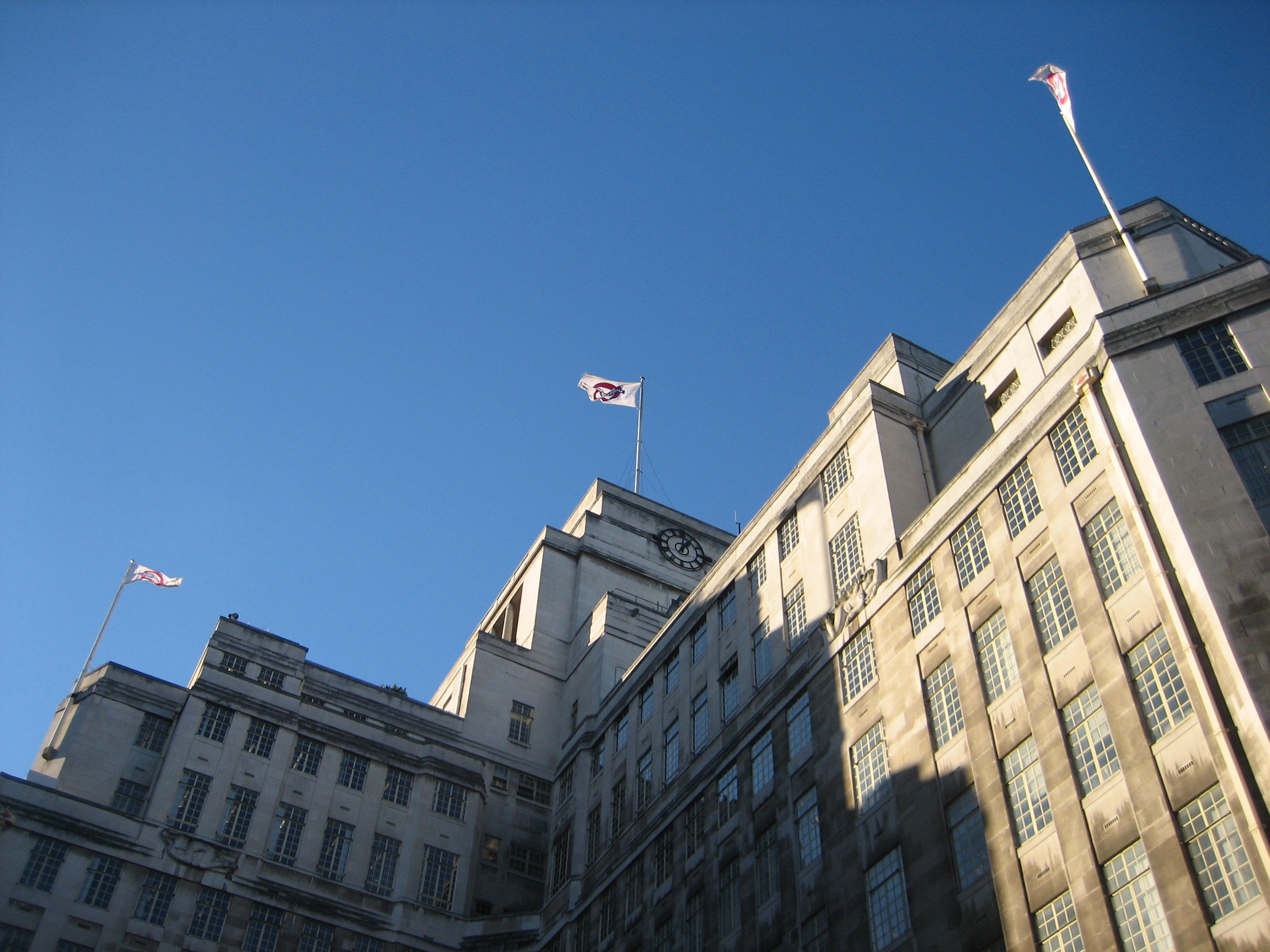
Cathedral of modernityHaving already swooned over the statues on the outside of London Underground’s HQ, I feel any further words of my own can’t possibly do justice to the wonder that is the whole of the building.

So I’ll let other people’s words do that for me.

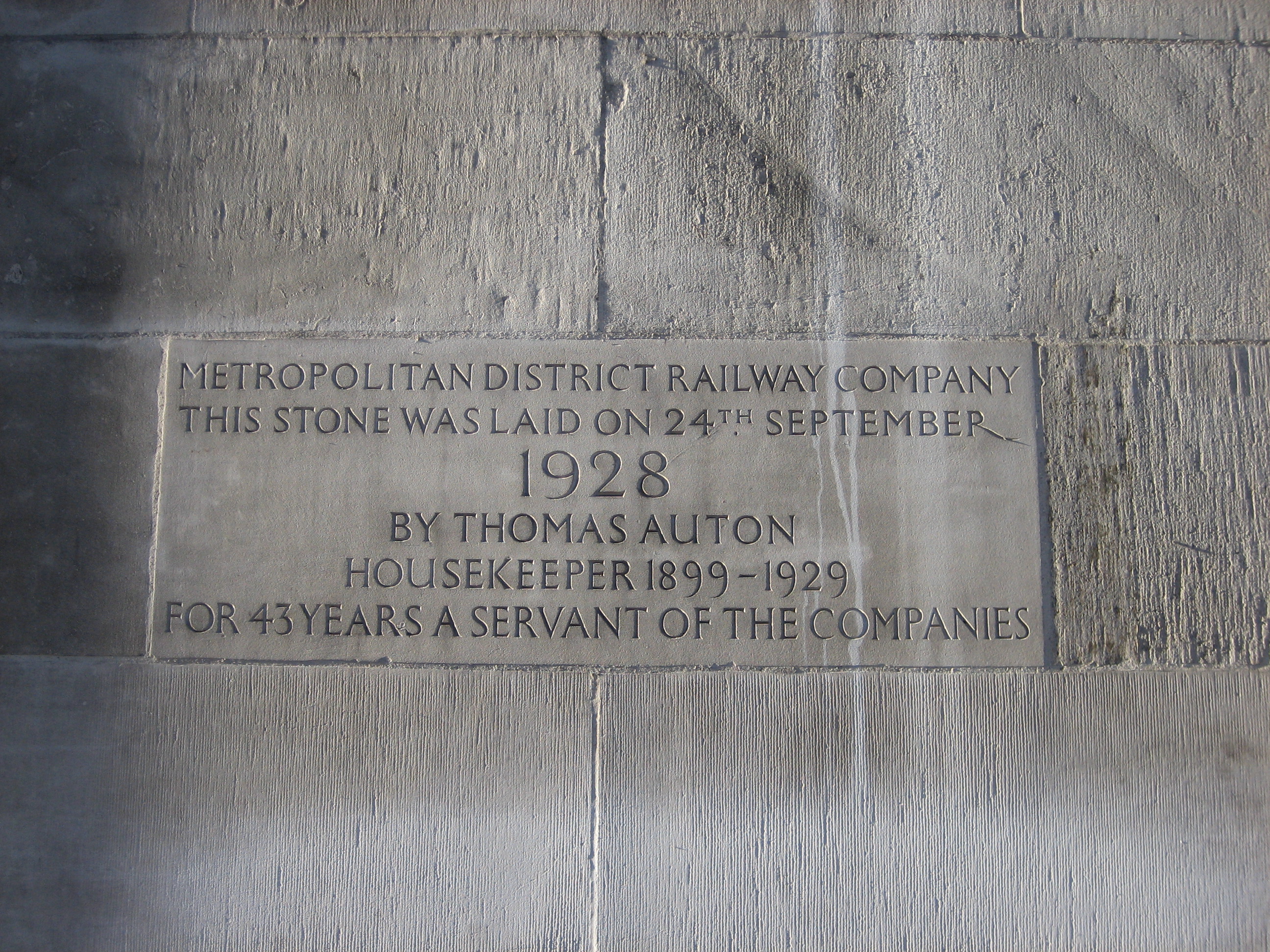
Foundation“When I realised the full possibilities of this [building’s] cross-shaped plan – good light, short corridors, and a compact centre containing all services, complete with lifts and staircase communicating directly with all four wings… I do not think I was ever more excited.”
– Charles Holden, 1944

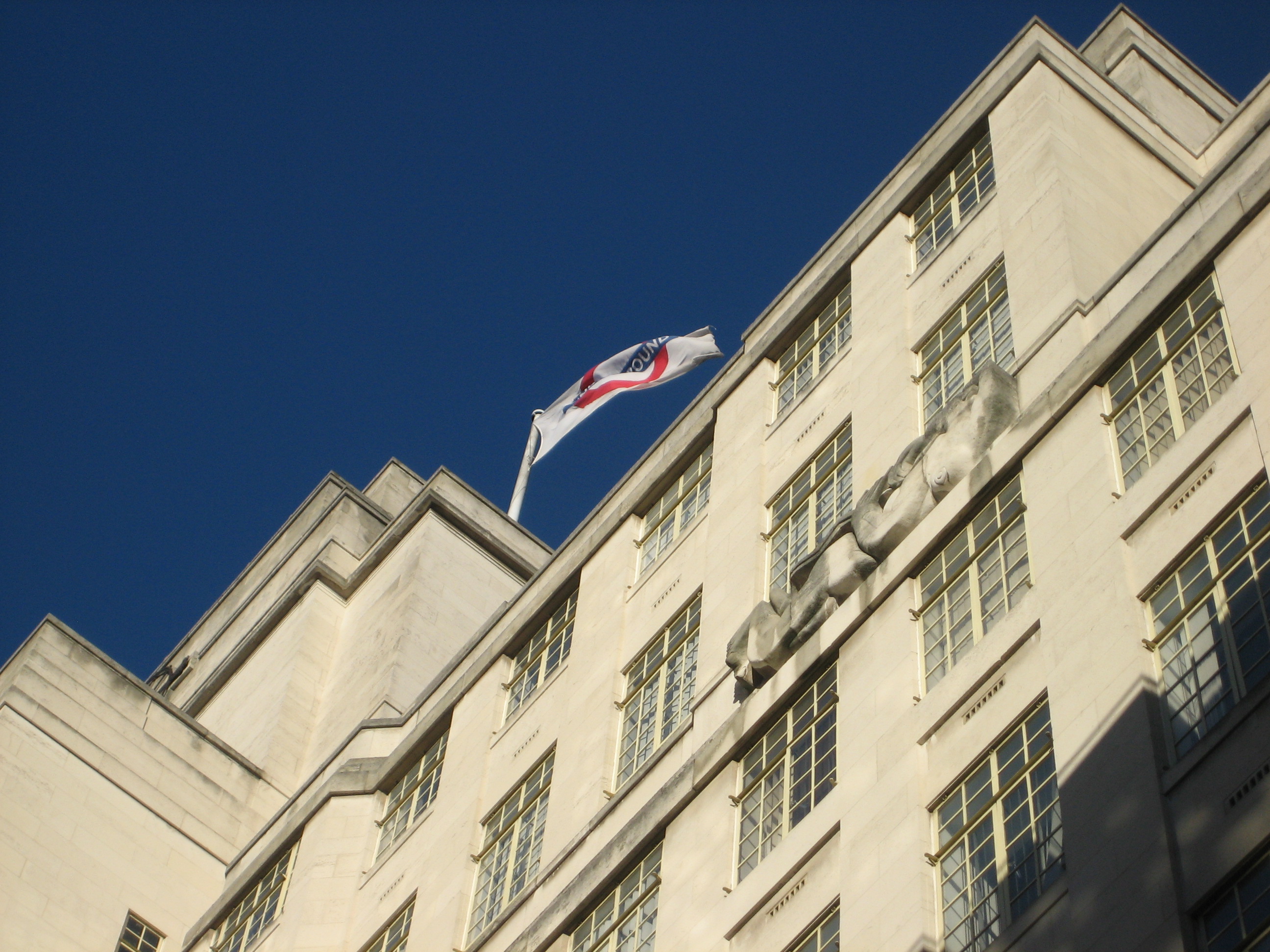
Flying the flag“Charles Holden built embassies of modernism. If you wanted symbolism of a newer world, he was making those shapes against the sky.”
– Peter York, 2013

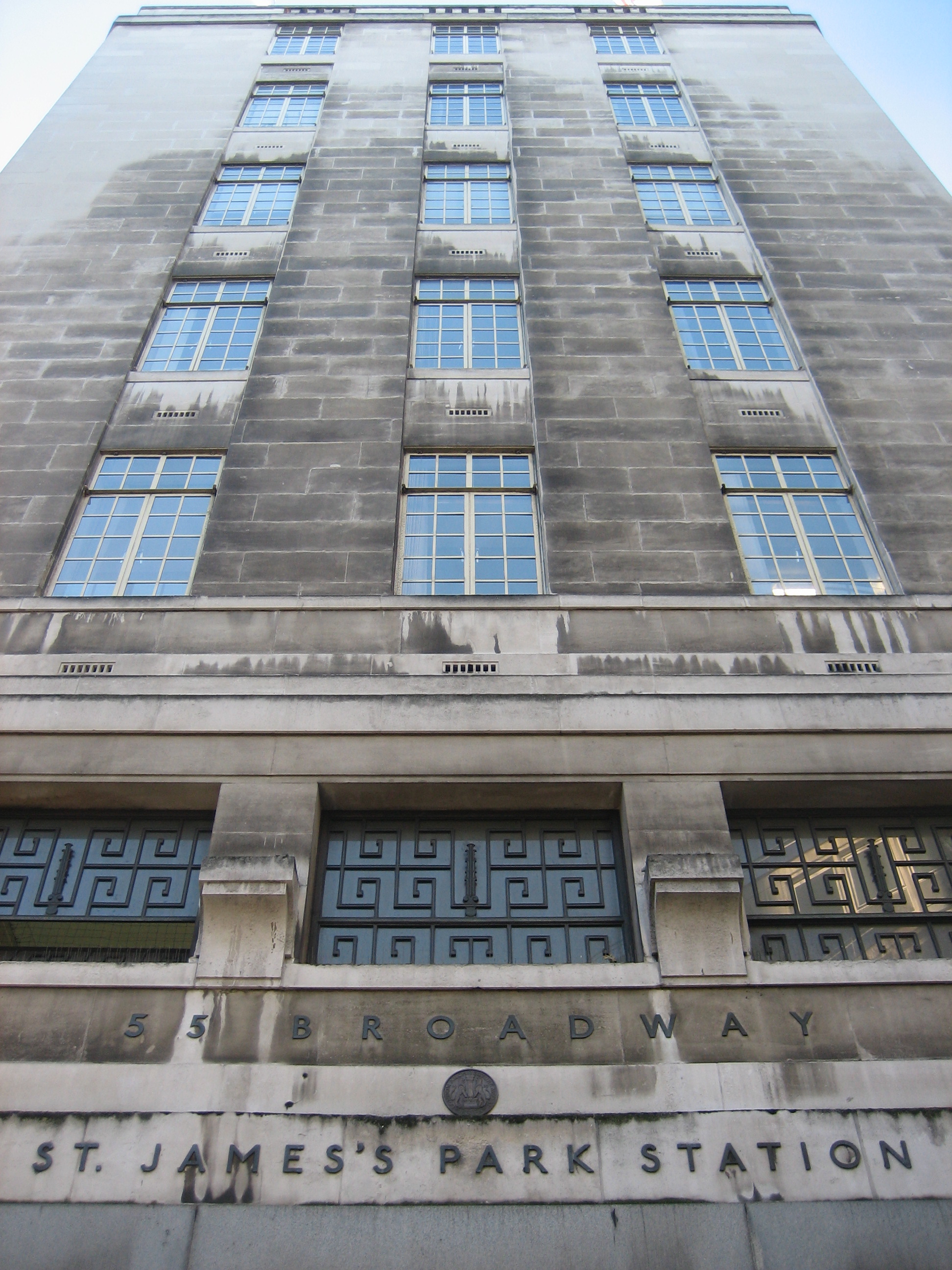
Broadway melody '55“The building, begun in 1928, was constructed by The Foundation Company and completed in 1930. When finished it had a floor area of 31,000 sq ft. Above the second floor the building had a central tower and four wings, each 48ft wide. The wings necessarily varied in length, the east wing was 100ft, the west was 76ft and the other two were just 60ft. The top of the tower was 176ft above road level, and was surmounted by a 60ft flagstaff.”
Mike Horne

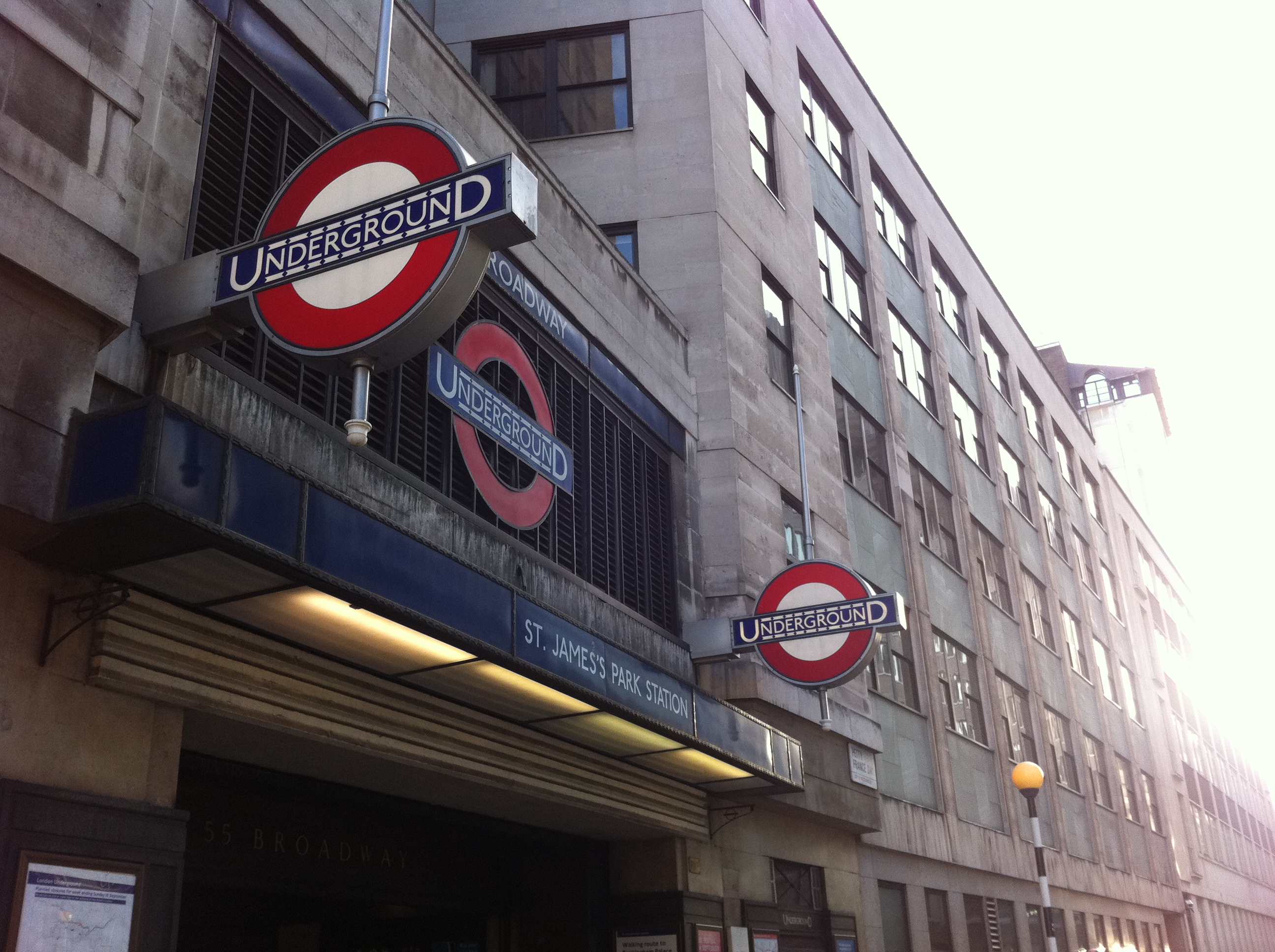
A central Park“Frank Pick [who commissioned the building] was the greatest patron of the arts whom this century has so far produced in England, and indeed the ideal patron of our age.”
– Nikolaus Pevsner, 1968

Jesus H. Cruciform

“The historic home of London Underground is to be converted into expensive flats as part of a drive by transport chiefs to raise more than £1 billion. The Grade I-listed building at 55 Broadway… is unsuitable for a modern office, say bosses. Lower floors will be converted into one-bedroom apartments and the rest will be penthouses. LU boss Mike Brown said: ‘Any development must respect the building’s heritage. We will proceed sensitively.'”
– London Evening Standard, 15 May 2013

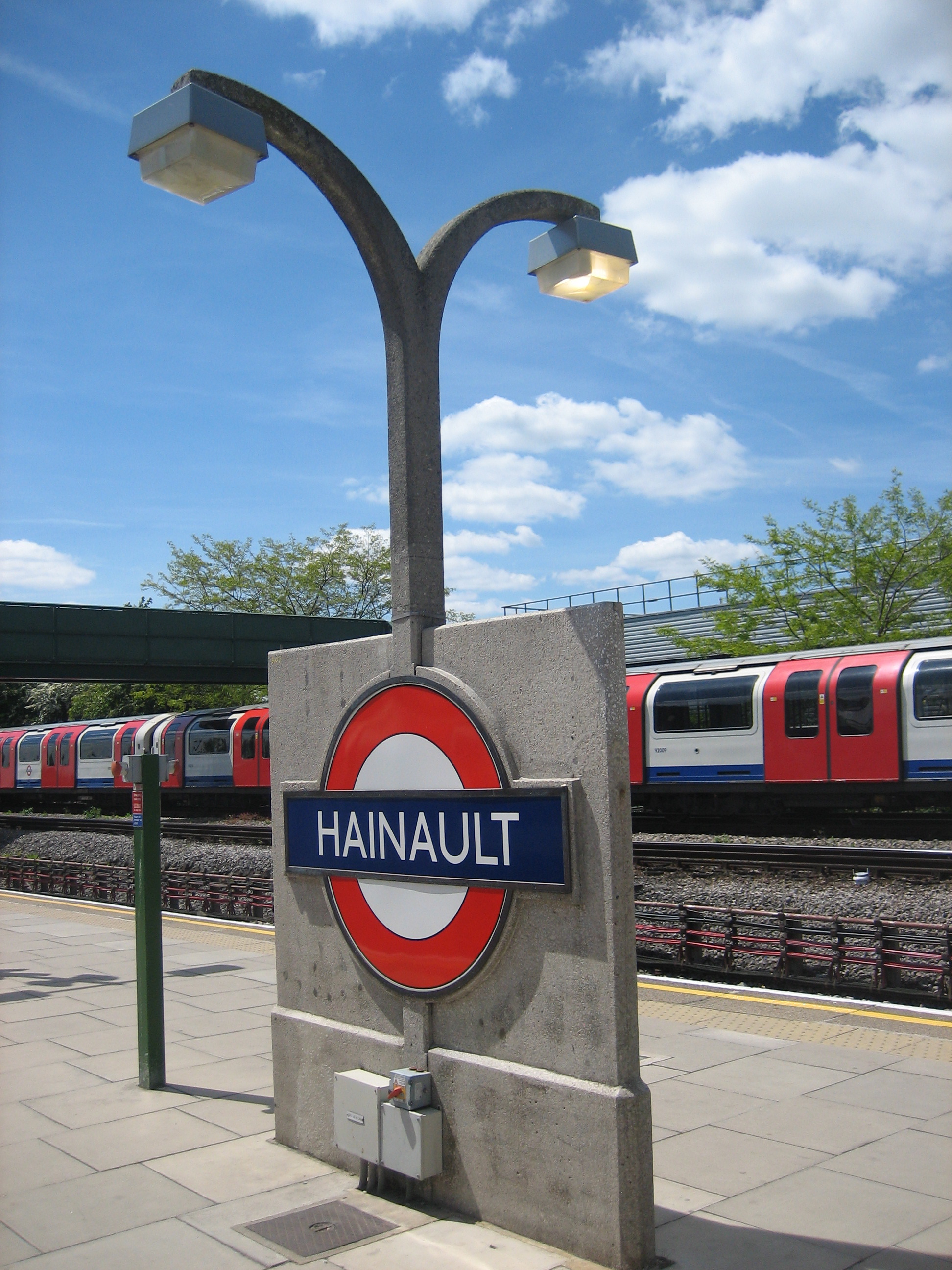
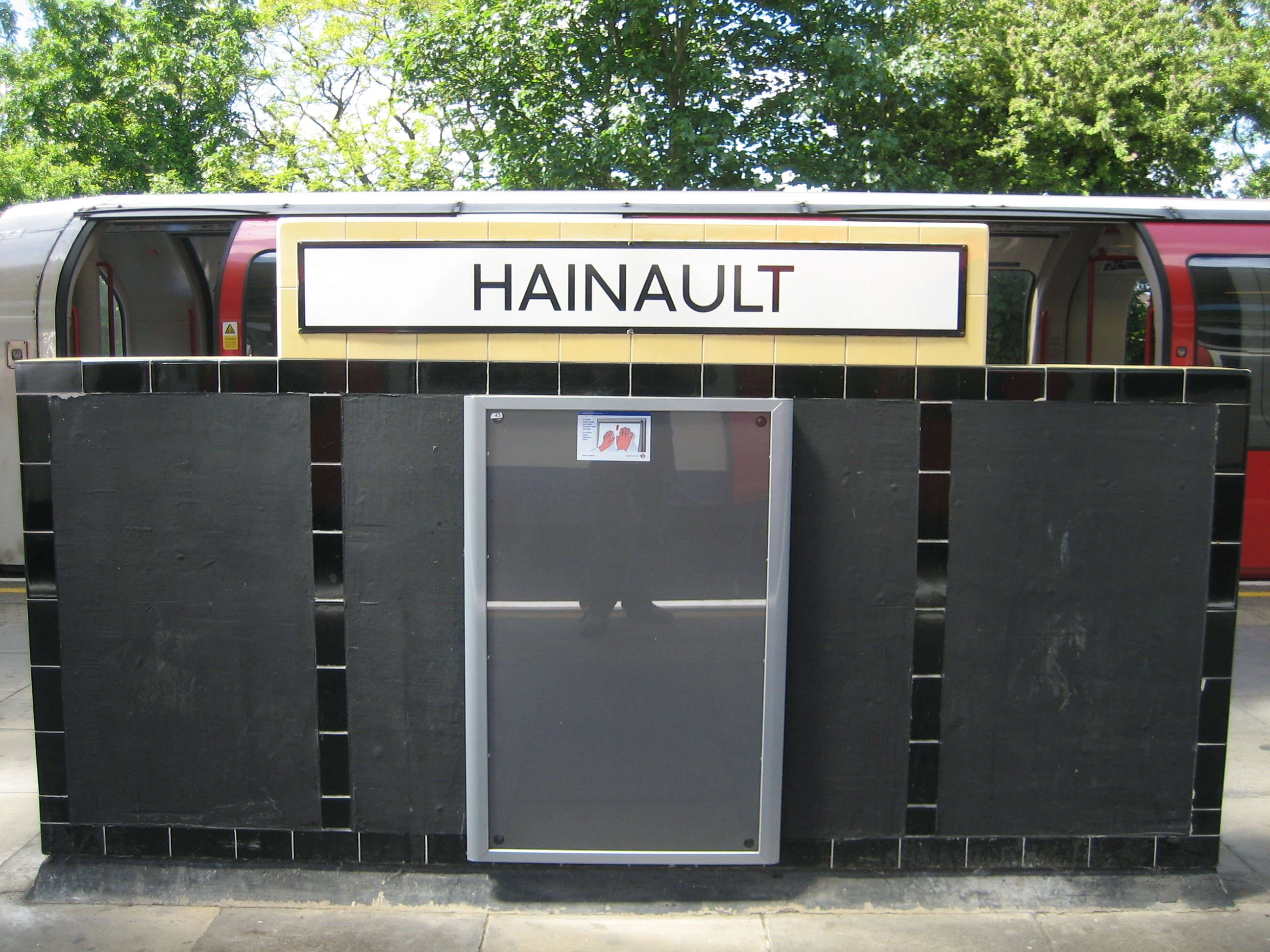
Much Hainault about nothingOnly three trains an hour run north from this station. It’s just as well the platforms are so gorgeous. Chances are you’re going to do a lot of standing around on them.

Passengers wanting to travel south have it much better. They get to pick from around nine trains an hour. No loitering among the beautiful canopies or mooching under the picturesque awnings for them. But then if you’re heading south from Hainault you’re going towards central London, and I imagine you haven’t the time for design fripperies, no matter how elegant.

If you’re travelling north from here, however, I’d guess you’re more than likely returning from something: work, maybe an excursion, perhaps an appointment or a tryst. You’re already resigned to your journey lasting as long as it takes, so hey: another quarter-of-an-hour just means more chance to make Hainault while the sun shines.

Naults and crosses The platforms’ shapely concrete posts and ritzy curves give the discerning (and even the idle) public architecture devotee many reasons to be cheerful.

Less pre-disposed towards Hainault is the “Tube challenger“, for whom the place is often the fly in their diagrammatic soup. Mastering the so-called Fairlop Loop on the Central line necessitates picking a train that avoids having to change here, and possibly endure a wait of up to 20 minutes, which certainly won’t help you set a new world record.

Hence while there is plenty of scope for a bit of infrastructure ogling, these platforms are also the crucible of a fair few thwarted dreams.

Definitely a case of ‘Naults and crosses.

Here's looking at you