Through a glass darklyDarkness can be just as attractive as light on the Underground.

In the hands of the right architect, it gets deployed for mathematical as well as sensory effect. It becomes more than something to be accommodated expediently, and instead resembles something to be manipulated skilfully – and daringly.

The gigantic ticket hall at Eastcote is one such an example. The darkness doesn’t cling to the shoulders of people passing in and out, or lurk pointedly in the corners of your eyes. It’s only there if you want it to be there. Yet its presence isn’t an accident. It is part of the design.

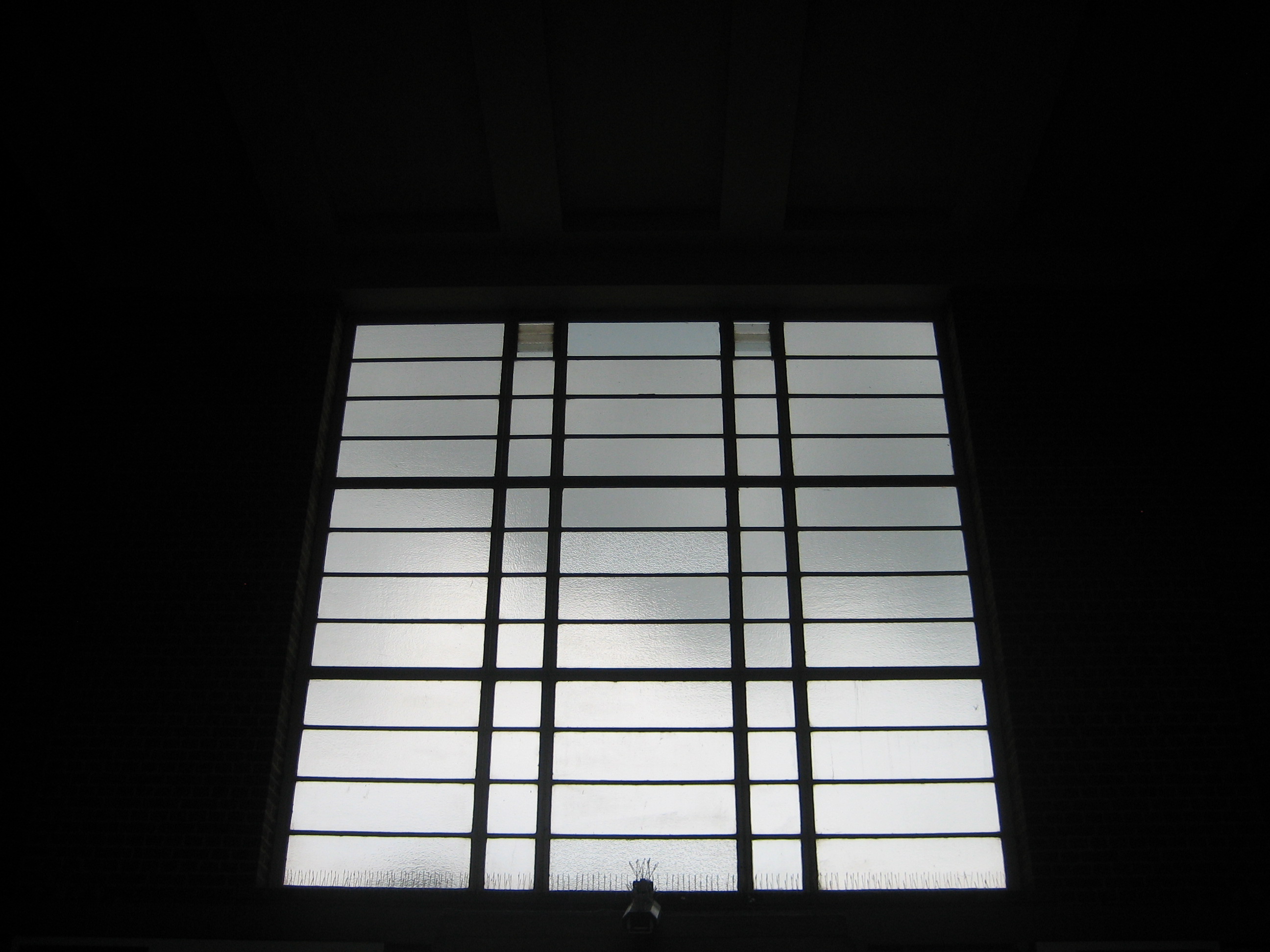
I'll get me 'CoteBrick, concrete and glass: the holy trinity of 1930s-era London Underground. But it’s modernity, not divinity, that guided the construction of this cunningly beautiful station, both in principle and practice. Light pours in; darkness pours out. The enormous glass panels are dazzling whichever and wherever you look at – and through – them:

To say the very EastThe secret to all of this? Height. Look how tall the ticket hall stands. Think how much brightness is deliberately allowed inside. Then consider why it is that so many of the greatest Underground stations reach so far above ground. There’s a sort of inverse proportionality going on here, but I’m stumped if I can express it as an equation.

Well, other than light + dark x Charles Holden = something profoundly illuminating.

I’ll get me ‘Cote.
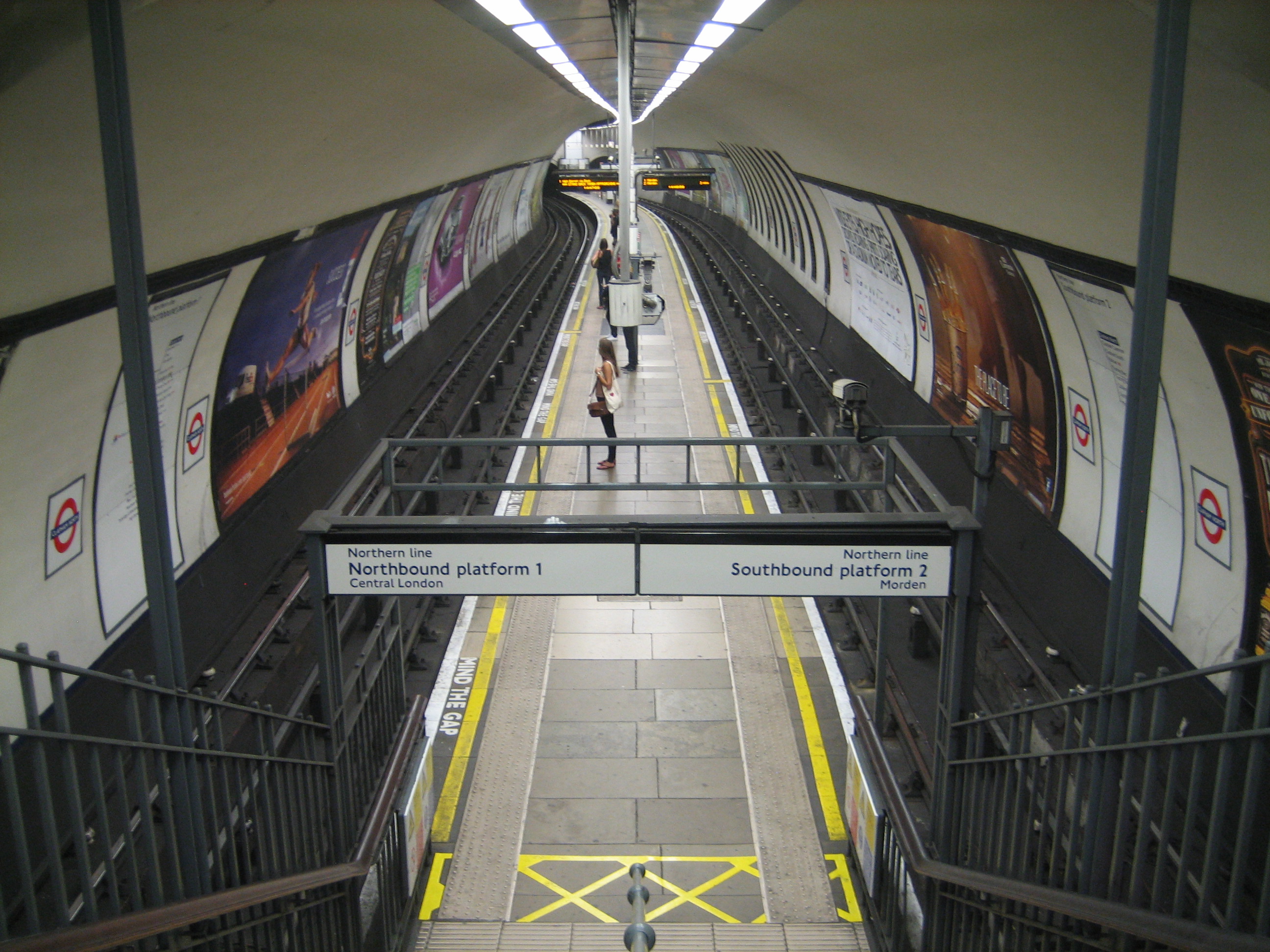
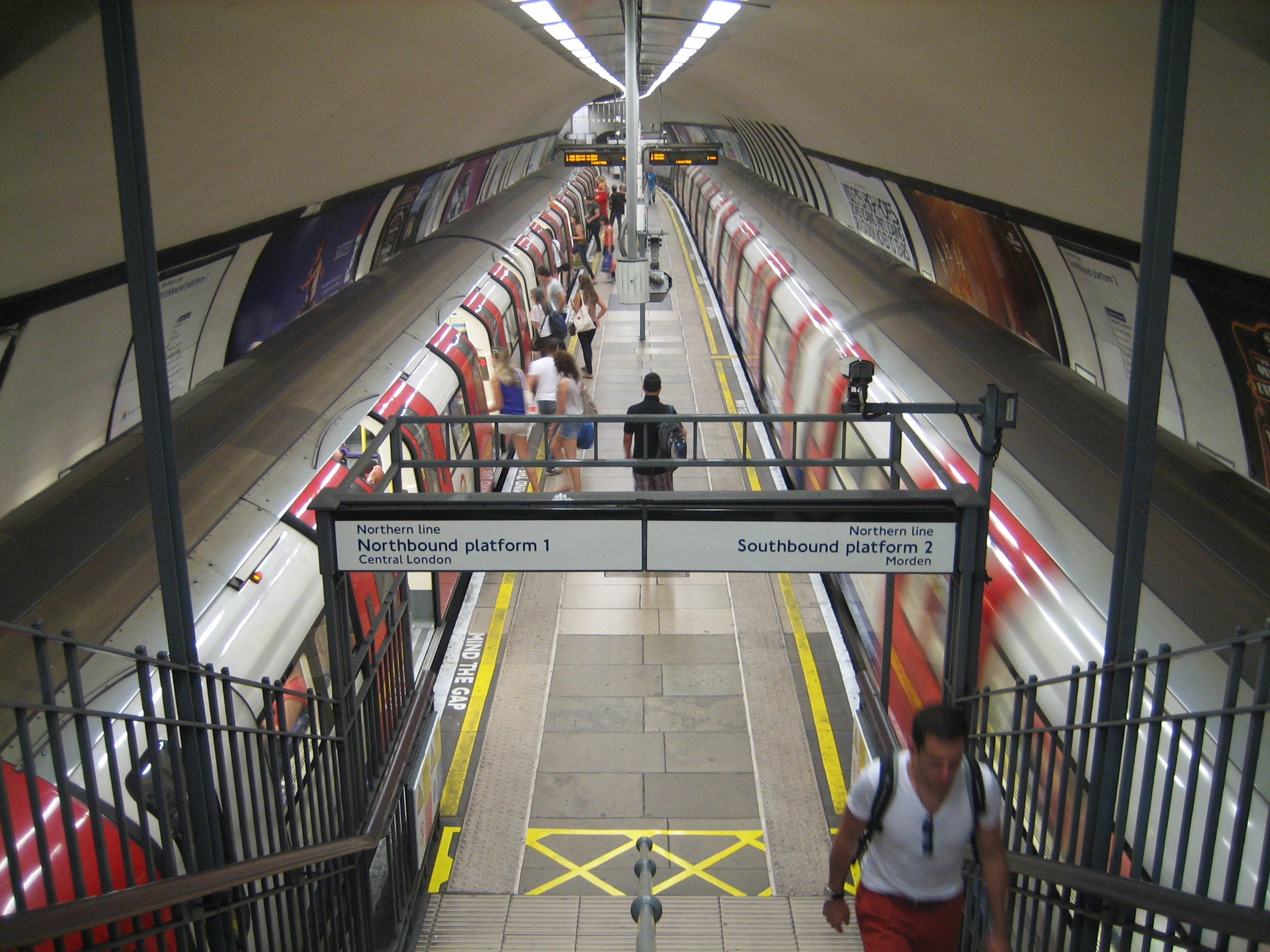
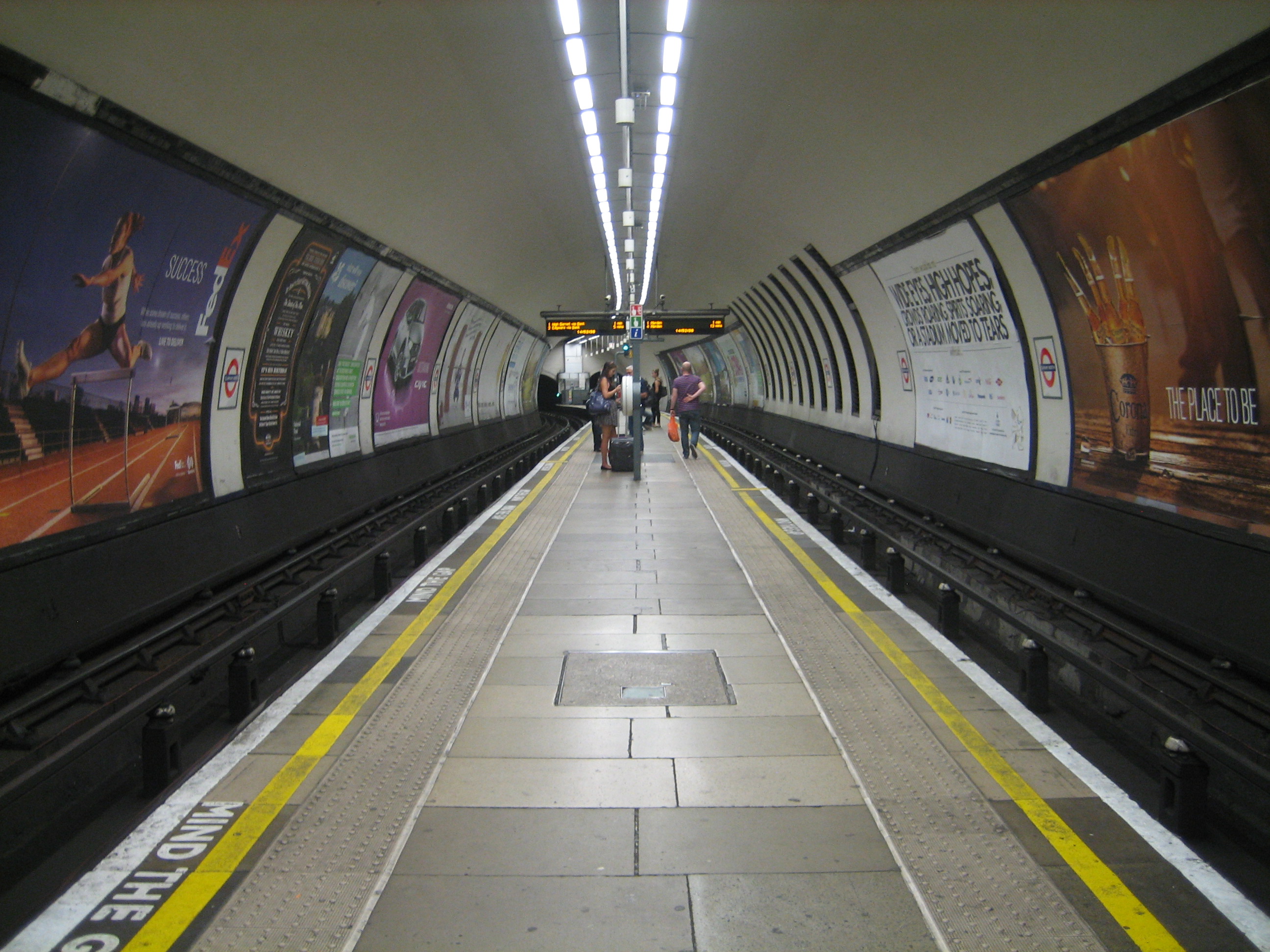
Mind the gapsThere are only two stations deep below ground with platforms like these: this one, and the next stop south on the Northern line, Clapham Common.

I don’t claim greatness for these platforms on safety or accessibility grounds (though I’d be interested to compare the number of accidents per year at Clapham North with those at recently refurbished deep-level Northern line stations, like Angel or Mornington Crescent).

What makes them special is their rarity and their antiquity.

Passing trains Not everything that is old is worth preserving, just as not everything that is new is transient. By and large, the “right” bits of the 150-year-old Underground have been kept and restored, while the “wrong” bits are – after a long wait – being sorted out.

But the platforms here and at Clapham Common cannot be sorted out, because there isn’t room. A whole new tunnel would have to be dug. That isn’t going to happen any time soon.

Using these platforms is therefore something of a novelty yet also, in an odd way, a sort of privilege. Passengers aren’t treated like fools at Clapham North. We are trusted to use this eccentric (to our eyes) architectural arrangement, and not to blunder dopily on to one or other set of tracks while reading a newspaper or prodding at our phone.

For the occasional visitor there is also excitement to be felt when trains rush in from either direction simultaneously: a sensation compounded by being in a single contained space.

The platforms are islands of history, not just of convenience. They can’t be allowed to exist forever, and they shouldn’t. But for now, their latterday idiosyncracy renders them teasingly special.

No man is an island

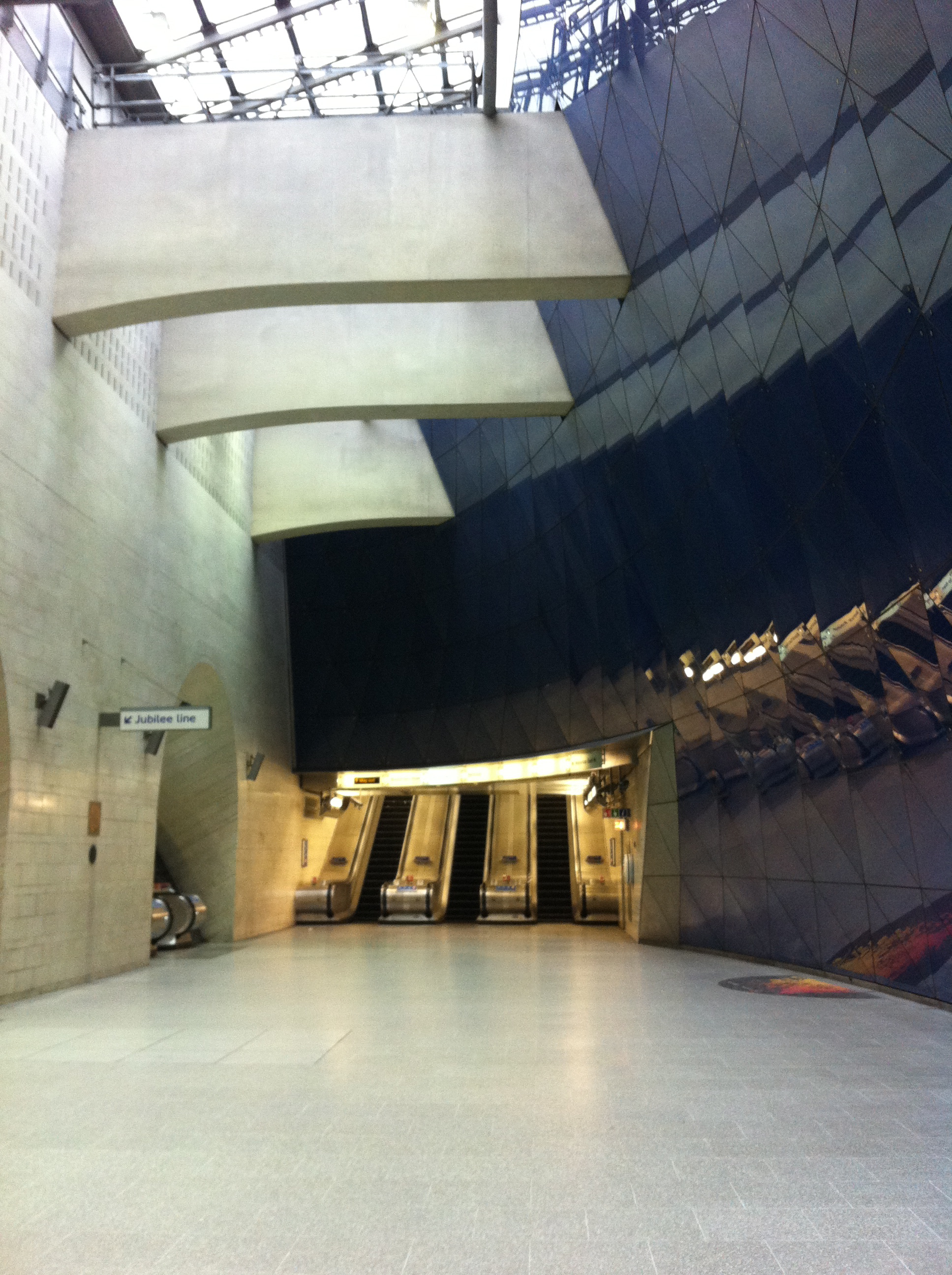
Smile!The Jubilee line extension from Westminster to Stratford is nothing if not a lesson in how to introduce light into dark places. Glittering, shimmering, colourful light. And there’s an entire wall of it at Southwark, tinted in the most alluring, soothing shade of blue.

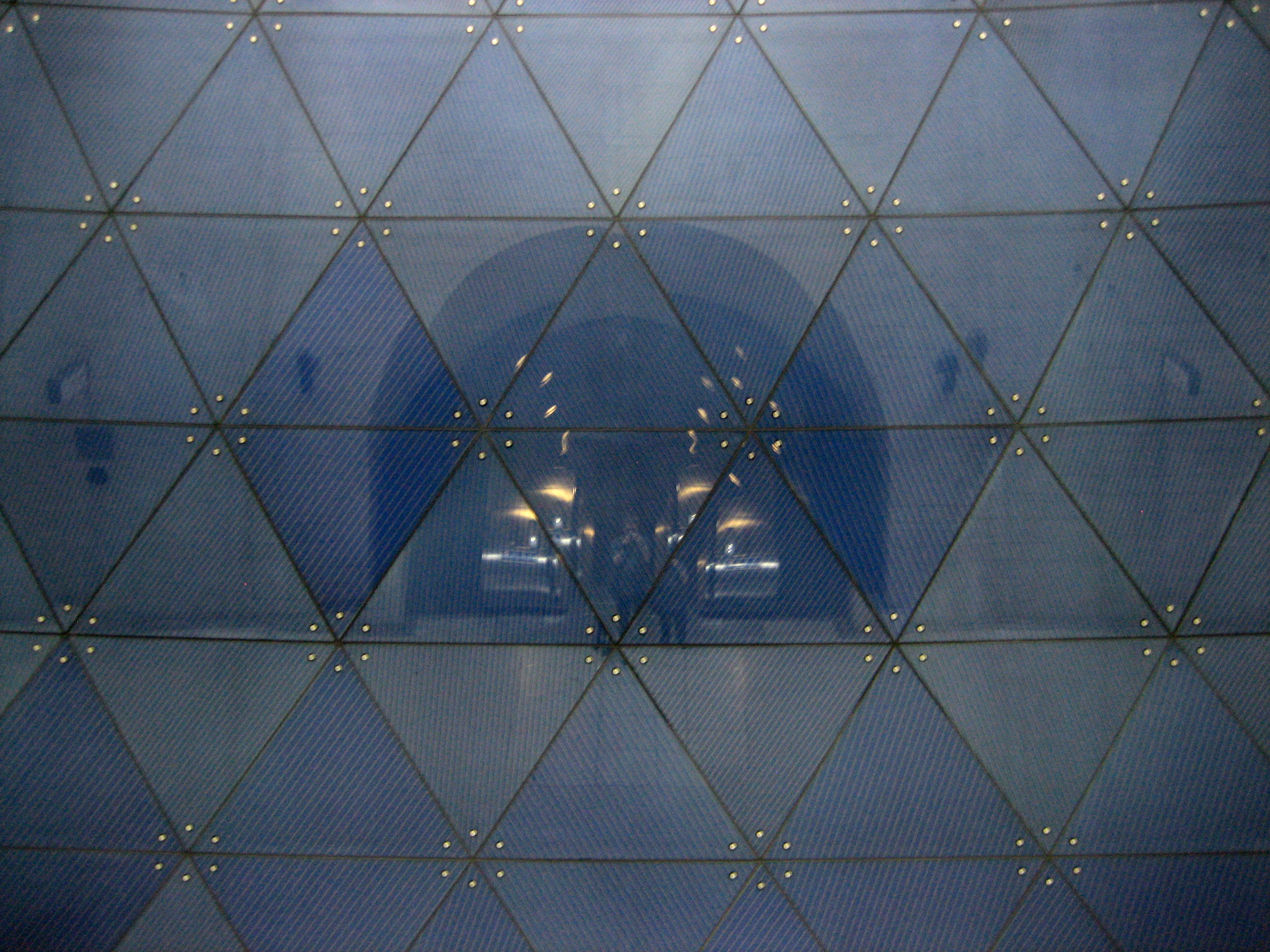
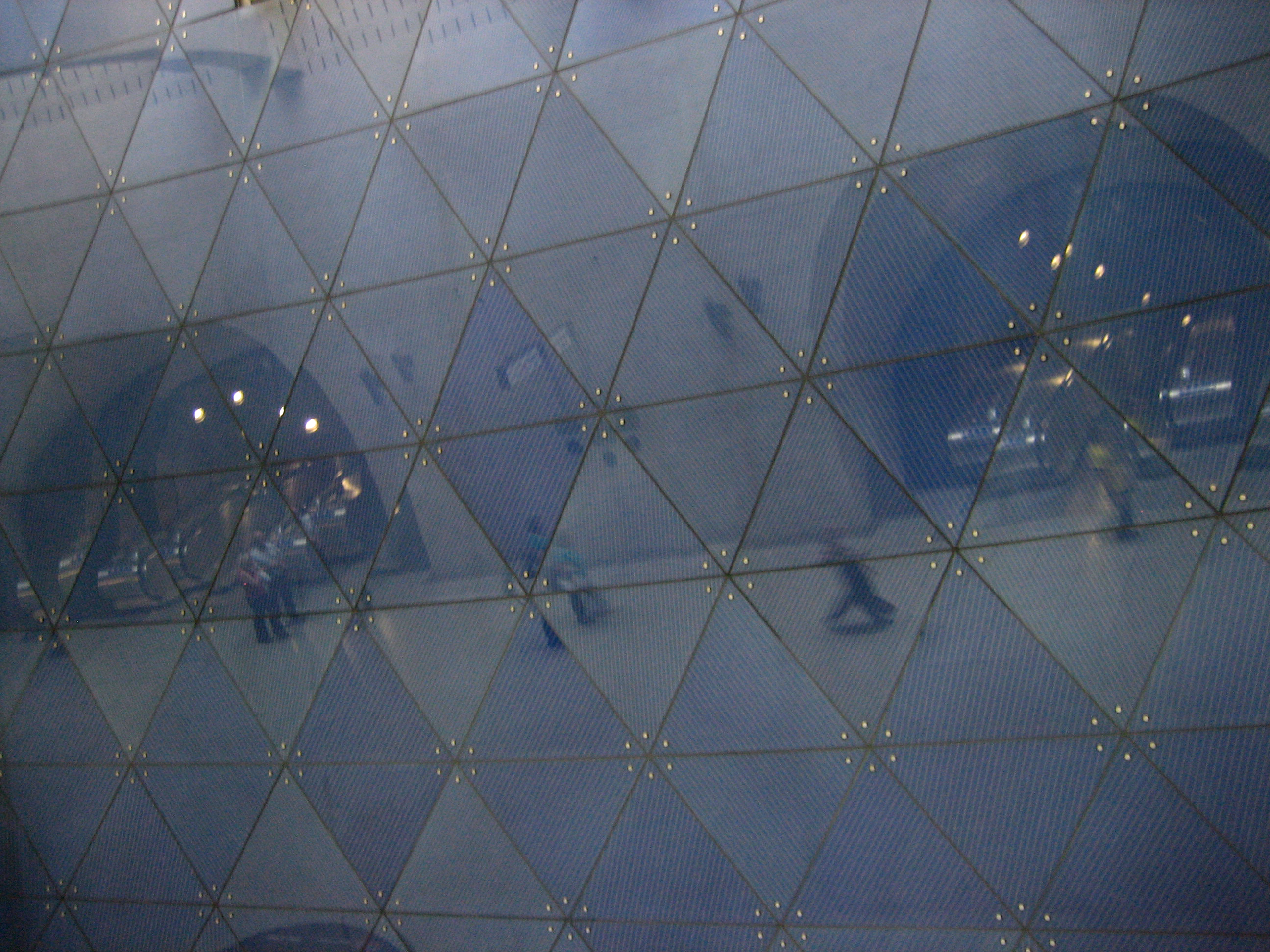
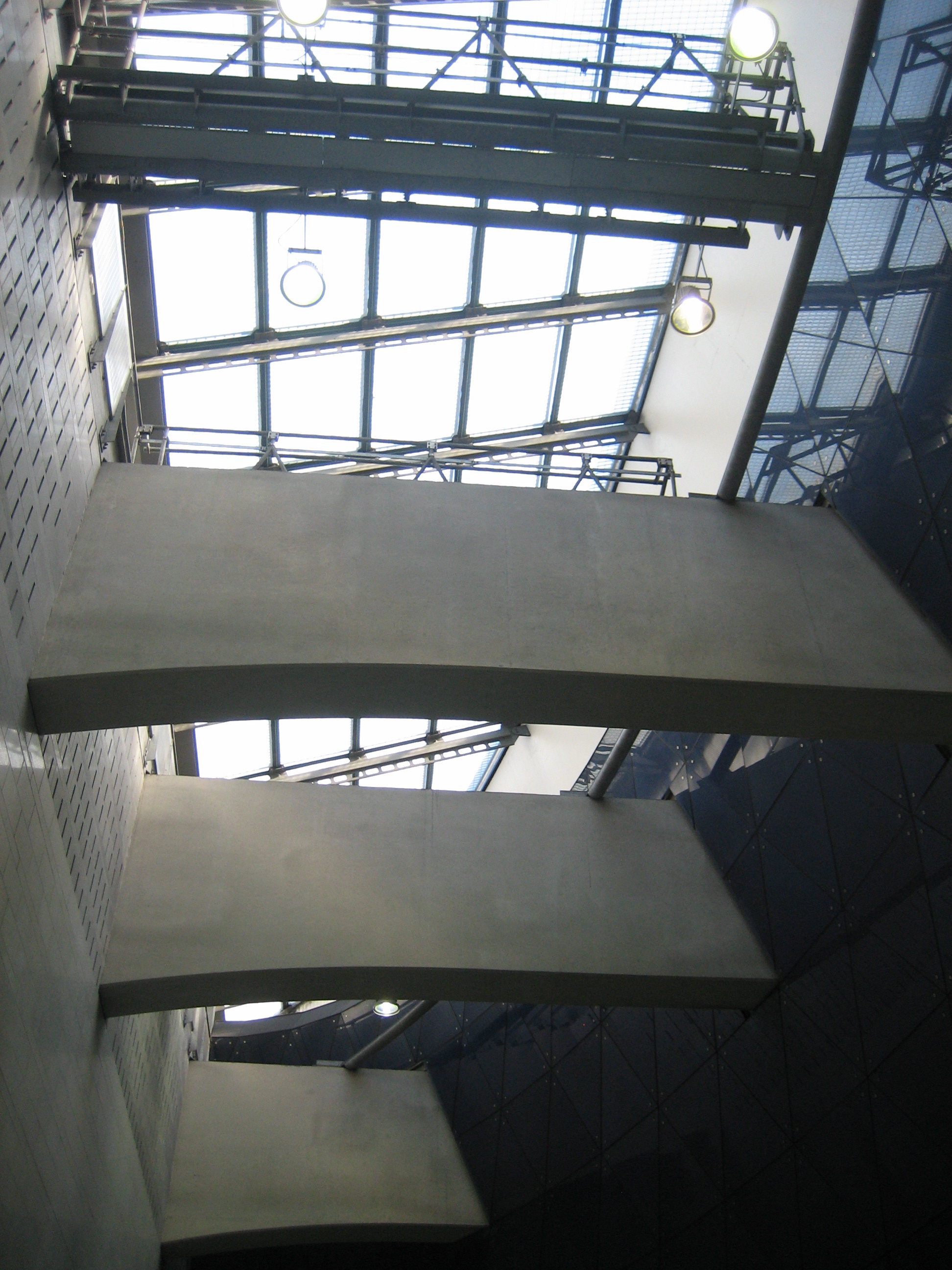
BluetonicIt is a dazzling 40 metres long and made up of 496 panels of varying sizes, bolted together to form an enormous azure-hued tapestry that reflects all the energy of the station concourse.

The fact that the wall is purely decorative and serves no structural purpose whatsoever just makes it all the most precious. It’s a great example of the way the newer Jubilee line stations were conceived as opportunities to be exploited, not obstacles to be accommodated. Plus it’s gorgeous to look at, both as a slice of art and a turquoise-tinged mirror on all the bustle of the Underground.

I’ve always enjoyed bluetones.

BluetonesWhat a thrillingly chunky dose of architecture. The wall is held in place with these massive concrete struts, which themselves become attractive – for me, anyway – thanks to the way they are shadowed by daylight pouring in from the roof.

Southwark station unfurls narrowly downwards, a necessary manoeuvre due to surrounding buildings and – oh, the irony – old railway viaducts. Curse those Victorians with their feats of swaggering engineering!

But what it loses in horizontal sprawl it gains in dramatic, elegant elevation. The glass wall, the work of Alexander Beleschenko, celebrates what might otherwise had been treated as a constraint. And blue is the perfect colour for the station: cooling, introspective, becalming.

Who knew geometry could be so emotional?

Blue is *the* colour