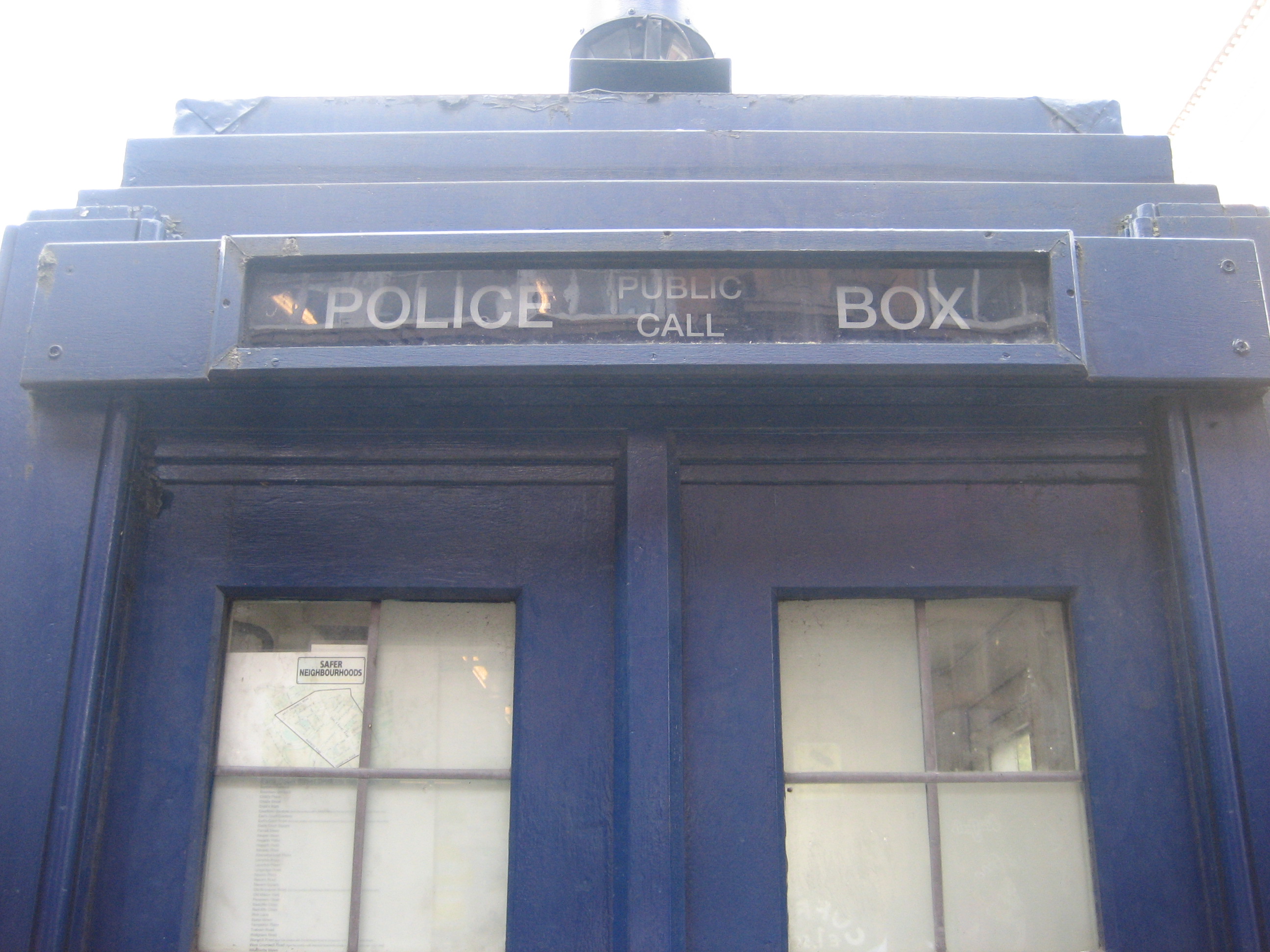
Timey-wimeyParked by the eastern entrance to Earl’s Court is something that competes for attention from passers-by with a frozen-yoghurt parlour, a branch of Pret a Manger, and a kiosk selling international newspapers.

When I was there, it was losing to all three.

Like the TV series, it’s a relatively contemporary reimagining of a once ubiquitous staple of everyday life that had ended up somewhat irrelevant and unloved.

Unlike the TV series, it’s seen better days, looks somewhat shabby and could do with sprucing up a bit. The dirt has, however, led to some topical graffiti:

Hello sweetie!You can’t use it to call the police. You can’t even go inside. And those that have the power to do so better not think of lighting up.
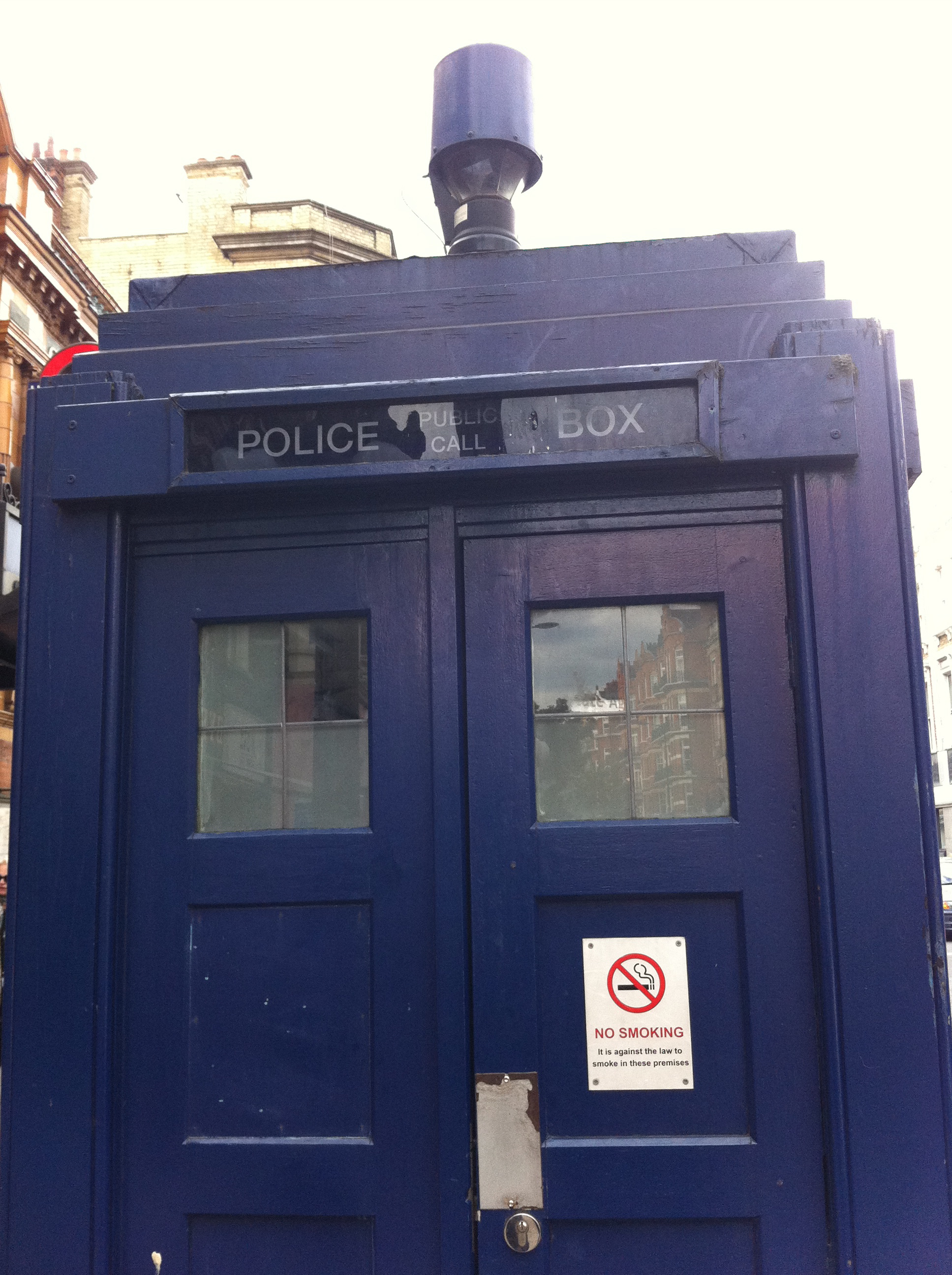
Sterner on the outsideIt’s probably sterner on the outside than the inside.

A thoughtfully-embossed brass panel fixed to the box explains who, where and when:
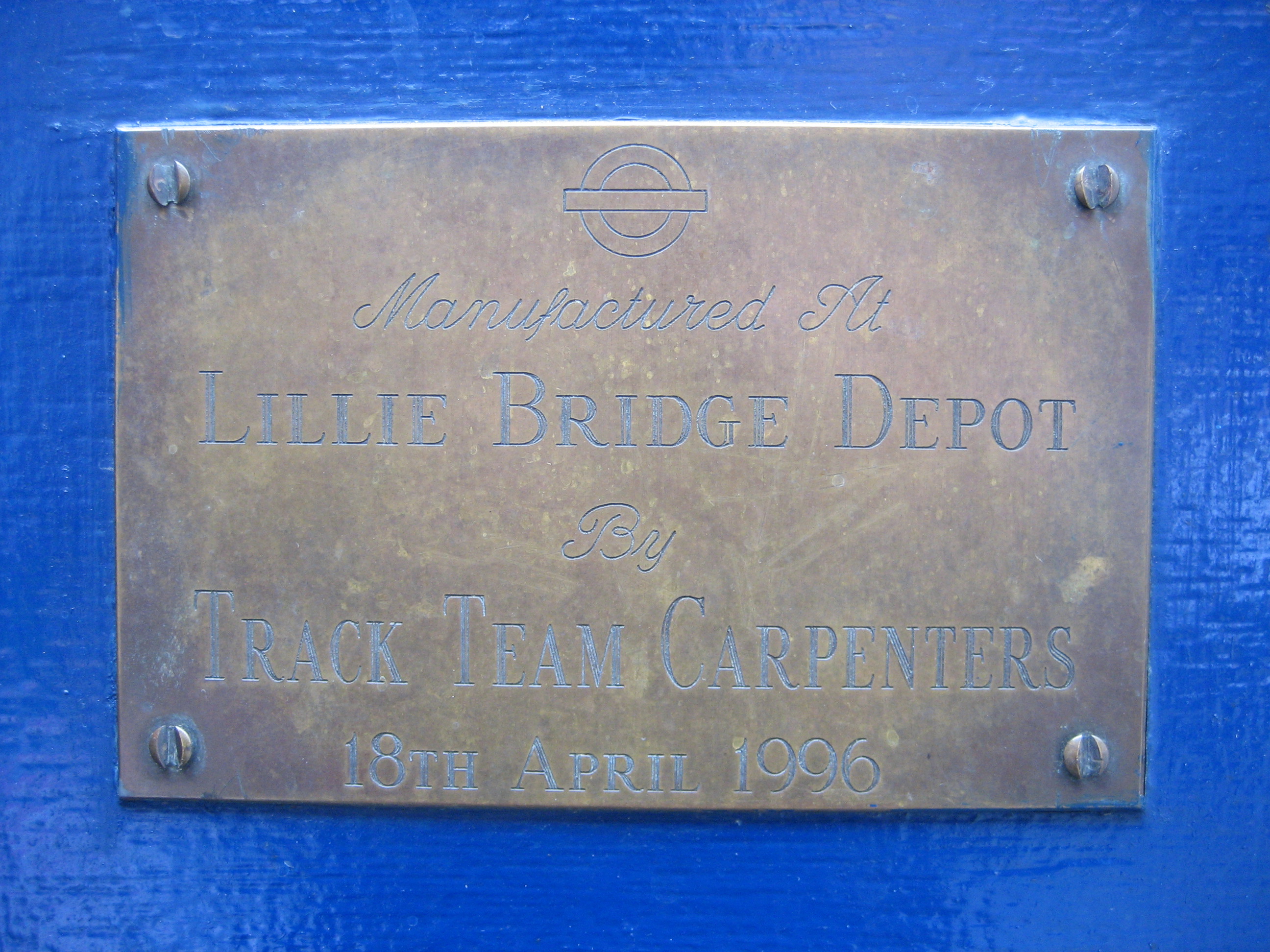
SpoilersI’m used to being eyed suspiciously while taking photographs outside an Underground station. On this occasion, though, not only did I fail to be eyed at all, I also got the sense of being actively ignored, even shunned. It was as if the twin bodies of the London Underground and Doctor Who had suddenly aligned in such a fashion as to send anybody in close orbit scurrying for less obsessional climes:

The anoraks have landedEarl’s Court station: change here for the District, Circle, Piccadilly and Gallifrey lines.
Country-spiedMetro-land is not quite a thing of the past.

That vast sales pitch-cum-sunlit upland of the early 20th century hasn’t completely disappeared into the margins of a Betjeman anthology or the back room of a transport museum. If you look for it with keen eyes, or listen hard enough, you’ll find the traces.

All along the farthest western reaches of the Metropolitan line the conceit still lingers. Someone threw an idea across Middlesex so profound as to resonate over a 100 years later.

It’s there in the rustle of leaves, the sigh of a sash window, the creak of a set of points, the song of a bird whose location you can’t quite place… All common sensations, but all somehow elevated by virtue of geography to become both part-mundane and part-magical.

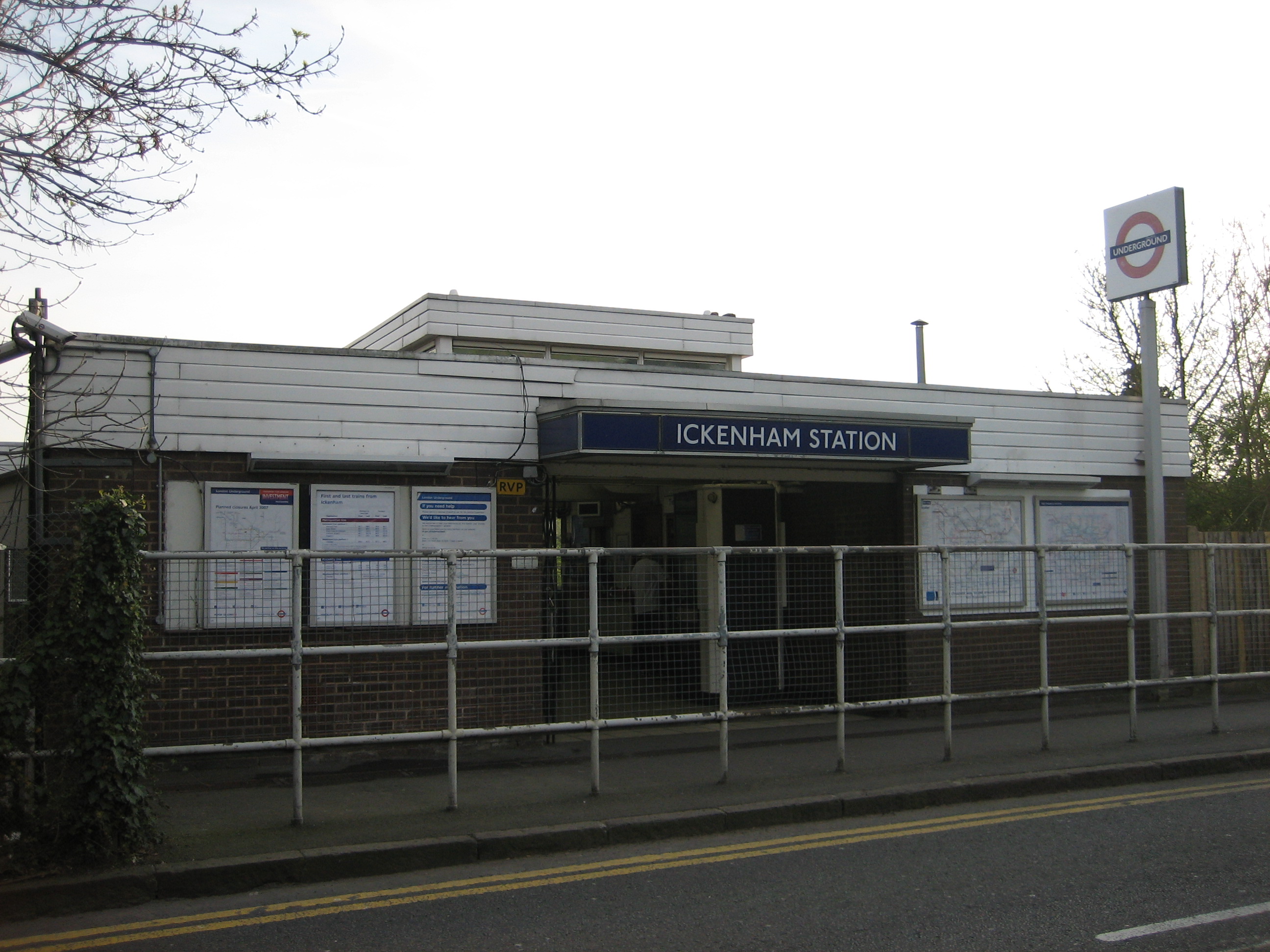
The entrance to Ickenham station can make you shudder with despair:

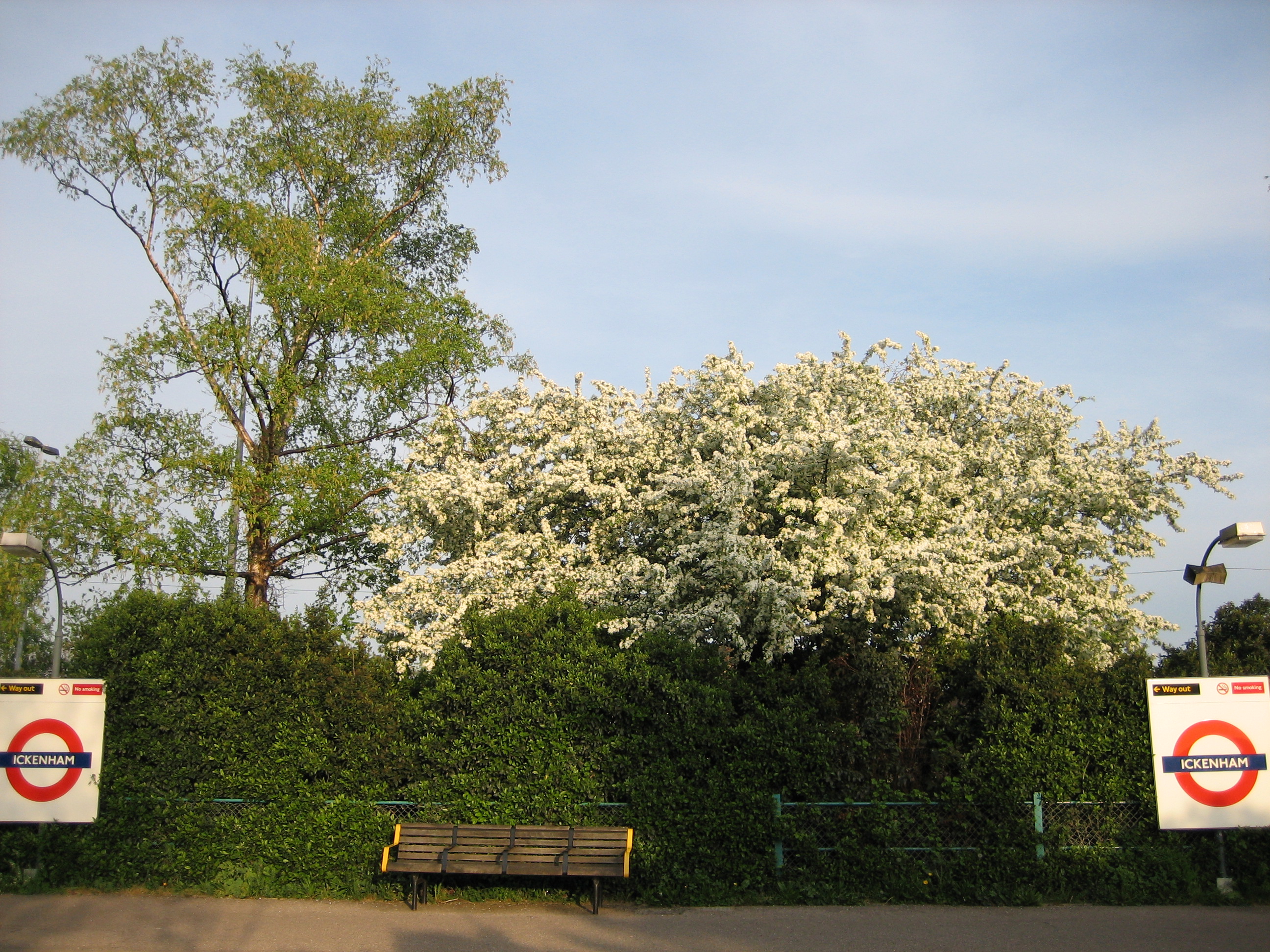
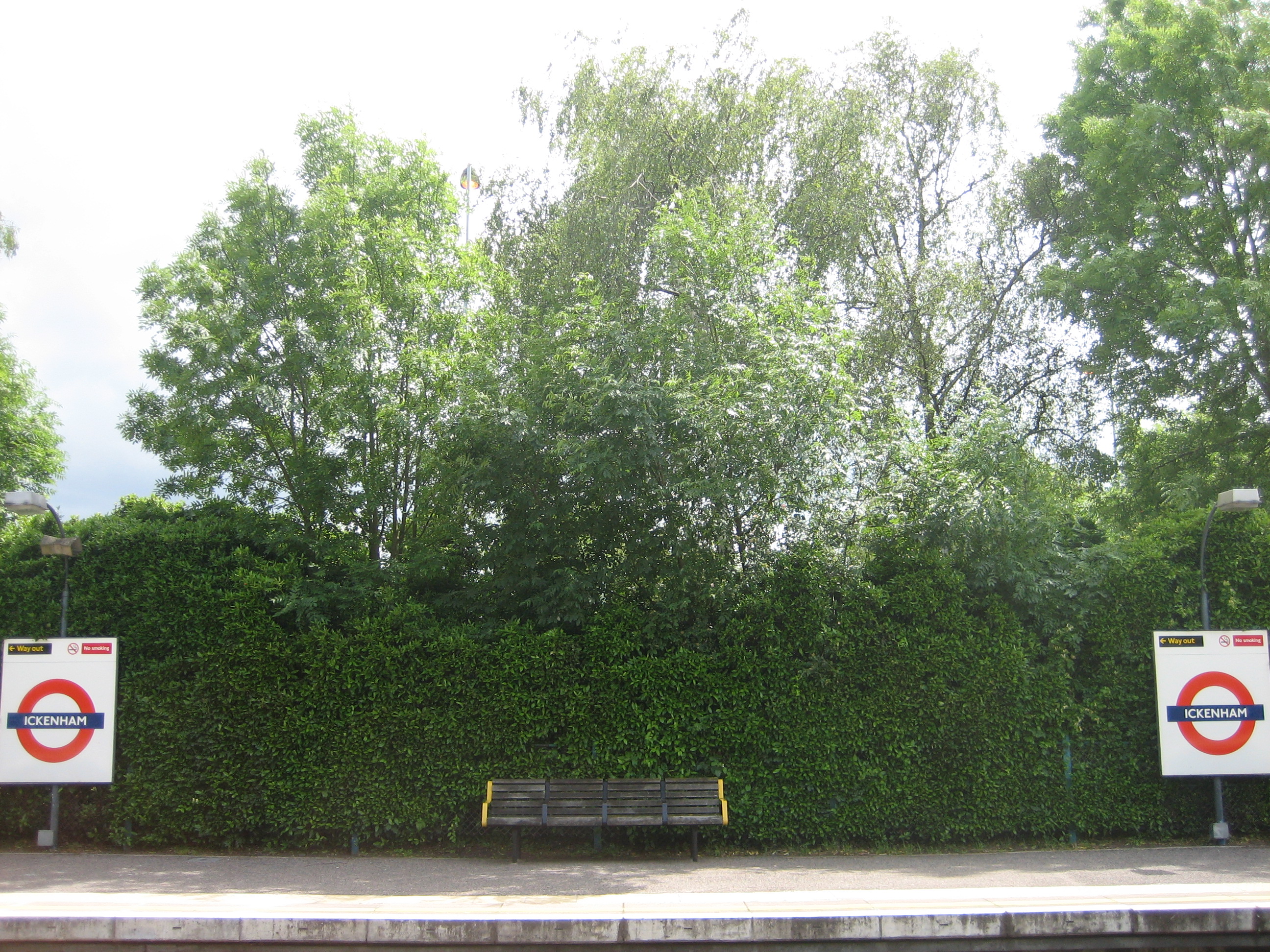
*shudder*But its platforms can make you shiver with delight:

The joy of MiddlesexHere is where Metro-land can, if you so desire, be wished back into all-consuming existence.

Sit by these trees and imagine yourself surrounded by roads bordered with the softest of soft suburban grass, patronised by neatly turned-out vehicles peopled by neatly turned-out passengers, and lined with the most stylish of provincial amenities: a world that, if it ever really existed, fired just as many useful imaginations as it did useless realities.

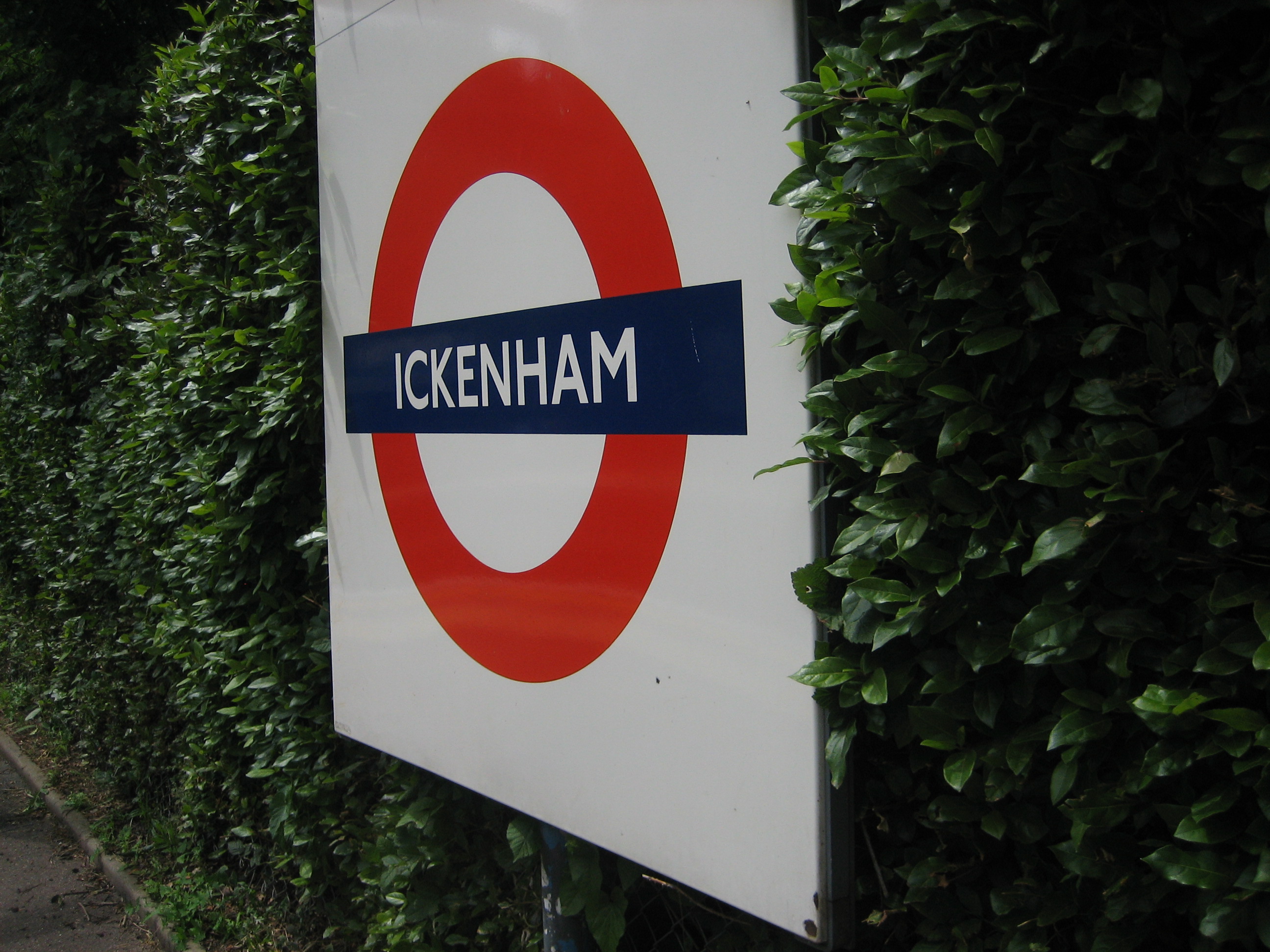
This, at least, is realDon’t linger too long, however, for the fantasy can only ever be a fleeting one – especially if you’re heading westbound and the next station is the grisly Hillingdon.

Metro-land was once promoted seriously if rather loftily as “a country with elastic borders that each visitor can draw for himself”. That country might have long passed from the lexicon of poets and advertisers alike, but its borders can still be drawn, even though – like anything this old and worn – the elastic’s almost gone.

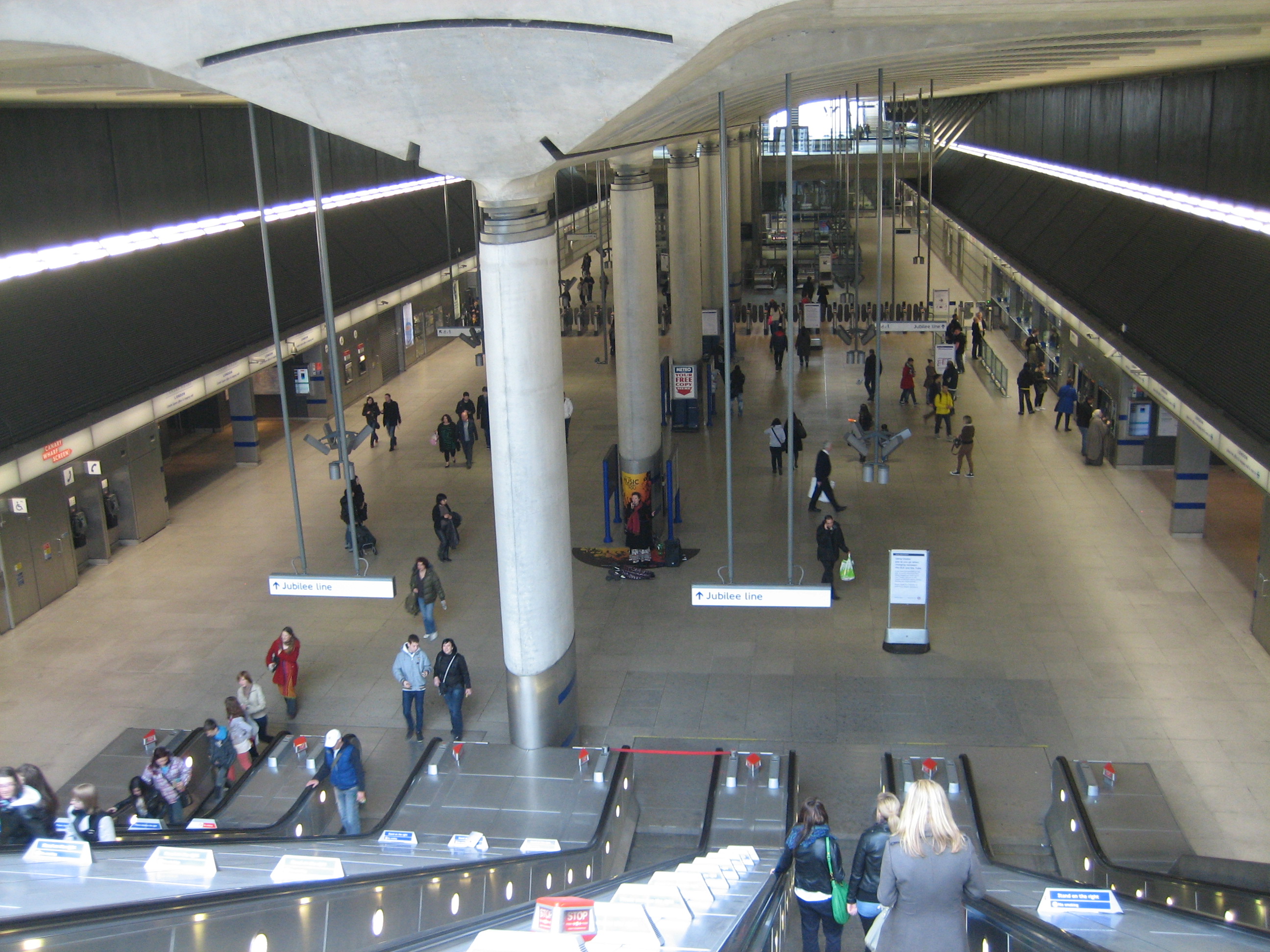
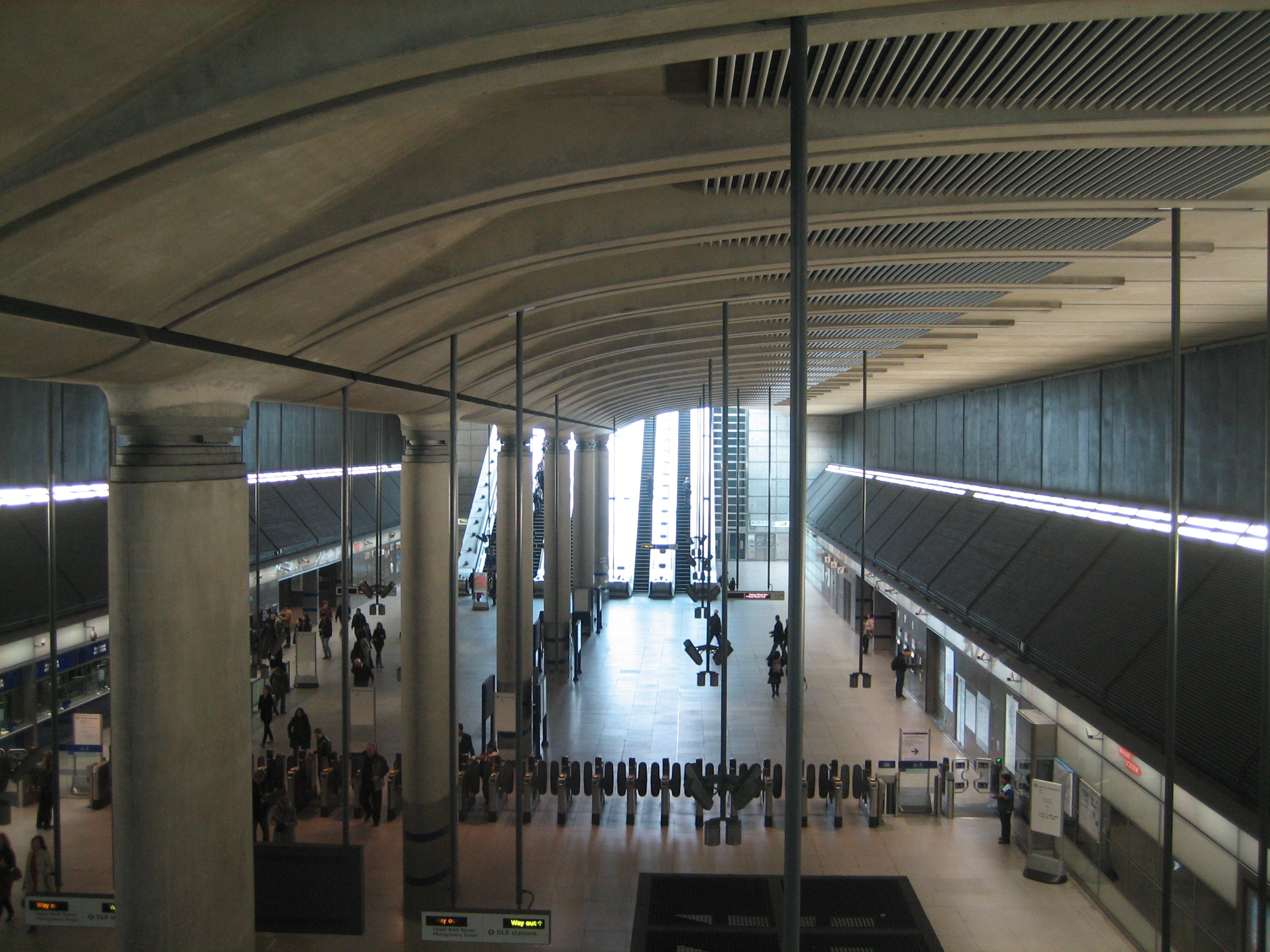
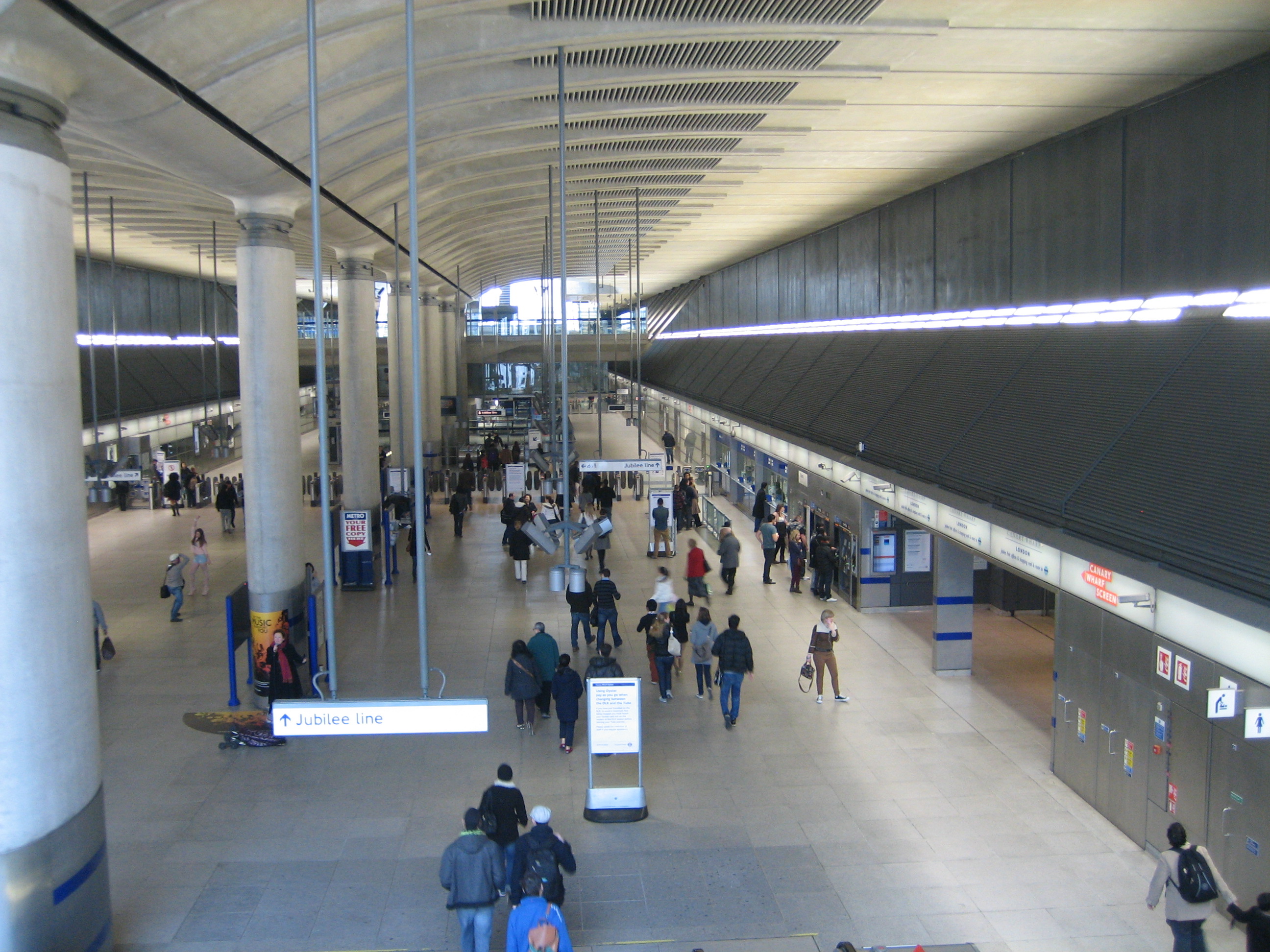
Wharf factor 3, Mr SuluIt stretches over two football pitches in length and is deeper than a six-storey house. It plays host to over 40 million pairs of feet every year. It took only nine months to design. It is the jaw-dropping jewel of the modern Underground.

I would add it needs no introduction, but I see I’ve already given it one.

A station of two halvesCanary Wharf station doesn’t have any equals. It is its own reference point. You can make objective comparisons of an empirical kind, as I did above. But you can only grasp at subjective ones, and even then words never quite suffice. The nearest sensation to descending into the very pit of this colossal trench is probably that experienced further round the Jubilee line at Westminster, although that doesn’t boast Canary Wharf’s vast panoramas or cascades of natural light.

The whole interior feels wider than a mile. And yes, it is impossible not to cross in style.

This is the London Underground at its most courageous and its most imaginative. The scale and ambition was deliberately pitched so as to anticipate what has indeed come to pass: that the station would eventually have to serve far more people than the 50,000 a day estimated at its opening in 1999.

And that number keeps on rising. Perhaps a point will be reached when there are too many people – too many, at least, to allow the visitor to fully appreciate the attention to detail lavished on both the mighty and the miniature.

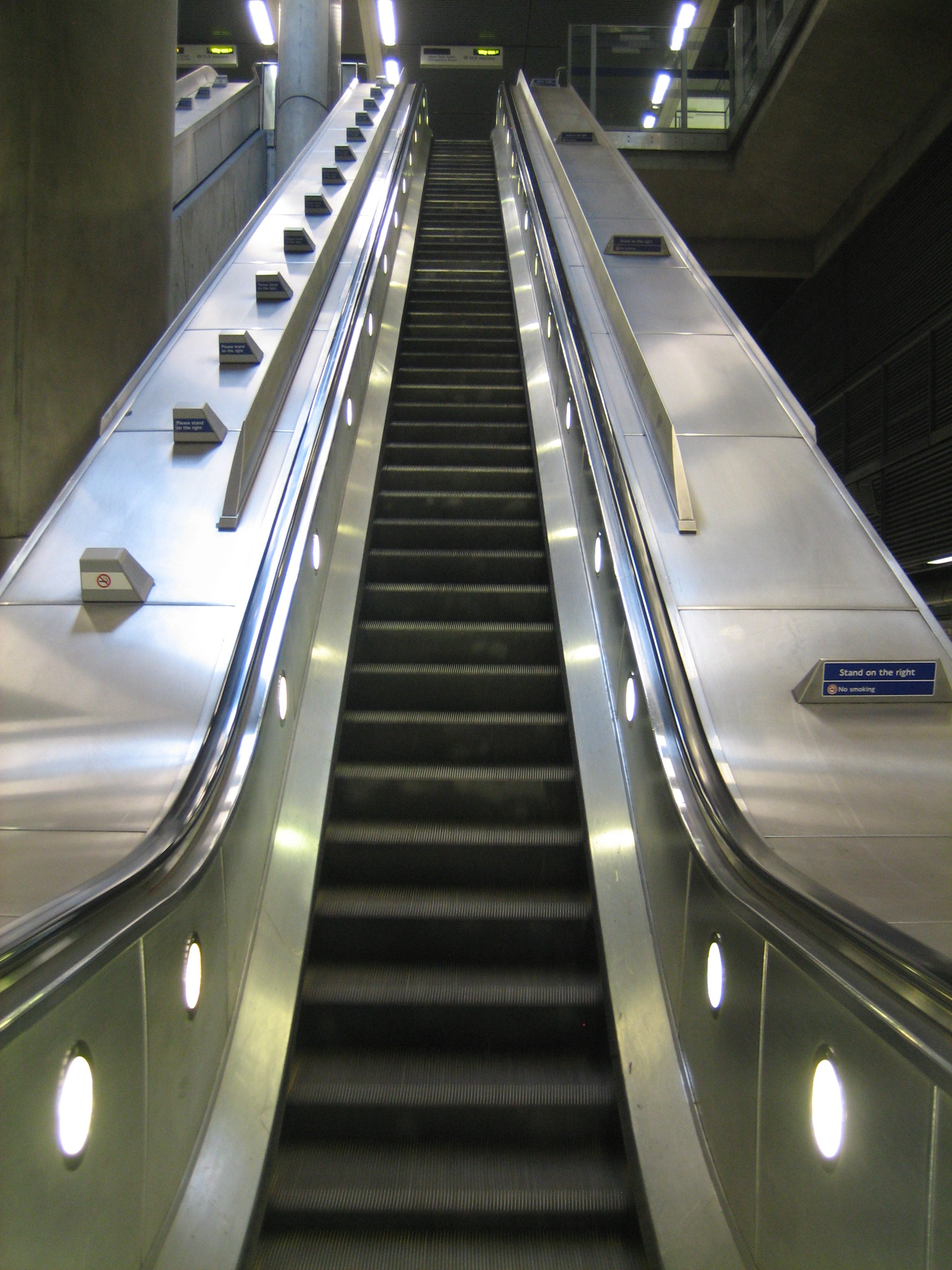
Silver stairUntil then, Canary Wharf station remains just as much a statement of London’s swagger and personality as Tower Bridge or the Olympic stadium or the King’s Road.

Passage through it, beginning at the mighty west entrance, demands to be soundtracked with something like Henry Mancini’s title music for Arabesque, or Temptation by New Order, or Marvin Hamlisch’s Bond 77 theme. Just make sure you time the latter so you hit the escalator at 0:27.

My huckleberry friend