Archive

Tag Archives: Charles Holden

Knock on OakwoodBy way of illustrating who wins in a Holden v Green contest, here’s an example of the former’s architectural genius just a few stops up the Piccadilly line from the latter’s Caledonian Road.

The inside of Oakwood, which opened in 1933, is a vast, dazzling playground of modernist design.

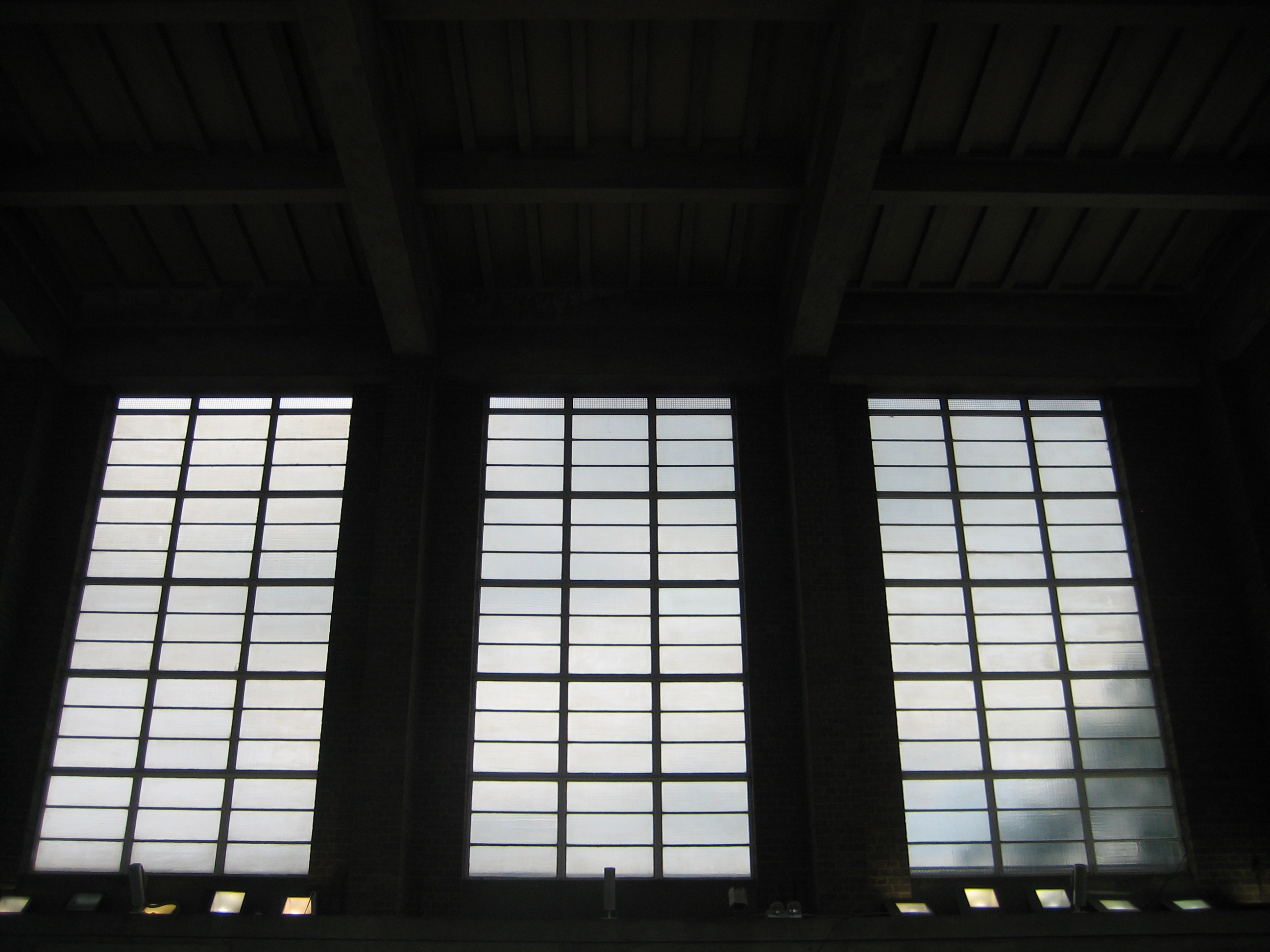
The building is, frankly, enormous, the sort more common to a mainline station than a mere metropolitan network. Those excitingly mammoth windows pictured above send natural light pouring into the sleek and spacious booking hall, in turn creating all sorts of bewitching shadows and illuminations.

Then there’s the ceiling, a giant’s crochet of great hunks of cement, perched on top of massive walls of clean, crisp, perfect-aligned brickwork. There’s no need for ornamentation or extra decoration or even much in the way of colour. The station’s design creates its own beauty. Nothing more needs to be added.

Well, except for one neatly-positioned, charmingly-crafted clock:
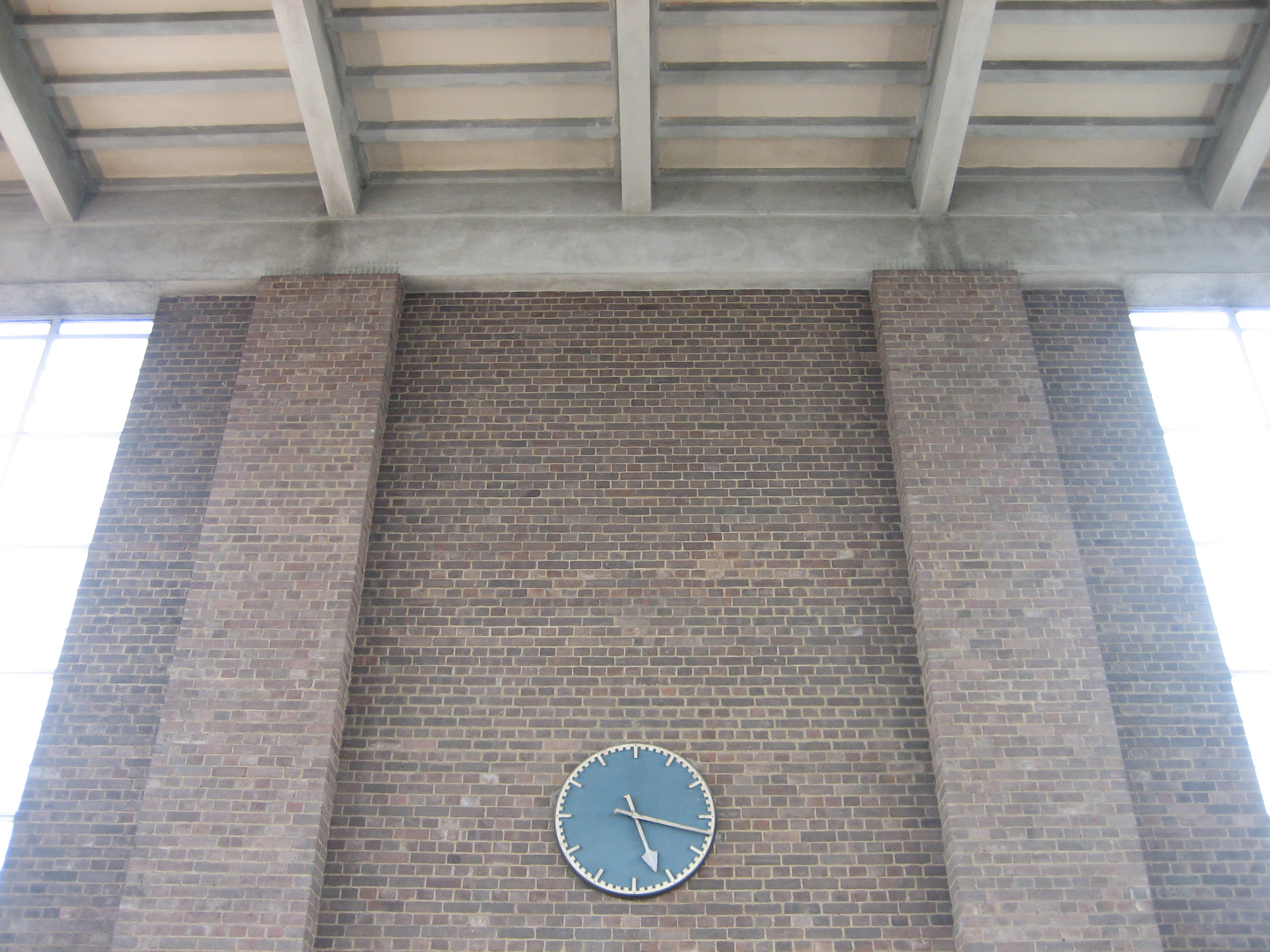
Sign o'the timeThe scale and ambition of the place caught my breath. I stopped in my tracks when I walked in, stunned by what was around me. I tried to linger as long as I could before inviting suspicion from passengers and staff, none of whom seemed to be lifting their eyes a few feet above the ground.

A shame, because we are blessed and incredibly flattered by buildings like this. Apologies for sounding painfully preachy, but it feels, well, really quite humbling that someone thought it worth bestowing so much love and attention on such as ostensibly functional assignment.

Three cheers for Charles Holden!

(And I haven’t even started on the exterior of Oakwood… not to mention the platforms…)
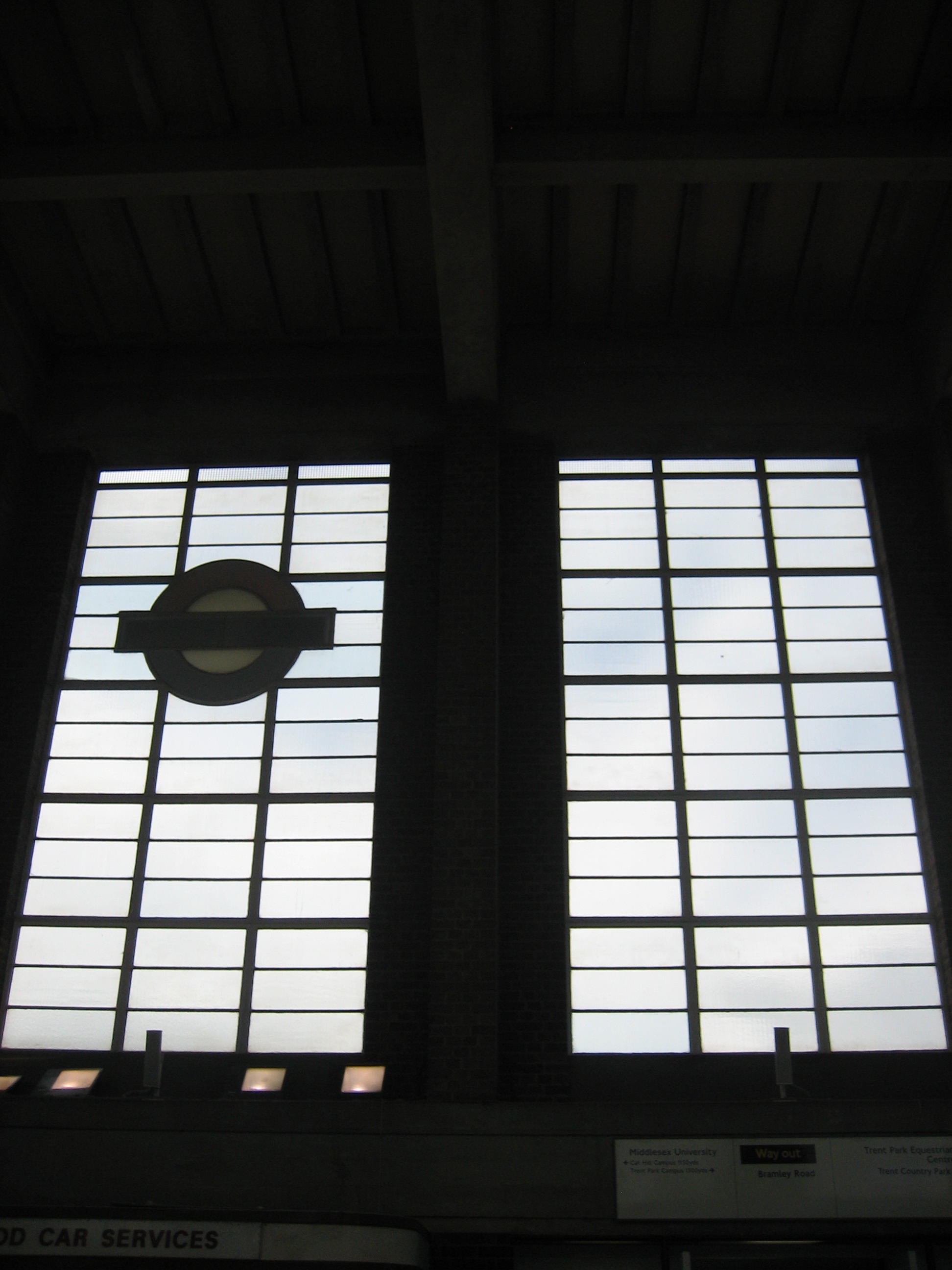
Let's go through the roundel window

Suburbanisation of the DaleksFrom the tip of the roof downwards, Southgate is something very special.

It holds its own against fierce competition from pretty much every station along the northern end of the Piccadilly line, which is easily the most rewarding stamping ground for Underground architecture. And it does this by not merely being another example of Charles Holden’s faultless skill for coupling beauty with design, but by being unique.

There is literally no other station like this on the whole of the network.

The Underground has landedThere’s a sense here that Holden set out to push as far as he dared the expectations for and acceptance of how an Underground station should appear in a suburban high street.

You might think he failed, or that he went too far. I think he succeeds with aplomb.

Agreed, it does look like Southgate station has landed from some other time and place, even some other world. But it doesn’t feel out of time or out of place. Maybe that’s because we’ve all got so used to seeing this kind of extraordinary architecture in ordinary surroundings. But perhaps that’s all the more reason to continue to draw attention to it – and to appreciate and marvel at it even more, Dalek stalk and all:

Another 'Holden Globe award' winnerIt opened in 1933 and is now Grade II* listed. There’s no steel or iron here: just brick, concrete and glass, singing in perfect harmony.

The interior, which I’ll cover another time, and which explains how that dazzling circular roof appears to be entirely self-supporting, was renovated in 2008. The majestic exterior is pretty much unchanged.

It’s not something you can easily take in just by standing still. If you’re like me – which you’re probably glad you’re not – you’ll end up walking all the way round the outside. Twice.

Oh, and as if we weren’t spoiled enough, Holden throws this in to boot:

Look! Over here!It’s a massive roundel adjacent to the station entrance, that in turn supports an enormous illuminated turret – just in case you hadn’t noticed the Underground calls here.

Now if only Transport for London licensed desk lamps that looked like this…

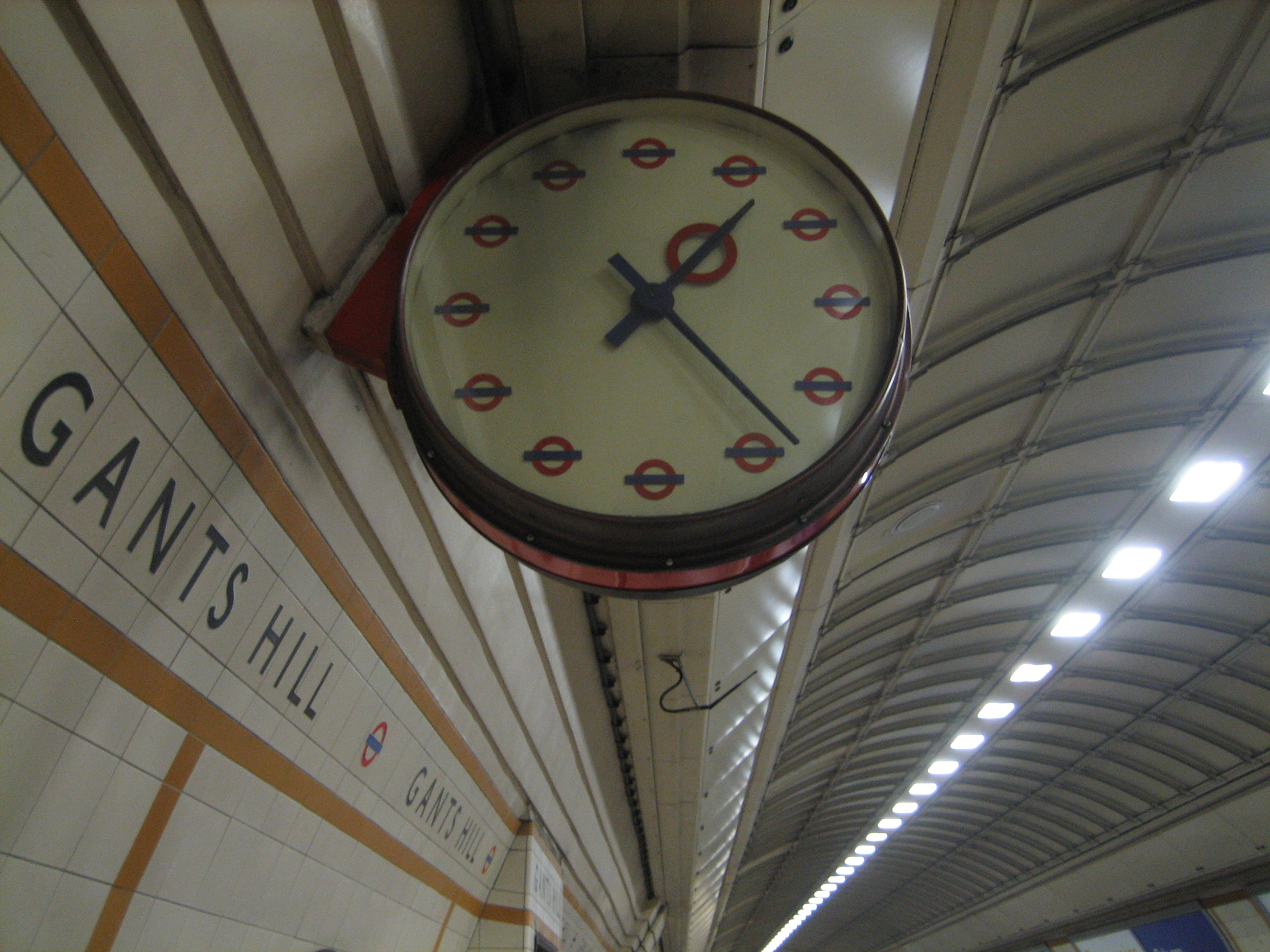
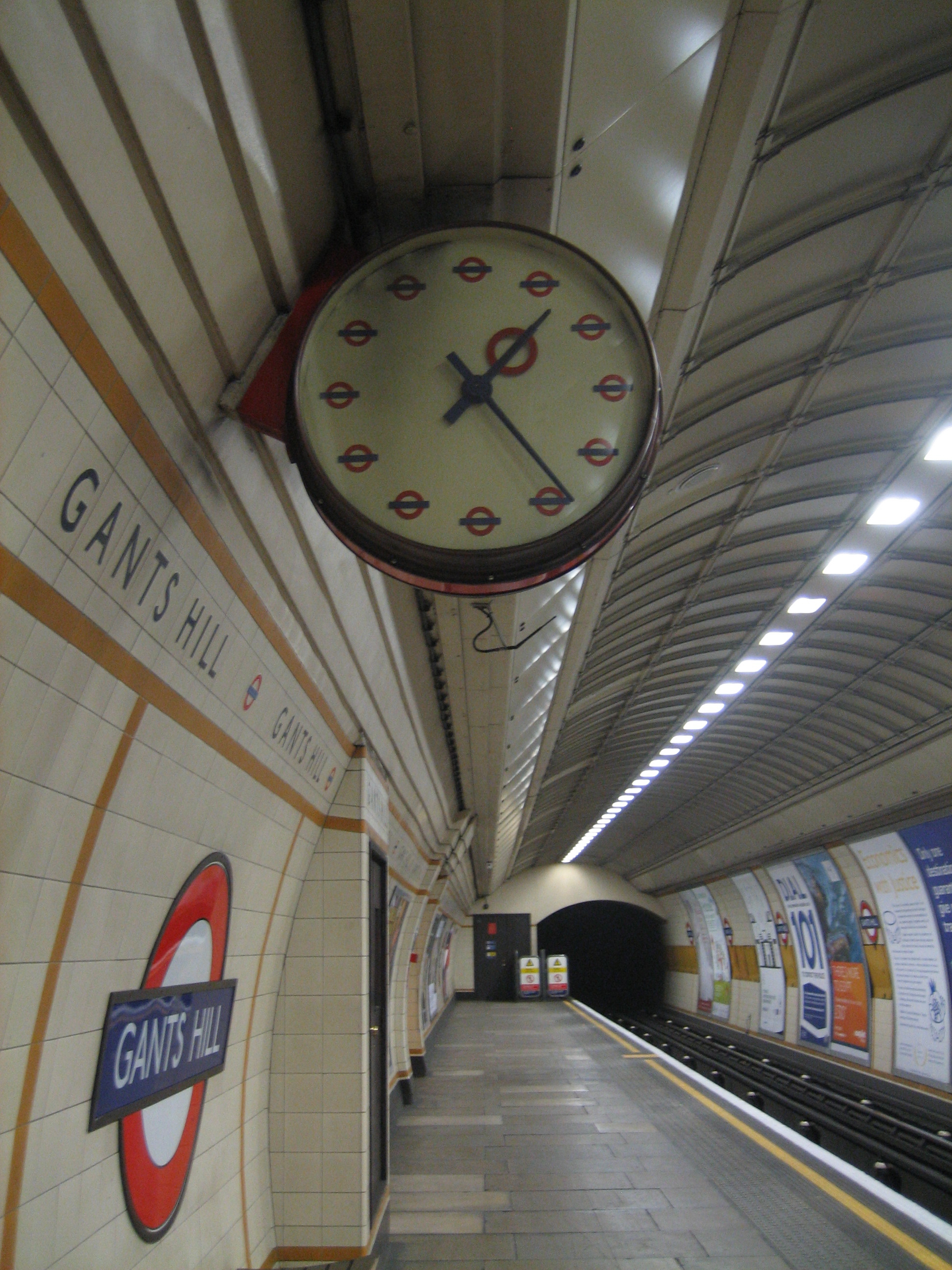
Telling the time, sensibly, steadilyThey’re not ideal if you’re trying to teach someone to tell the time. In fact they are useless. But in every other regard – which admittedly are not many – the platform clocks at Gants Hill are to be praised.

In a station graced with more eye-catching features than most, thanks chiefly to the inspired machinations of its architect Charles Holden, the clocks are understated gems.

Their design could be said to be informed by the same principles that guided Harry Beck towards his groundbreaking London Underground map: that less is sometimes more; that information should be there to serve others and not simply itself; and that on occasions the fundamentals of time, place and space are not actually that important. After all, a glance at the hands of a clock are all most of us ever want or need.

They also boast an abundance of Underground roundels – and, let’s be honest, you can never have too many of them.

Gants for the memory