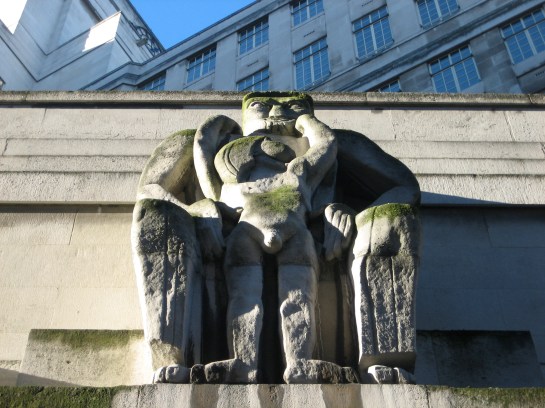
 Reaching such a propitious milestone as this, the midway point of my quest to list 150 great things about the Underground, demands something grand and bold. I feel I need to rise to the occasion. After all, as Roger Moore said to Jane Seymour, there’s no sense going off half-cocked.
Wait, what?
 Yes, that is what you think it is. And you reckon today’s public transport cuts are controversial.
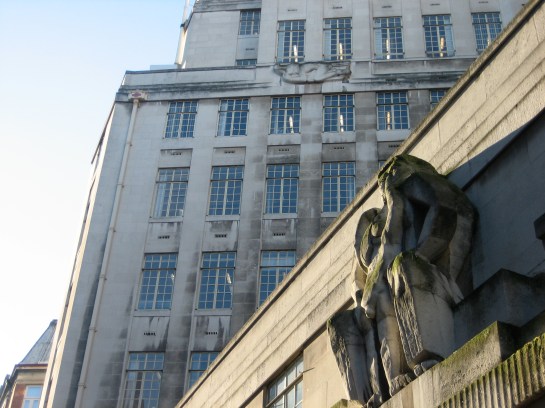
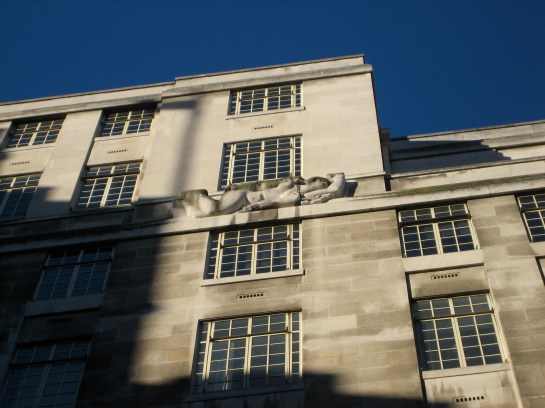
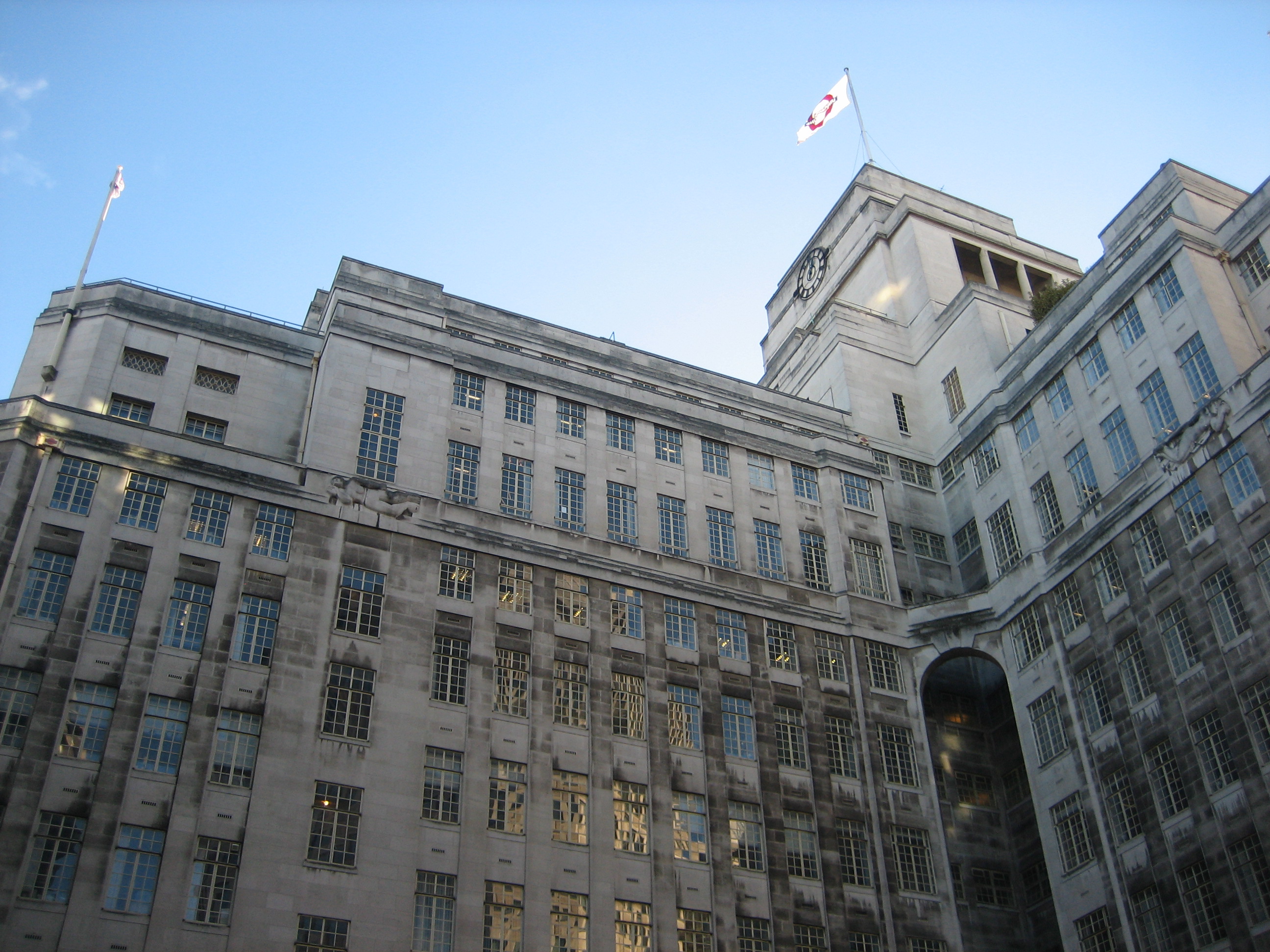
The immense and dazzling edifice that is the headquarters of London Underground at 55 Broadway, sitting astride St James’s Park station, is furnished with a set of equally striking and suitably head-turning sculptures.
Two appear in the photo directly above: in the background, high up on the beautiful facade, is North Wind by Eric Gill; in the foreground, sporting the naked child, Day by Jacob Epstein.
It was Epstein who brought down the censorious hordes of the late 1920s, who in turn almost brought down the visionary helmsman of London Underground himself, Frank Pick. For it was into Pick’s hands that the penis was placed (stop giggling at the back), and who threatened to resign if the public campaign against Epstein’s sculpture found favour with his own superiors.
An inch and a half saved the day (insert your own innuendo here). This was the length of stone Epstein agreed to remove from the naked figure. There is no information available as to how and why this particular length was calculated. Maybe there’s a secret equation used by public institutions to determine genital:scandal ratio.
But perhaps there was a bit of calculated outrage going on here. After all, Epstein’s Day is the sculpture that is most prominently displayed on the outside of 55 Broadway, and therefore the one most likely to catch the public’s eye. Pick, along with Epstein and the architect Charles Holden, must surely have anticipated the furore – and hence the extra publicity.
A total of 10 sculptures appear on the building, the work of an assembly of artists the like of which TV Times would no doubt (and appropriately) have called star-encrusted.
The immensely influential Epstein provided two: Day, and a companion work, Night, that stirred its own respective pot of societal umbrage:
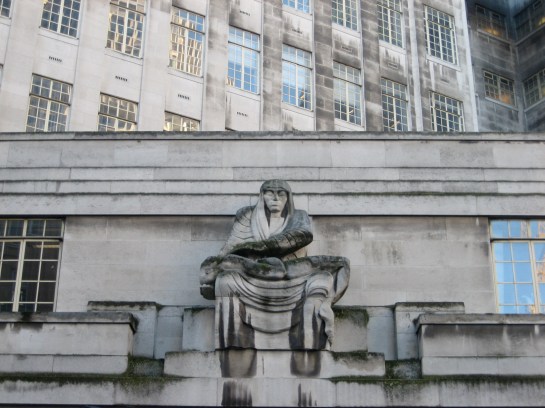 The other eight sculptures depict the four winds, twice over. The engraver and noted religious sculptor Allan G Wyon supplied one East Wind:
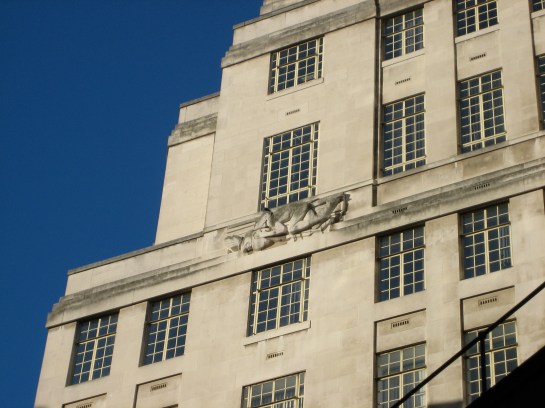 The other was created by Eric Gill, who also supplied the North Wind shown in the second photo above, and a South Wind.
Eric Aumonier, whose work I chose to begin this blog 75 entries ago, designed the second South Wind, while Alfred Gerrard was responsible for the other North Wind.
The two West Winds were the work of Sam Rabin:
 …and no less a figure than Henry Moore (the sculpture on the left)
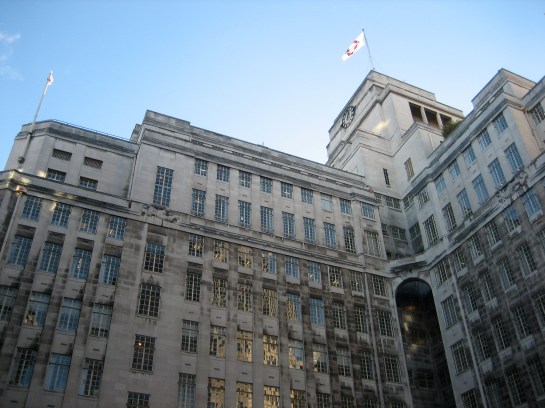
Gerrard’s North Wind is on the right (click to enlarge).
That roll-call of names shows the power that Charles Holden could wield when it came to commissioning major public art for a major public construction.
I’ll return to 55 Broadway again; the building itself more than deserves its own entry. But this particular ensemble of creativity, on such a formidable structure in such a potent location, easily supplies enough tonnage of worth to sit at such a waymarker in my quest.
Despite being one and a half inches shy of what was originally conceived, the 10 sculptures represent the ambition of the Underground as once was, and the legacy it commands and carries onwards into its future.
Plus they’ve allowed me to indulge some ripe double entendre that, unlike some of the other assertions on this blog, would surely stand up in court.
 If ever someone decides to ban curves on public transport buildings, Wood Green is done for.
 It’s a roundel-rama. The station swoops brassily along the junction of the eponymous high road and the wonderfully-named Lordship Lane, throwing more shapes than Su Pollard doing Back in the USSR.
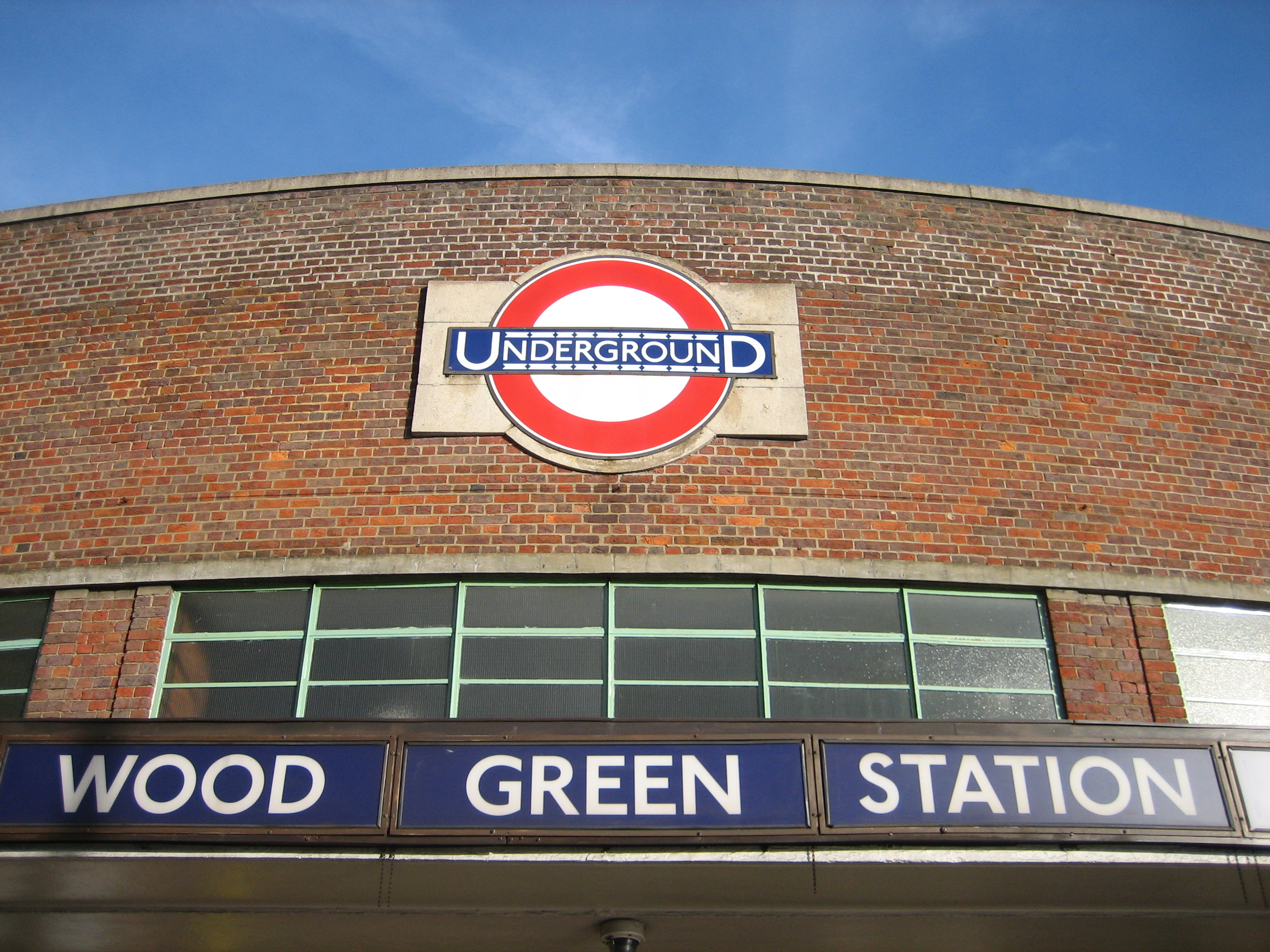 Two ventilation towers act like clamps on this huge, half-eclipsed zoetrope, holding either end in position as if to prevent sudden rotation. It’s as if the revolving restaurant (as once was) atop the BT Tower has spiralled off its perch and landed nonchalantly in the centre of Haringey.



 150 great things about the Underground