Archive

Architecture

Barons' green backAutumn seems to suit Barons Court. I’ve been here at other times of the year and felt the station’s exterior looked a bit leaden and grubby, or too bland and sterile. But the soft light and sharp contrasts that you get on a sunny autumn afternoon flatter the place incredibly. The beauty of all the tiny details on the station’s rather intimidating walls is deepened, and the splendour of the building’s design is served up to you in generous, mellow-toned slices.

Court-ing complimentsPerhaps you need a particular kind of sunlight to pick out the care that has gone into the lettering on the station’s signage. Maybe the colour of the brickwork only comes into its own when shot through the prism of a bright October rather than a blistering July or dank December. Or perhaps it’s just that the building’s subtle hues sit best among the equally understated atmosphere that percolates right through this most gentle of seasons.

The effect is evident in the decoration both on the station’s front, and on – ahem – Barons’ green back. Good grief!
Crumbs!It’s all Grade II listed and was all the work of architect Harry Ford. It is stylish, and it is lovely, but it isn’t, as writer Mark Mason contests, “the most beautiful station not just on the London Underground, but in any world you, I or anyone else could possibly imagine.” Oh no. That honour lies elsewhere, with a station I’ve already celebrated here, and to which I’ll return again.

Wheel on the wingI could have rounded up all of this station’s treasures in one single entry, but that would have made for a very long read where too many delights jostled for too much attention. So this is the third time I’ve doffed a hat to Uxbridge, and the first in which I’ve stepped outside its walls to see if the exterior holds its own against the glittering interior.

It more than does.

Bridge of sighsWelcome to a Bridge of sighs.

The beautiful sculptures on the top are by Joseph Armitage, who also designed the National Trust oak leaves symbol and provided carvings for a number of the UK’s finest inter-war institutions, including the former Commercial Bank of Scotland in Glasgow.

In a literal sense, the sculptures are wings with wheels. But to me they represent something of the thrill and the wonder that you experience, unprompted, at the start of any long journey: sensations that bloom when you’re a child, but which surely linger inside you somewhere for the rest of your days.

Anything that also commemorates the progressive power of technology is fine with me. Those wheeled wings get extra marks for including leaf springs.

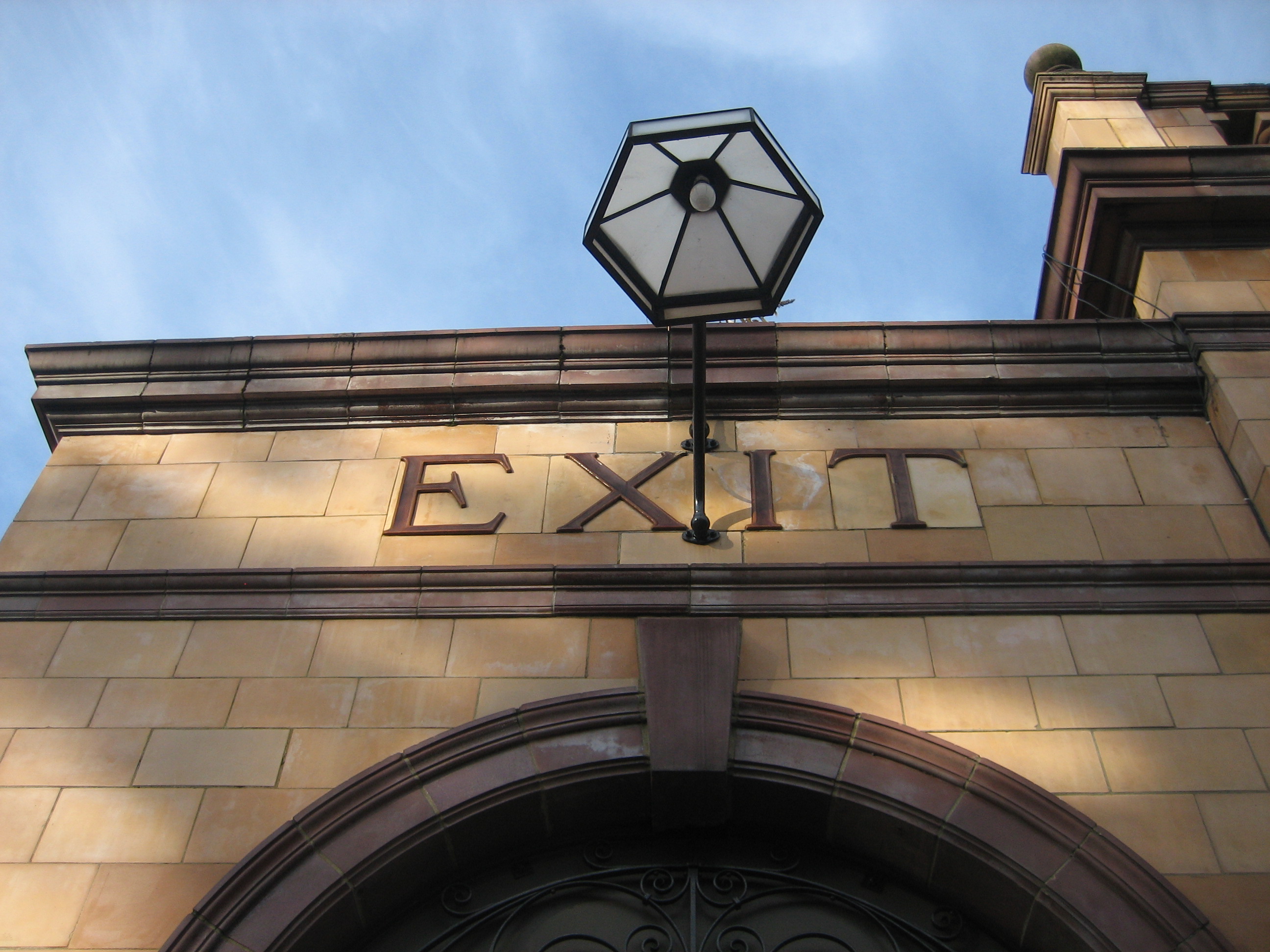
Then there’s the entrance itself, crowned by a glorious chunk of massive fontage:

Man of lettersI’m normally suspicious of a man of letters, but I’d make an exception for these.

Charles Holden and L H Bucknell designed the entire station, including the sleek and dashing entrance, through which characters from Dennis Potter’s Pennies from Heaven quite possibly passed on their way to their latest emotionally cathartic flashback or song-and-dance number.

And finally there is this, standing alone in front of the entrance, reaching into the sky, a beacon for the town and signpost to the city:

Perfect circleIt might be 15 miles west of Charing Cross, but Uxbridge station is one of London’s finest monuments.

Kew E. D.Bear with me on this one.

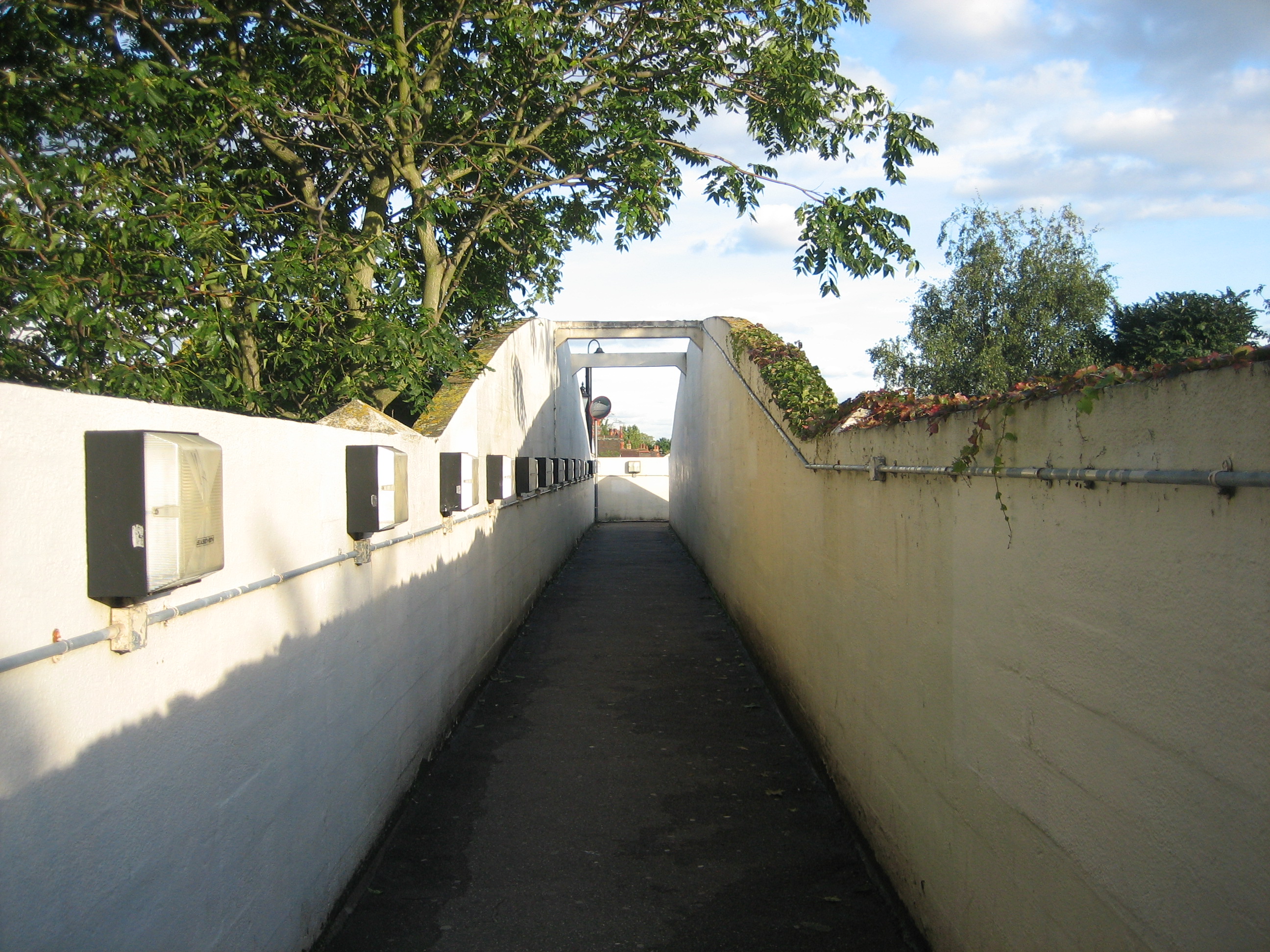
I accept it might not look particularly attractive, or even create a fleeting impression of attractiveness. You might think it looks unarguably dull, or at the very least utterly unexceptional. I accept it’s probably not the sort of place you’d want to linger, even when – as here – the sun is bathing everything in a flattering, early autumnal glow.

But for all this, the passenger footbridge at Kew Gardens is rather special.

The more you linger, the more curious it looks – and feels. It’s possible to sense something a bit alien, a bit foreign about this bridge. The shape, the colour, the materials… none bear traces or motifs of homegrown architecture. There is nothing familiar in the structure, no parochial reference points in the design. There is no tang of London oozing from the brickwork.

What’s it doing here? And in Kew Gardens, of all places?

I mean, look at it:

Kew jumpingOf course, there’s a switcheroo coming up, and here it is.

Precisely why it is so unusual is precisely why it is so fascinating.

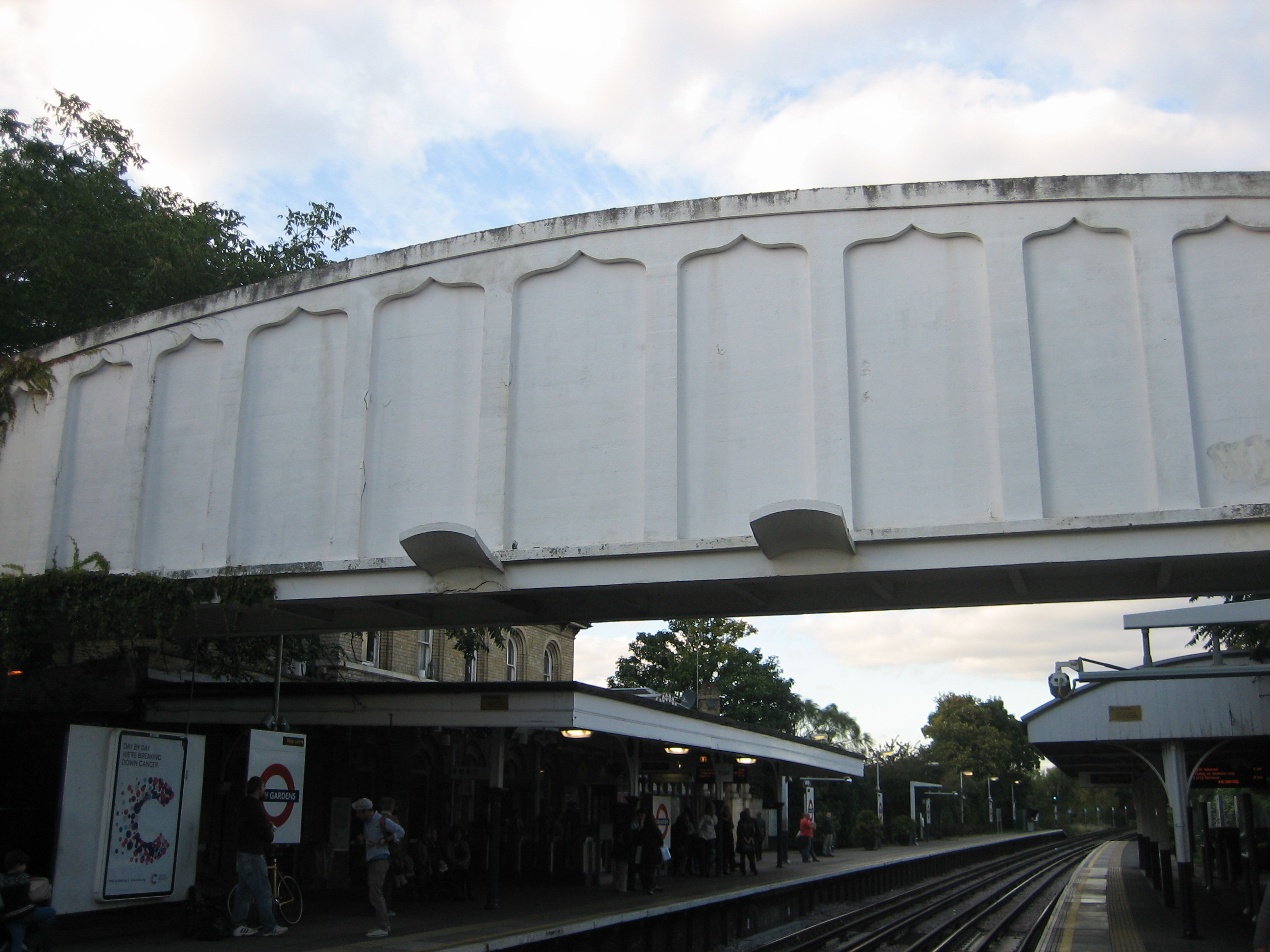
A nearby plaque explains all. The bridge was opened in 1912 and is a hugely rare and very early example of one made from reinforced concrete, using a technique pioneered by the French engineer François Hennebique. That feeling of other-worldliness starts to make sense.

Moreover, it was deliberately designed (I’m not sure who by) with those unusual high walls and those odd projections out of its sides in order to protect its users from smoke and dirt coming from passing steam engines. How thoughtful – and how daringly continental. There can’t have been many people native to Edwardian Britain believing that passengers ought to take precedence over machinery.

The whole thing was done up in 2004 thanks to English Heritage, the Kew Society and numerous other benefactors, including every person who’s ever played the National Lottery (that’s how the heritage fund works, isn’t it?)

Heaven knows what it looked like before its makeover – less attractive certainly, but also probably less intriguing. Even the furnishings seem to have scrubbed up well:

Hooray for the blue, white and redAll in all, a most agreeable form of Kew jumping.

Did I mention the views are pretty damn special as well?

Form an orderly Kew