Archive

Designs

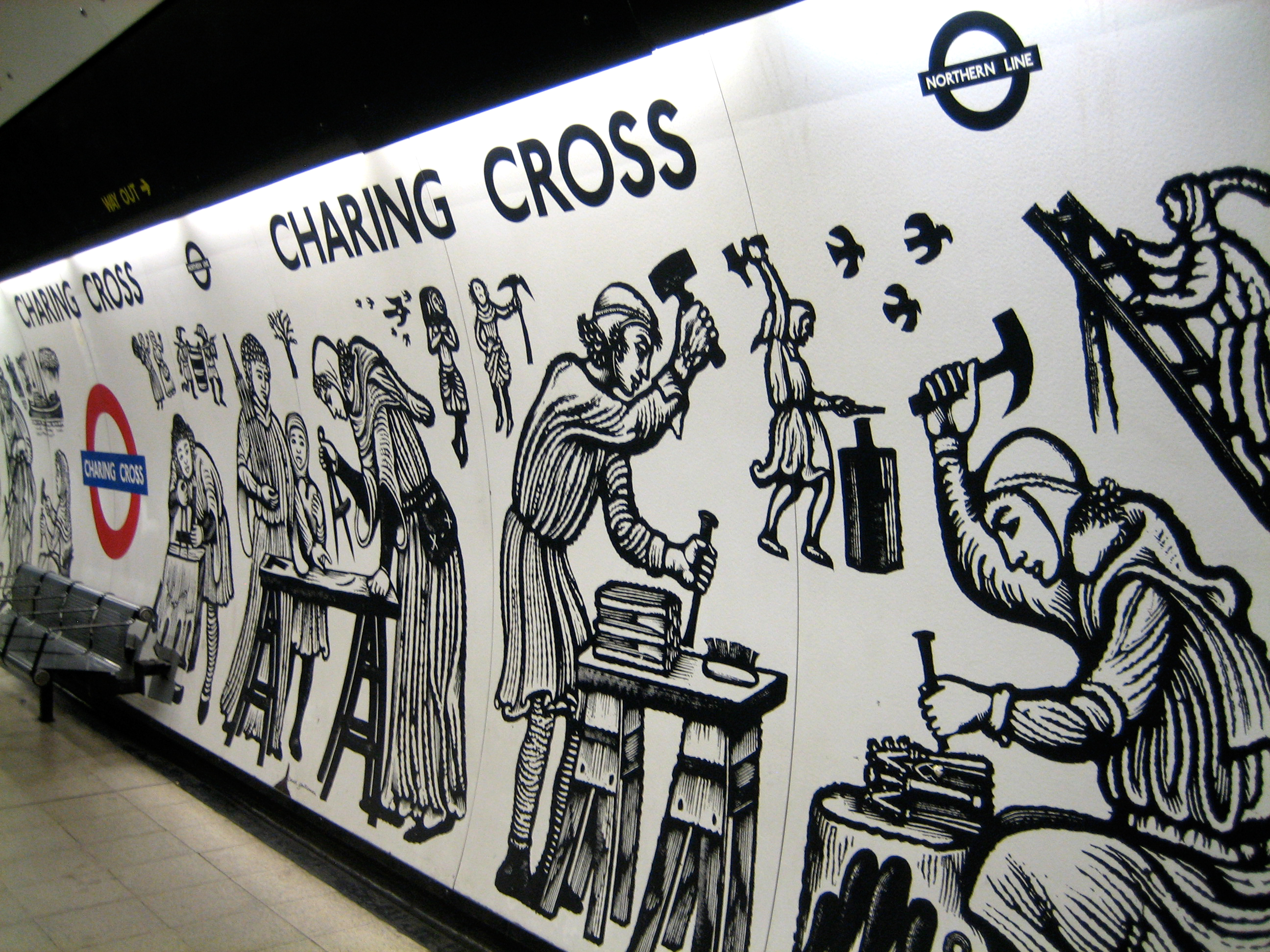
Commuter rage: it's been going on for centuriesDavid Gentleman’s designs for the walls of the Northern line platforms at Charing Cross, aside from suggesting that commuter rage dates back almost eight centuries, are a triumph from start to finish. And that’s a very long triumph, stretching as they do from one end of the platform to the other, and starring a cast of hundreds encompassing peasantry to pageantry, with the occasional pick-up en route:

Are you going my way?Are you going his way?

Strictly speaking, the murals retell the story of the construction of the eponymous cross, built in 13th century on the order of King Edward I as one of a number in memory of his wife Eleanor of Castile.

But if you fancy a more figurative interpretation, the designs reflect anybody and everybody who travels on the Underground. The range of character types is so broad it’s almost always possible to find one that, if not directly resembling yourself, at least reflects something of your mood:
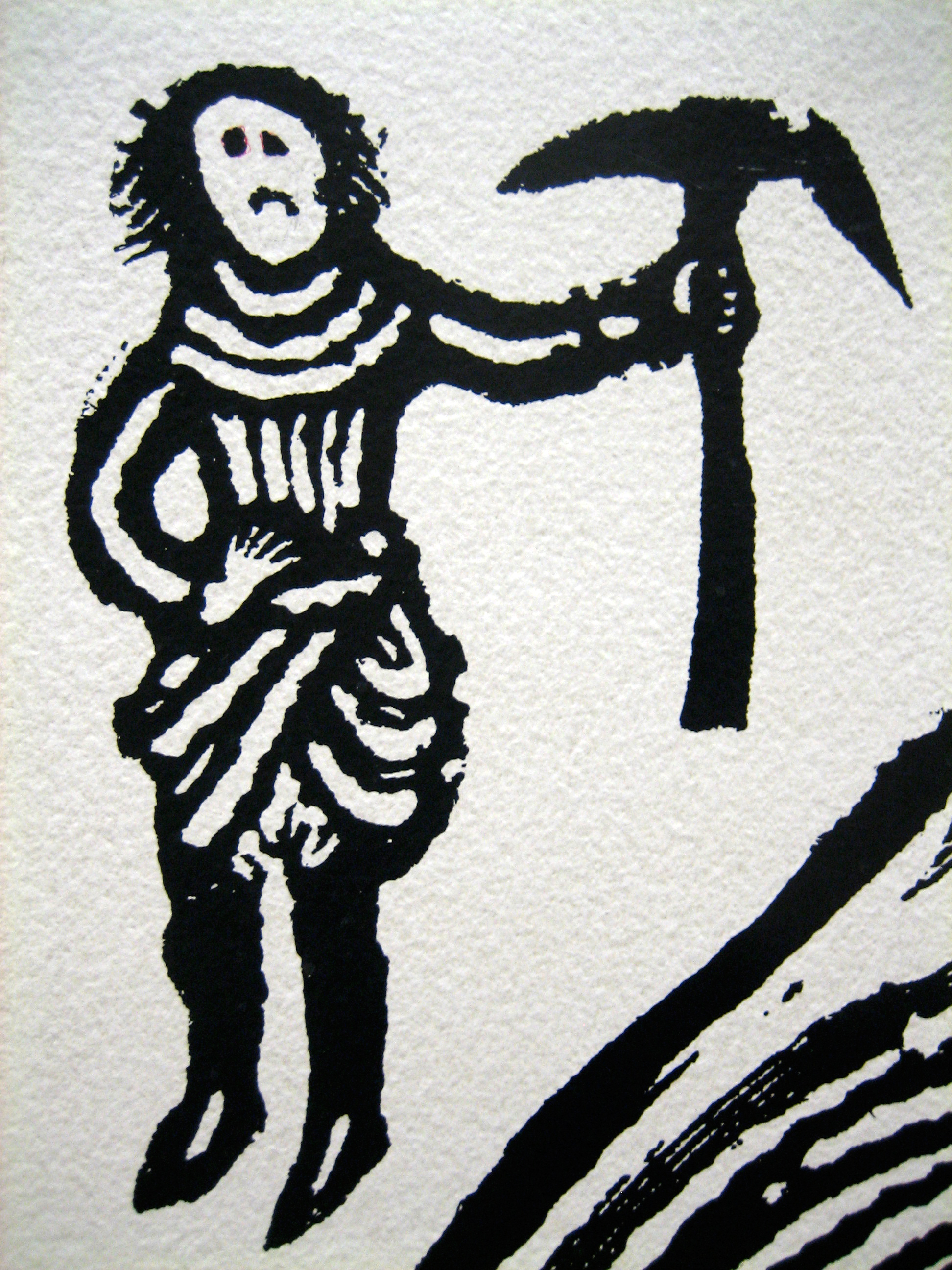
We've all been thereAs we go about our toil, so does Gentleman’s ensemble, from the most humble to the most holy.

You may only grab a blur of images as your train rushes in, pauses then hurries off. Or you may have time to spy a face or feature that stays with you, in turn capturing a moment out of your day and elevating what can feel a mundane business – getting from A to B – into something a bit magical:

Gentleman nails it Close-up, you realise it’s not just human beings that benefit from the artist’s bracing, characterful style:

Symbolism a-go-goI reckon this is the murals’ greatest strength: the vivid personality of its subjects. These are historic events drawn in a very contemporary way. The scenes don’t seem rarefied, done for abstract contemplation. They’ve been leavened with a universal humanity.

Admittedly the amalgamation of unwelcome if necessary everyday ephemera sometimes looks, literally, rubbish:
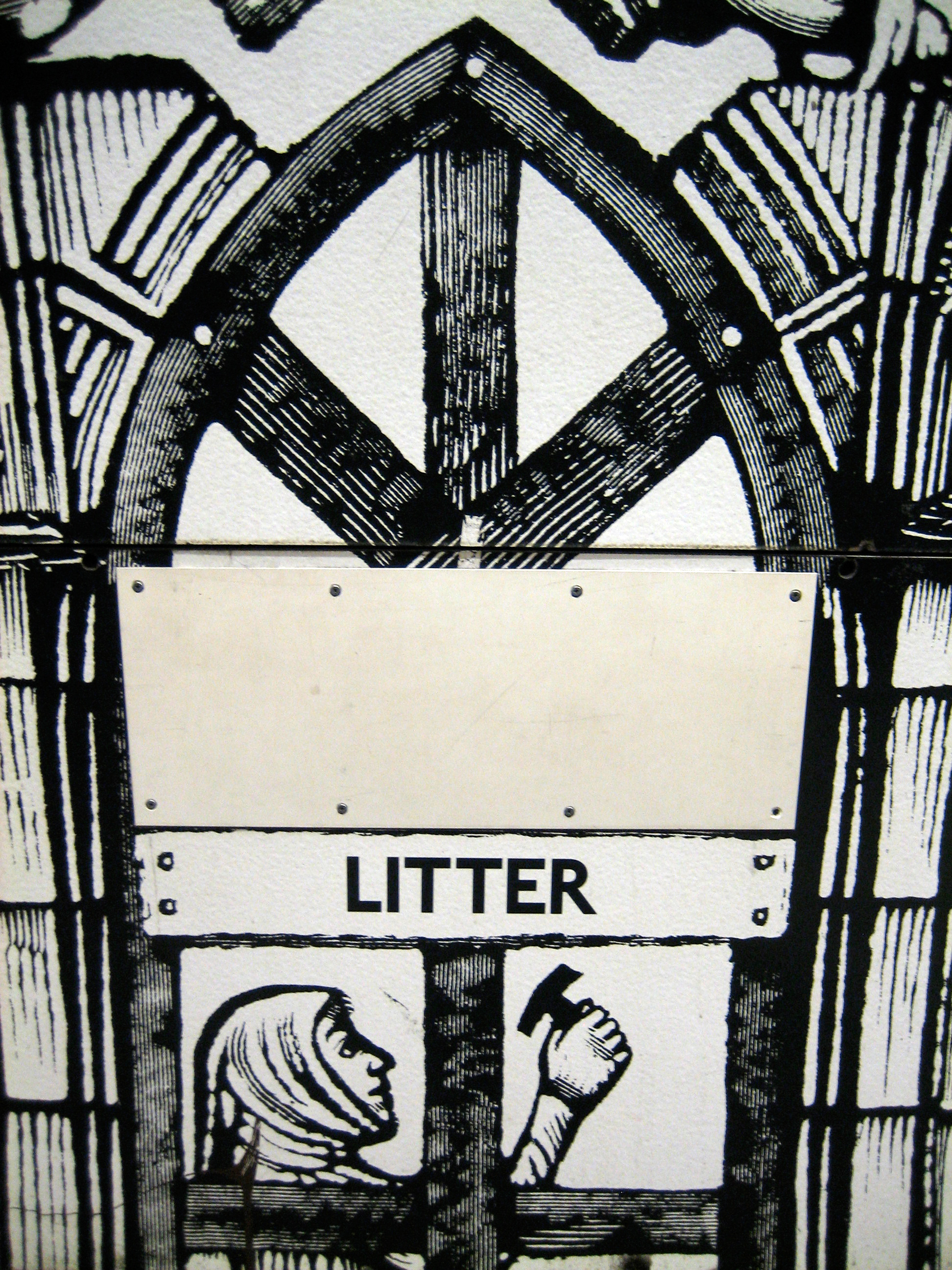
A bit (of) rubbishBut then you also get this, the Northern line roundel, popping up in wonderfully unlikely situations:
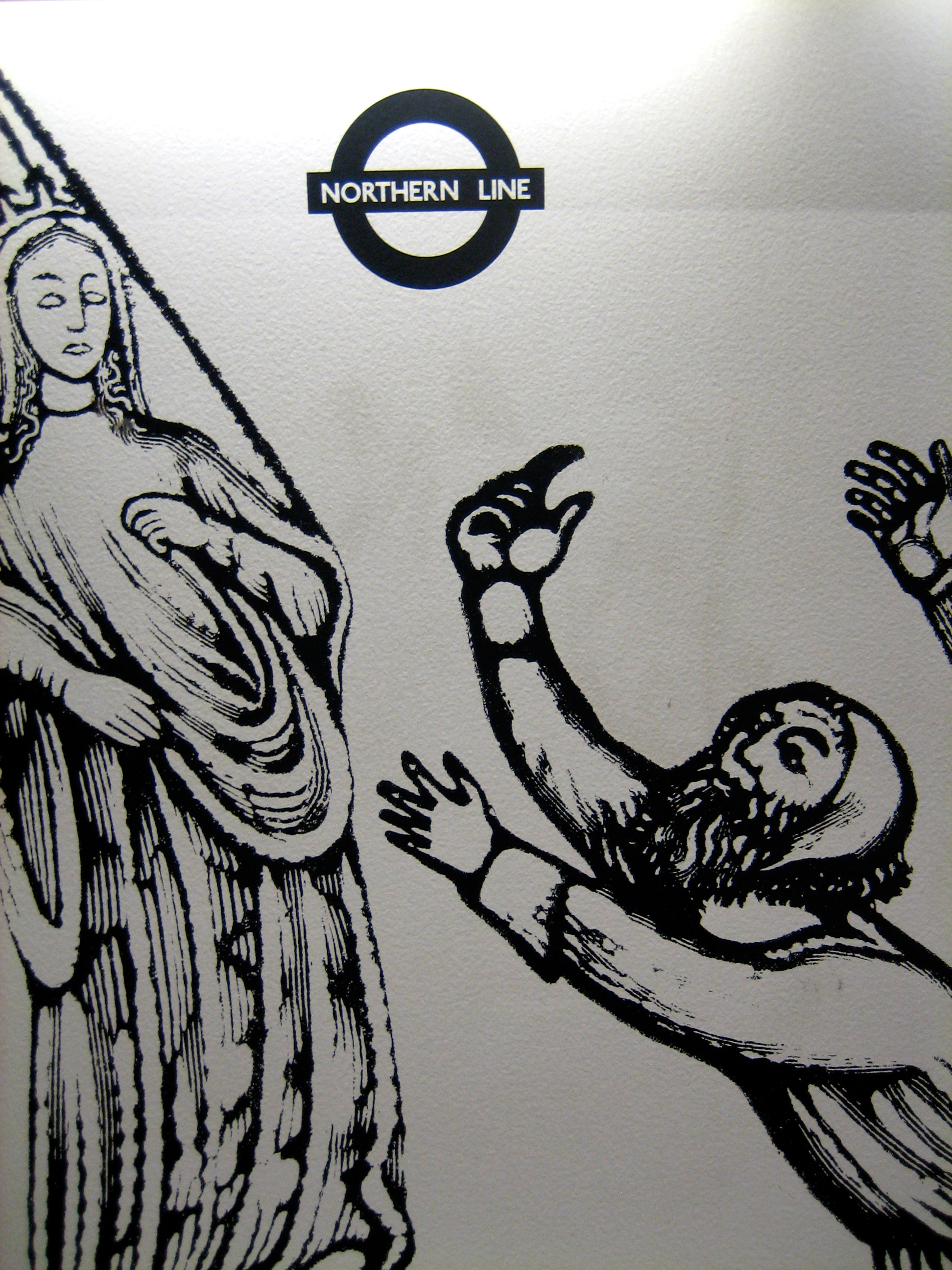
Manna from heavenFrankly, who wouldn’t want to worship such a divine manifestation?

The murals are one of the few things London Transport got right in the 1970s. They date from when Charing Cross was reworked as the terminus of the newly-extended (and newly-named) Jubilee line, and when all the messy jostling of stations separately called Trafalgar Square, Strand and Embankment got tidied up.

It can’t have been easy persuading the LT suits of the merits of such an aesthetic investment. But then, as the murals show, we all have our crosses to bear.
B-b-b-b-build

Stone meReaching such a propitious milestone as this, the midway point of my quest to list 150 great things about the Underground, demands something grand and bold. I feel I need to rise to the occasion. After all, as Roger Moore said to Jane Seymour, there’s no sense going off half-cocked.

Wait, what?

Public transport cutsYes, that is what you think it is. And you reckon today’s public transport cuts are controversial.

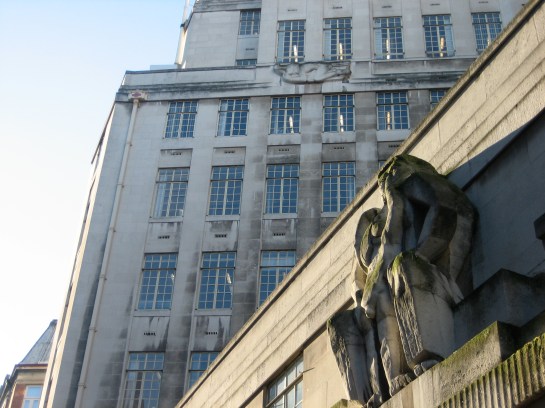
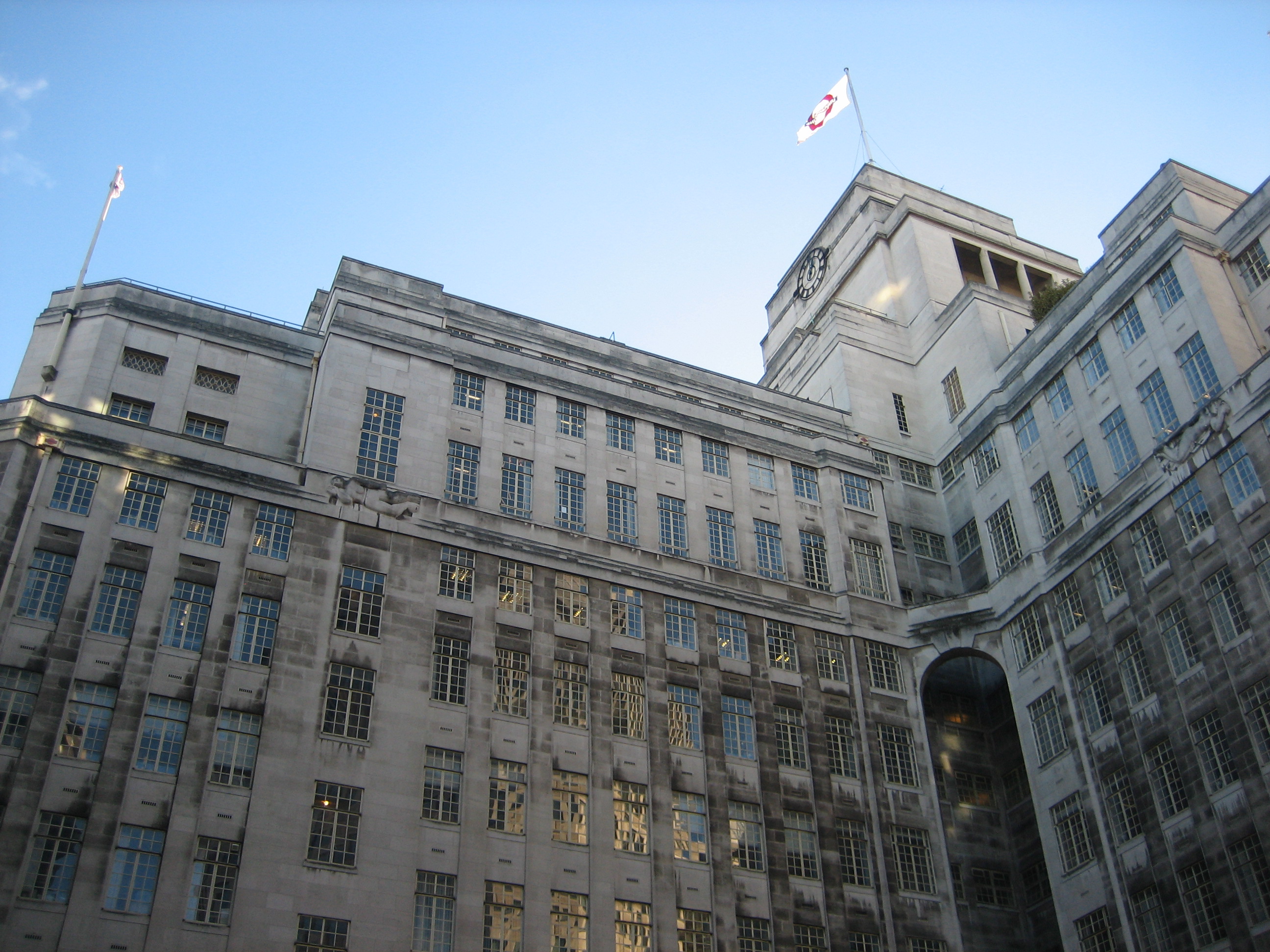
The immense and dazzling edifice that is the headquarters of London Underground at 55 Broadway, sitting astride St James’s Park station, is furnished with a set of equally striking and suitably head-turning sculptures.

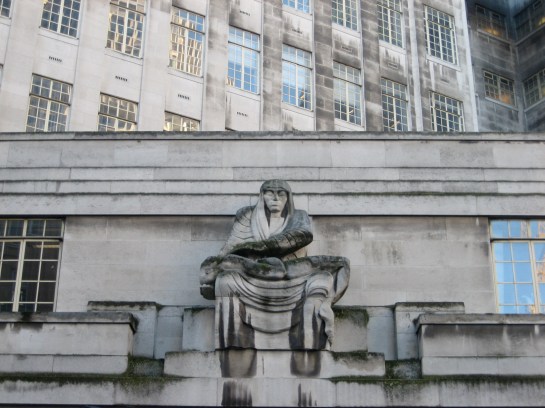
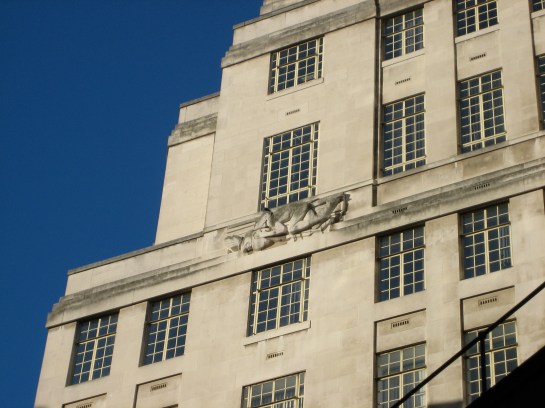
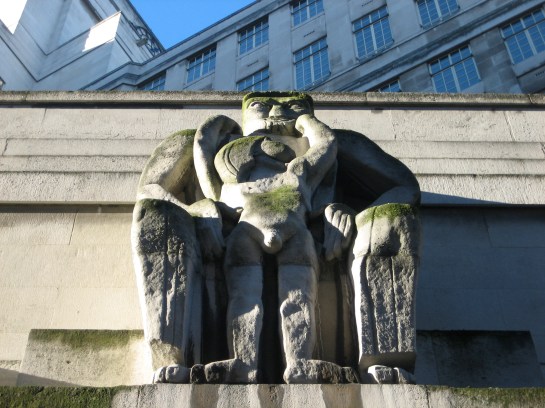
Two appear in the photo directly above: in the background, high up on the beautiful facade, is North Wind by Eric Gill; in the foreground, sporting the naked child, Day by Jacob Epstein.

It was Epstein who brought down the censorious hordes of the late 1920s, who in turn almost brought down the visionary helmsman of London Underground himself, Frank Pick. For it was into Pick’s hands that the penis was placed (stop giggling at the back), and who threatened to resign if the public campaign against Epstein’s sculpture found favour with his own superiors.

An inch and a half saved the day (insert your own innuendo here). This was the length of stone Epstein agreed to remove from the naked figure. There is no information available as to how and why this particular length was calculated. Maybe there’s a secret equation used by public institutions to determine genital:scandal ratio.

But perhaps there was a bit of calculated outrage going on here. After all, Epstein’s Day is the sculpture that is most prominently displayed on the outside of 55 Broadway, and therefore the one most likely to catch the public’s eye. Pick, along with Epstein and the architect Charles Holden, must surely have anticipated the furore – and hence the extra publicity.

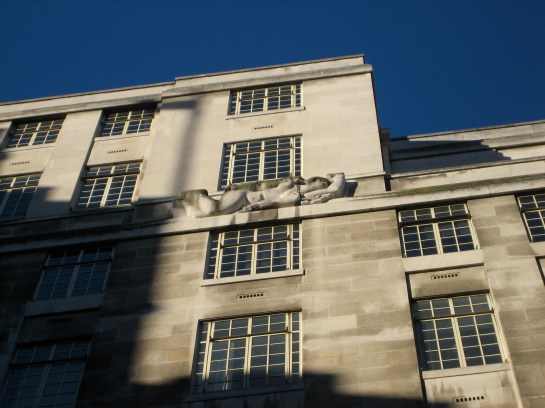
A total of 10 sculptures appear on the building, the work of an assembly of artists the like of which TV Times would no doubt (and appropriately) have called star-encrusted.

The immensely influential Epstein provided two: Day, and a companion work, Night, that stirred its own respective pot of societal umbrage:

Night workThe other eight sculptures depict the four winds, twice over. The engraver and noted religious sculptor Allan G Wyon supplied one East Wind:

Where there's a wind there's a wayThe other was created by Eric Gill, who also supplied the North Wind shown in the second photo above, and a South Wind.

Eric Aumonier, whose work I chose to begin this blog 75 entries ago, designed the second South Wind, while Alfred Gerrard was responsible for the other North Wind.

The two West Winds were the work of Sam Rabin:

Go, West…and no less a figure than Henry Moore (the sculpture on the left)

The Moore, the merrier

Gerrard’s North Wind is on the right (click to enlarge).

That roll-call of names shows the power that Charles Holden could wield when it came to commissioning major public art for a major public construction.

I’ll return to 55 Broadway again; the building itself more than deserves its own entry. But this particular ensemble of creativity, on such a formidable structure in such a potent location, easily supplies enough tonnage of worth to sit at such a waymarker in my quest.

Despite being one and a half inches shy of what was originally conceived, the 10 sculptures represent the ambition of the Underground as once was, and the legacy it commands and carries onwards into its future.

Plus they’ve allowed me to indulge some ripe double entendre that, unlike some of the other assertions on this blog, would surely stand up in court.

Colour me happyWhat’s the best thing to do with a bit of station that nobody uses anymore? Abandon it, like at Barbican? Honour it, like at Highgate? Or give it a new life as a space for the installation of contemporary art?

It depends on the context, I suppose. And that’s not just a cop-out of an answer. It’s a pragmatic one.

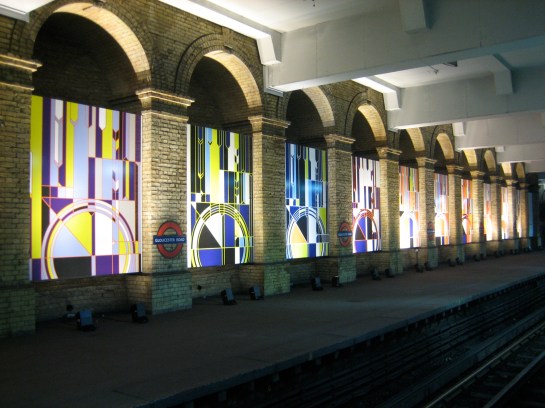
Utilising the disused platform at Gloucester Road for the exhibition of art was an inspired decision. The giant, illuminated alcoves lend themselves brilliantly to the displaying of striking visual designs. It’s a great example of how to marry location and function.

Slinging bits of art into the alcoves at Barbican, however, wouldn’t create half as good an effect. There the alcoves are outside, shorn of the manipulated atmosphere of an artifically-lit environment. They’re striking in their own way, as I’ve already acknowledged. But their cousins at Gloucester Road represent the better home for things that need to be shown off for being different and new, rather than for always being the same.

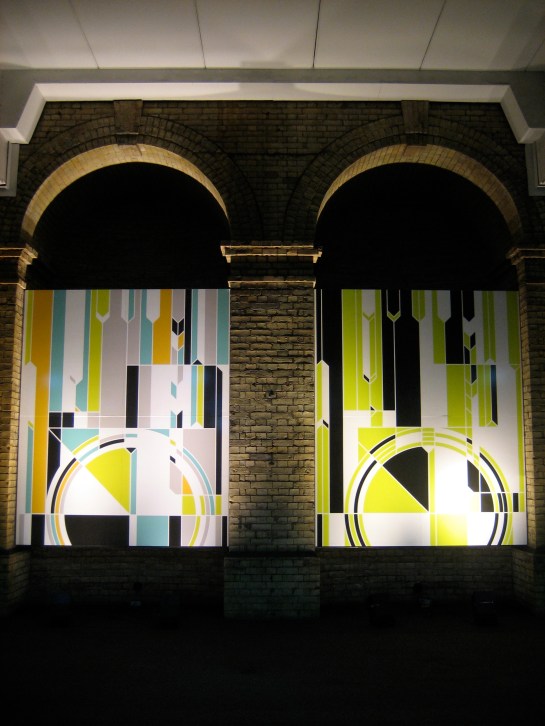
Tailored for GloucesterThis space has been used for art installations since the early noughties. There have been some marvellous, bewitching efforts, as well as some that are better forgotten. But all have called attention to themselves, which is kind of the point.

The installation that was in place when I took these photos was called Big Ben by the artist Sarah Morris.

Platform heartI love the geometry and vibrancy of the designs, especially the way they seem to complement the geometry of the platform itself. They rekindle a bit of energy in an environment that would otherwise be rather lifeless. Plus they are wonderfully lit. Placing them just out of reach, on the other side of the tracks, adds to the appeal.

This platform has come alive again, but on its own terms. Hopefully it will continue to do so long into the future.