Archive

Numbers 26-50

Tiles all round Maida Vale won a National Railway Heritage award in 2010 as an example of the right way to modernise a historic building.

The station dates back to 1915, but was looking distinctly rough around the roundels before London Underground gave it a subtle but effective facelift. Centrepiece of the building, both then and now, are the twin mosaics on the walls of the entrance staircase:

Step inside, loveYou can’t miss them. Delicate and elegant, they are the first things you see when you step foot inside the station and begin your descent down the angular steps to the ticket hall.

Maida Vale is tiny. It’s squashed into a street corner and tries to make the most of its slightly oppressive architecture. Thankfully, the mosaics lift the atmosphere and also your sense of perspective. Without them the station would be a much gloomier and less roomier affair.

Their absence would also have left a rather acute aesthetic hole in this scene from Alfred Hitchcock’s 1927 film Downhill:
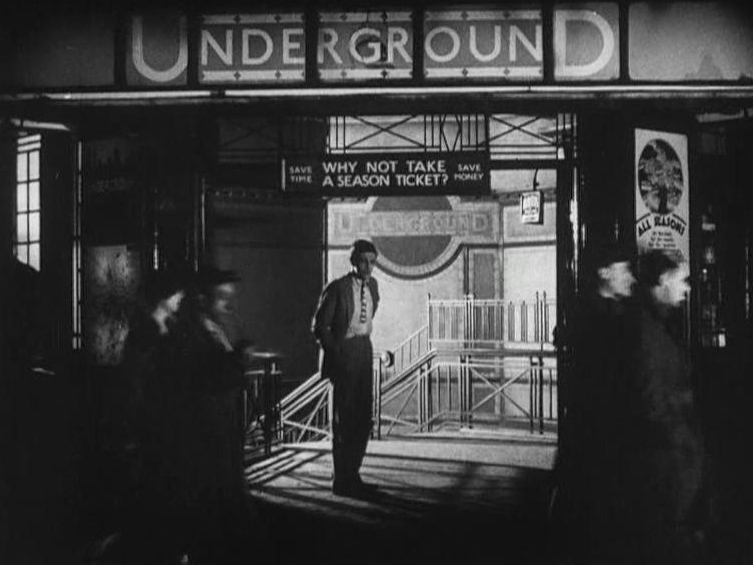
Fame at lastYou can tell just from looking at that shot that something bad is, has been or is about to start going on. Although admittedly the film title does somewhat give the game away.
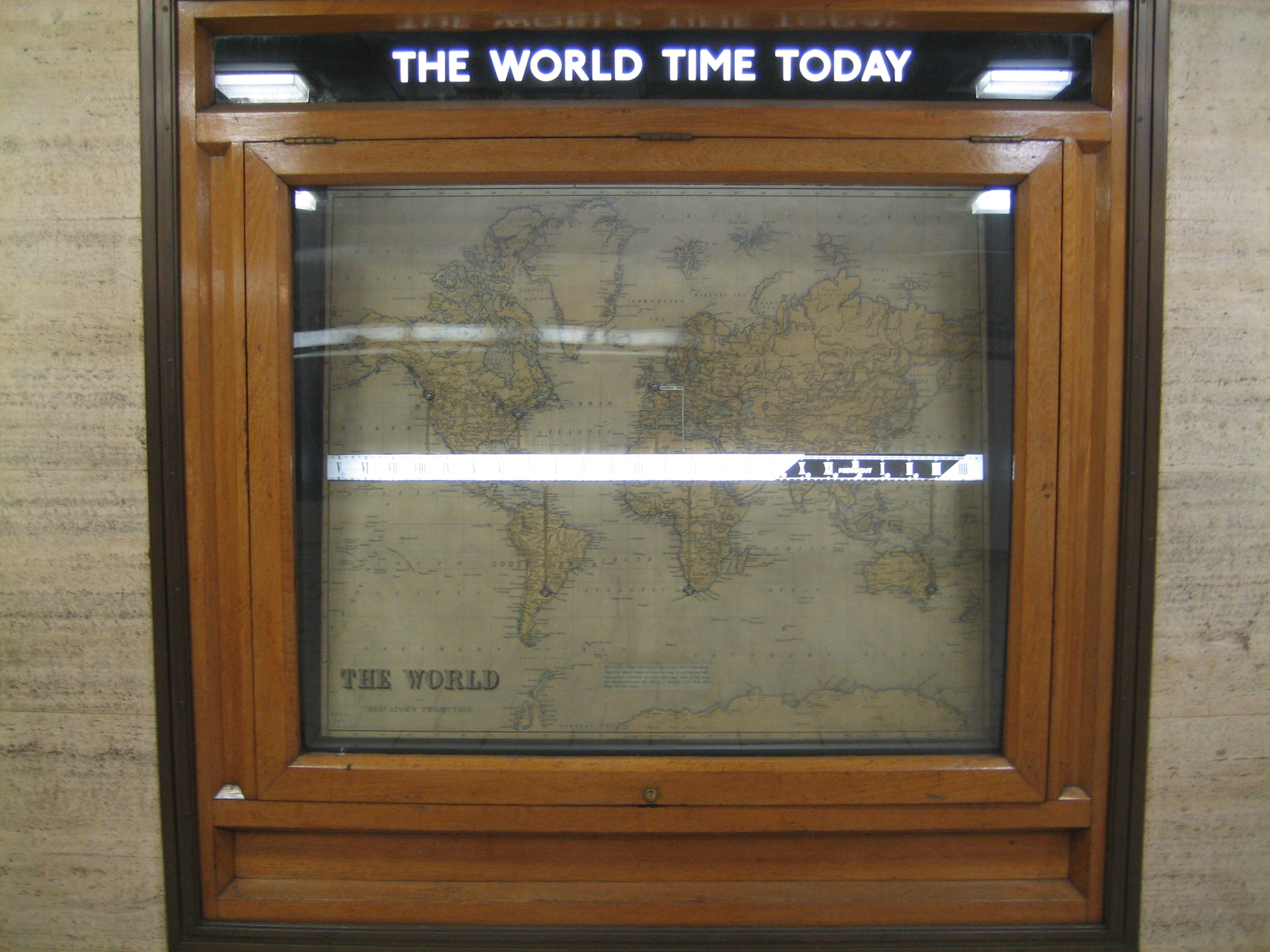
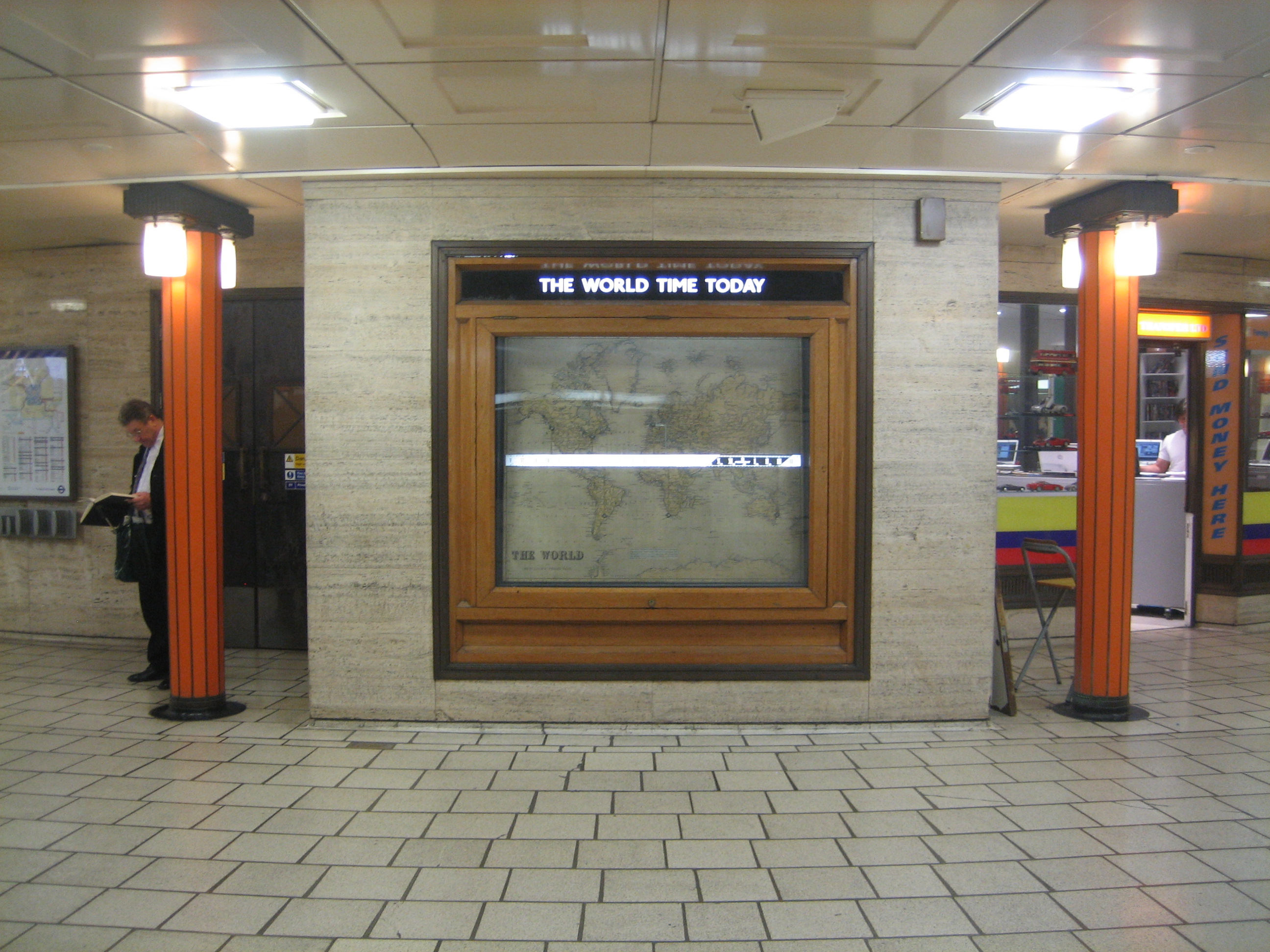
Minute minutesIt was the middle of the rush hour when I took this picture, yet the crowds of people passing around me didn’t give this object the time of day.

Which was a pity, as it was doing the very same back at them, and with considerably more style.

The world, clockedThe linear clock at Piccadilly Circus is an overlooked gem. It sits snugly within the inner wall of the station’s circular entrance hall at almost the furthest point possible from the main escalators, so perhaps its failure to grab attention isn’t that surprising.

But even the people who were brushing against it barely cast it a tiny glance. Perhaps they’d seen it before, twice daily, as regular as, ooh, clockwork. Or perhaps they just didn’t have – I should stop this – enough time.

Still, their unwillingness to pause and stare did afford me an almost clear shot of the installation, save for one gentleman who, having seen what I was up to, made a point of remaining stubbornly motionless, my fierce glares bouncing off him like platitudinous ping-pong balls.

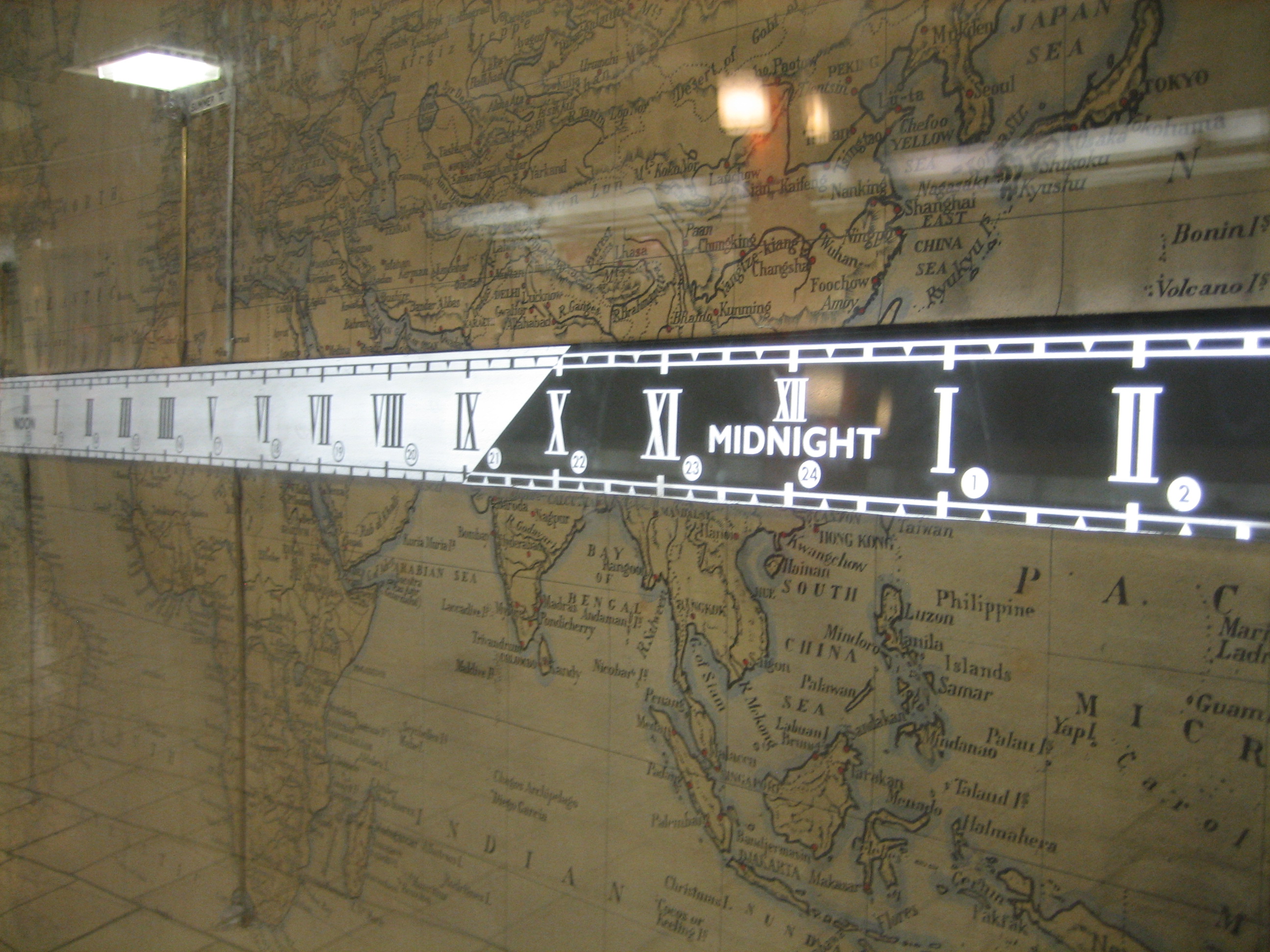
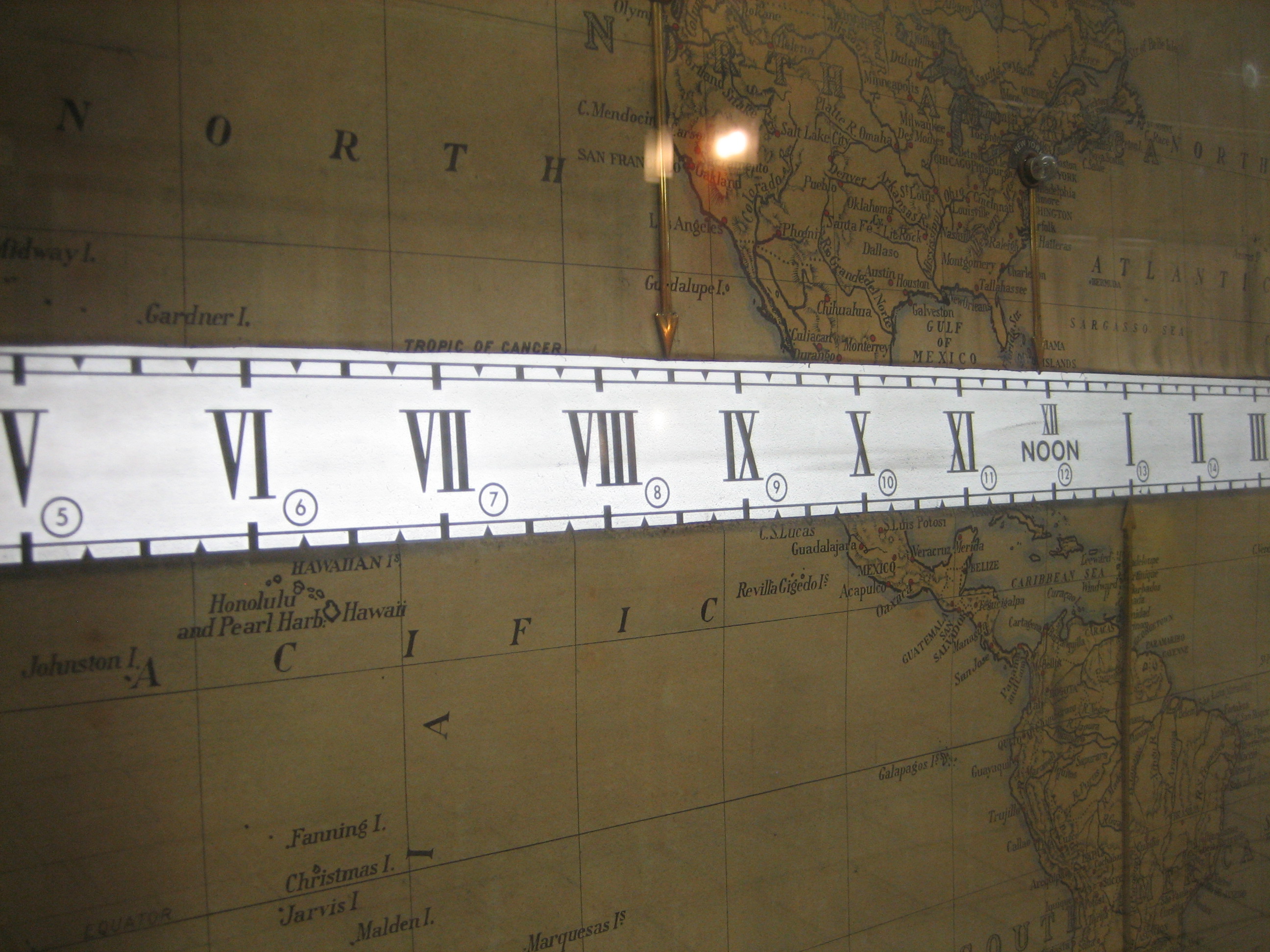
Time, gentleman, pleaseThe clock dates from the station’s redesign in the late 1920s. The central strip scrolls imperceptibly across the map of the world at the same speed as the planet’s rotation. As such it is possible to see, roughly, what the time is anywhere around the globe at any point of the day or night. Wonderfully simple and simply wonderful.

Responsibility for such a suavely elegant and restful timepiece lies with architect Charles Holden and builder John Mowlem and Co, who collaborated on the whole of the station.

Piccadilly Circus entrance hall can feel a bit like a spinning top at its busiest moments, with passengers whirling in, up, round, down and out. You have to fight against the flow of people to even stand still. No wonder the clock doesn’t get much of an audience.

Its time in the sun was probably in its infancy, when people strolled rather than stormed around the station. But fortunately, even if nobody is looking, somewhere the sun is always shining for this antique watchman, and hopefully always will.

Where the sun never sets...

Yes, another oneWelcome to the other end of the line.

The terminus at Uxbridge was conceived and designed to mirror that at Cockfosters, so it makes sense for me to salute them sequentially.

There are differences between the two, but not substantially. Uxbridge is slightly taller and longer than its crosstown cousin, but keeps the same overall shape and sensibility. Statistically it is four times busier than Cockfosters, but is still just as elegant and, despite the hubbub, just as atmospheric:

IlluminatingI know I’m a sappy simpleton, but I find the way these massed ranks of regal arches diminish and fade into the distance really rather special.

If you can forget the bustle and sidestep the people loitering not for a train, or to meet someone, but just for the sake of it, there’s a bewitching ambience to Uxbridge station.

The presence of stained glass, which I’ve already mentioned, makes the whole place feel slightly hallowed. Except nobody departs to another life, or a hole in the ground, from Uxbridge; the most they can hope for is a swift connection to Rayners Lane.

Go in peaceUnlike Cockfosters, this isn’t the one and only station building to have existed in this location – or to be precise, in and around this location.

The first incarnation of Uxbridge station was opened by the Metropolitan Railway in 1904, north of where it is now. The second and current incarnation dates from 1938. Regular readers will have no trouble guessing whose estimable hands were responsible for drawing up the blueprints.

Holden back the yearsDespite being dozens of miles and countless stations apart, Uxbridge and Cockfosters help remind you what the Underground is and always should be: one network, serving one London, whose similarities are greater and stronger than what many, especially London’s one newspaper, would often have you believe.