Archive

Zone 3

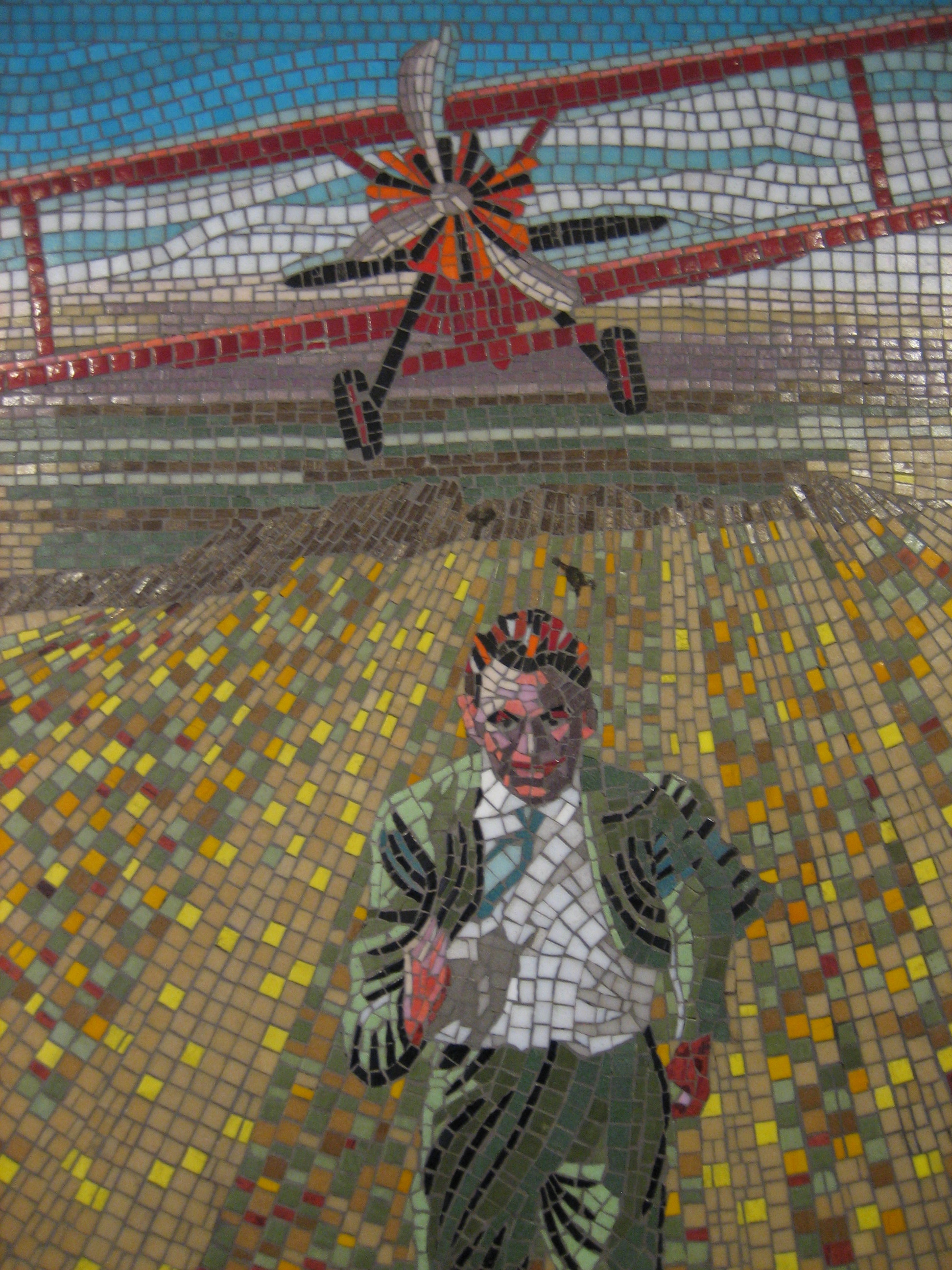
A spot of dustingWaltham Forest borough council commissioned these mosaics to mark the centenary of Alfred Hitchcock’s birth. The director was born in Leytonstone in 1899; each design commemorates a memorable moment from his cinematic career.

Bad hair dayThey were created by the Greenwich Mural Workshop and unveiled in 2001.

Leytonstone station is reached from either the western or eastern end of a long subway, along which are positioned the mosaics. It means you only get to see half the designs on your way to or from the platforms – that’s if you’re bothering to look at all:

Eastern entranceNobody was paying them any notice while I was there. In fact, me taking photographs of the mosaics was attracting more attention than the mosaics themselves. It’s a shame when something so intriguing becomes so familiar as to be almost invisible.

Captions provide information on which film is represented by which design, which is useful for those less familiar depictions:
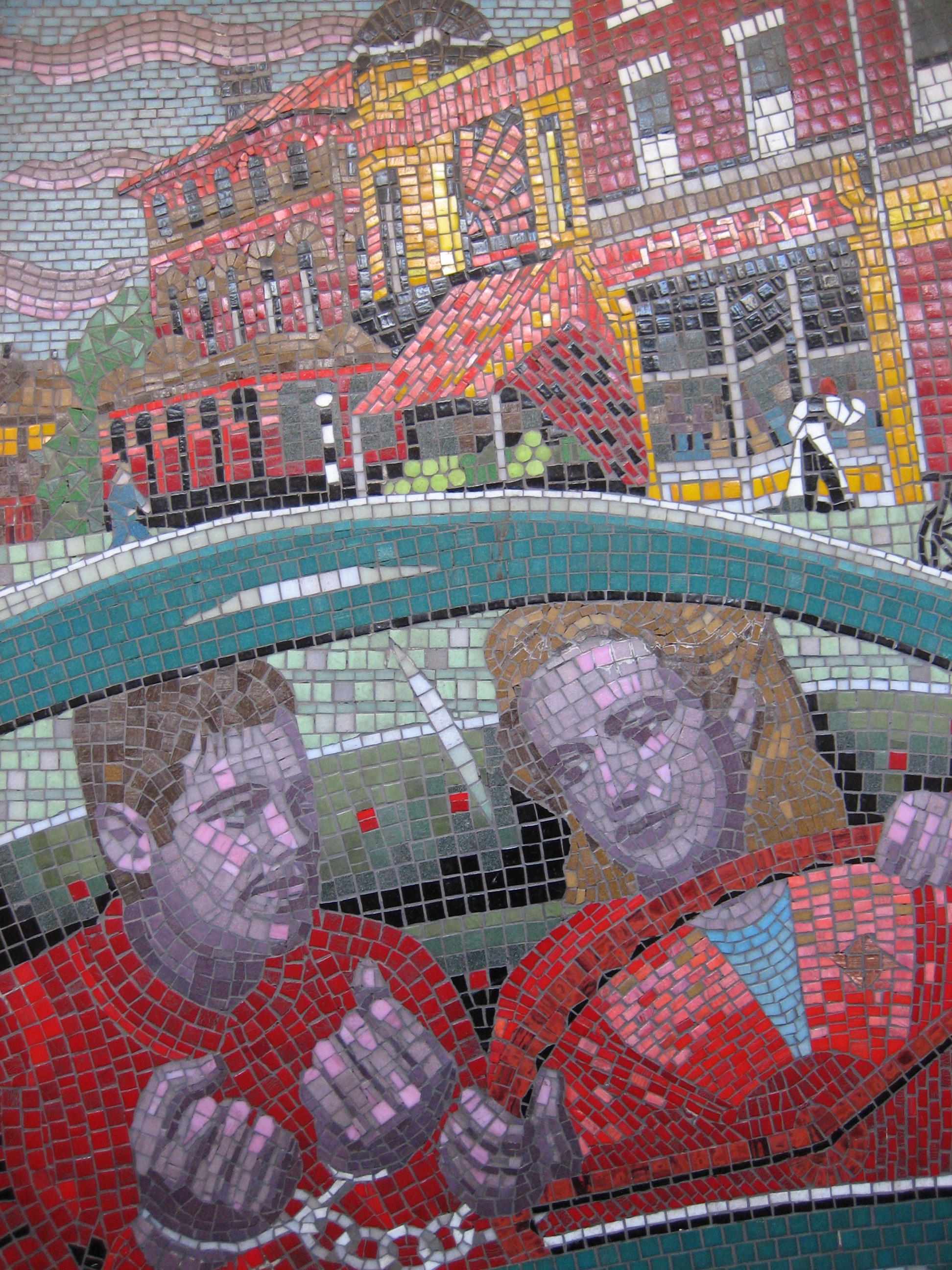
SaboteurThere are 17 in total, 14 showing scenes from films, three symbolising moments in Hitchcock’s career. If you’re not rushing to or from a train at Leytonstone, all of the designs are worth close inspection. Or for that matter, any sort of inspection at all.

Number 17

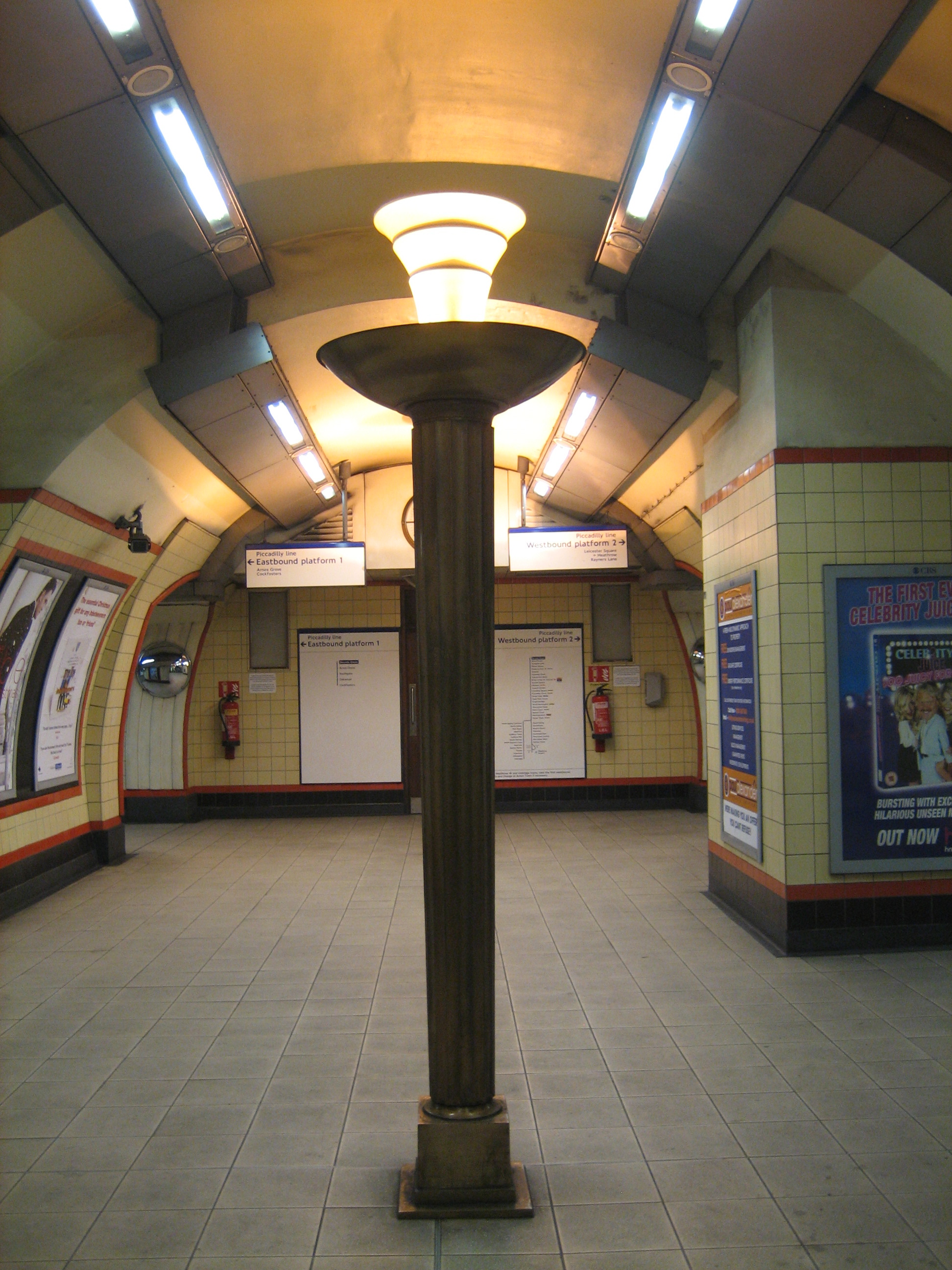
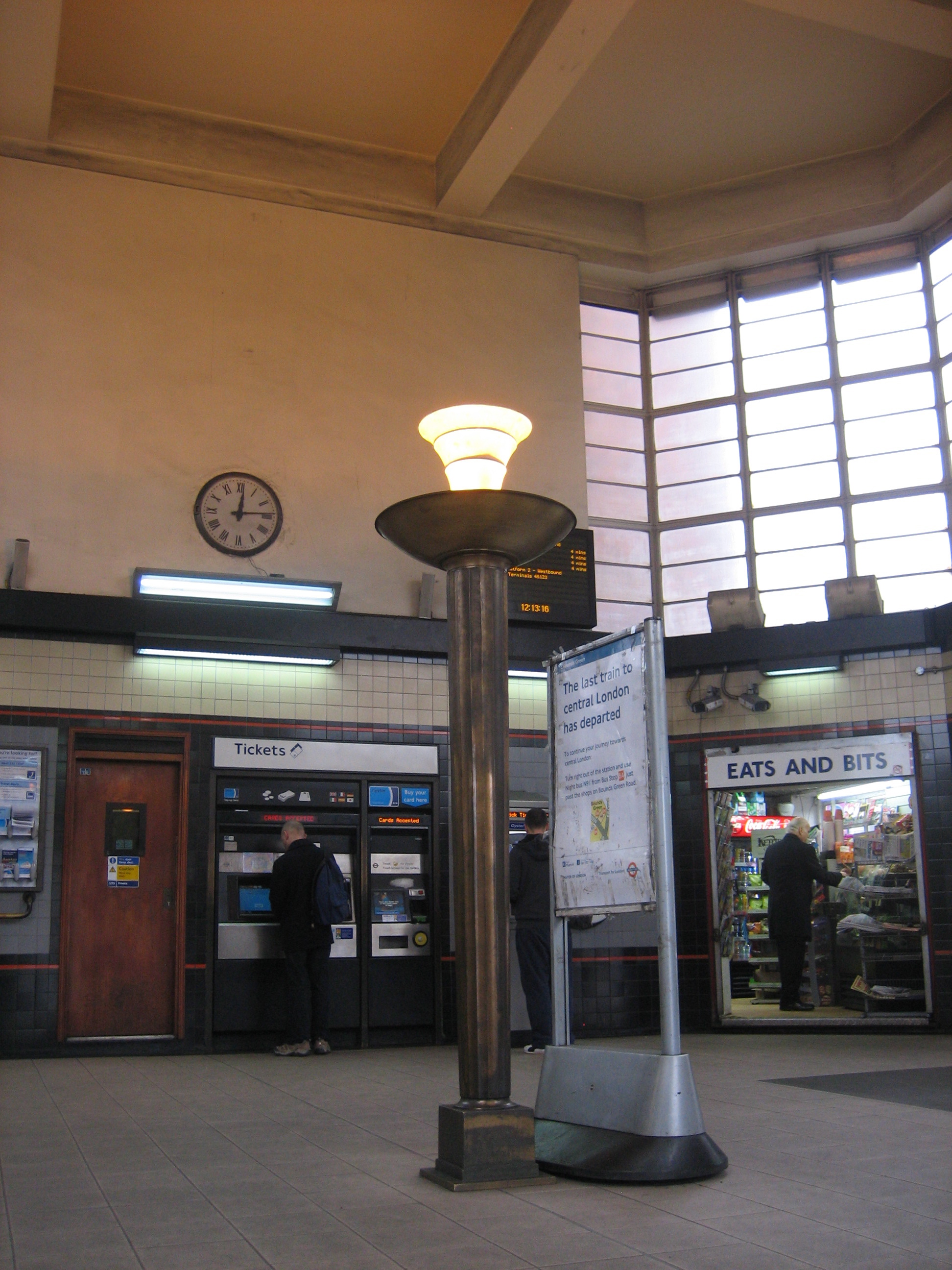
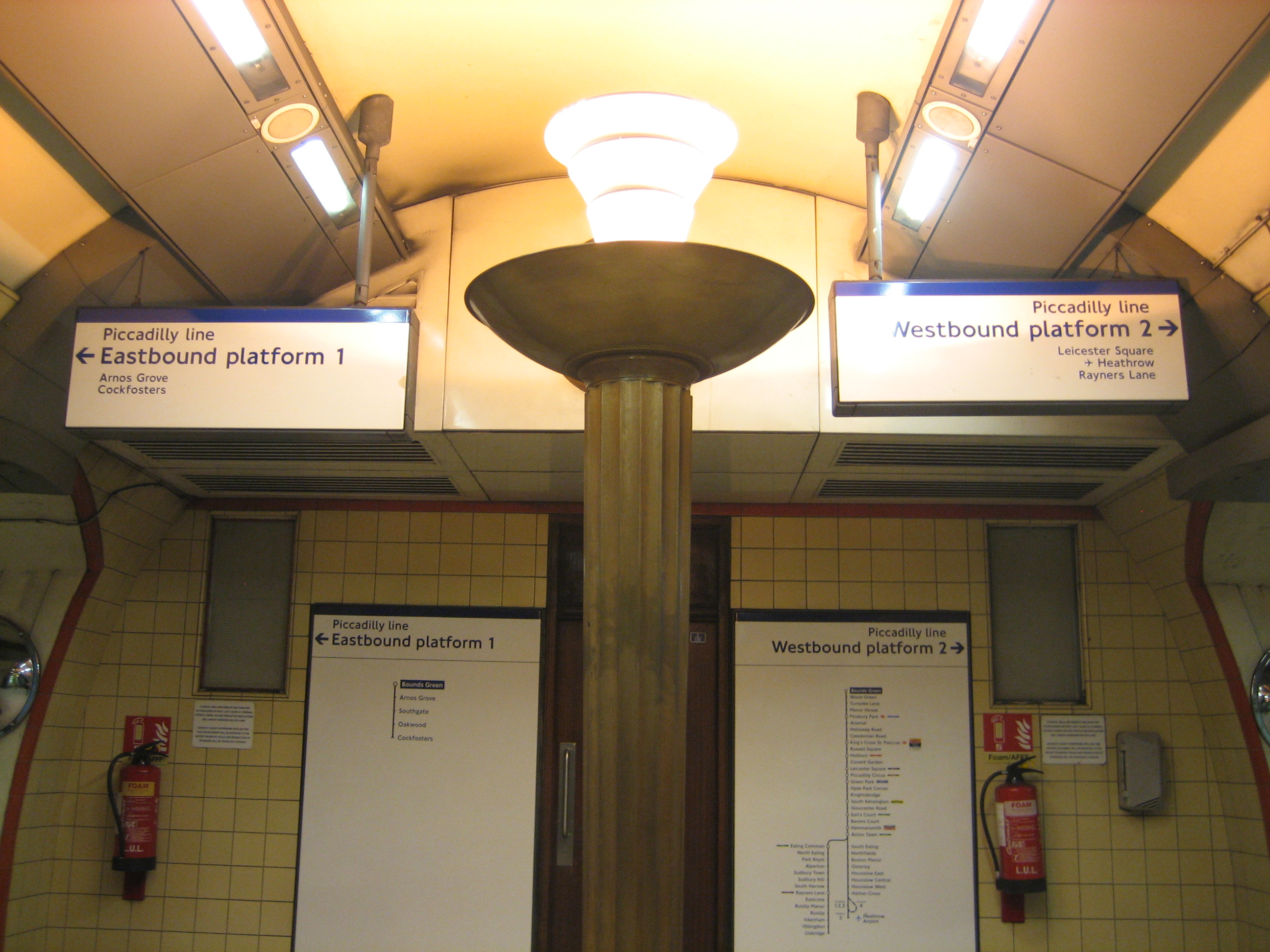
Light fantasticThe northern end of the Piccadilly line is without doubt going to feature many times in this blog. It probably boasts the most concentrated array of delights to be found on the London Underground network. I may as well admit right now that some of its stations will turn up here more than once. That’s certainly true of Bounds Green, where three of these beautiful objects live:

Glory Bound(s)The trio of bronze uplighters, two in the passageway between the platforms and one in the entrance hall, were the work of a man who is also going to make repeated appearances in this blog: Charles Holden.

The design dates back to 1932, the year Bounds Green station opened and from a time when the Underground was being subject to a complete reimagining in size, look and feel. Or rather, a complete imagining, seeing as how up until that point, nobody had seriously thought of or tried to conceive of the Underground network as one thing. Specifically, one thing that was deserving of coherent branding, original design and unique architecture. Holden and his management sponsor Frank Pick did. SPOILER: their efforts will probably comprise, oh, at least one-fifth of my 150.

Eats and BitsThe uplighters at Bounds Green, besides being Art Deco at its functional finest, create a cosy, comforting atmosphere: perhaps not the most obvious of environments for the likes of Eats and Bits, but very much in keeping with the thinking of their designer. I’m not going to disagree with him. After all, Underground stations should be places you want to be, that you feel pleased and proud to be stepping into, and not just locations from which you want to flee as soon as possible and in which you’re loathe to dwell.

But there’s more to marvel at Bounds Green station than just three exquisite illuminations. I’m already looking forward to going back.

The archer at East Finchey stationThere’s no great significance in choosing this to begin with. Proximity is, I suppose, the main reason. East Finchley station is a couple of stops southbound from where I live. I travel through nearly every day and invariably catch a glimpse of the archer, though it’s not best seen from a passing train. To fully appreciate its character and design you need to leave East Finchley station, turn around and look up, just above the main entrance.

Have bow, will travelIt’s the work of the sculptor Eric Aumonier (1899-1974) and is positioned so that you only see it on entering the station – in other words, on beginning your journey. In another non-coincidental touch, the implied trajectory of the archer’s arrow traces that of the line itself, about to dive underground into what was for a time the longest tunnel in the world: a little over 17 miles to Morden.

The sculpture is now more than 70 years old. It was unveiled on 22 July 1940, a moment in history when appreciation of public transport design was assuredly not high up in the nation’s consciousness. Yet it must have caught the eye and hopefully roused the soul. As London Transport’s staff journal said at the time: “It is more than a decorative device; it is powerful symbolism.”

It still is. It points the way down the line to the rest of the network and to London itself: home of some of Aumonier’s most famous creations, including similarly Art Deco sculptures inside the old Daily Express building, and a relief of the “South Wind” on the exterior of London Underground’s head office itself (of which more anon).

To the end of the lineBrilliantly sited, fantastically realised, impishly styled and enduringly relevant, the archer sums up pretty much everything worth celebrating about the Underground.

Hmm. On reflection there is an awful amount of significance to picking this as the first of the 150.