Archive

Zone 3

Round the Wood'If ever someone decides to ban curves on public transport buildings, Wood Green is done for.

Roundel-ramaIt’s a roundel-rama. The station swoops brassily along the junction of the eponymous high road and the wonderfully-named Lordship Lane, throwing more shapes than Su Pollard doing Back in the USSR.

Like a momentarily-paused spinning top, it bristles with potential energy. Sunlight bounces off and through its fortress of windows, meaning both the inside and outside share the gleaming spoils.
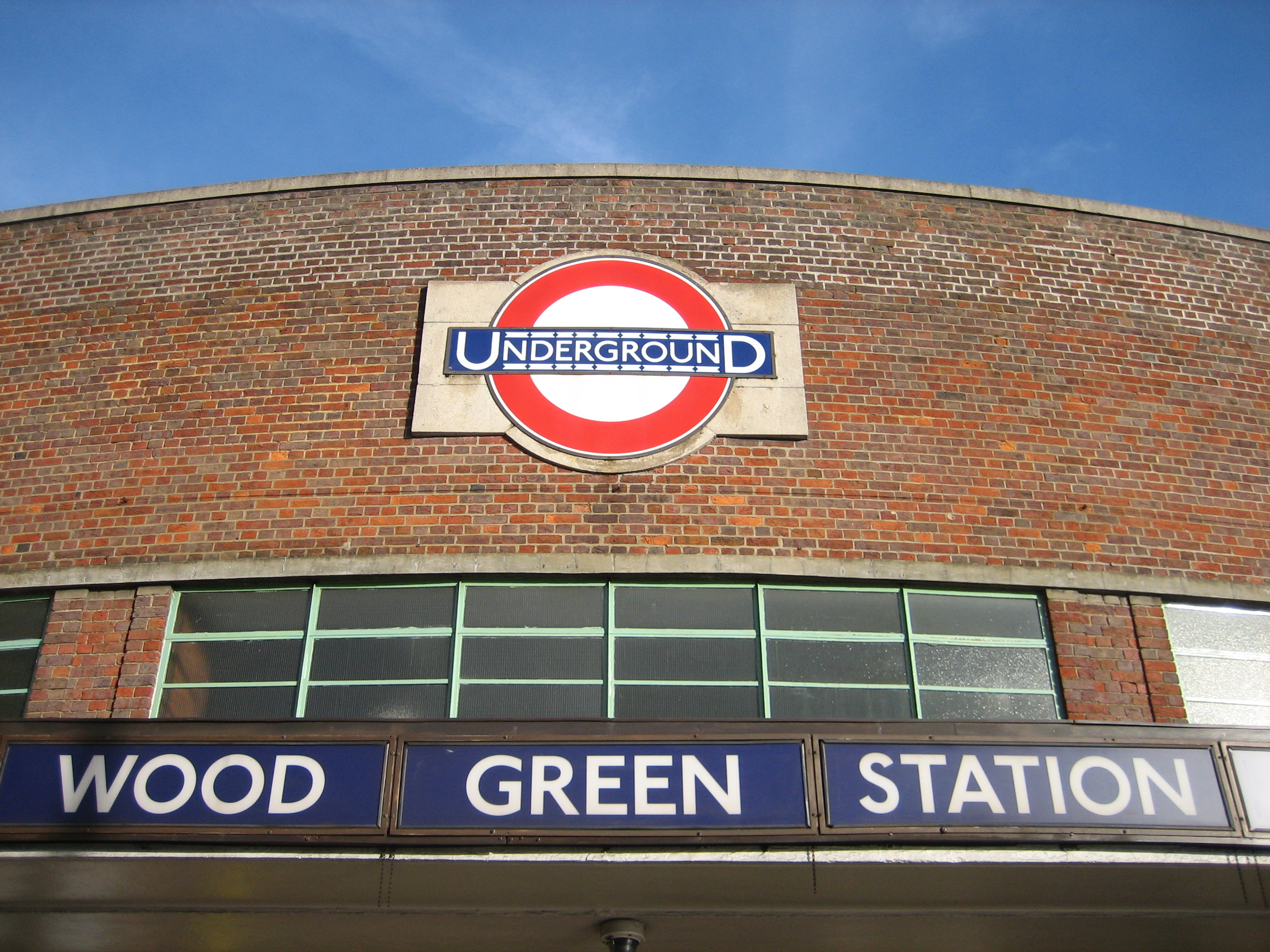
A light, hereTwo ventilation towers act like clamps on this huge, half-eclipsed zoetrope, holding either end in position as if to prevent sudden rotation. It’s as if the revolving restaurant (as once was) atop the BT Tower has spiralled off its perch and landed nonchalantly in the centre of Haringey.

If this all sounds a bit fanciful, you’re right. But then that’s what fantastic architecture does to you. Or perhaps more accurately, what fantastic architecture is meant to do to you.

Charles Holden designed this and every station on the Piccadilly line north of Finsbury Park. Legend has it that, on receiving the commission from London Transport, Holden charted a small, roundel-shaped private plane and set off from central London towards Cockfosters, laughing with glee and spraying a jet of modernist glitter in his wake. This may not be true.

Wood Green was finally given Grade II-listed status in July 2011: a decision that meant every stop from the terminus as Cockfosters down to Turnpike Lane was now protected.

That’s seven stations in total. I’m pretty sure you won’t find a similarly sequential concentration of wonder anywhere else in the UK.

Grade expectations

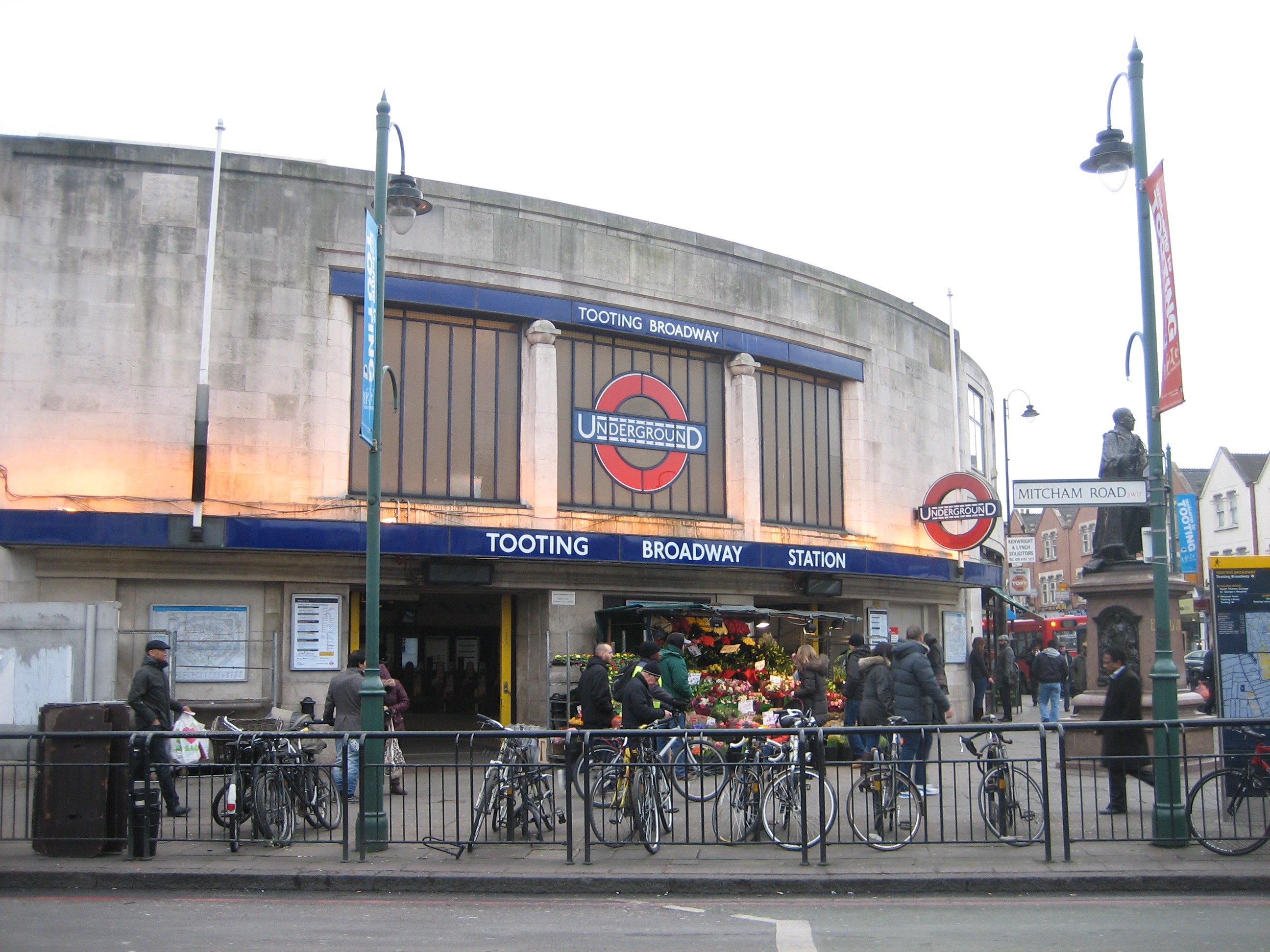
My kind of BroadwaySubject of one of the saddest songs ever written about the Underground, Tooting Broadway station is a location ripe for emotional statements. So here’s one. It is a thrillingly modernist smear across an otherwise unremarkable palette of suburban London. Judge it by colour, shape, size or purpose, it’s everything the surrounding area is not.

The building, completed in 1926, is bold and stylish, blessed with both grand gestures and subtle delights. In the former category belongs the enormous curved facade, built like so many of Charles Holden’s creations out of his beloved concrete, and looking dapper in its neatly-lined, nicely-hued finery:

Holden his ownIn the other category sit the illuminations that usefully pick out some of the building’s features during the day, but really come into their own at night, when the place turns the charm up even further and poses as a beautiful glittering palace. Yes, the lights are always bright on Broadway.

Broadway lightsA member of the German royal family stands guard by the entrance. He turned up a good 15 years before the station did, having just had his nine years interloping on the British throne curtailed through death. You might remember him from such titles as First Emperor of India and the Man Who Brought You The Edwardian Era:

Saxe-Coburg and Gotha not picturedI’m uneasy about royals having anything to do with the Underground. The two institutions are mutually exclusive. One values splendid isolation; the other, glorious diversity. Whenever a royal is shoved on to the Underground for some official opening or other, they look desperately discomfited or unhappy. The same goes for all the commoners playing host. Better to keep these two worlds well apart.

I know the statue predates the Northern line’s arrival, but I’m far more comfortable associating  Tooting Broadway with Patrick Fitzgerald‘s “John of Arc” than Edward VII.

(PS: Here’s a fine, five-minute snapshot of a day in the life of the station, minus all weeping/sleeping songwriters.)

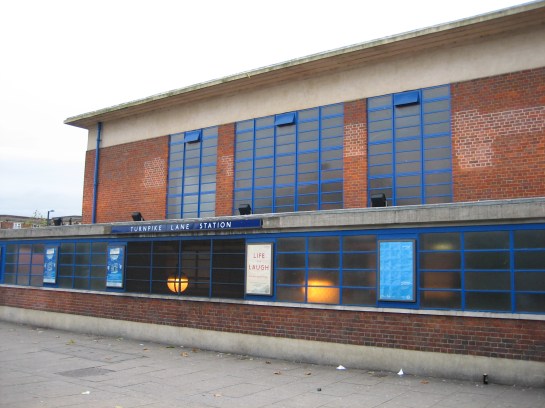
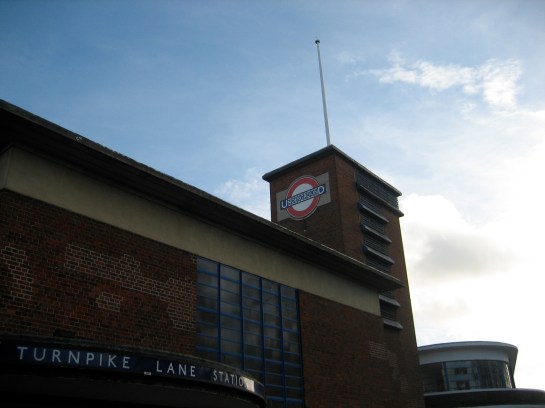
Purple patchesIf you’re ever inclined to literally worship the London Underground, the chapel-esque hues of Turnpike Lane would be a good place to start. And also something of a God place.

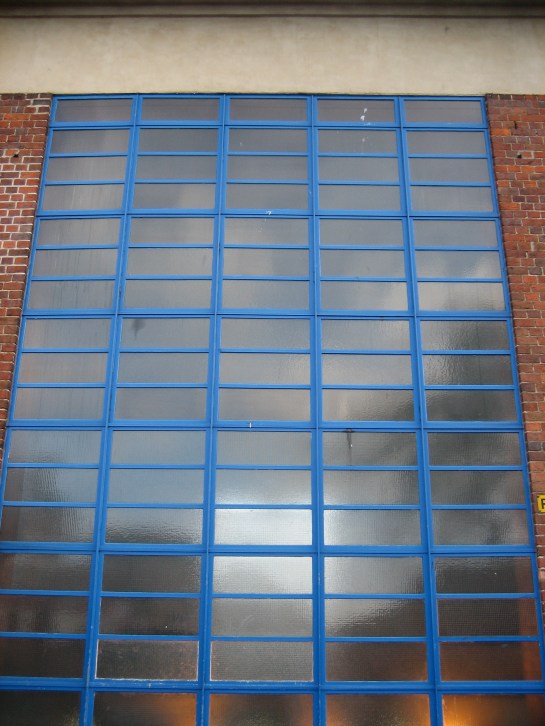
The towering segmented portals that climb the station’s giant walls could almost pass for sort of atheistic stained glass windows. They certainly perform a similar function, allowing natural light to pour into the vast, nave-like interior, while a hushed reverence envelops the building like a particularly voluminous cassock.

Not that there’s anything sacred to glean from either the station’s function or design. There’s much that is gloriously profane about Turnpike Lane, as there is of almost any Underground station. The warm inclusiveness, the non-denominational throng, the absence of anyone passing judgment: this is the kind of church I’d like to belong to. Look, there’s even a spire:

An aspiring viewYet another winning throw of the dice from Charles Holden, the station opened in 1932 and has been Grade II-listed since 1994.

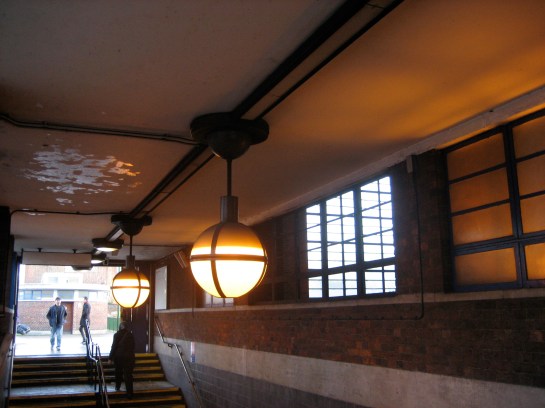
But it’s not in the best of shape. As you pass through the exterior walls and descend, as if arriving at a Baldwin-era society bash, to the ticket hall, amid the grace and glamour are barely-disguised patches of growing decay. Much like the entire Baldwin era, in fact.

Fading ballsStill, the orange and purple ambience casts enough warm appeal to make up for the damp. Someone needs to pass the collection plate around City Hall soonish, though.

Praise beIt’s well worth making a pilgrimage to Turnpike Lane to soak up some of its bracingly modernist and vaguely sanctified air. It’s TfL’s very own Lourdes: a place to rejuvenate your soul, with trains to central London every two minutes.

And don’t worry: unlike the Church of England, everyone is welcome here.

Amen, brother