Archive

Zone 4

A spot of dustingWaltham Forest borough council commissioned these mosaics to mark the centenary of Alfred Hitchcock’s birth. The director was born in Leytonstone in 1899; each design commemorates a memorable moment from his cinematic career.

Bad hair dayThey were created by the Greenwich Mural Workshop and unveiled in 2001.

Leytonstone station is reached from either the western or eastern end of a long subway, along which are positioned the mosaics. It means you only get to see half the designs on your way to or from the platforms – that’s if you’re bothering to look at all:

Eastern entranceNobody was paying them any notice while I was there. In fact, me taking photographs of the mosaics was attracting more attention than the mosaics themselves. It’s a shame when something so intriguing becomes so familiar as to be almost invisible.

Captions provide information on which film is represented by which design, which is useful for those less familiar depictions:
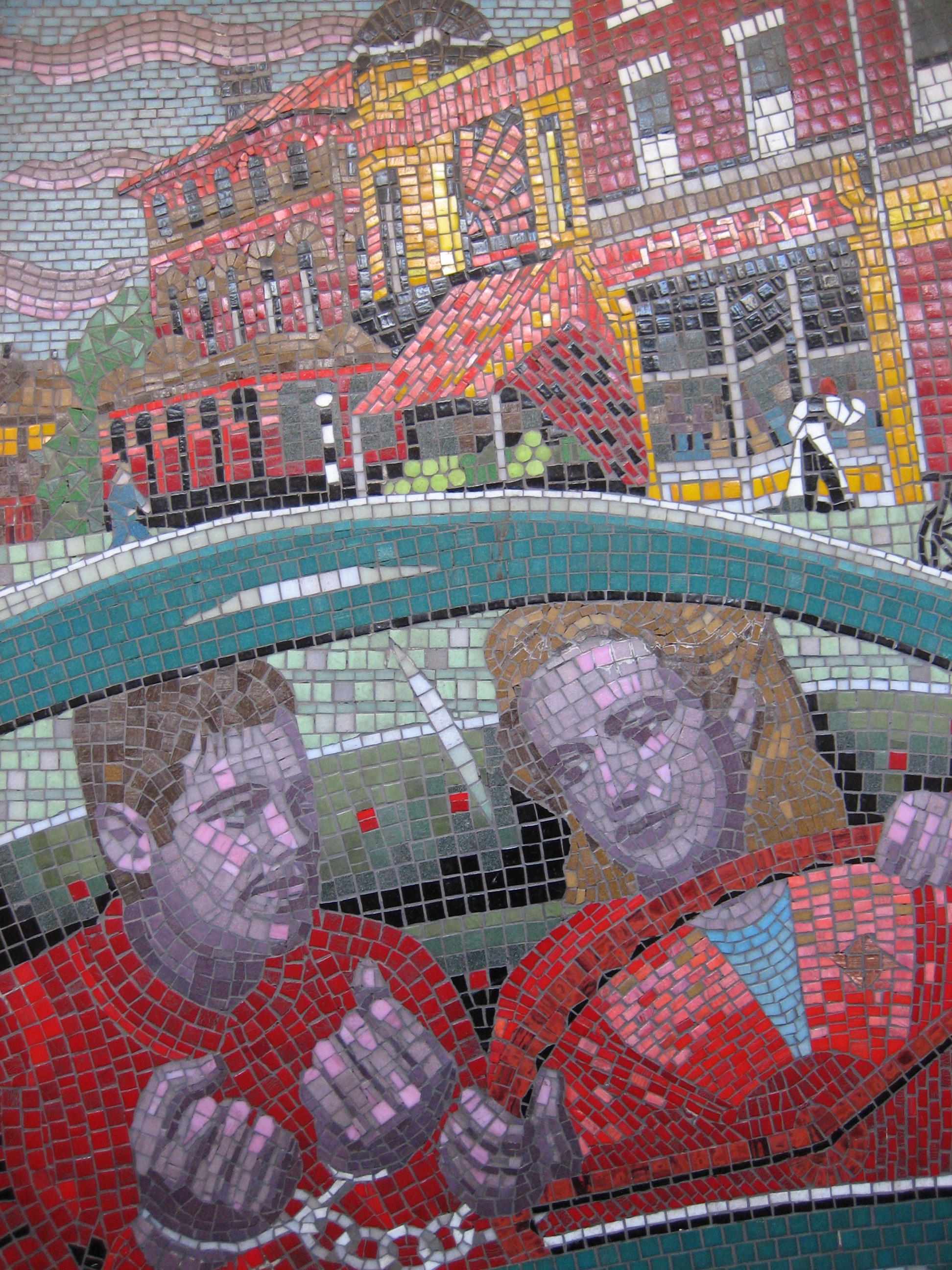
SaboteurThere are 17 in total, 14 showing scenes from films, three symbolising moments in Hitchcock’s career. If you’re not rushing to or from a train at Leytonstone, all of the designs are worth close inspection. Or for that matter, any sort of inspection at all.

Number 17

Cementing a reputationOne of London’s finest landmarks belongs to one of London’s least-used railway lines.

It represents the highest point on the Underground network above ground (almost 18 metres in height) but serves a station that is visited by close to the fewest number of passengers on the whole of the network to which it belongs.

It’s an object of awe-inducing size and unquestionable beauty, yet chances are it is rarely seen by anyone in the capital save those who live and work in the neighbourhood.

Out in any weatherThe viaduct that carries that Northern line from Finchley Central over the Dollis Brook to Mill Hill East is impossible to appreciate while inside a carriage trundling across its top.

You can pick up a sense of the structure’s accomplishments by virtue of the views across the surrounding countryside (and it is countryside, even here, in the centre of the borough of Barnet). But you need to make a five-minute journey on foot from either station to the valley floor to sample its full wonder.

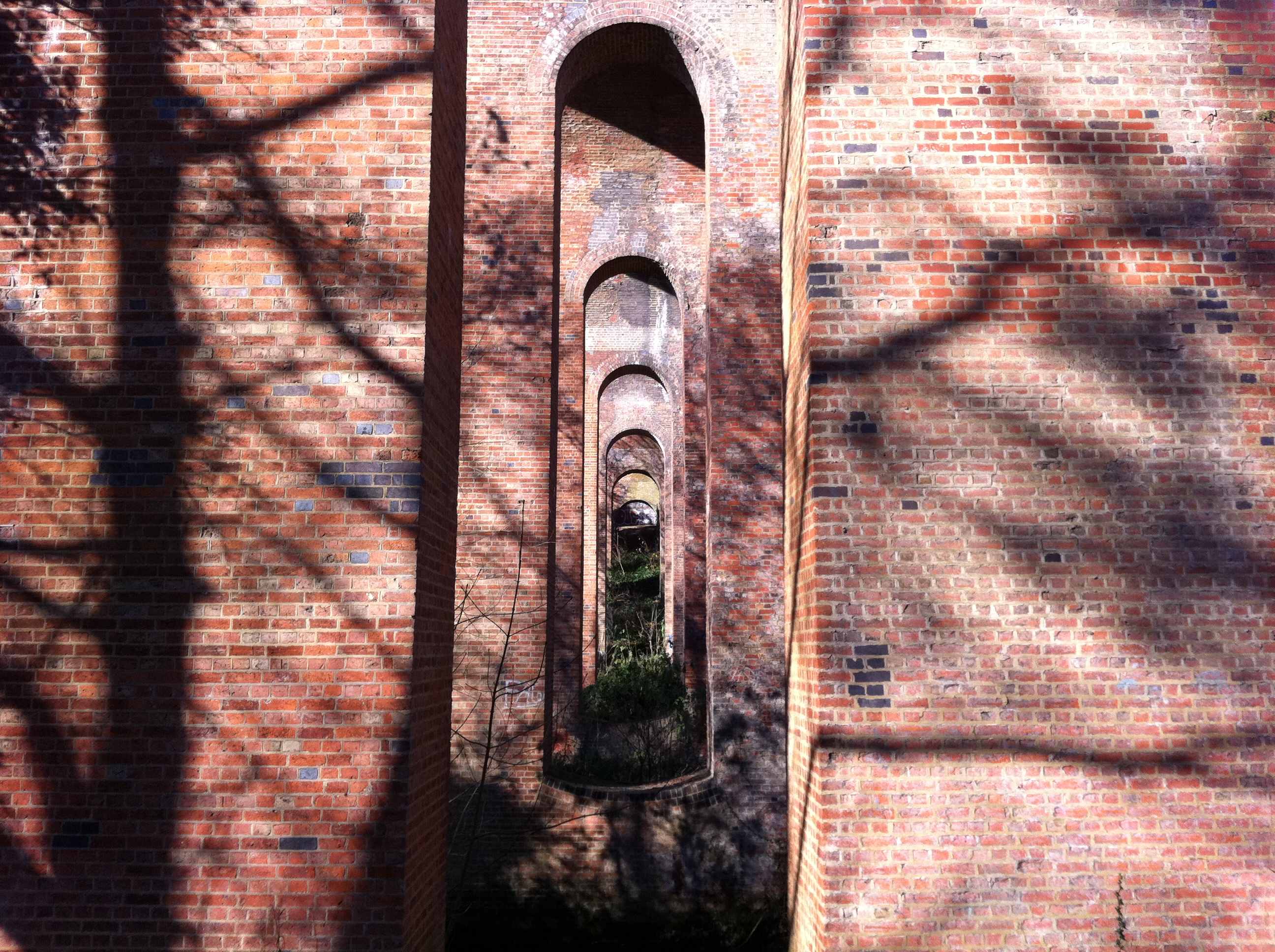
The archesTo stand underneath one of its arches is a rather giddy experience. Everything is simply so… big. So fantastically, addictively, uncompromisingly big. But not big in a bombastic, ill-conceived way. This is big done with foresight, skill and style.

Thousands upon thousands of bricks curve, glide and dance in every direction. The sun throws shadows that are both scintillating and eerie, and which play out against huge bursts of illumination:

More archesThe viaduct has been in use since 1867. John Fowler is the man to thank, the genius (and for once the word is justified) who acted as chief engineer for the very first chunk of the Underground, the Metropolitan railway; the Forth railway bridge; Grosvenor Bridge, the first railway bridge over the Thames; the original stations at Liverpool Central, Manchester Central, Sheffield Victoria and St Enoch in Glasgow; and many other highlights of Victorian civil engineering.

It’s almost laughable that the paltry single stump of a track that runs apologetically from Finchley Central to Mill Hill East has been blessed with such splendour and majesty.

But that’s what makes the Underground so great: that its artistic peaks often lie among its remunerative troughs, yet both somehow continue to exist, side-by-side.

I dream my dreams away

Suburbanisation of the DaleksFrom the tip of the roof downwards, Southgate is something very special.

It holds its own against fierce competition from pretty much every station along the northern end of the Piccadilly line, which is easily the most rewarding stamping ground for Underground architecture. And it does this by not merely being another example of Charles Holden’s faultless skill for coupling beauty with design, but by being unique.

There is literally no other station like this on the whole of the network.

The Underground has landedThere’s a sense here that Holden set out to push as far as he dared the expectations for and acceptance of how an Underground station should appear in a suburban high street.

You might think he failed, or that he went too far. I think he succeeds with aplomb.

Agreed, it does look like Southgate station has landed from some other time and place, even some other world. But it doesn’t feel out of time or out of place. Maybe that’s because we’ve all got so used to seeing this kind of extraordinary architecture in ordinary surroundings. But perhaps that’s all the more reason to continue to draw attention to it – and to appreciate and marvel at it even more, Dalek stalk and all:

Another 'Holden Globe award' winnerIt opened in 1933 and is now Grade II* listed. There’s no steel or iron here: just brick, concrete and glass, singing in perfect harmony.

The interior, which I’ll cover another time, and which explains how that dazzling circular roof appears to be entirely self-supporting, was renovated in 2008. The majestic exterior is pretty much unchanged.

It’s not something you can easily take in just by standing still. If you’re like me – which you’re probably glad you’re not – you’ll end up walking all the way round the outside. Twice.

Oh, and as if we weren’t spoiled enough, Holden throws this in to boot:

Look! Over here!It’s a massive roundel adjacent to the station entrance, that in turn supports an enormous illuminated turret – just in case you hadn’t noticed the Underground calls here.

Now if only Transport for London licensed desk lamps that looked like this…