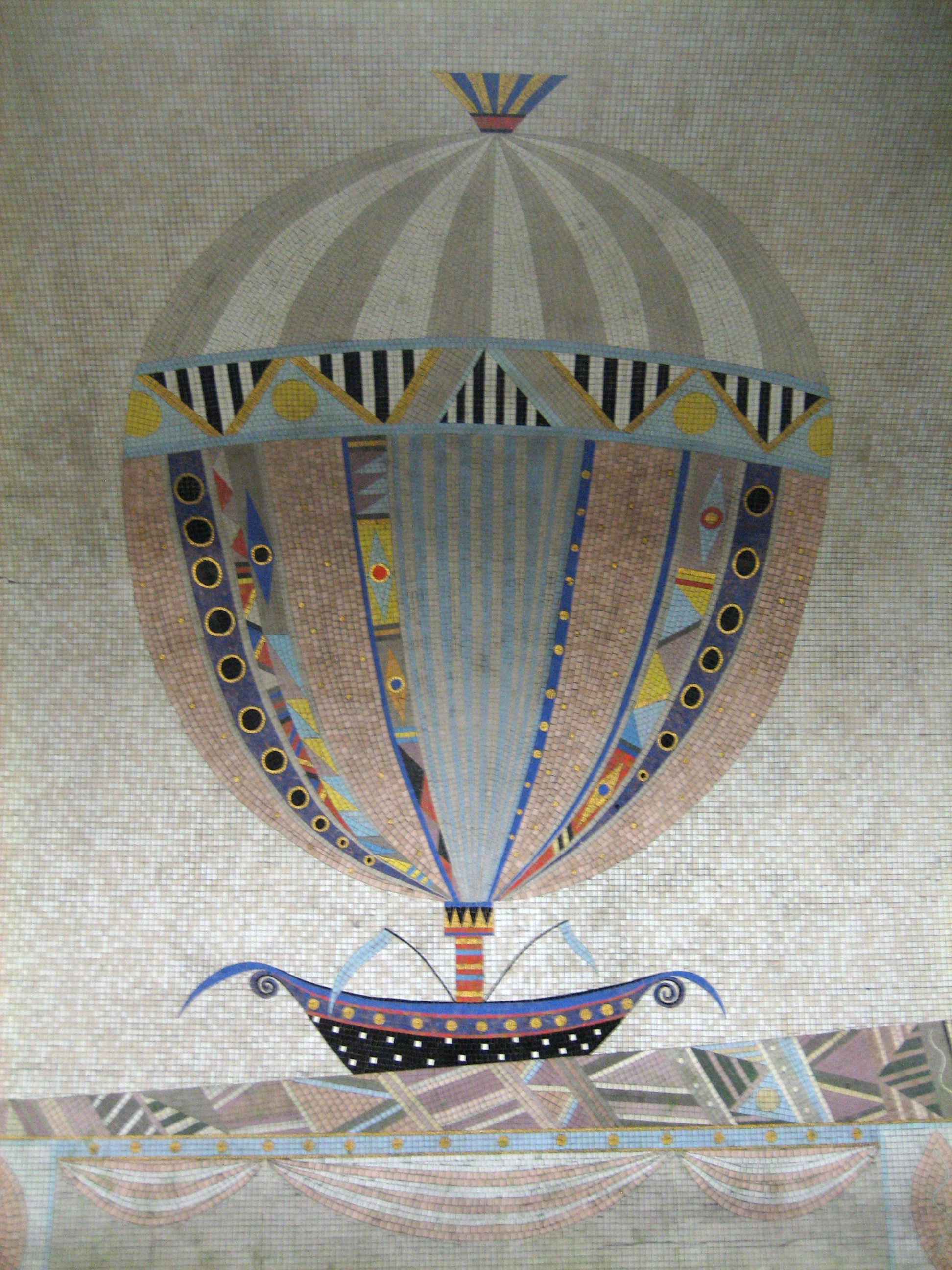
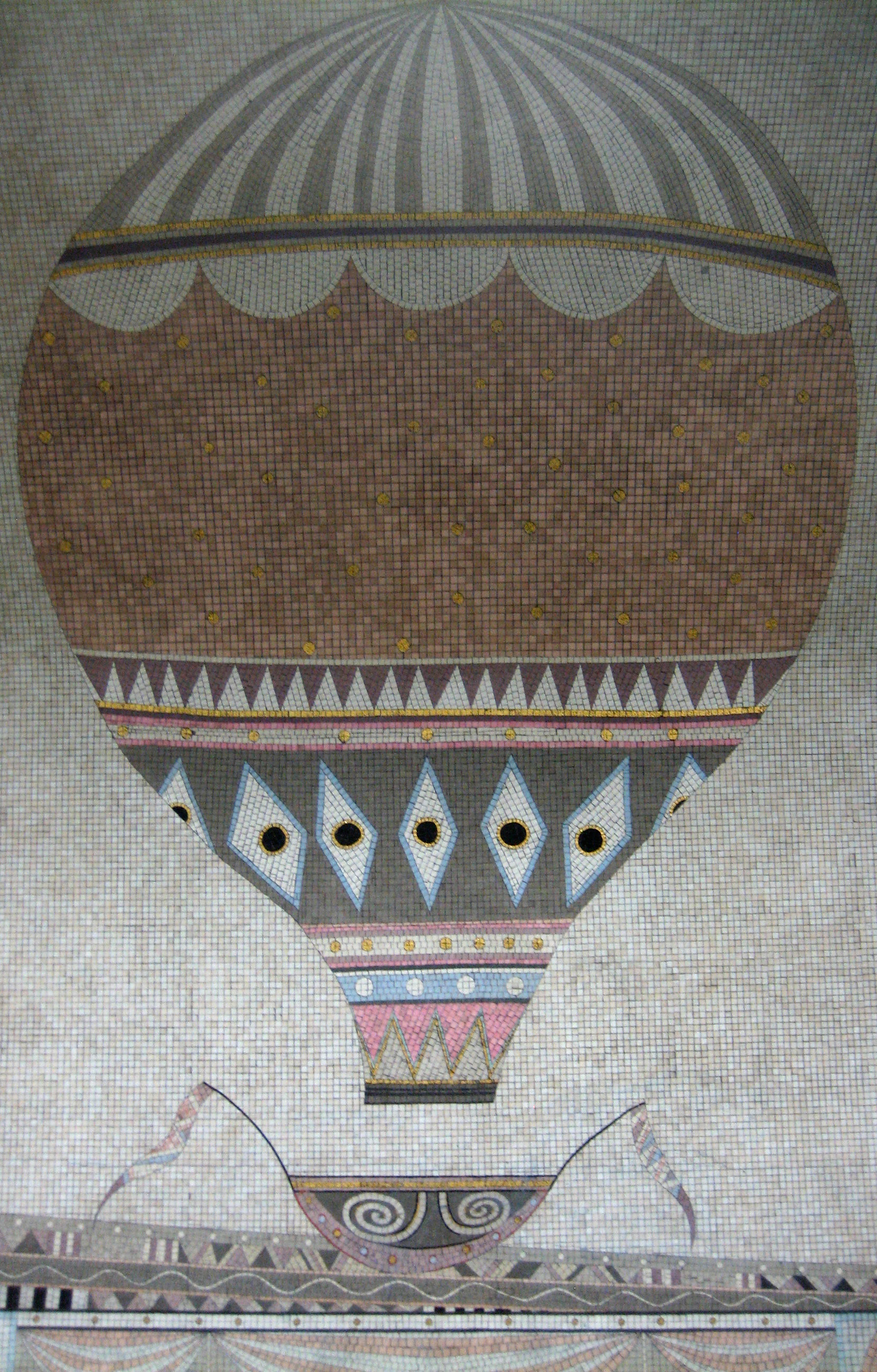
 In the March 2013 edition of Creative Review – an issue distinguished by some very notable contributors indeed – the artist Annabel Grey talks about the challenges she faced in realising her ambitious concept for the walls of the southbound Piccadilly line platform at Finsbury Park:
“It got very complicated and mathematical, as there’s an ellipse of a landscape running behind the balloons, and I realised that when you added the spaces between the trackside panels, the landscape would have been about 360 feet high!”
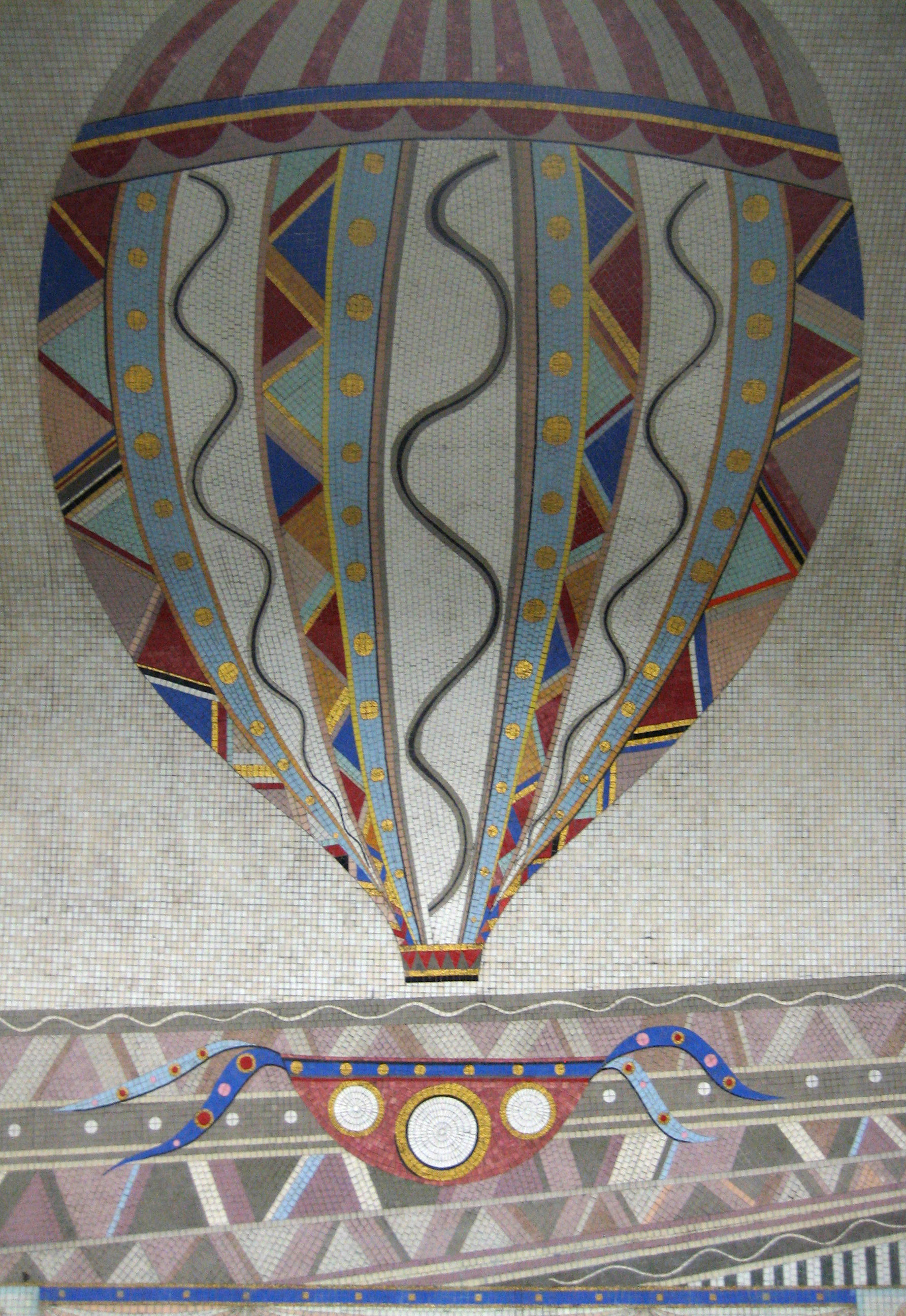 Much annotation of the tunnel wall ensued, which by the sound of it involved protractors, balls of string and those enormo-sized bits of chalk you now see only in possibly inaccurate recreations of Victorian classrooms.
Grey’s plan was to have the balloons ascend, drift then descend in sequence all the way along the platform – and it works, brilliantly. Starting at the far end, her six magnificent flying machines rise, glide then fall in a perfect union of trigonometry and transportation. It’s a wonderfully uplifting and elevating spectacle for so deep and otherwise lumpen an Underground station.
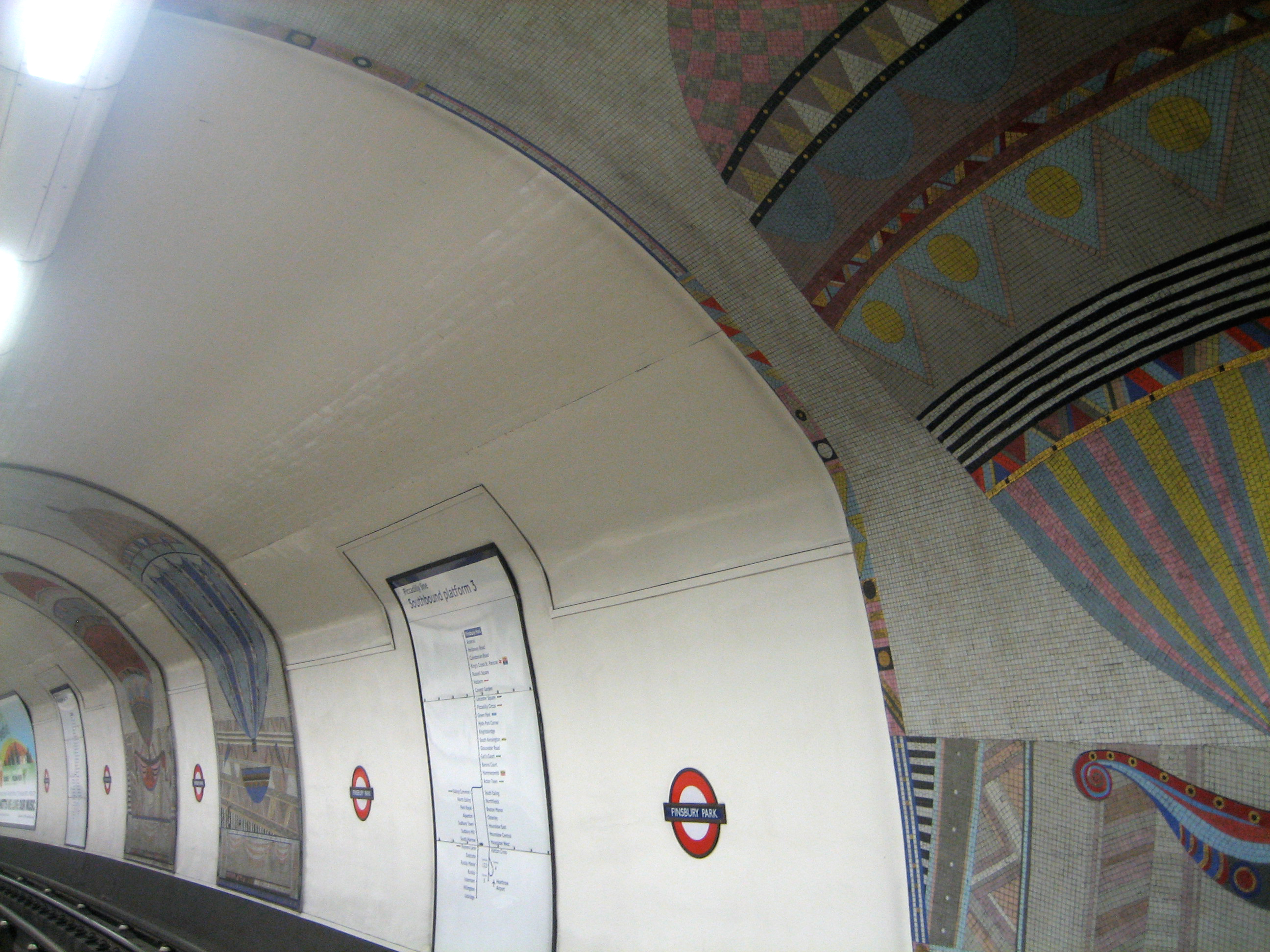 I wonder how many people actually a) notice them at all, and b) perceive of each balloon as being part of a bigger design, running the full length of a platform hardly anybody runs the full length of.
But I rather like the fact that the concept is there for you to spot. The balloons flatter you as they flutter past. Their mathematical caper is there to be solved by the witty, not sold to the unwitting. If you miss it, the secret is safe with those who have already resolved the puzzle.
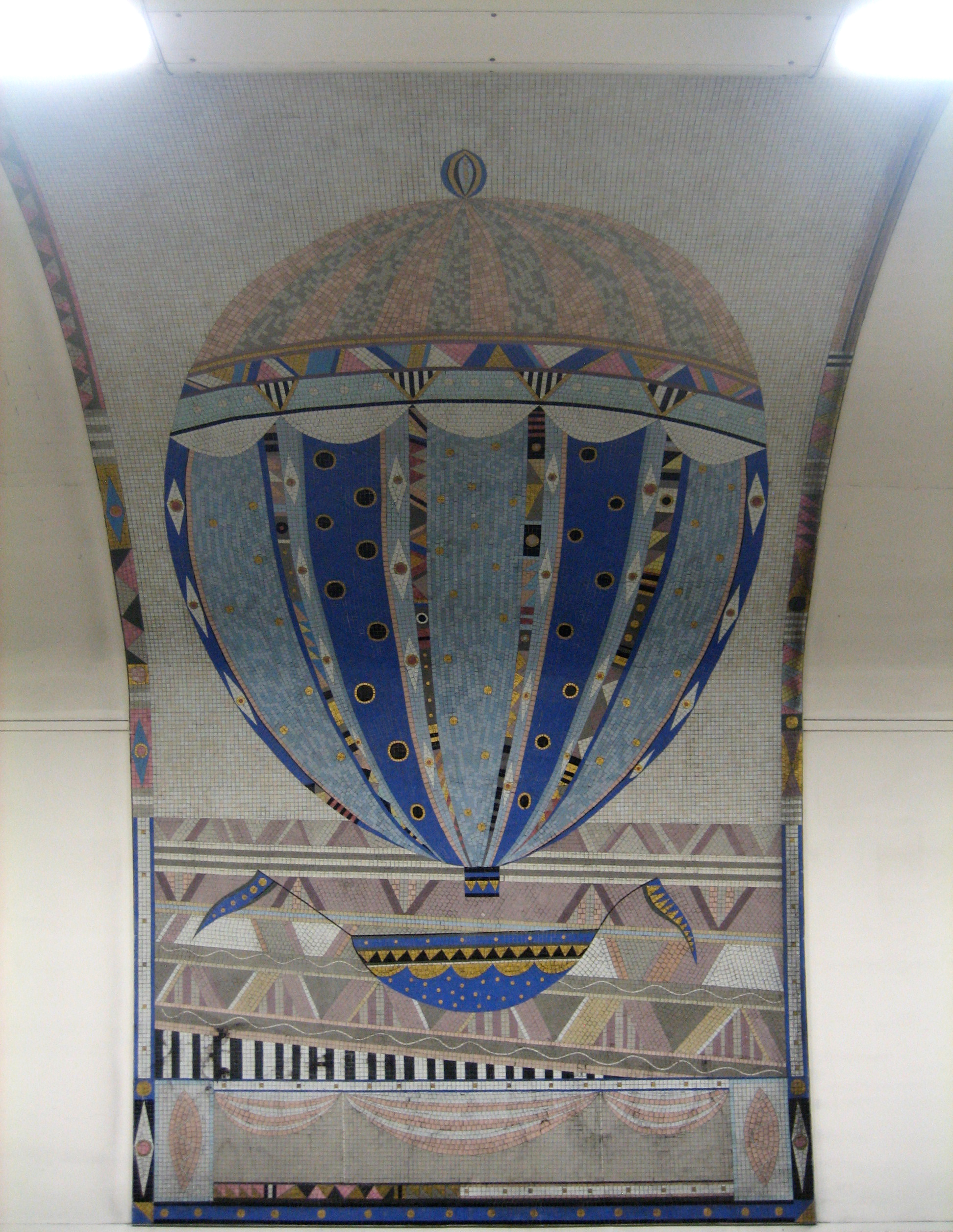 As an afterthought, I was intrigued to read that the designs date from what remains, in my head, a barren time for publicly-funded urban transport: the 1980s. Grey and her team were commissioned by London Transport in 1983. They were even allowed to buy up to £15,000 worth of gold mosaic, which represented just one of a whopping 52 different coloured tiles shipped in from Vincenza.
But then I remembered London Transport was still run by the GLC at that point, which itself was run by someone who used and still uses the Underground every day of his life*.
 *As opposed to riding a bicycle to and from work, thereby never having to meet, mingle with or let alone speak to anyone else.

 150 great things about the Underground