 Growing up, I thought Great Portland Street was one of the most famous places in London. This was due solely to its frequent mentions on Just a Minute on Radio 4, as the place from which Kenneth Williams would feverishly wail he had come – often against his supposed better judgement – to be on the show.
Sitting in my bedroom in the East Midlands, I concluded this was clearly one of the most illustrious abodes in the capital, by virtue of being worthy not just of the tenancy of people like Kenny, but of such repeated namechecks on (what is still) the best panel game in Britain.
Years later I realised the calculated comedy and self-deprecation behind those repeated cries of “I didn’t come all the way from Great Portland Street for this! It’s a disgrace!” For one thing, the area is barely 15 minutes’ walk from the location of the old Paris studios where Just a Minute was recorded: hardly a voyage of Jules Verne-esque stature. And second, it is assuredly not an world-famous, celebrity-rich, tourist-attracting hotspot. The most cosmopolitan touch is a sign to a public toilet with the word MEN reproduced in four languages.
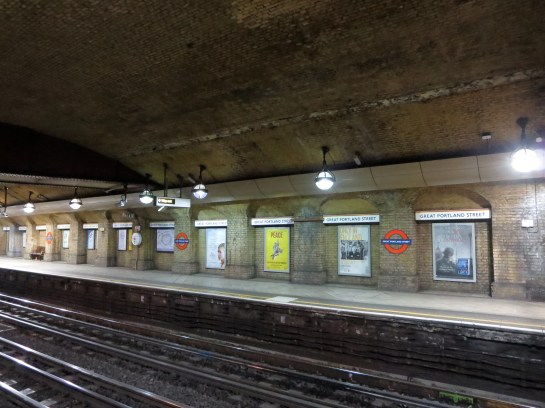
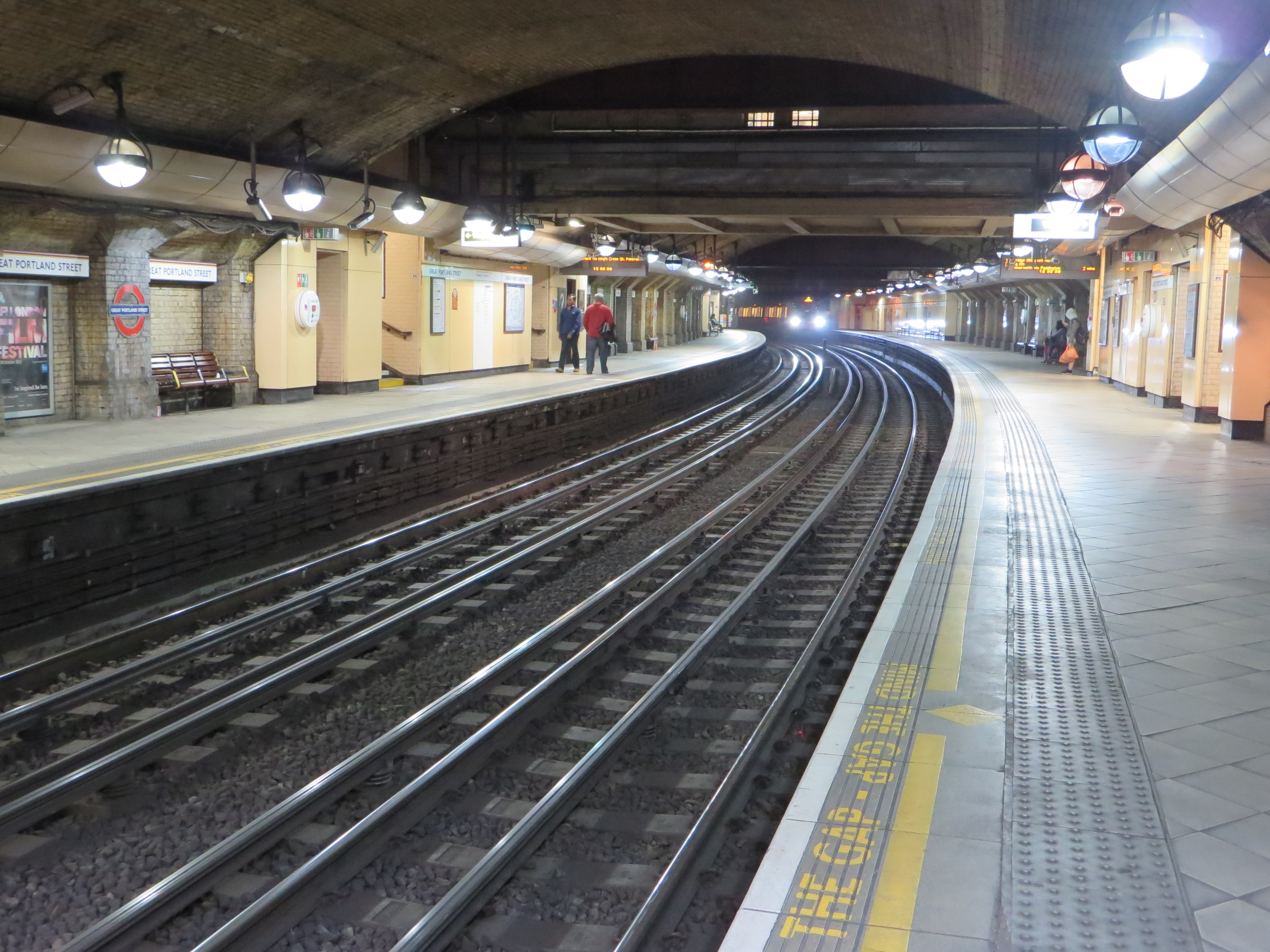
What it does have, however, is an Underground station of which even the purposefully-snobbish Kenneth Williams might have approved:
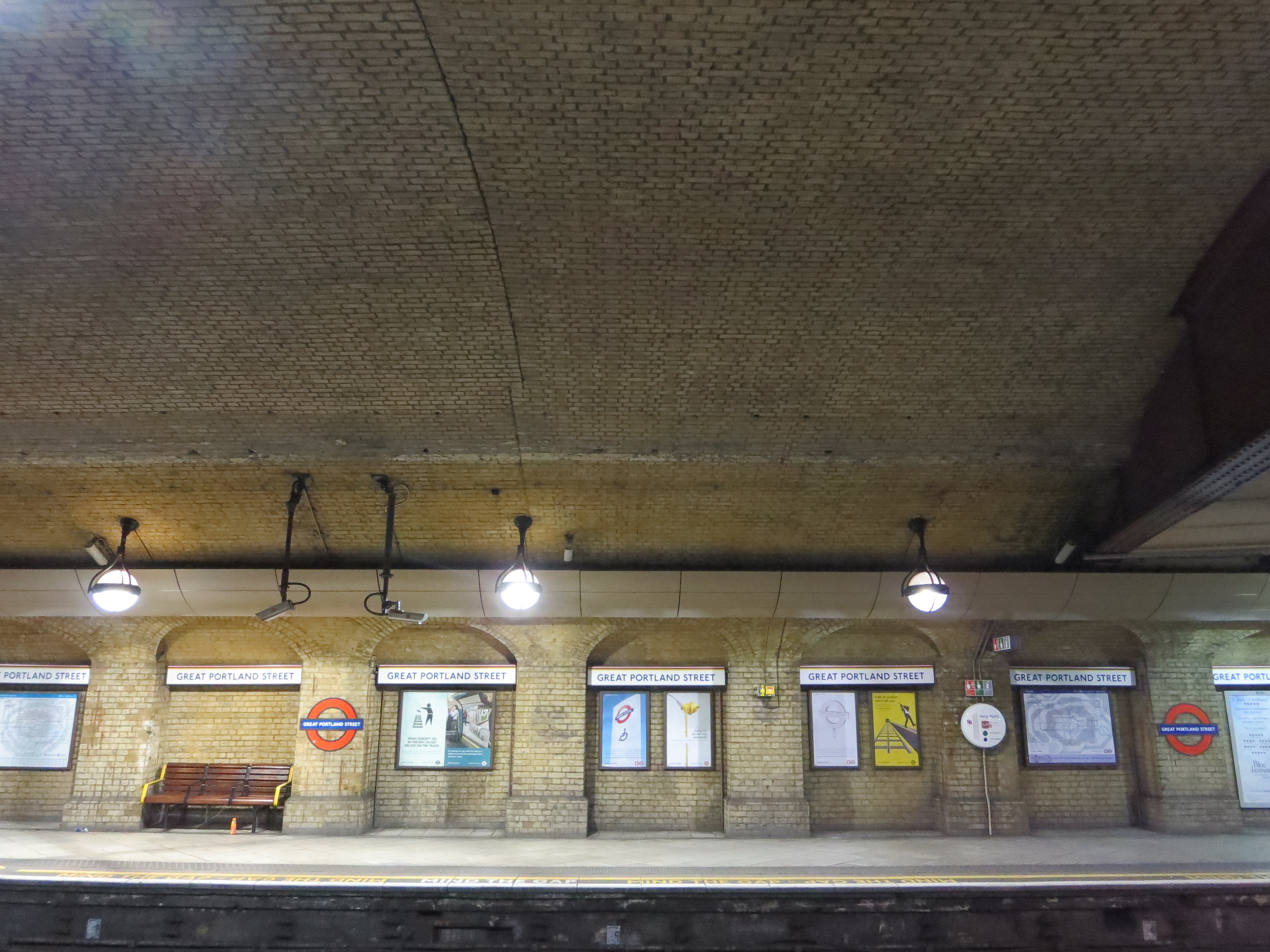
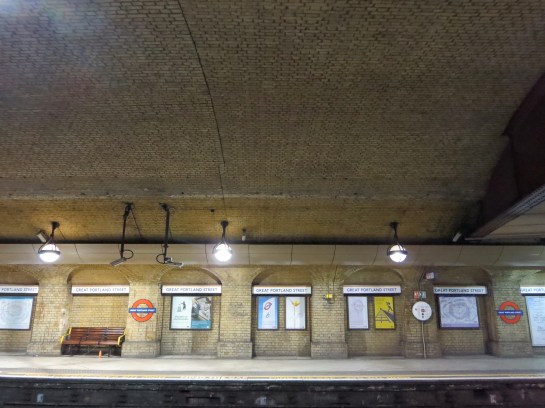 The platforms have a bewitching grubbiness* that they share with next-door neighbour Baker Street. Both stations are fine examples of how to evoke heritage thoughtfully, not clumsily. No unsubtle dollops of Victoriana here.
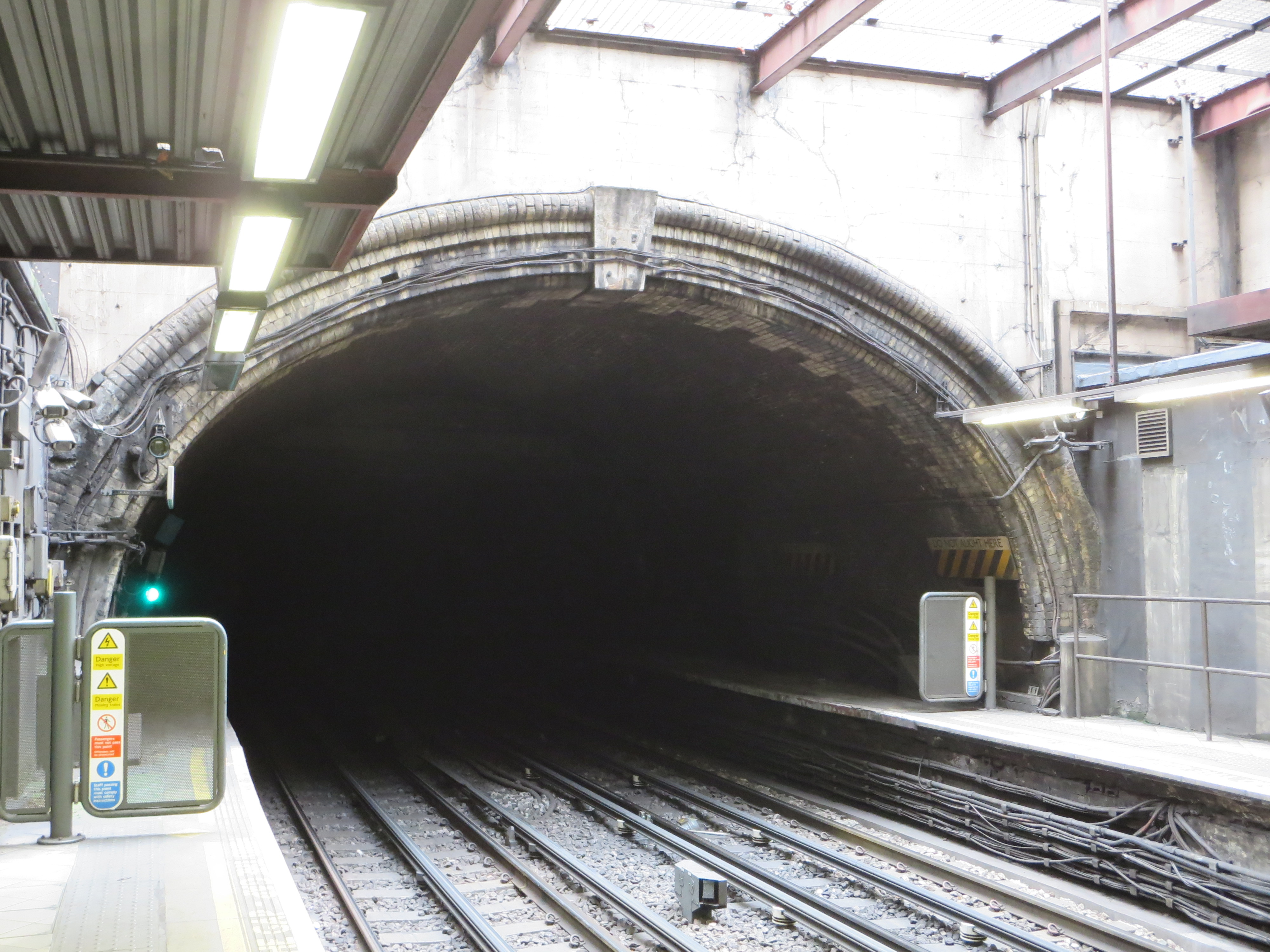
Admittedly the enormous brick-lined tunnel does much of the job single-handedly. It’s impossible not to be awed by its vast, smooth curve arching above your head, created from thousands and thousands of bricks, smeared not with a few blobs of artlessly added designer-grime, but with 150 years of history.
The alcoves have been reasonably well-preserved, albeit blessed with not quite the same seductively noir lighting as at Baker Street. In fact, the whole interior is brighter than its cousin, thanks to a stab of daylight at the western end of the platforms:
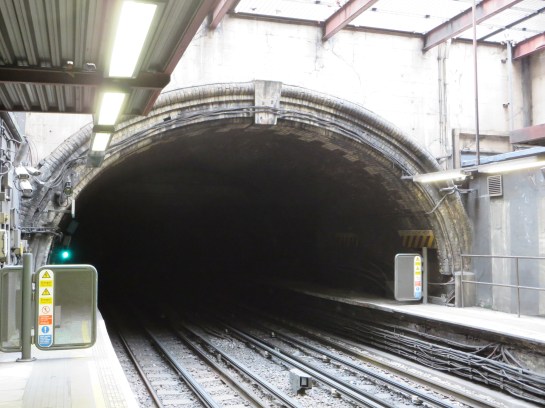 I’m guessing that’s the Marylebone Road, though I’ve never been able to find the corresponding gap above ground to allow me a peek downwards.
For all its charm, Great Portland Street is not without flaws – much like its most famous advocate. The station suffered terribly at the hands of Metronet, the company briefly in charge of the infrastructure of nine of the Underground’s lines during the last decade.
Metronet’s policy of cheap but ugly concealment rather than costly but beautiful restoration left chunks of Great Portland Street shrouded in plastic. There’s nothing wrong with plastic, of course – except when it shouldn’t be there:
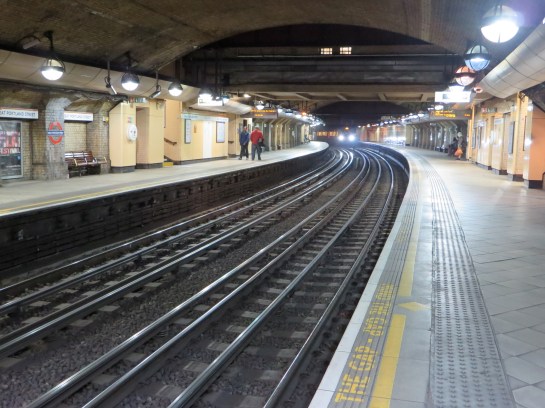 Its five years since Metronet’s expensive and predictable collapse, when the upkeep of this line (and, since 2010, every Underground line) passed back into public ownership.
I do hope Transport for London one day gets round to righting the wrongs its unmourned erstwhile cohort perpetrated.
I didn’t come all the way to Great Portland Street for this!
*Just like the best of the Carry On films, naturally
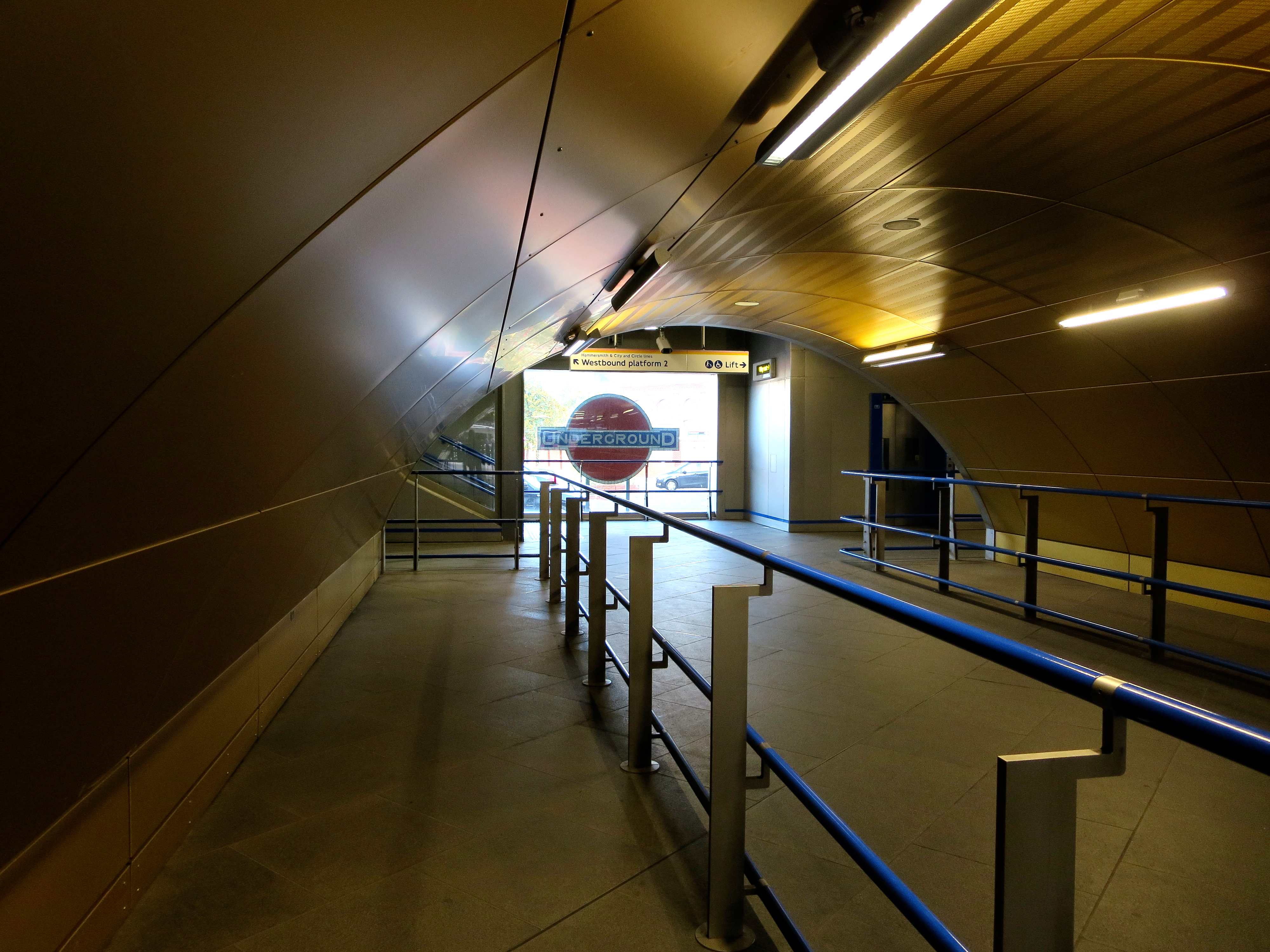 I really haven’t done enough on this blog to commemorate people who – at the time of writing – are still alive. Mike Ashworth is one such person, as it’s thanks to him visitors to Wood Lane station can admire a thousand or so chunks of history that might otherwise have been left to rot.
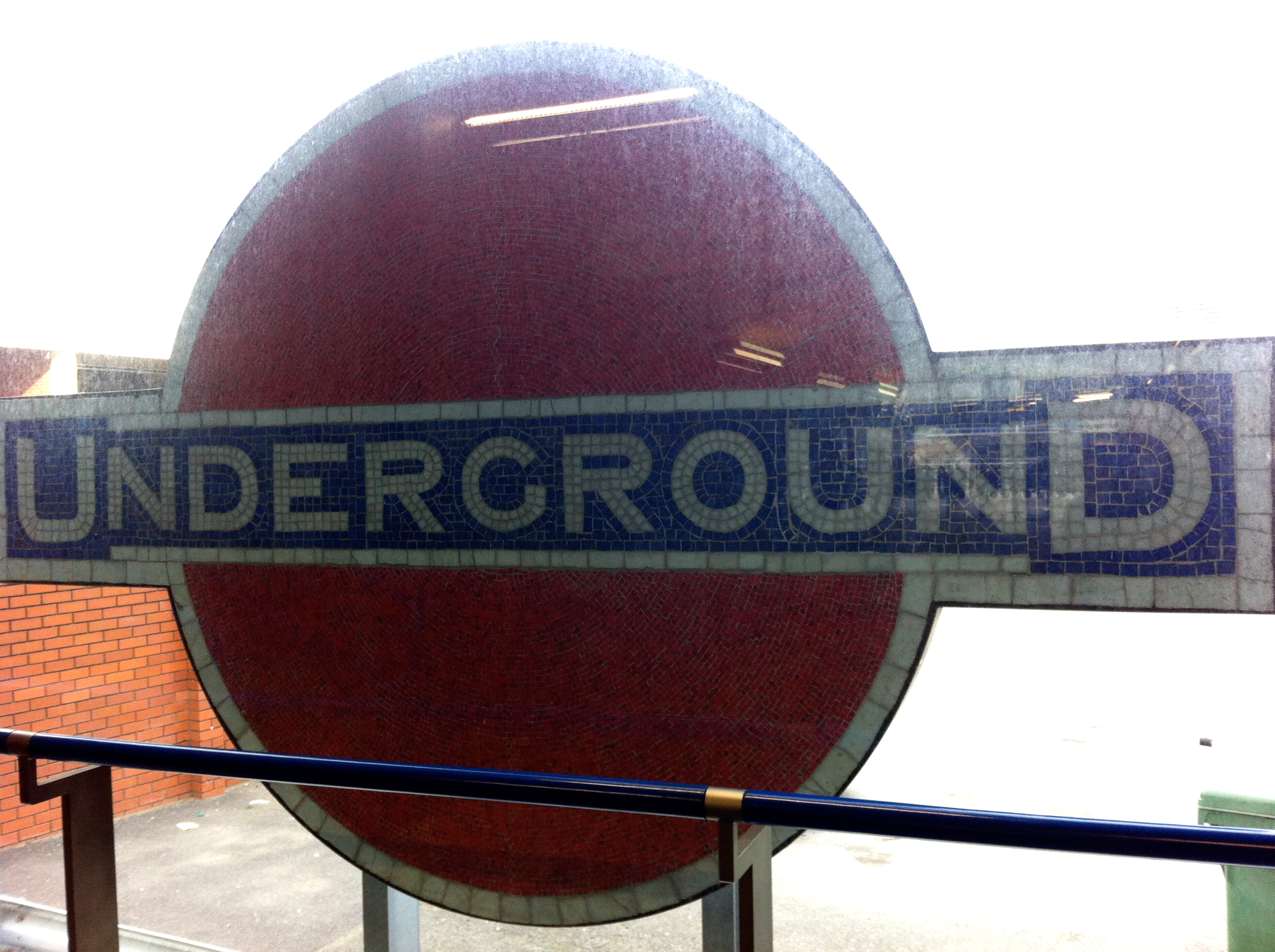 It’d be wonderful were it to be open display, even if it meant it had to be mounted higher up, out of the reach of hands with hammers or light-fingered loons.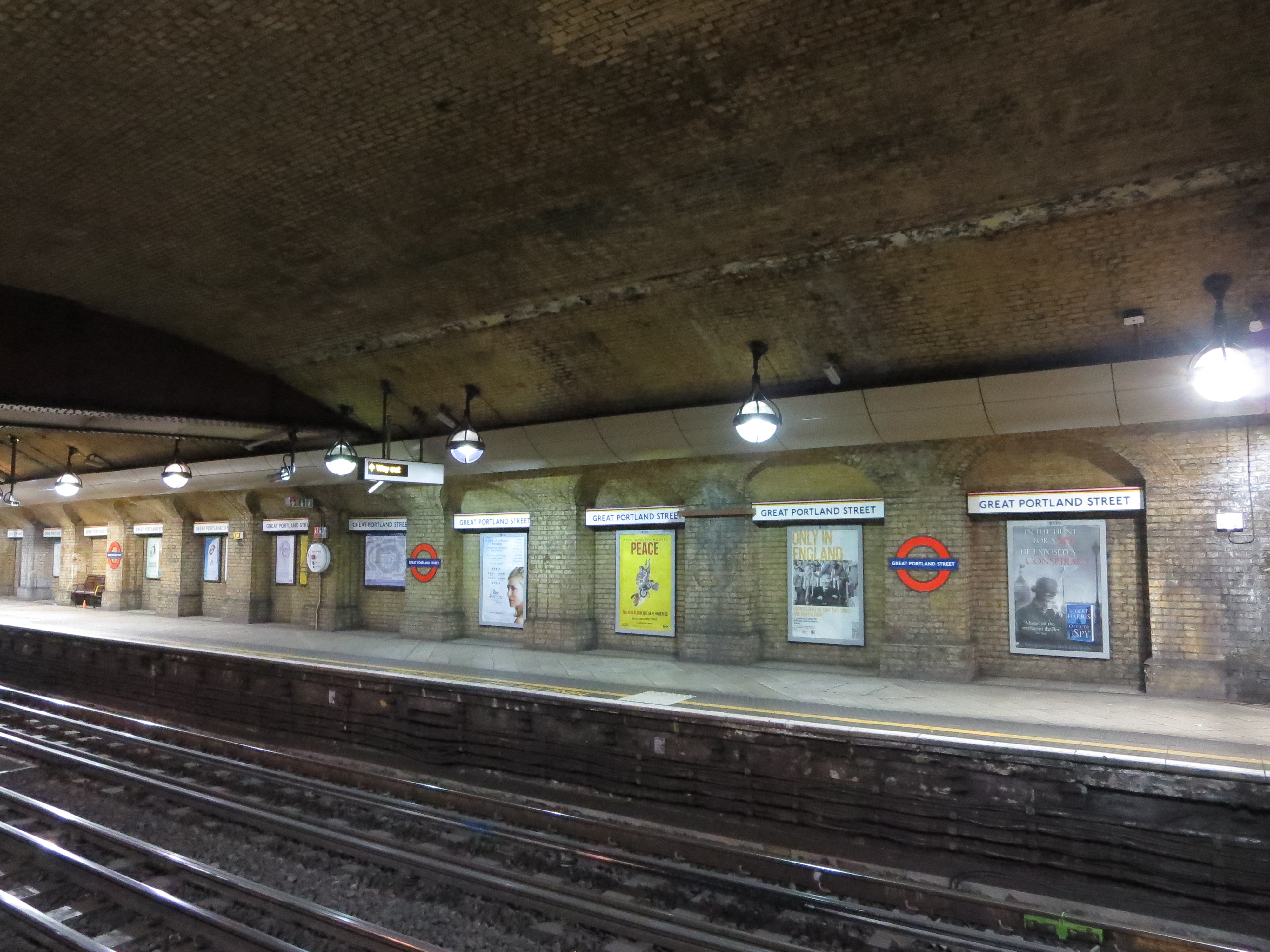
 150 great things about the Underground