Archive

Architecture

Purple patchesIf you’re ever inclined to literally worship the London Underground, the chapel-esque hues of Turnpike Lane would be a good place to start. And also something of a God place.

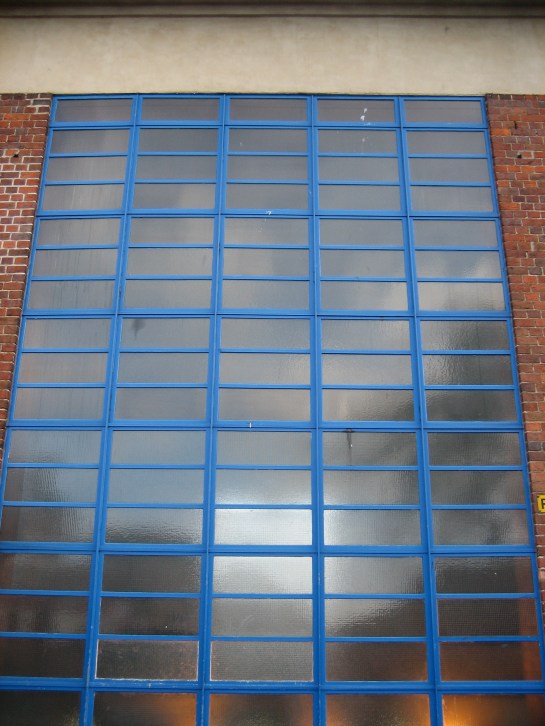
The towering segmented portals that climb the station’s giant walls could almost pass for sort of atheistic stained glass windows. They certainly perform a similar function, allowing natural light to pour into the vast, nave-like interior, while a hushed reverence envelops the building like a particularly voluminous cassock.

Not that there’s anything sacred to glean from either the station’s function or design. There’s much that is gloriously profane about Turnpike Lane, as there is of almost any Underground station. The warm inclusiveness, the non-denominational throng, the absence of anyone passing judgment: this is the kind of church I’d like to belong to. Look, there’s even a spire:

An aspiring viewYet another winning throw of the dice from Charles Holden, the station opened in 1932 and has been Grade II-listed since 1994.

But it’s not in the best of shape. As you pass through the exterior walls and descend, as if arriving at a Baldwin-era society bash, to the ticket hall, amid the grace and glamour are barely-disguised patches of growing decay. Much like the entire Baldwin era, in fact.
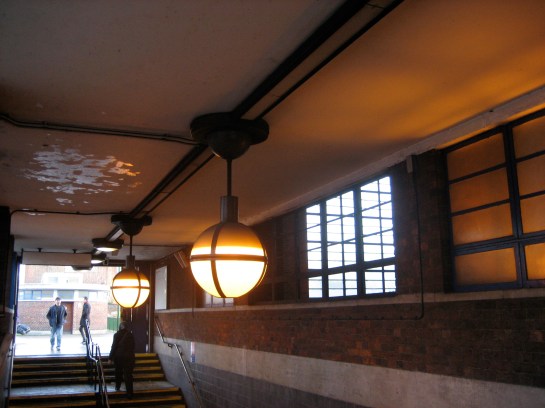
Fading ballsStill, the orange and purple ambience casts enough warm appeal to make up for the damp. Someone needs to pass the collection plate around City Hall soonish, though.
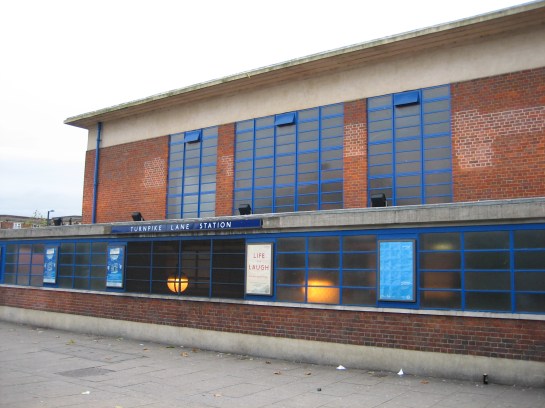
Praise beIt’s well worth making a pilgrimage to Turnpike Lane to soak up some of its bracingly modernist and vaguely sanctified air. It’s TfL’s very own Lourdes: a place to rejuvenate your soul, with trains to central London every two minutes.

And don’t worry: unlike the Church of England, everyone is welcome here.
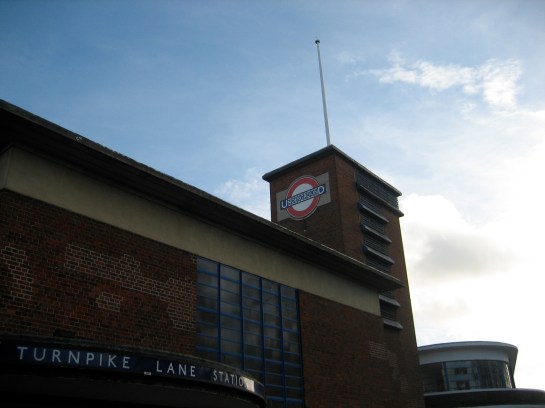
Amen, brother

Colour me happyWhat’s the best thing to do with a bit of station that nobody uses anymore? Abandon it, like at Barbican? Honour it, like at Highgate? Or give it a new life as a space for the installation of contemporary art?

It depends on the context, I suppose. And that’s not just a cop-out of an answer. It’s a pragmatic one.

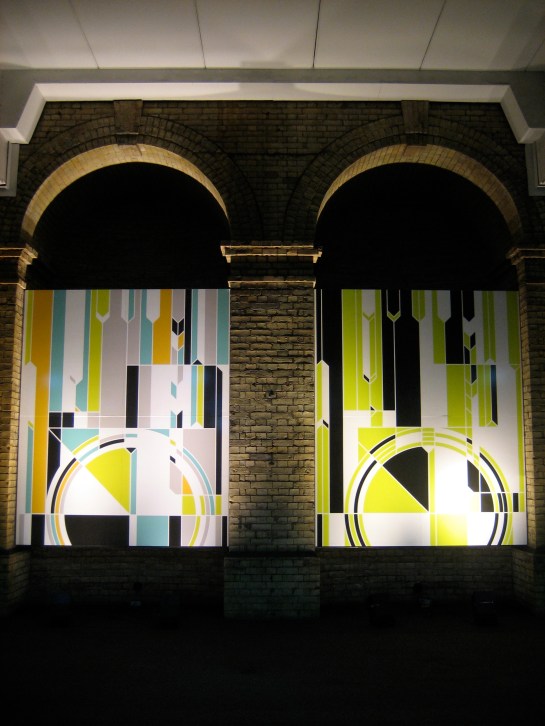
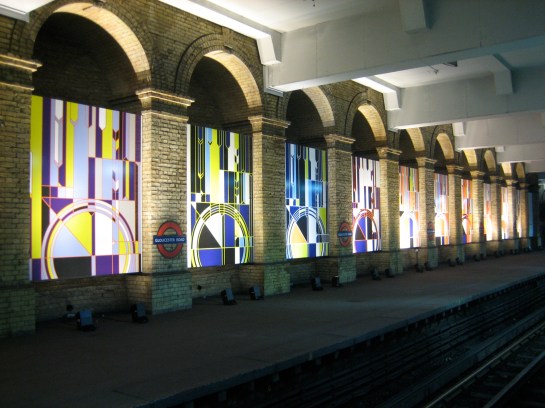
Utilising the disused platform at Gloucester Road for the exhibition of art was an inspired decision. The giant, illuminated alcoves lend themselves brilliantly to the displaying of striking visual designs. It’s a great example of how to marry location and function.

Slinging bits of art into the alcoves at Barbican, however, wouldn’t create half as good an effect. There the alcoves are outside, shorn of the manipulated atmosphere of an artifically-lit environment. They’re striking in their own way, as I’ve already acknowledged. But their cousins at Gloucester Road represent the better home for things that need to be shown off for being different and new, rather than for always being the same.

Tailored for GloucesterThis space has been used for art installations since the early noughties. There have been some marvellous, bewitching efforts, as well as some that are better forgotten. But all have called attention to themselves, which is kind of the point.

The installation that was in place when I took these photos was called Big Ben by the artist Sarah Morris.

Platform heartI love the geometry and vibrancy of the designs, especially the way they seem to complement the geometry of the platform itself. They rekindle a bit of energy in an environment that would otherwise be rather lifeless. Plus they are wonderfully lit. Placing them just out of reach, on the other side of the tracks, adds to the appeal.

This platform has come alive again, but on its own terms. Hopefully it will continue to do so long into the future.

Yay for greyWere Transport for London ever inclined to hire out its stations for games of hide-and-seek, Westminster should be your number one choice. Regardless of cost, regardless of climate, it would be a palatial plaything in which you would be able to stay concealed for hours, and through which you would hunt your comrades for even longer.

Because this is a joyous, labyrinthine union of architecture and engineering that astounds rather than confounds with its intricacy and ambition. A million wretched M&M Worlds would not come even close to matching Westminster station’s capacity to dazzle and entertain. It is one of London’s marvels, easily holding its own against the Houses of Parliament next door, and Downing Street nearby, and Trafalgar Square just down the road.

In fact, don’t bother with the rest of Westminster at all. Just come to its station, and stand, and stare – in every direction you can.

No step too farHere the late-1990s Jubilee line extension sits on top of itself, westbound beneath eastbound, inside the deepest excavation ever attempted in central London. On top of them run Circle and District line trains, along a route dating back to the 1860s, and on tracks that had to be meticulously “sunk” a milimetre at a time in order to fit snugly into the newly-expanded interchange.

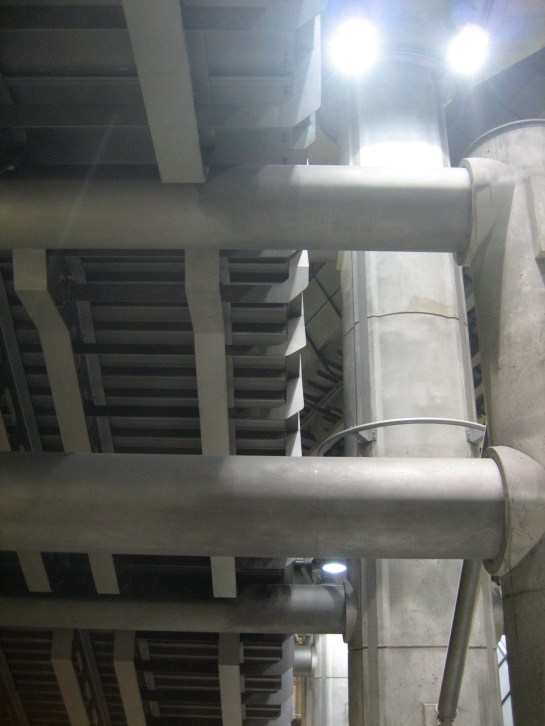
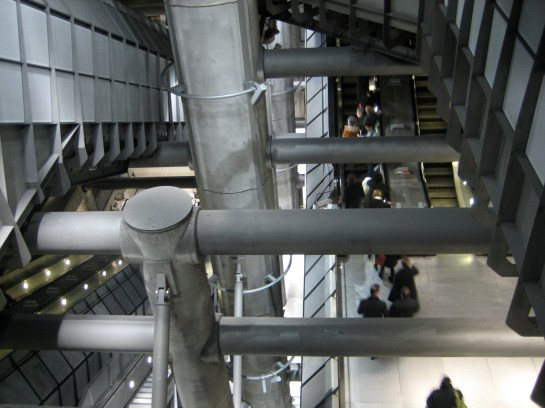
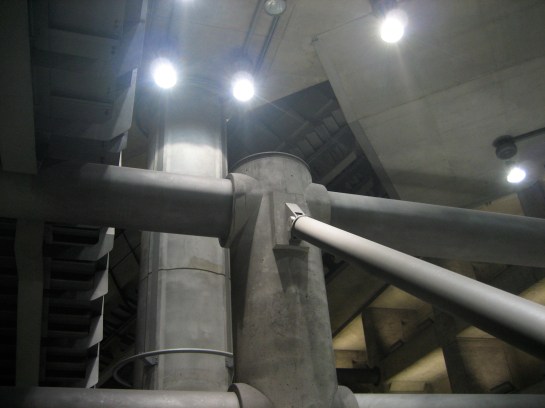
The whole incredible edifice is stitched together with what look like giant knitting needles: dozens of colossal concrete columns that plunge and stab their way with panache through the station’s alluring heart:

Heart of darknessFrom certain angles the interior looks like the aftermath of a fight between some Tripods.

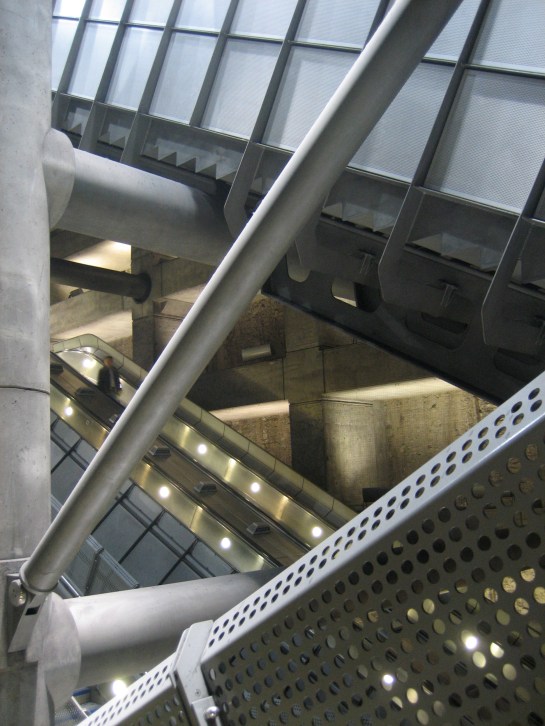
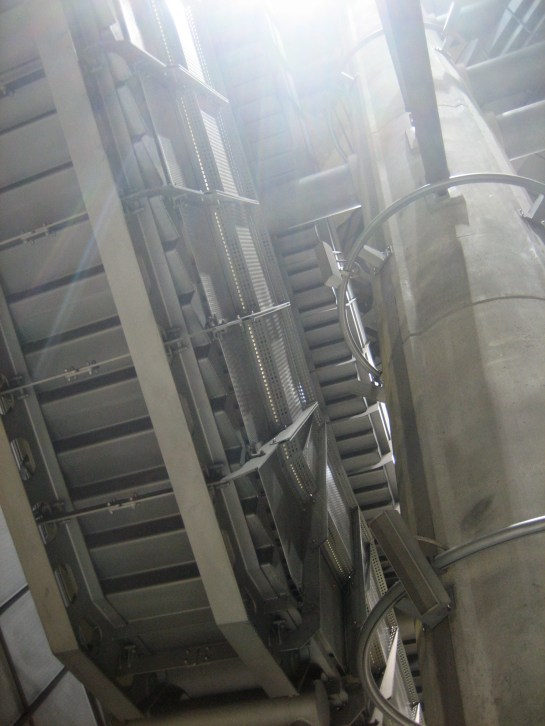
And woven throughout are escalators upon escalators, and stairways that hug, envelope or snake around the escalators, and walkways that curl alongside and amid the stairways and the escalators. It is a breathtaking concoction… but never confusing or overwhelming, and never, but never, menacing.

What happens when architecture dancesI love this place.

Walking through is like being miniaturised inside a Swiss timepiece, or exploring a Brobdignagian doll’s house.

It is a structure that tingles with imagination and which hums with achievement.

Westminster station is what happens when architecture dances.

Stairways to heaven