Archive

Architecture

Like a circle in a spiralKenneth Williams deploys many persuasive turns of phrase throughout his wonderful diaries, sometimes without grace, sometimes without merit, but never without purpose. One of my favourites is his depiction of himself “sat in the flat, revolving memories.” It’s an immensely attractive description for the otherwise somewhat unexceptional business of brooding, or moping, or – to use another of Kenny’s terms – drearing about.

It also captures very neatly the cyclical nature of contemplation: that sense of turning the same things over and over, and of forever returning to dwell on a matter over which you’ve pondered many times, not always without regret.

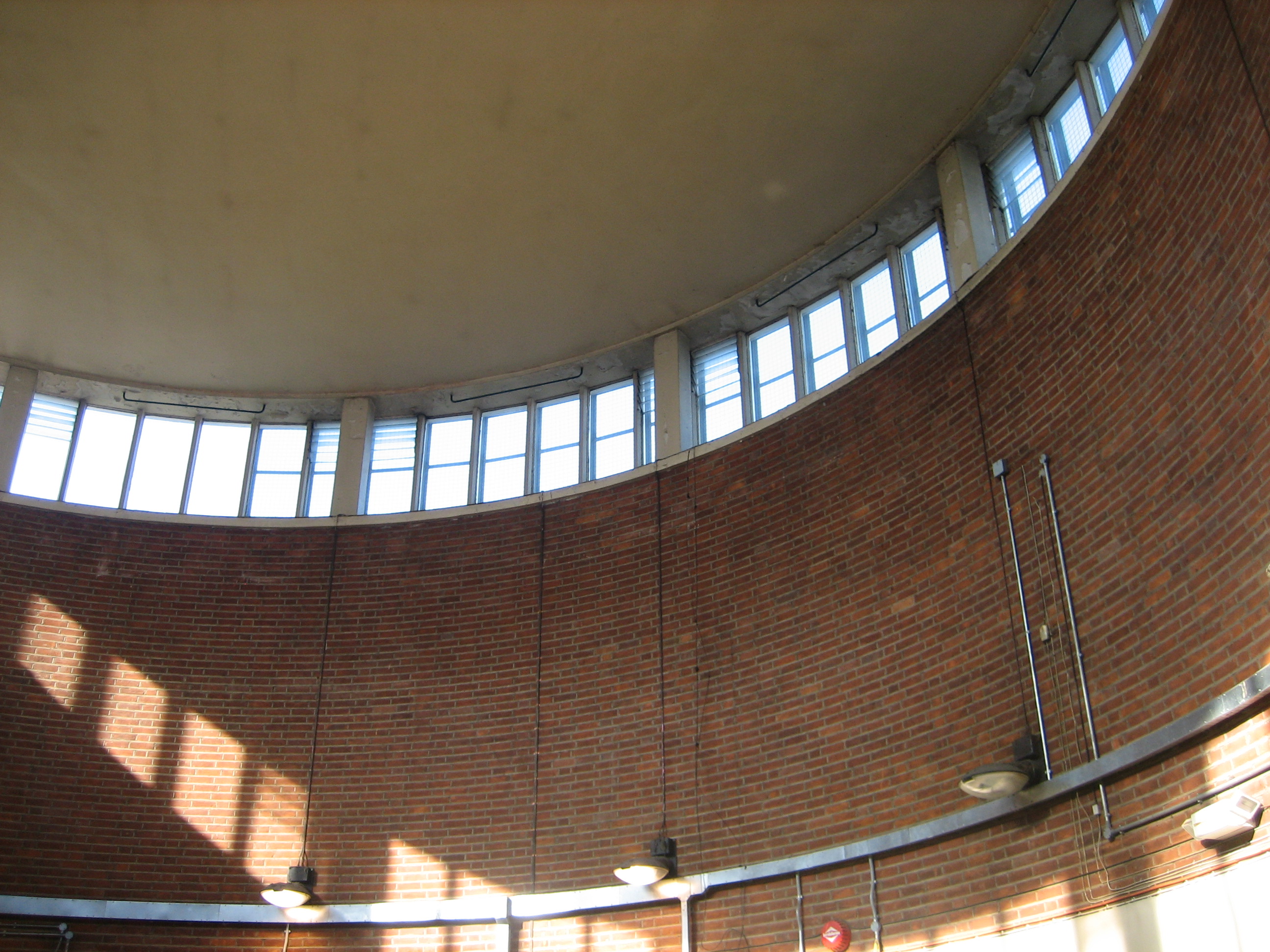
The ticket hall at Hanger Lane is a place that smoothly inverts Williams’ wise words, by way of revolving memories not within but around you.

It does this in a literal sense, its resplendent curved interior swooping this way and that, each post-war trinket and trimming igniting a little firework of nostalgia that pops and crackles inside your head. Look over there: a bit of tatty 1950s signage. And there: an uplighter that harks back to the 30s. That typeface: doesn’t it look a touch 1980s? As for that notice on the toilet door, that must be close to 40 years old. Yikes: am I really almost the same age?

But it also does it in an allusive sense. This ticket hall contrives somehow to send other associations spinning through your mind: memories of school assembly halls, of whirling zoetropes in science museums, of dust particles dancing in ribbons of sunlight in provincial libraries, of drums and top hats and birthday cakes and merry-go-rounds and doctor’s waiting rooms and party games and giant, giant silences in giant, giant spaces.

Hanger Lane is in my ears, and in my eyesNow, just as one man’s ceiling is another man’s floor, so one person’s revolving memory bank is another person’s pile of bricks. Hanger Lane’s elegance can’t bewitch everyone in the same way, or else it would cease to be special. I’m sure it suffers by sharing a name with the eponymous gyratory, even though – as I’ve already suggested – that particular tangle of roads doesn’t quite deserve such a fearsome reputation.

It also has its roots not in the Underground but – heavens – British Rail, whose Western Region architect Peter MacIver conceived the building in an era of austerity that boasted a very different cultural template to that being advanced politically today. (I really must stop moaning about Michael Gove on this blog.)

Yet maybe all these things make me love the place all the more. It wants to be different, it tries to distinguish itself, it defies your expectations… and, to my mind, it succeeds utterly. It not only revolves memories, it evolves them as well. Even the simple, formal elegance of the station’s exterior, bombarded with gales of traffic noise and jostled by neighbouring gangs of blighted shopfronts, keeps my senses transfixed.

Yes, I’m afraid I’m going to have to say it. Hanger Lane is in my ears, and in my eyes.

Blue surburban skies

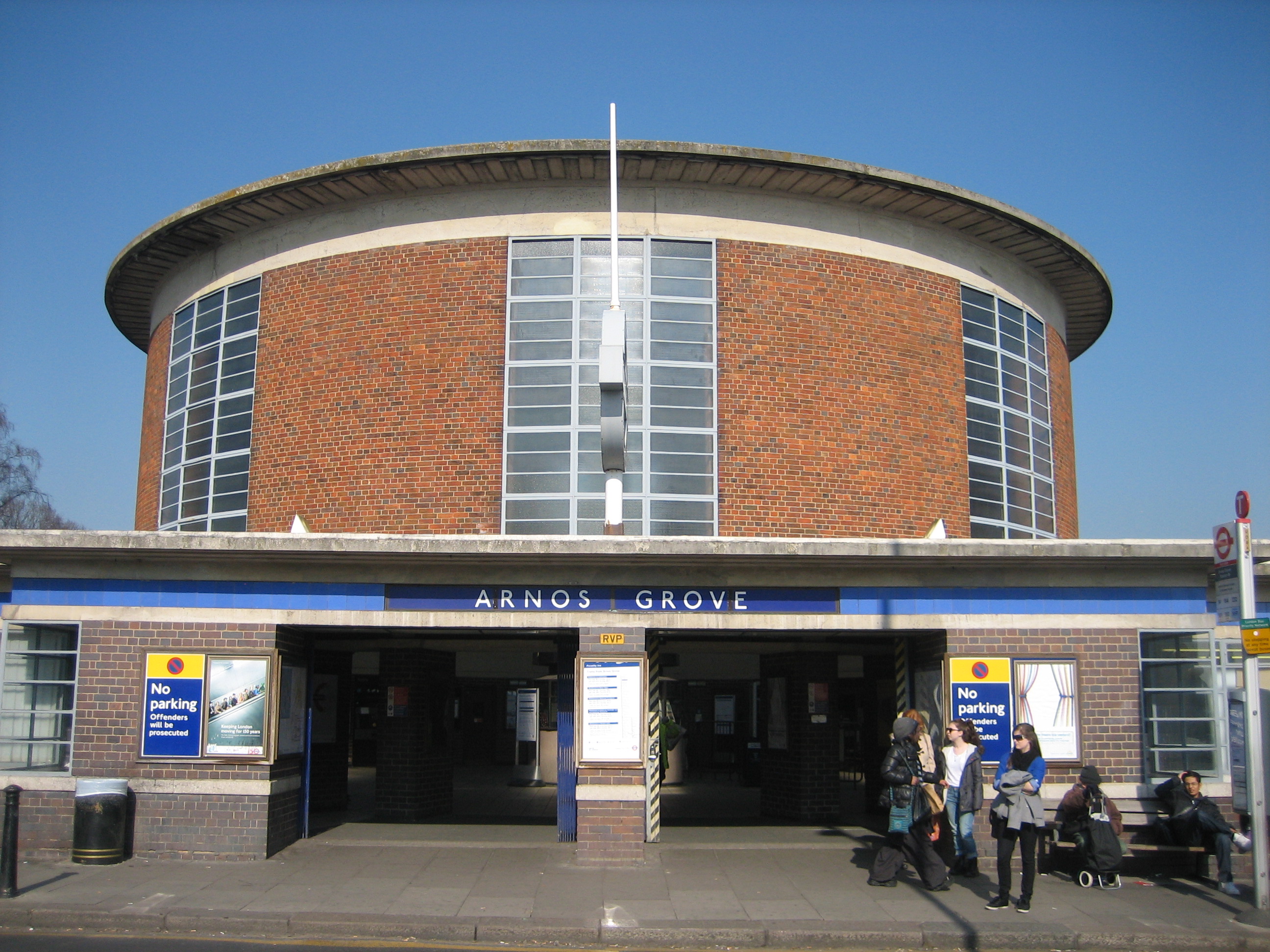
Banging the drumPeter York calls them “embassies of modernism”. Michael Gove calls them “prison houses of the soul”. I call the Piccadilly stations designed by Charles Holden one of the finest ensembles in the land. A bracing, lustrous orchestra of sensations. Their massed ranks of roundels, passimeters, turrets and Dalek stalks deployed in shimmering harmony, resonating up and down north London. A bit of bombast here, a bit of delicacy there, the odd cheeky homage thrown in for good measure.

It’s an ensemble that can fizz as well as flutter, that whirls as well as soothes. And in the centre, keeping everyone else in time and in line, the thunderous, glorious magic drum that is Arnos Grove.

Pa-ra-pa-pa-pumApologies for the more-fanciful-than-usual wittering, but I don’t feel too steady on my feet. Because I’ve already bowed my head long and low to the wonder that is the interior of this station. How to pay equal tribute to the equally wondrous exterior? What more is there to say about Charles Holden, about whom I’ve been banging a drum for a good portion of the last 100 posts?

Well, one mark of Holden’s genius is that he always does have something new to say, and another mark is that he does so with such visually self-evident swagger. The only thing he can really apologise for is trying. And that’s more than can be said for most of us.

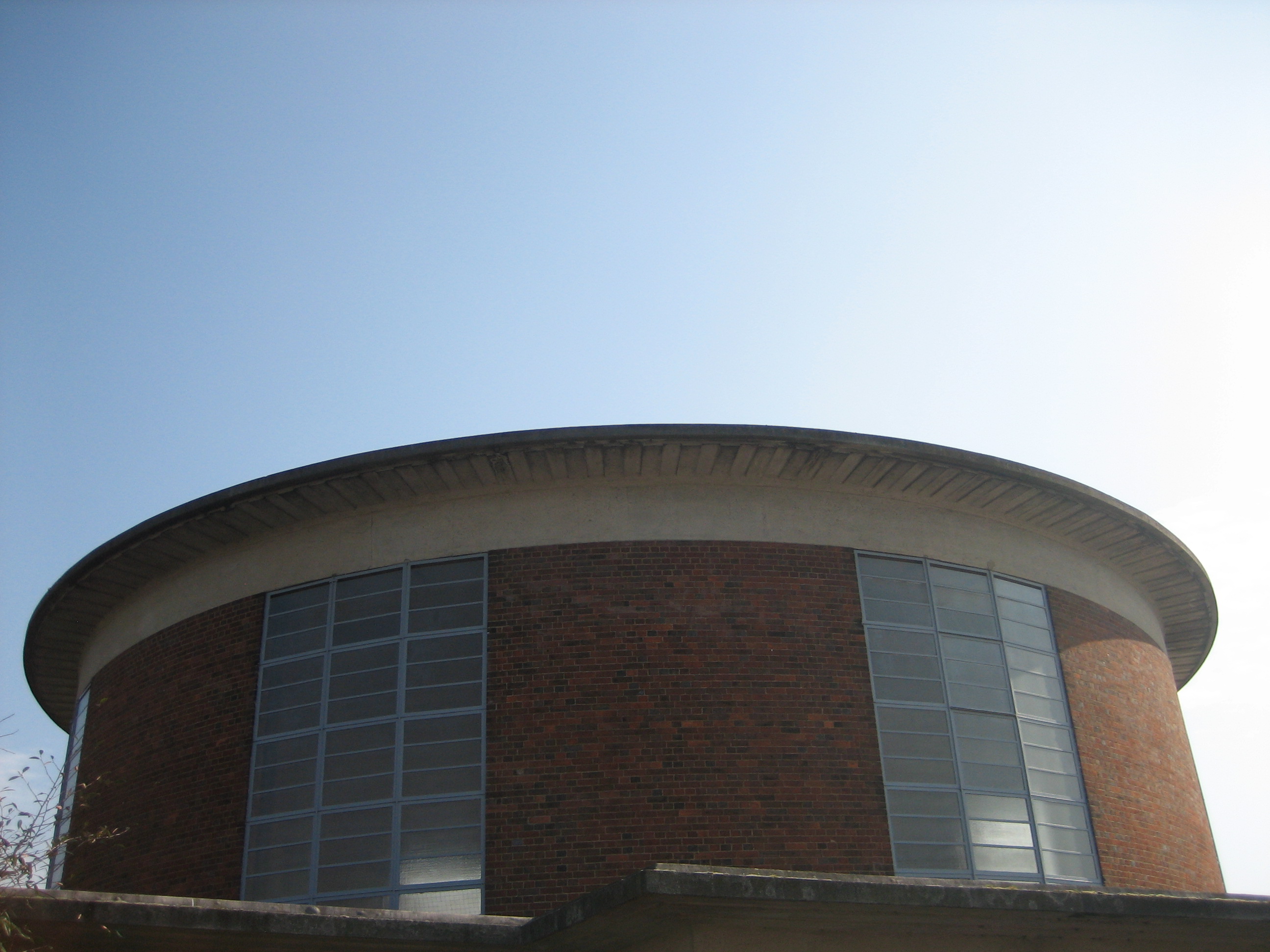
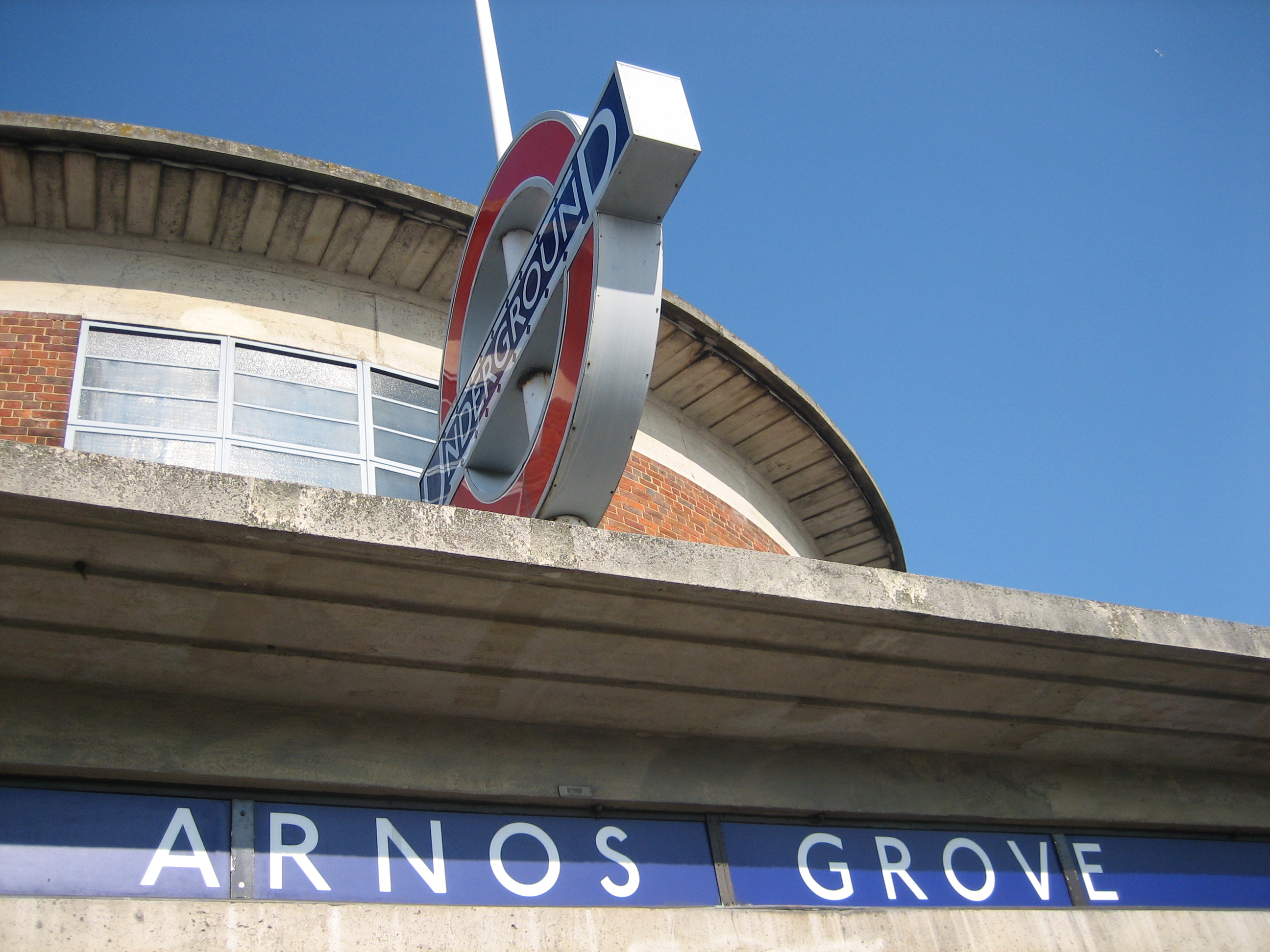
Arnos Grove looks like it has just tunnelled its way up from some kind of subterranean concrete Eldorado. It is like nothing on Earth (well, almost) yet somehow intensely familiar. The distinctiveness of the place attracts, rather than repels. You feel almost propelled towards it, like bathwater skipping its way down a plughole. It’s the opposite of being flung outwards by a centrifuge. It is this poster made real.

Grove is in the heartThere are many, many Underground stations that can cheer, amuse and sometimes thrill me when I step inside. There are a few that go further – stations that bewitch and flatter. But there’s only one that revives me. That picks me up, no matter how deep I’ve sunk. That actually, in a very clumsy, reserved, hope-nobody’s-looking, British kind of way, lifts my heart.

Beyond that, there’s really not much more I can say about Arnos Grove.

For when Charles Holden bangs the drum, there are no words to describe the way I feel.

Still Holden his own

It always would beHe adored West Finchley station.

He idolised it all out of proportion.

No, make that, he romanticised it all out of proportion.

To him, no matter what the season was, this was still a place that existed in black and white and pulsated to the great tunes of something by Dennis Potter involving trains and tragedy, and which allowed him shamelessly to reference one of the finest opening sequences in cinema history, despite not having anywhere near the same style, wit or imagination.

Yes, he was too romantic about West Finchley. Yes, to him it was also a metaphor for the decay of contemporary culture. And yet, in its own restrained, sparse, under-used, over-played, half-arsed, romanticised, metaphorical way, West Finchley was his station… and always would be.

Coming up rosesI’d like to think everyone in London has special feelings towards their local Underground station. I’d like to think those feelings are mostly good-natured, though I’ll readily concede that’s not easy when your local station is Gunnersbury, Seven Sisters, or anywhere on the Bakerloo line north of Kilburn Park.

At the time of writing, my local station for five years has been West Finchley. I make no bones about the fact it was one of the reasons I chose to live in this area of north London. And I retain the same gushing affection towards it as I did the first time I ever had cause to pass along its platforms.

It’s not a very busy place. It’s staffed for only two hours on weekday mornings. At off-peak times, I’ll often find myself the only person waiting to get on a train, or the only person to get off. In both instances a part of my brain buried deep from any passing relationship with reality pretends it is me and only me for whom the station exists.

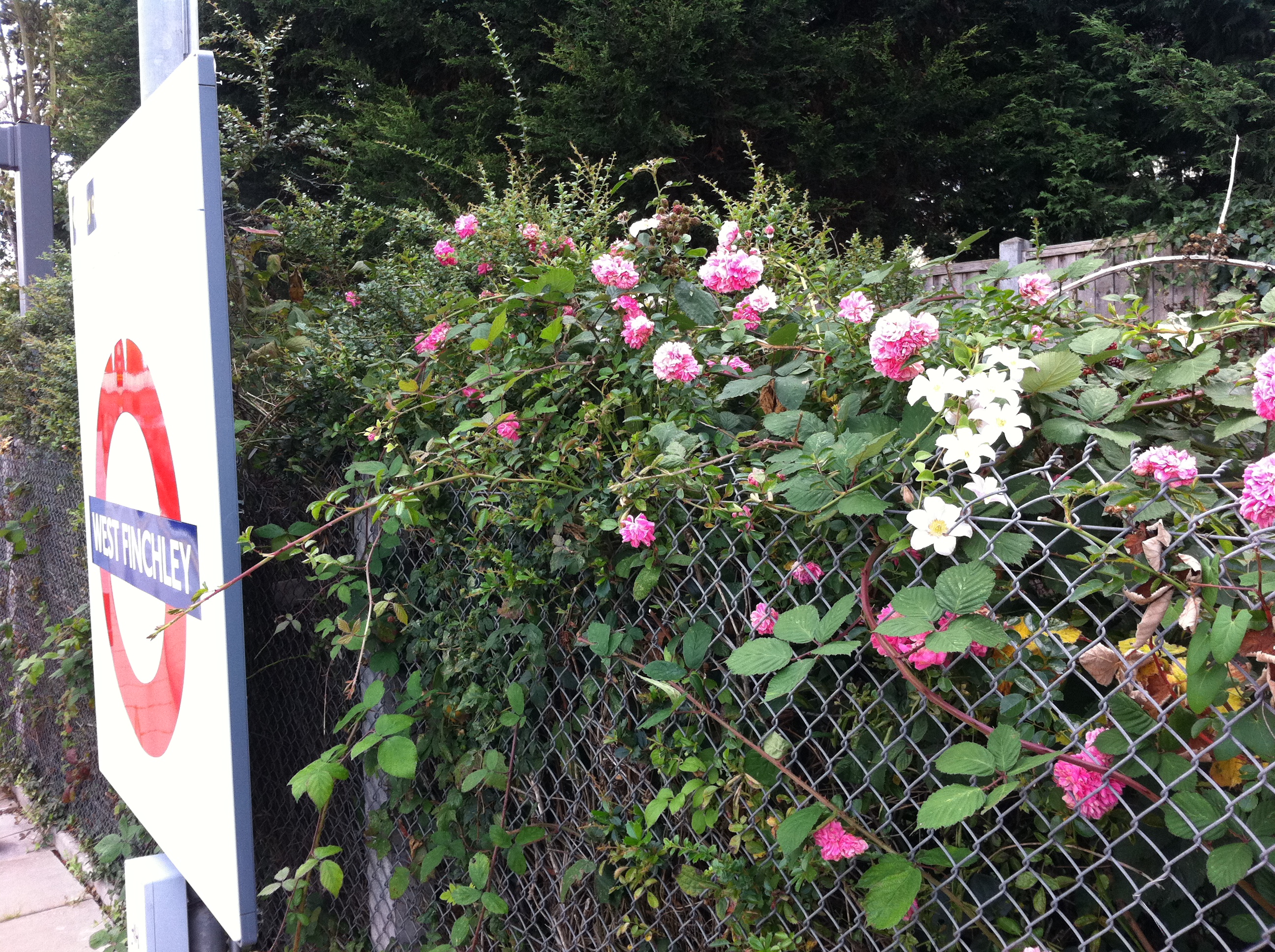
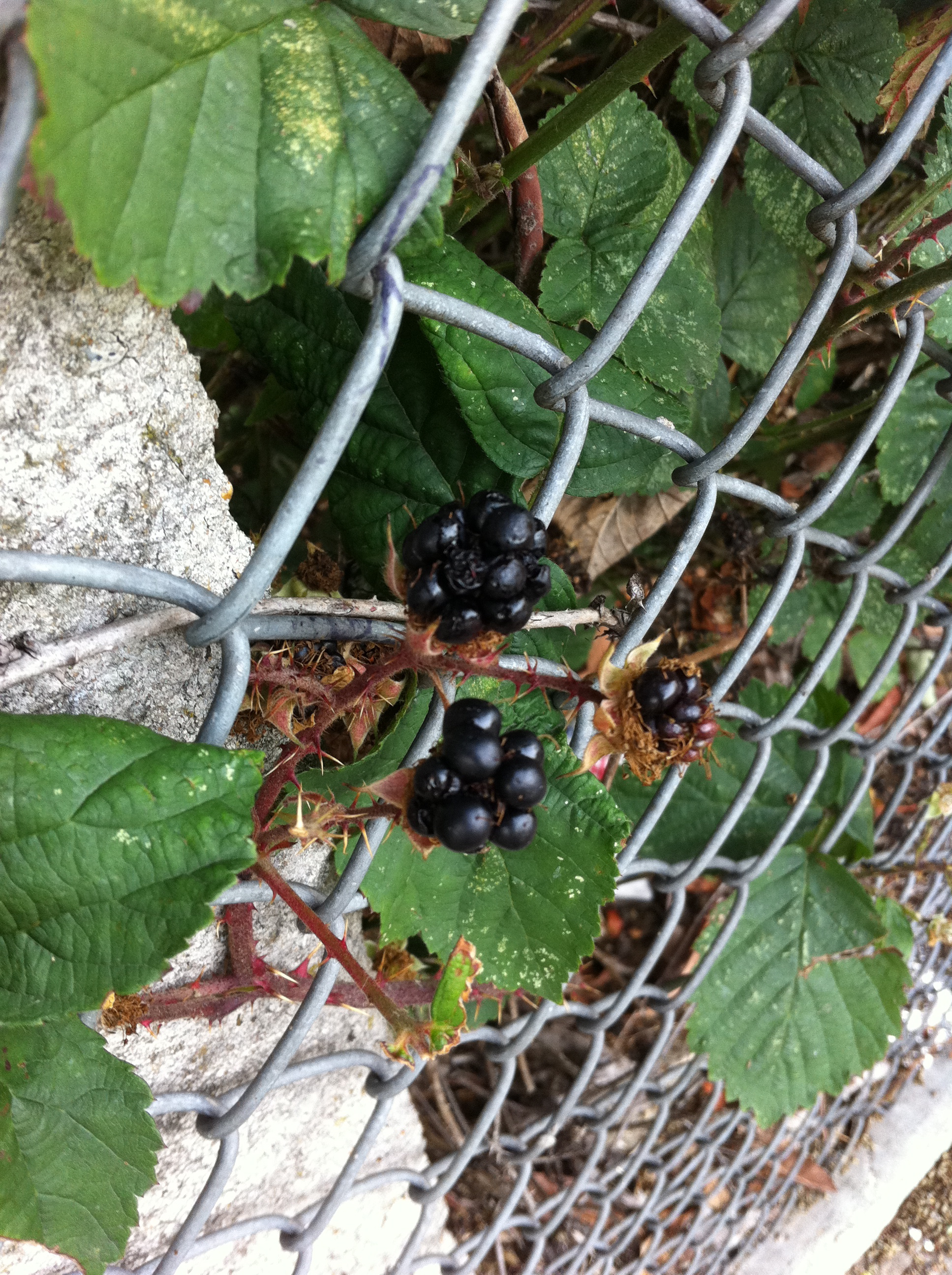
A berry peculiar practiceFruit grows on the platforms of West Finchley. In summer, roses caress the barbed wire. In winter, robins perch on branches a few feet from your face.

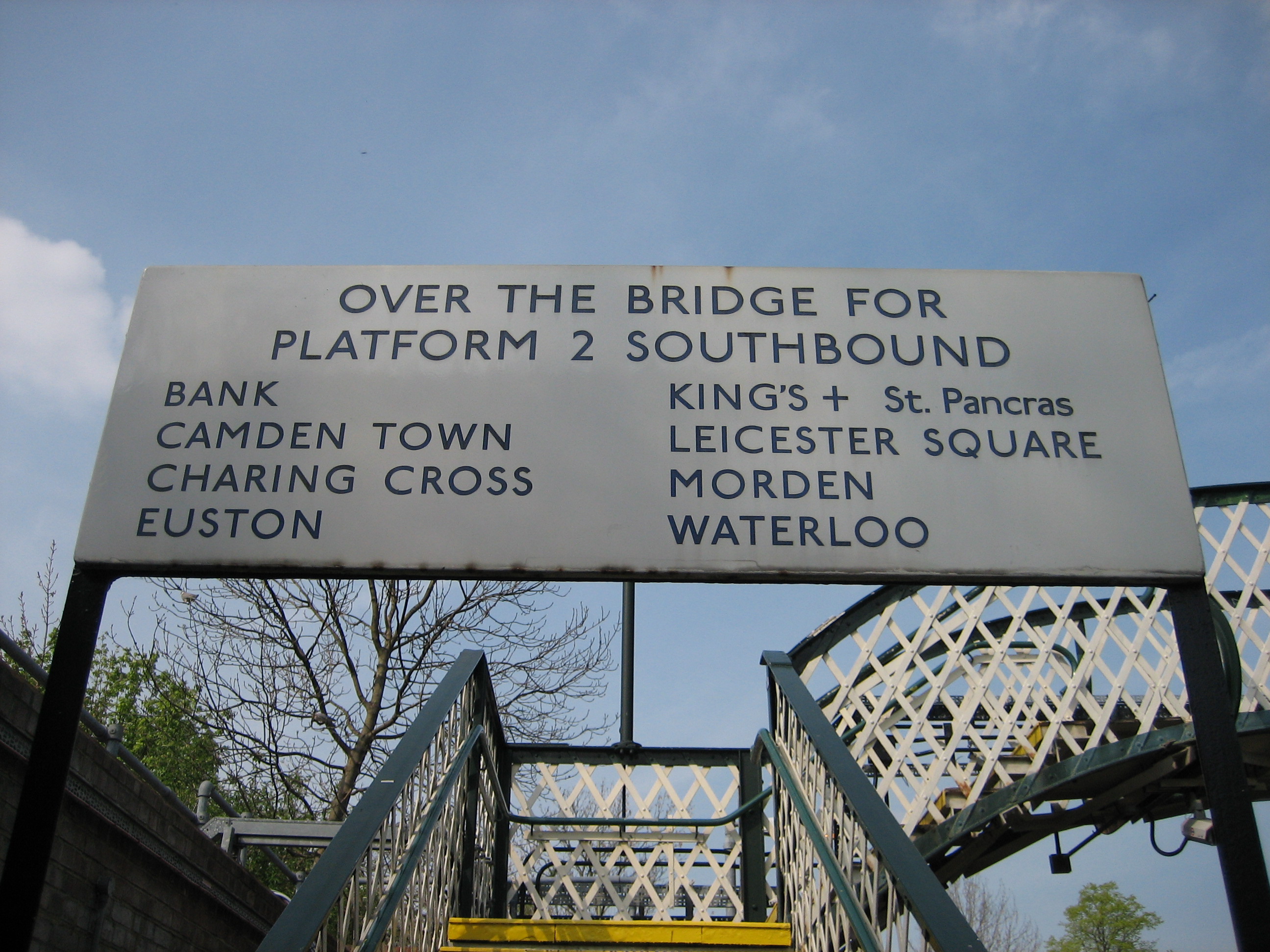
All the functional furniture of an overground Underground station – trackside cables, wires for the loudspeakers – is tucked out of sight behind bushes and trees. The automated announcements are turned down low out of respect for the residents of nearby houses. There are waiting rooms on both platforms, with electric fires. And there are toilets and pocket maps and guides for continuing your journey and benches and buttons to press for help in an emergency and a lovely great big old iron bridge that used to have a lovely great bit old iron sign above it:

KINGS + St PancrasThere’s also – shush! – a secret entrance. Transport for London describes West Finchley station as step-free, but unless you’re aware of the narrow passageway from an adjacent street that lets you on to the southbound platform, it’s the bridge or nothing.

To make this secret entrance even more of a secret, it’s only open for a couple of hours each morning. The rest of the time you need a special key to unlock the gates that guard the entrance. Such an arrangement could only exist, or rather only exist unnoticed, in a place like this, where things crossfade quietly between the quaint and the eccentric.

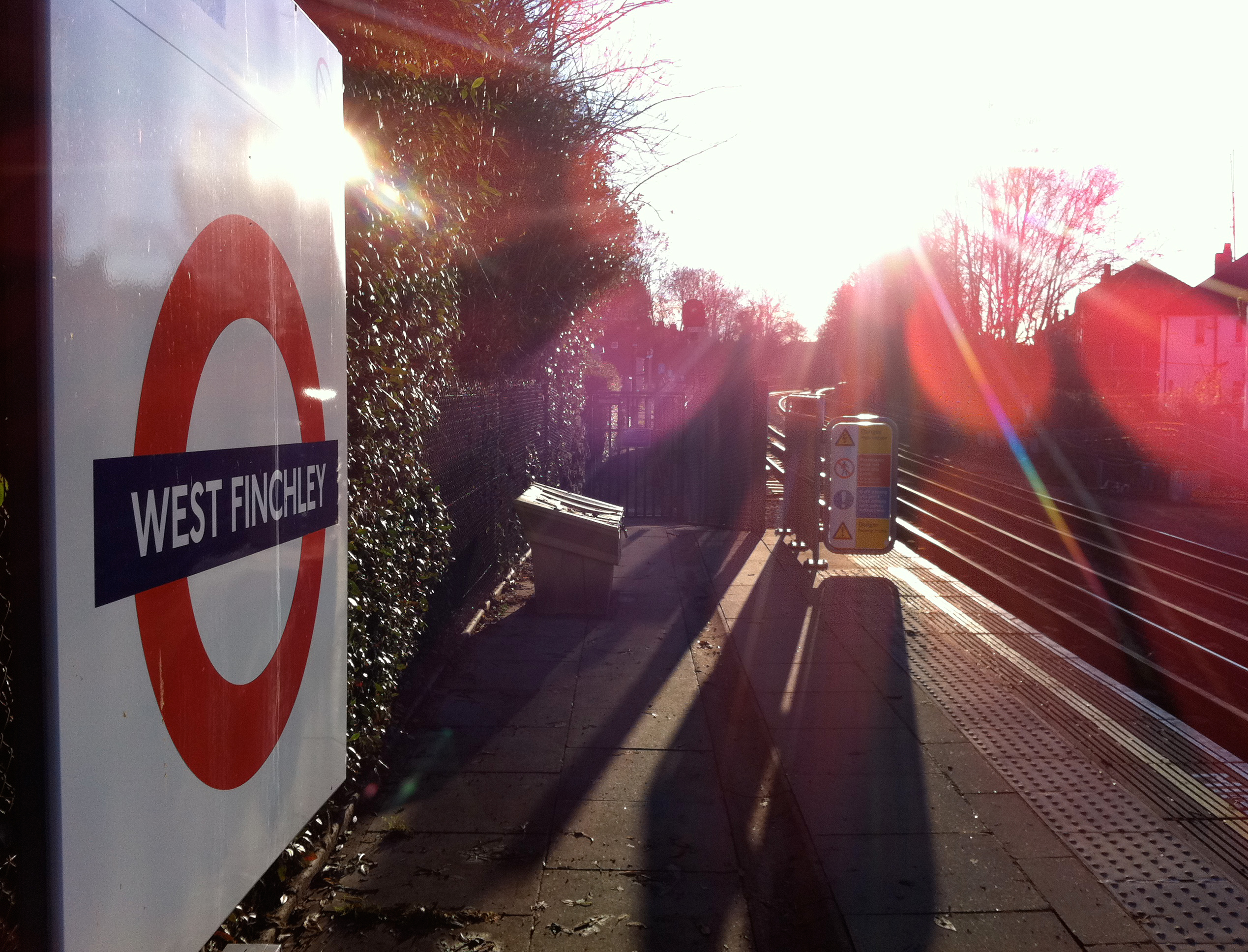
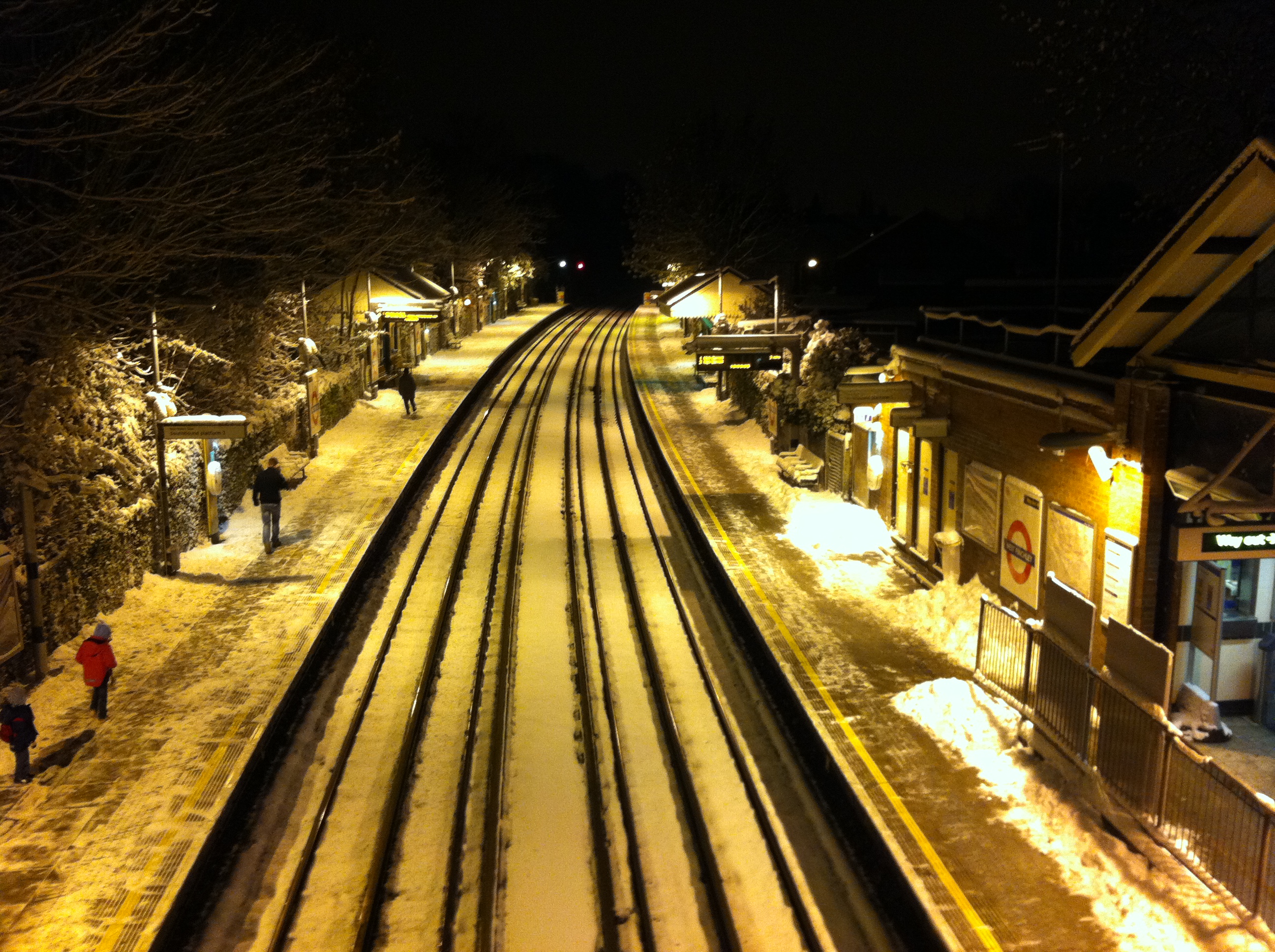
Tracks of my yearsI’ve published this photo on the blog before, but I’m giving it another outing as I think it sums up for me what is the ultimate appeal of West Finchley station: its homeliness. Even in as extreme a concoction of weather, season and hour as this, the place still feels welcoming. It is safe and reassuring. It is somewhere you know you can trust. And, of course, for me it means just that: home.

I hope other people share similar sentiments about their own local station. West Finchley isn’t particularly special in the way most of the things on this blog are, in the sense of boasting great architecture or locations or even sensations. But it has the ability to be special to me. I might romanticise it out of all proportion, but that doesn’t harm anyone except myself. Which is what, ultimately, makes it so great.