Archive

Yearly Archives: 2012

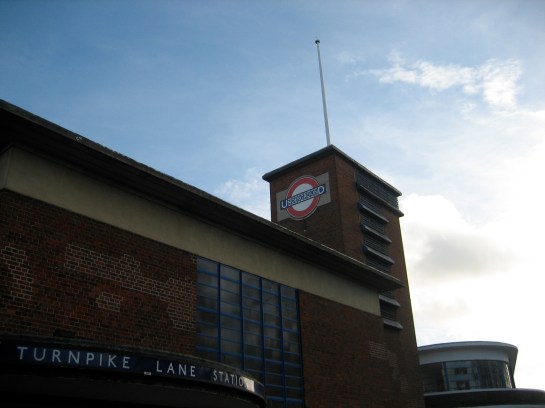
Purple patchesIf you’re ever inclined to literally worship the London Underground, the chapel-esque hues of Turnpike Lane would be a good place to start. And also something of a God place.

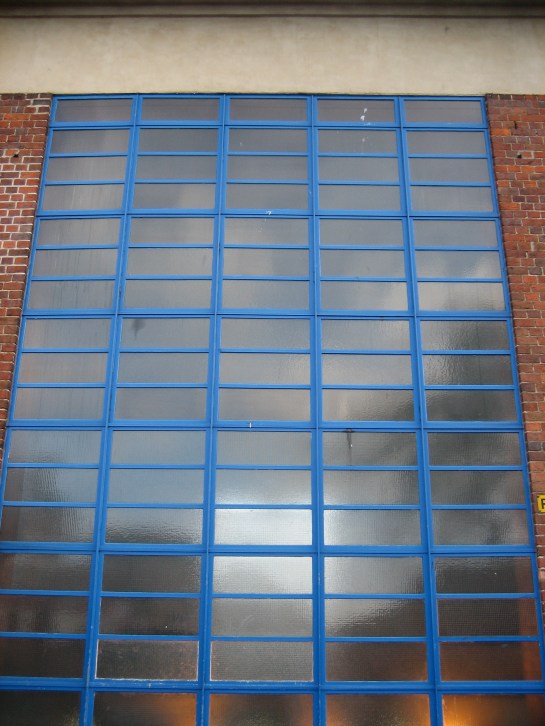
The towering segmented portals that climb the station’s giant walls could almost pass for sort of atheistic stained glass windows. They certainly perform a similar function, allowing natural light to pour into the vast, nave-like interior, while a hushed reverence envelops the building like a particularly voluminous cassock.

Not that there’s anything sacred to glean from either the station’s function or design. There’s much that is gloriously profane about Turnpike Lane, as there is of almost any Underground station. The warm inclusiveness, the non-denominational throng, the absence of anyone passing judgment: this is the kind of church I’d like to belong to. Look, there’s even a spire:

An aspiring viewYet another winning throw of the dice from Charles Holden, the station opened in 1932 and has been Grade II-listed since 1994.

But it’s not in the best of shape. As you pass through the exterior walls and descend, as if arriving at a Baldwin-era society bash, to the ticket hall, amid the grace and glamour are barely-disguised patches of growing decay. Much like the entire Baldwin era, in fact.
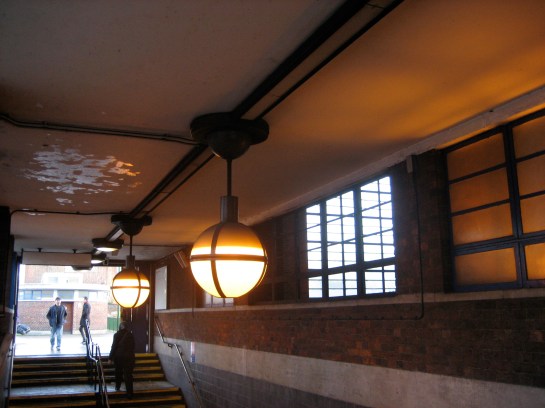
Fading ballsStill, the orange and purple ambience casts enough warm appeal to make up for the damp. Someone needs to pass the collection plate around City Hall soonish, though.
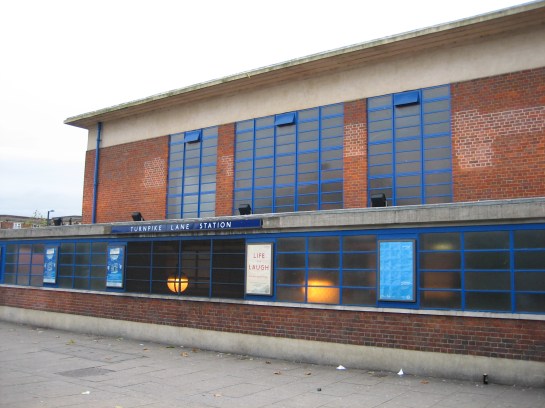
Praise beIt’s well worth making a pilgrimage to Turnpike Lane to soak up some of its bracingly modernist and vaguely sanctified air. It’s TfL’s very own Lourdes: a place to rejuvenate your soul, with trains to central London every two minutes.

And don’t worry: unlike the Church of England, everyone is welcome here.
Amen, brother

Colour me happyWhat’s the best thing to do with a bit of station that nobody uses anymore? Abandon it, like at Barbican? Honour it, like at Highgate? Or give it a new life as a space for the installation of contemporary art?

It depends on the context, I suppose. And that’s not just a cop-out of an answer. It’s a pragmatic one.

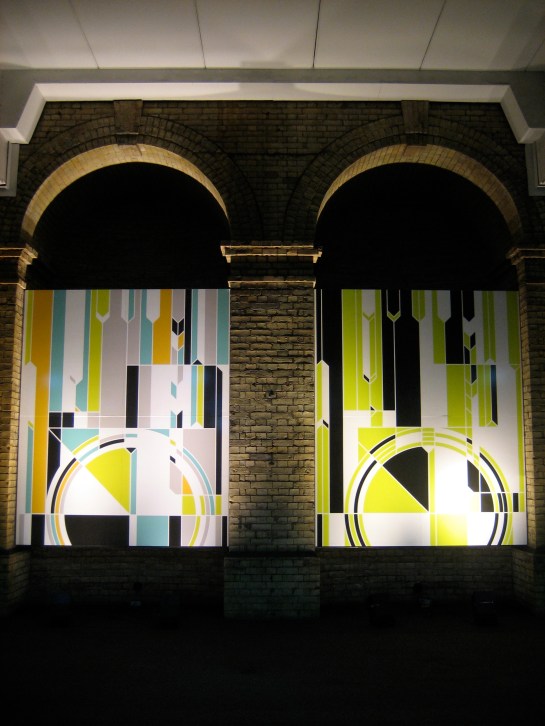
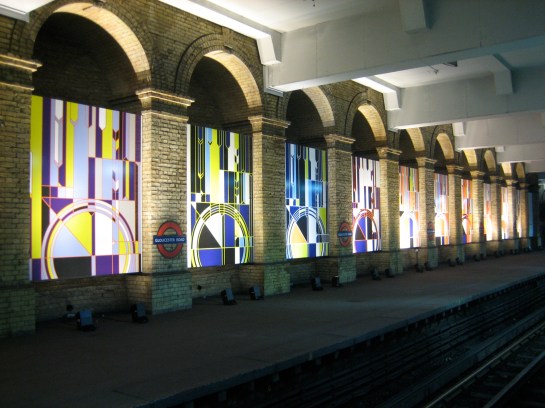
Utilising the disused platform at Gloucester Road for the exhibition of art was an inspired decision. The giant, illuminated alcoves lend themselves brilliantly to the displaying of striking visual designs. It’s a great example of how to marry location and function.

Slinging bits of art into the alcoves at Barbican, however, wouldn’t create half as good an effect. There the alcoves are outside, shorn of the manipulated atmosphere of an artifically-lit environment. They’re striking in their own way, as I’ve already acknowledged. But their cousins at Gloucester Road represent the better home for things that need to be shown off for being different and new, rather than for always being the same.

Tailored for GloucesterThis space has been used for art installations since the early noughties. There have been some marvellous, bewitching efforts, as well as some that are better forgotten. But all have called attention to themselves, which is kind of the point.

The installation that was in place when I took these photos was called Big Ben by the artist Sarah Morris.

Platform heartI love the geometry and vibrancy of the designs, especially the way they seem to complement the geometry of the platform itself. They rekindle a bit of energy in an environment that would otherwise be rather lifeless. Plus they are wonderfully lit. Placing them just out of reach, on the other side of the tracks, adds to the appeal.

This platform has come alive again, but on its own terms. Hopefully it will continue to do so long into the future.

Air apparentWe’ve conditioned ourselves to ignore most of what lines the platform walls of the Underground, largely because most of it is worth ignoring.

Promotions for someone’s new DVD; promotions for a “laugh-out-loud” comedy or “feelgood hit of the year” that boasts quotes only from reviews in the Daily Star; promotions for novels that begin with the phrase: “You’ve read Fifty Shades of Grey…”; promotions for anything to do with Peter Kay…

These are all, quite rightly, things we have taught ourselves to filter and reject from our list of subconscious concerns. We look at them but we don’t see them. We’ve other things to concentrate on – not least, making sure it doesn’t look like we’re concentrating on any passengers standing nearby.

Three station platforms at the northern end of the Piccadilly line buck this trend by offering up things to which attention is worth paying. But chances are most people don’t see them. And why should they?

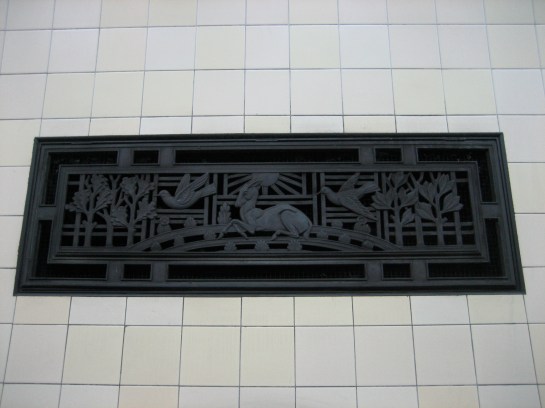
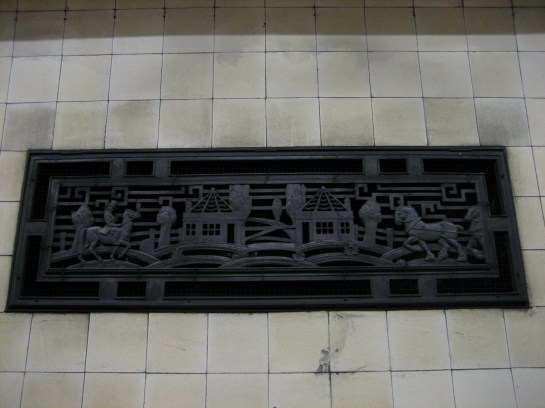
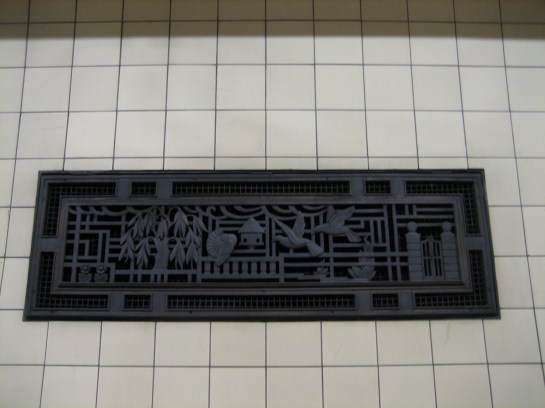
Green gaugeThese ventilation grilles are originals: installed when the stations were built in the early 1930s, and designed by Harold Stabler whose charming if sometimes idiosyncratic work I’ve encountered elsewhere.

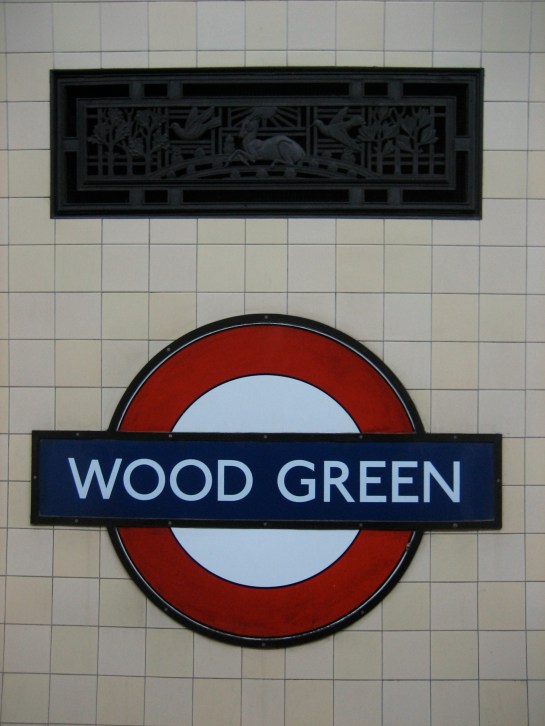
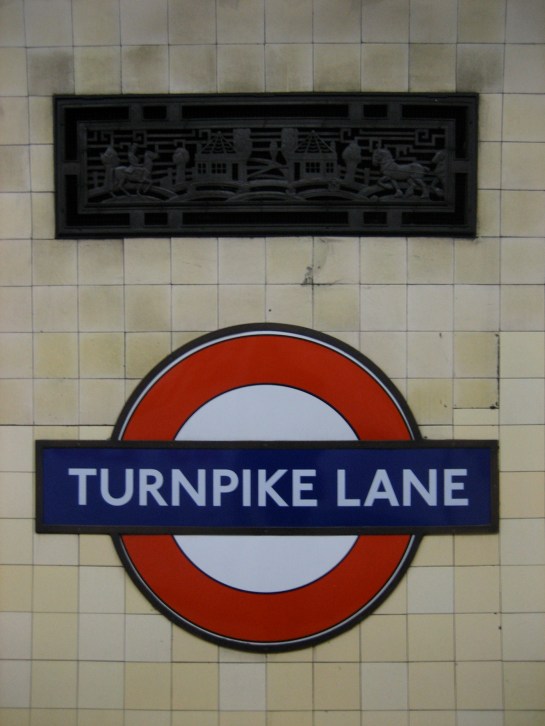
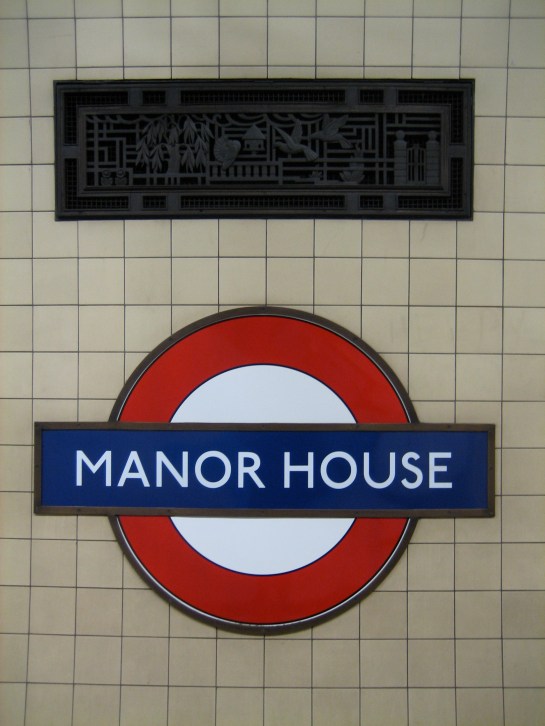
They can be found at Wood Green, Turnpike Lane and Manor House. Each one depicts a brazenly romanticised panorama of the neighbourhood. You can forgive the shamelessness, however, because of the wonderful attention to detail and – dammit! – their reassuring parochialism.

The grille at Wood Green appears to show two birds and a deer frolicking on the titular parkland. Trees, plants, even the sun’s rays are all neatly aligned and symmetrical. If only life were really like that.

Next comes Turnpike Lane:

In line for a grillingHere it looks like a brigand of courtly gentlefolk are about to engage in some business, possibly – judging by the rider’s deportment and dapper outfit – of a mercantile kind. Or maybe they’ve just come for a fight. Whoever is arriving from the right, however, has already got the upper hand by virtue of showing up with TWO horses not one.

Could do with a cleanThese particular grilles aren’t really helped by sitting within such shabby-looking walls. Someone needs to attend to those tiles with a cloth.

Finally we have Manor House:

Manor maketh manI’m not sure whether this is meant to be an idealised version of the interior of the eponymous building, someone’s back garden replete with a snoozing owl and pot plant, or maybe the grounds of the manor itself. That fine-looking portal on the far right suggests it could be the latter. Those aren’t your average garden gates.

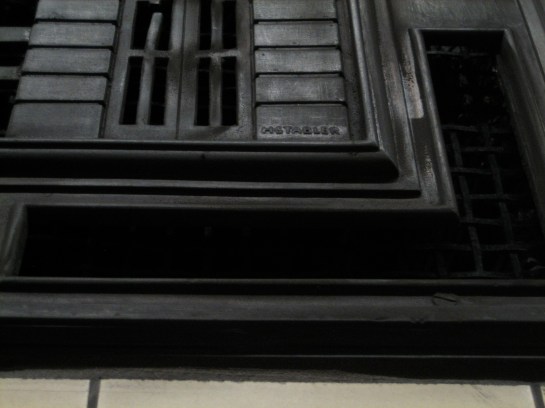
House proudAs with the tiles at Aldgate East, an even-closer inspection of all three grilles reveals the artist has smuggled in a namecheck for himself:

Harold the greatAnd who would begrudge him that? For here are a trio of objects that are properly worth looking out for on Underground platforms – that is, looking out for not merely to avoid seeing.