Thwunk. Hisssss. PsscchhHEEEEEE…schheeschheeschhEEEEEE…
It’s impossible to properly put into words. It’s a whirr and a hum and a whoosh and a purr rolled into one. It’s cosy and charming and not a little thrilling. And it goes like this:
Thwunk. Hisssss. PsscchhHEEEEEE…schheeschheeschhEEEEEE…
It’s impossible to properly put into words. It’s a whirr and a hum and a whoosh and a purr rolled into one. It’s cosy and charming and not a little thrilling. And it goes like this:
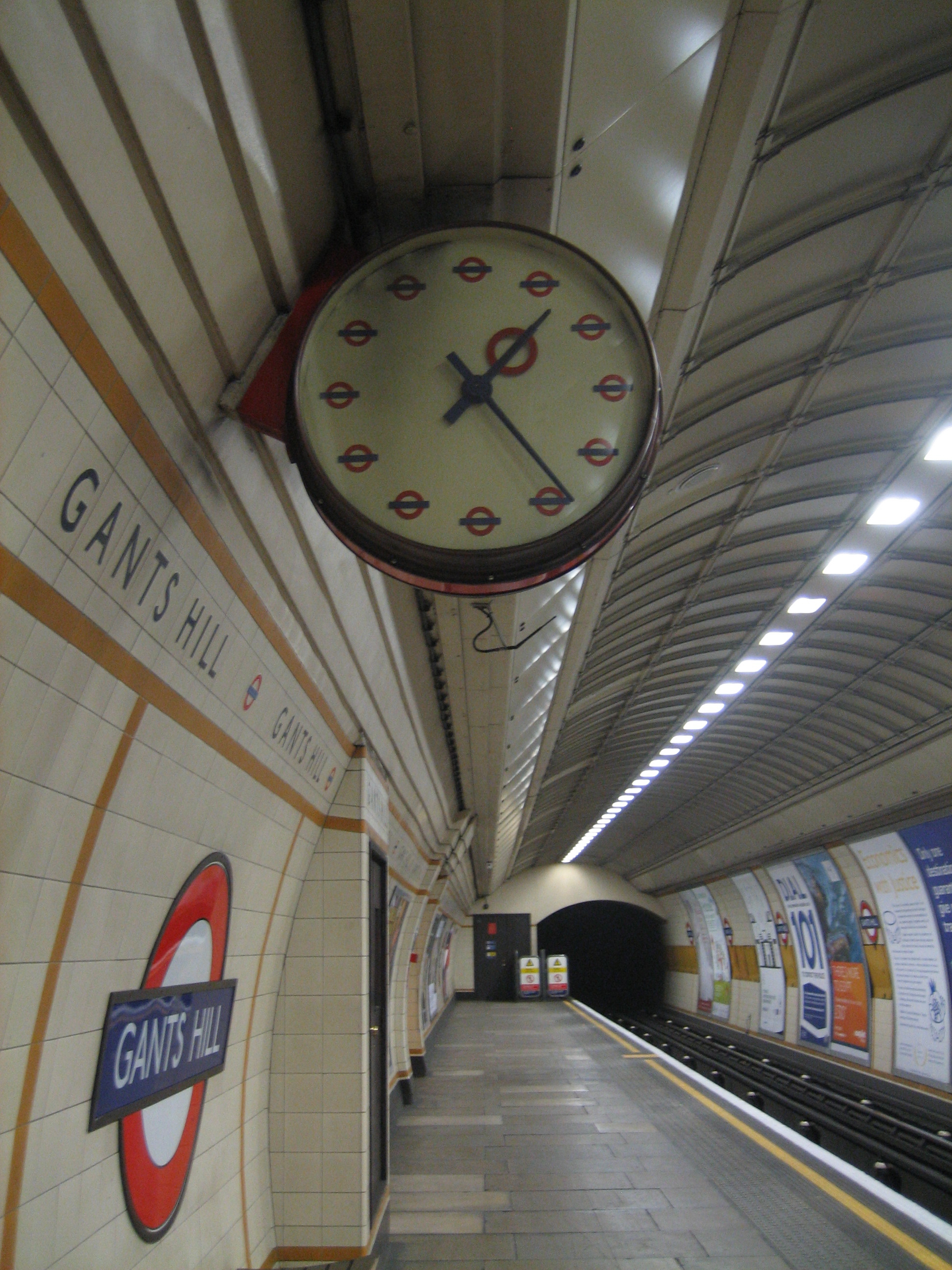
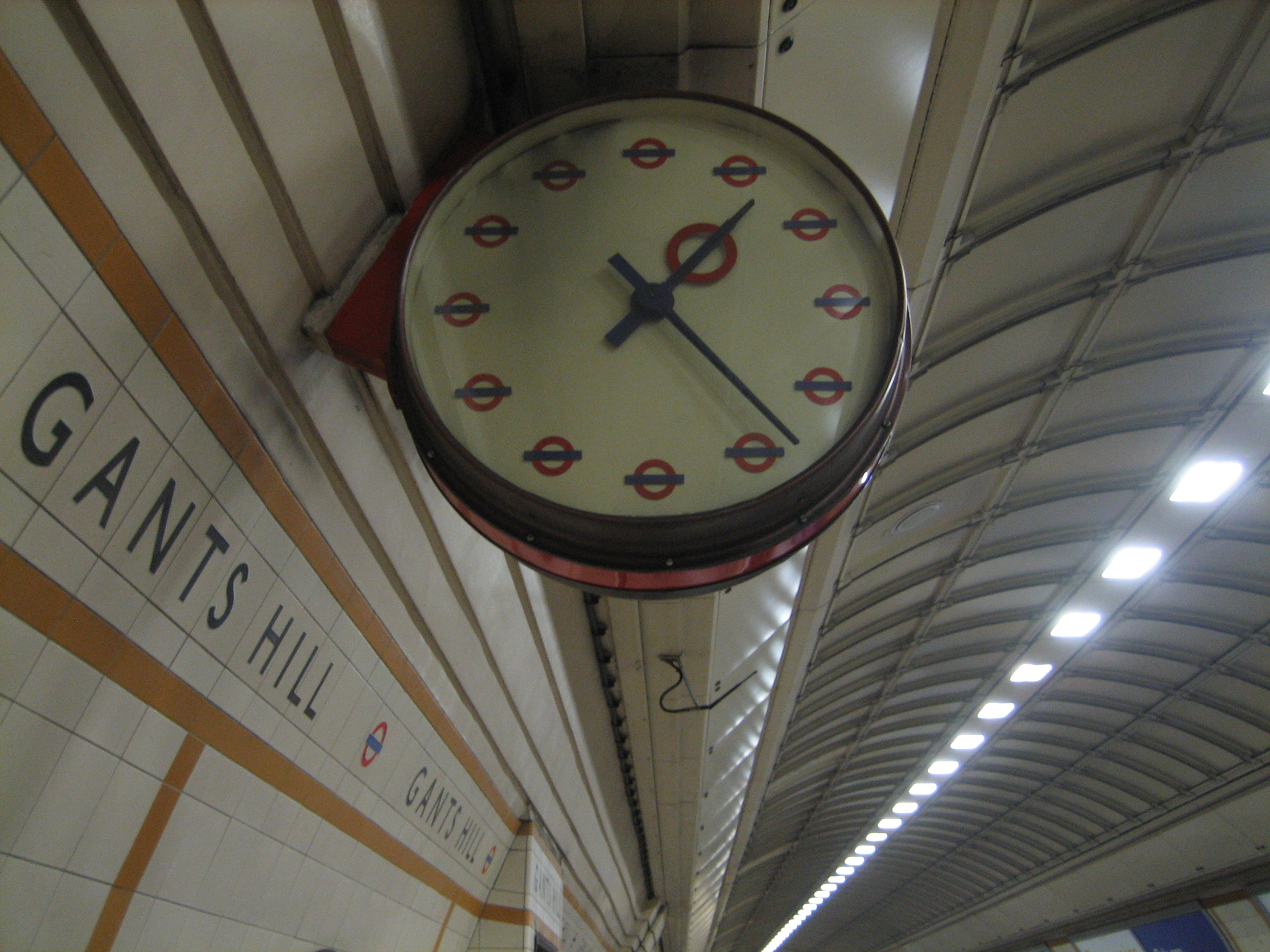 They’re not ideal if you’re trying to teach someone to tell the time. In fact they are useless. But in every other regard – which admittedly are not many – the platform clocks at Gants Hill are to be praised.
In a station graced with more eye-catching features than most, thanks chiefly to the inspired machinations of its architect Charles Holden, the clocks are understated gems.
Their design could be said to be informed by the same principles that guided Harry Beck towards his groundbreaking London Underground map: that less is sometimes more; that information should be there to serve others and not simply itself; and that on occasions the fundamentals of time, place and space are not actually that important. After all, a glance at the hands of a clock are all most of us ever want or need.
They also boast an abundance of Underground roundels – and, let’s be honest, you can never have too many of them.
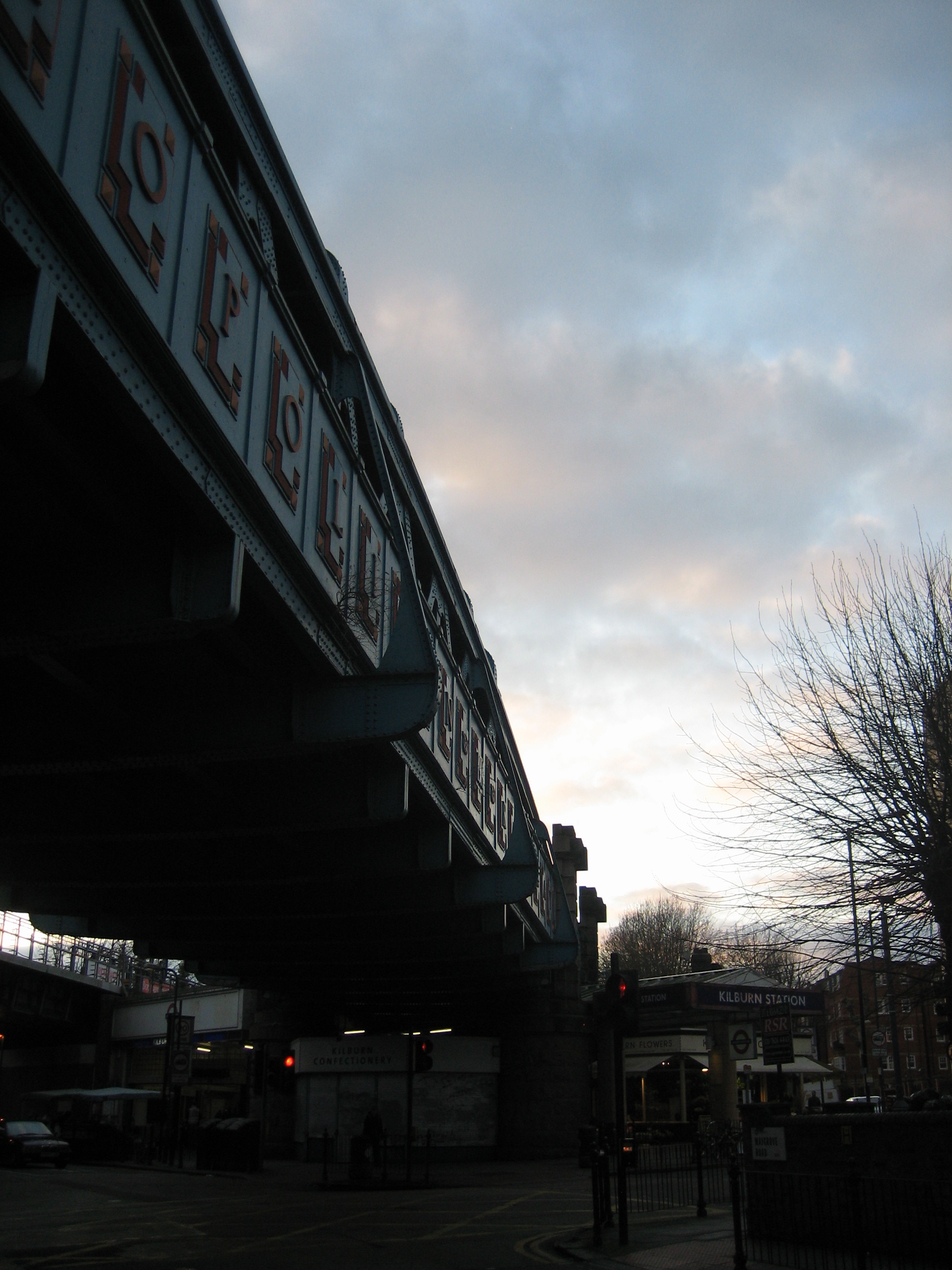
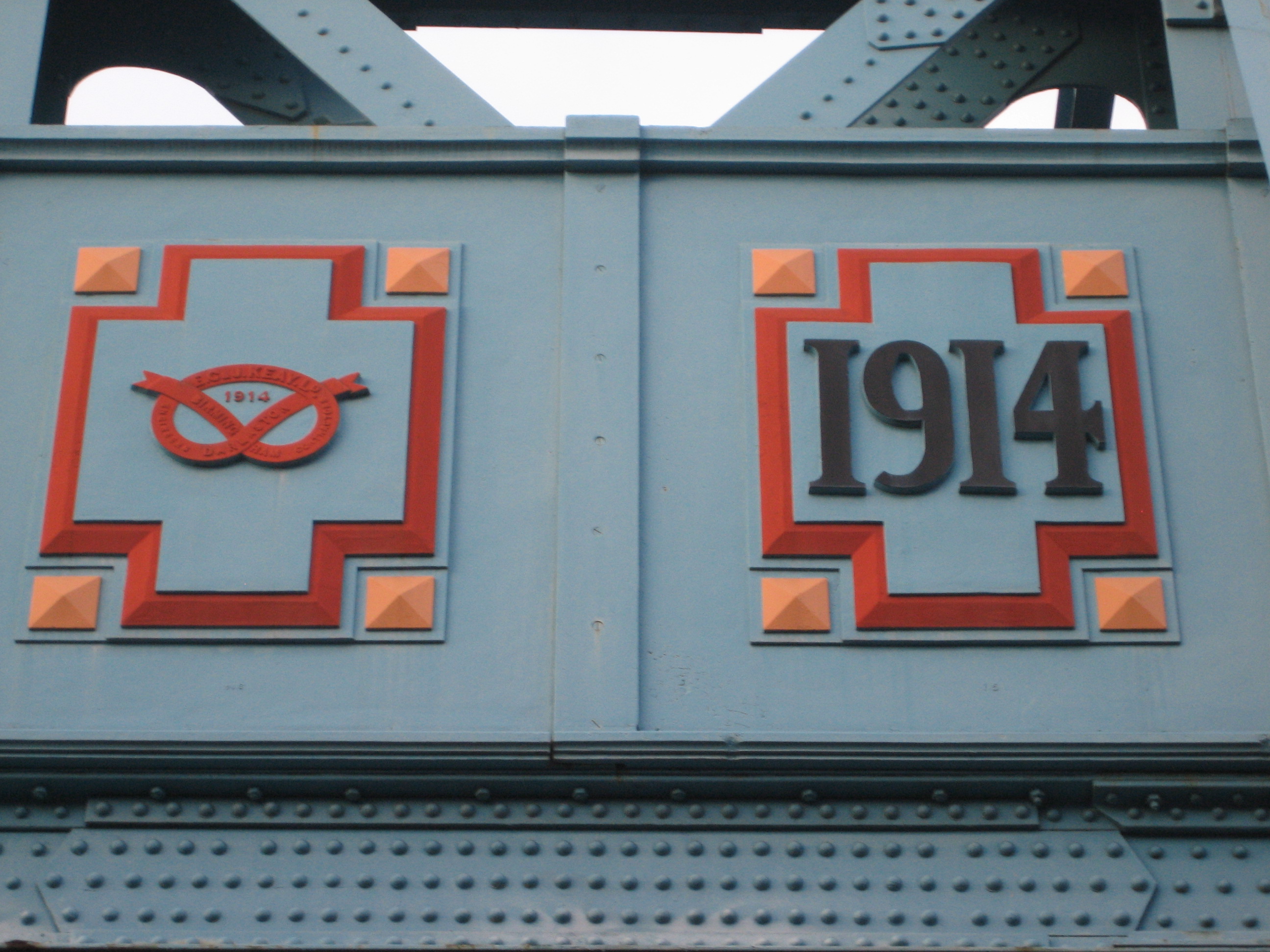 Carrying the Underground high over what was once the Roman thoroughfare of Watling Street, and which now boasts a dual identity as both the A5 and Kilburn High Road, is a construction you can only really appreciate when you’re under rather than on top of the tracks – and preferably standing in the middle of a road:
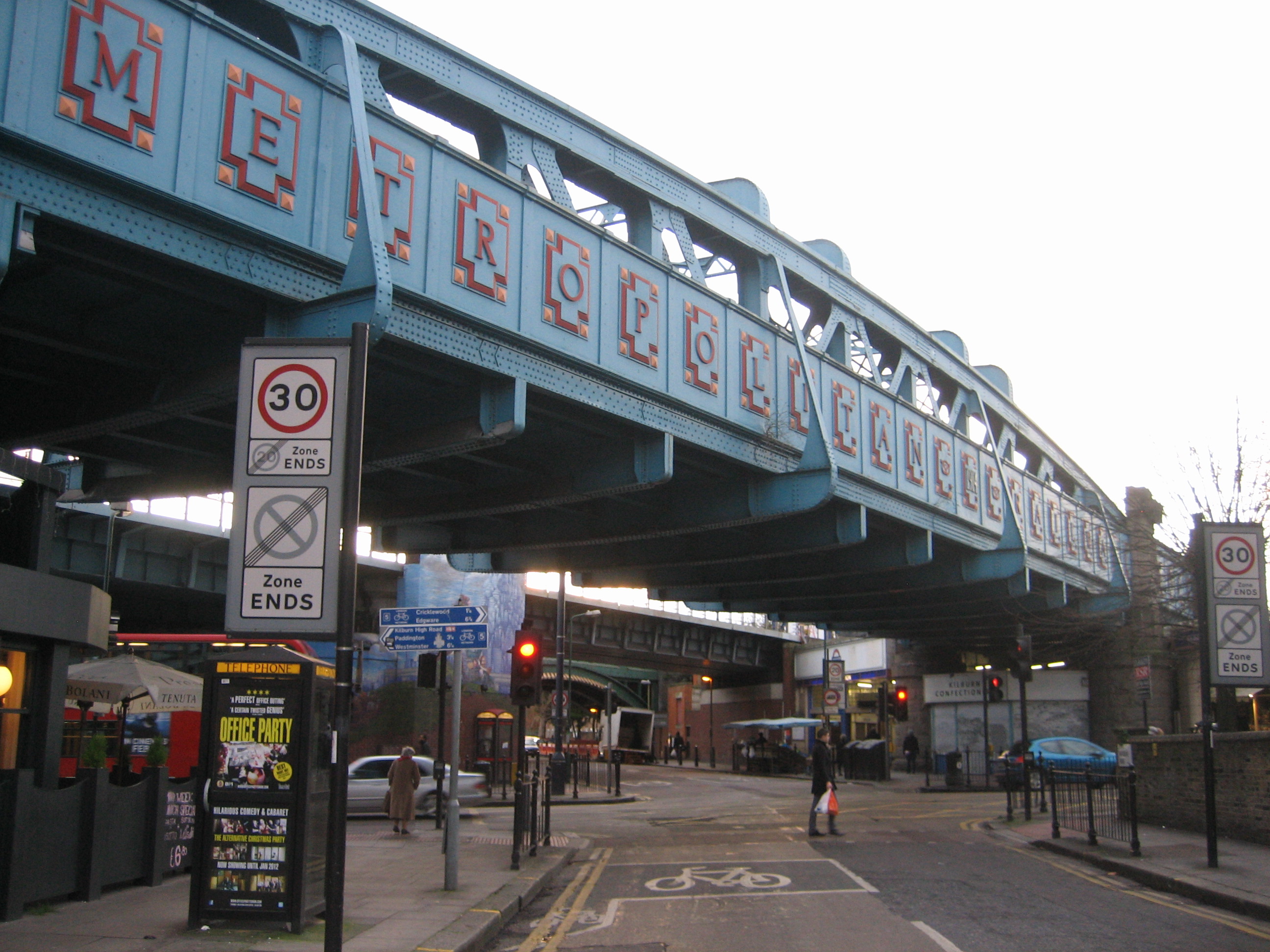 What was once an enormous slice of self-aggrandisement on the part of the Metropolitan Railway is nowadays an enormous boon to an area that deals mostly in grime and grey.
It’s as if someone has smeared a palate of primary colours right across this monochrome municipal landscape.
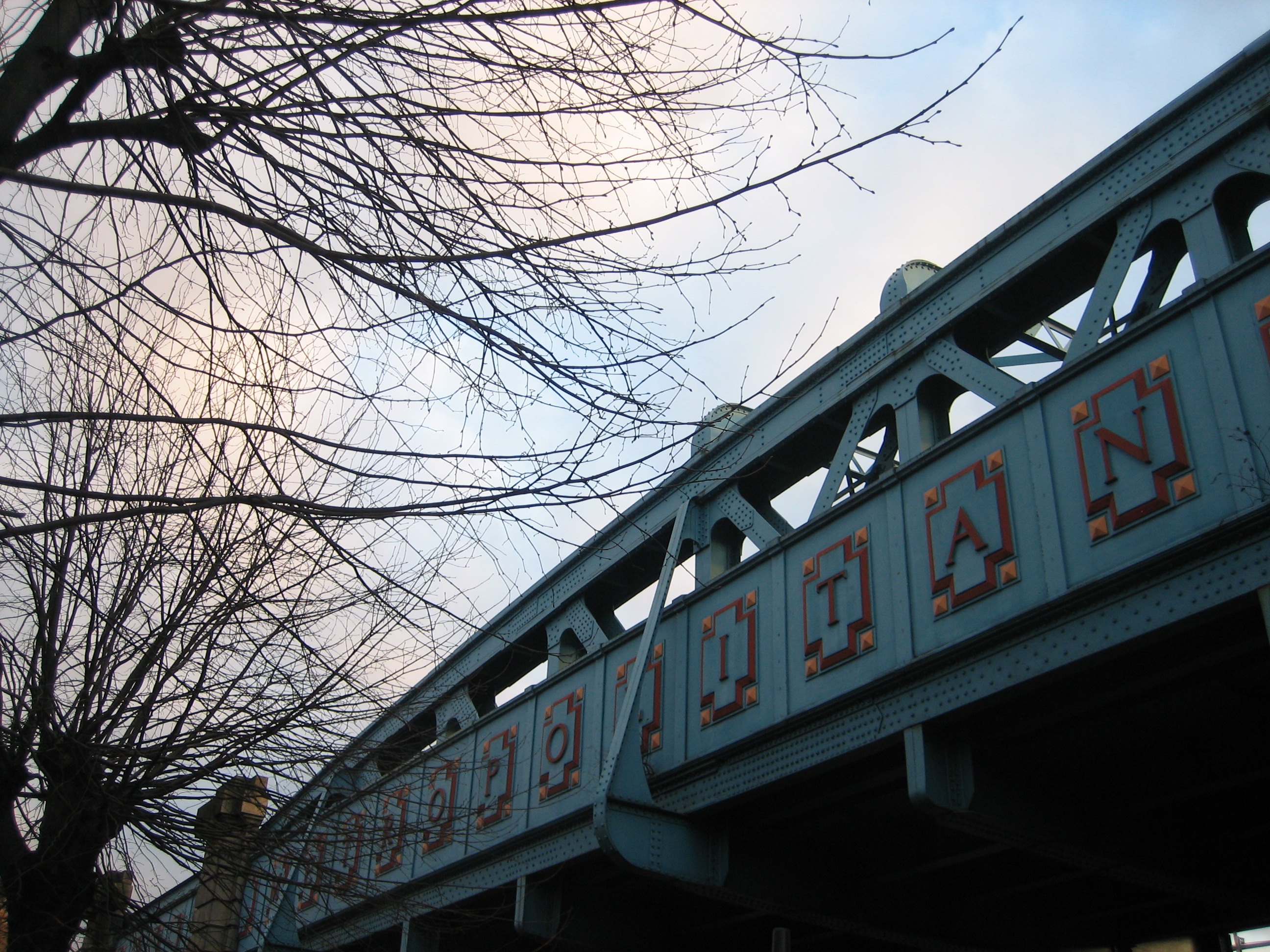 The viaduct was built when the Metropolitan line was going through one of its many muscle-flexing phases; in this instance, a quarupling of the number of tracks all the way from Finchley Road up to Wembley Park.
I love the shamelessness of the design and the fact the company had ultimately no scruples in turning the edifice into a massive piece of self-promotion – albeit one of sparklingly bold and bright ambition.
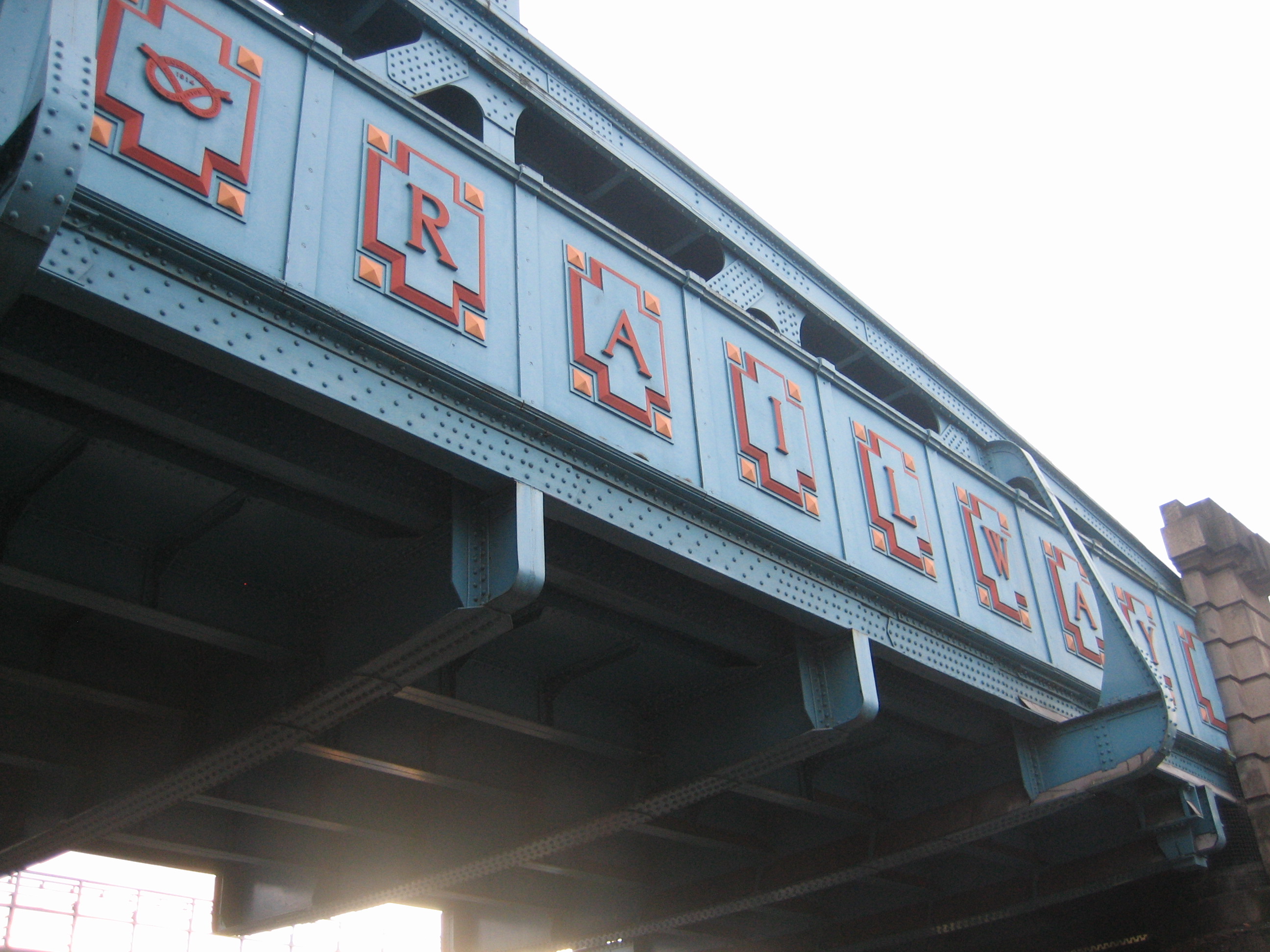 By any measure – conception, intent, size, appearance – it’s a triumph.
 150 great things about the Underground